 THE GAME ARCHIVE
A Viking War You Fight, Explore and Command
Viking: Battle for Asgard is a Windows action-adventure developed by Creative Assembly, with the PC port handled by Hardlight and publishing by SEGA; the documented release year is 2012. Its identity comes from the connection between three layers of play. Up close, an intensely physical melee combat engine lets Skarin dismember enemies with deadly combat moves in a whirlwind of death. Out in the world, vast open environments are full of combat, exploration and quests. On the largest scale, the game lays the foundations for huge battles featuring hundreds of dynamic NPC warriors, where the player fights alongside kinsmen and can turn the tide in their favour. The appeal is not any one of those layers alone but the way the same warrior carries his sword arm from a single duel into a field full of allies and enemies.
The story material frames that fighting as Skarin's journey. He is described as an uncompromising force, a plaything of the gods rebelling against their selfish agenda, and the definitive Viking warrior. The setting is the violent and glorious world of Viking mythology, presented as a place where players write their own legends to be told around the campfire. The documented objective that pulls the campaign forward is freeing the Viking kinsmen from the clutches of Hel. Because those same kinsmen can later fight at Skarin's side, the rescue objective and the large-scale battle system are linked rather than separate features.
Melee Combat and Dismemberment
The documented melee system is built around high impact and brutality. Combat is described as intensely physical, and the deadly combat moves dismember enemies in a whirlwind of death. That description matters for how encounters read in play: the combat engine is not presented as a distant, stat-driven exchange but as close, forceful fighting. The same system is the one the player uses across the open world, so the physicality of a one-on-one clash is also the baseline for fighting through hostile ground and quest areas.
The battle rules put that engine inside a second kind of fight. In huge battles with hundreds of dynamic NPC warriors, the player can subtly influence the battle through targeted assassination or wade in to save stricken allies. The two documented methods imply a real practical choice about where Skarin stands: the assassination route is about influencing the larger fight through a targeted action, while the rescue route means joining the press of bodies to help kinsmen in trouble. In both cases the goal is the same — become one amongst many and turn the tide in favour of the kinsmen — so the melee skills learned in smaller fights remain the foundation for the battle-scale alternatives.
Dragon Taming and Divine Magic
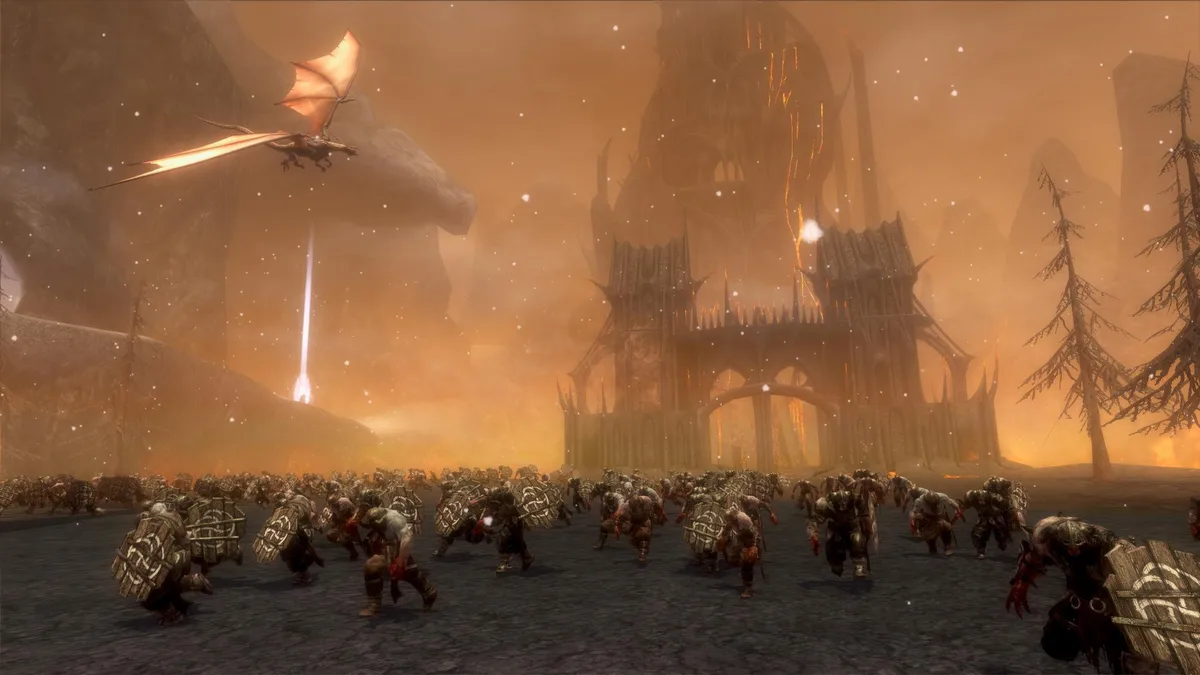
Mythical powers give the player options beyond the sword. The documented dragon rule is a two-step chain: tame dragons, then command them to rain fire upon your enemies. The order matters. The dragon is not described as a preset ally at the start of a battle; the player first secures the beast, and only then can the command release fire on the enemy. Once that is done, the mechanic offers a way to bring destruction down on enemies while the physical melee fighting continues below, making the dragon a documented ranged counterpart to Skarin's close-range work.
Divine magic is the other documented mythical power. The player can call on magic and the power of the gods to win the mortal war, framing spellcasting as a direct route toward victory rather than a decorative extra. The source presents the two powers together — tame dragons and command them to rain fire; call on magic and the power of the gods — so a player can treat them as a pair of larger-than-human tools layered on top of melee. The choice that matters is when to rely on the blade and when to invoke the powers that the ordinary warriors on the field do not have.
Open-World Exploration and Quests
The game's geography is described as vast open world environments. Players explore, uncover and fight their way across huge worlds full of combat, exploration and quests. That wording places quests inside the world rather than in a detached menu or separate mode: moving across a region is itself the means by which the campaign advances. The open structure also means the melee engine and the mythical powers are not reserved for set-piece battles. They are the tools the player carries while uncovering ground, crossing hostile territory and working through the tasks found along the way.
Progression across those huge worlds is tied to the quest content. The documented loop is to explore, uncover what is there and fight through it, with quests providing the structure that keeps the player moving through the map. This is also where the liberation objective meets the travel: freeing the Viking kinsmen from Hel's clutches is the campaign aim, and the open world is the space in which that aim is pursued. The practical consequence is that exploration and combat feed the same progression instead of competing with each other.
Epic Battles with Dynamic NPC Warriors
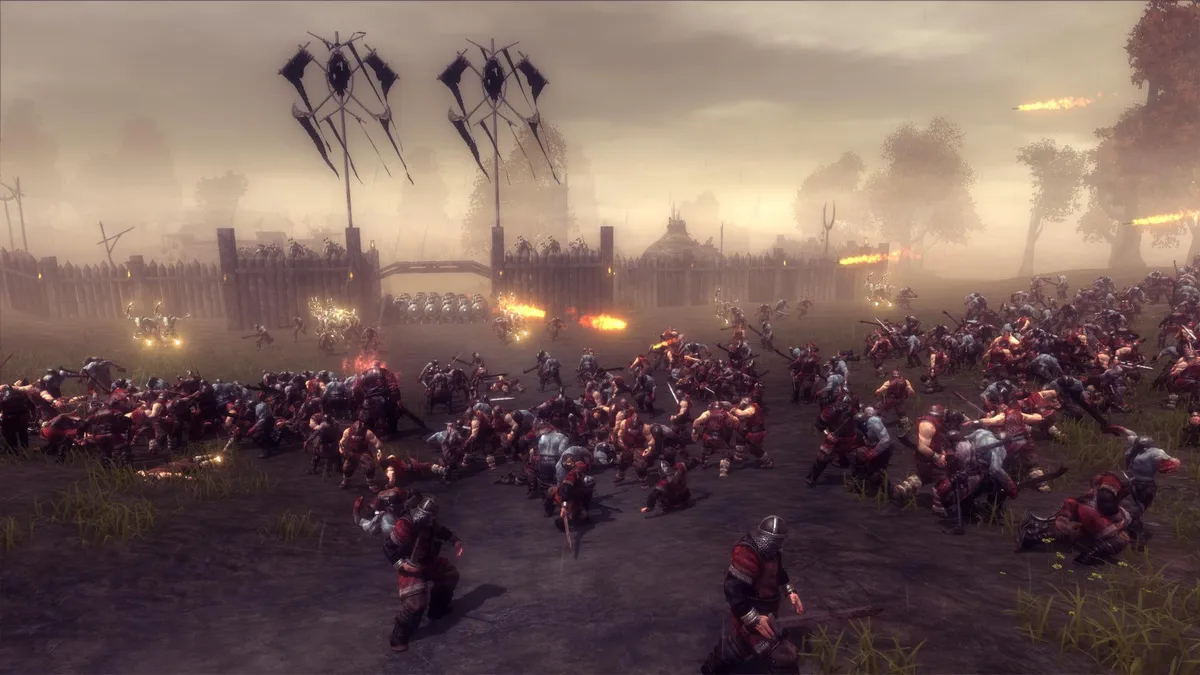
The battle system is described as laying the foundations for huge battles featuring hundreds of dynamic NPC warriors. Those fights are the stage on which several documented systems converge. The player can fight alongside the kinsmen, become one amongst many, and turn the tide in their favour. The presence of hundreds of dynamic warriors is what makes that language meaningful: Skarin is one combatant in a populated field rather than the only actor on it. The same battles also support the two intervention methods already noted — targeted assassination or wading in to save stricken allies — so the scale of the fight shapes how the player chooses to influence it.
The documented payoff of those battles is influence over the war's outcome. The game describes becoming one amongst many and turning the tide in favour of the kinsmen, which frames the huge fights as more than survival exercises. The choice between subtle assassination and open rescue is the player's route to that influence. Keeping the kinsmen in the fight and helping them prevail is the shared goal behind both routes, and the hundreds of dynamic NPC warriors are what make the battlefield feel contested on all sides while the player works toward it.
Liberating Kinsmen and Earning Their Sword Arm
The campaign's documented progression works as a two-part exchange. Skarin liberates his Viking kinsmen from the clutches of Hel, then earns their trust and their sword arm, and then fights alongside them in battle. The sequence is important: liberation is the precondition, trust is the step that converts rescued people into committed allies, and the sword arm is the payoff on the battlefield. The kinsmen are therefore not passive survivors waiting to be rescued again. Once trust is earned, they are active participants in the same huge battles described elsewhere in the game.
That payoff changes what the large battles mean in play. With kinsmen fighting alongside him, Skarin can become one amongst many and turn the tide in their favour. The two documented methods of intervention — subtly influencing the fight through targeted assassination, or wading in to save stricken allies — both make sense in that allied context: one is a way to shape the battle from within, the other a way to keep the kinsmen standing. Earning trust is the thread that ties liberation, the sword arm and the battle-scale choices together, and it gives the player a reason to care about the rescue objective beyond the story.
Skarin's Story, Input Options and the 2012 Windows Release
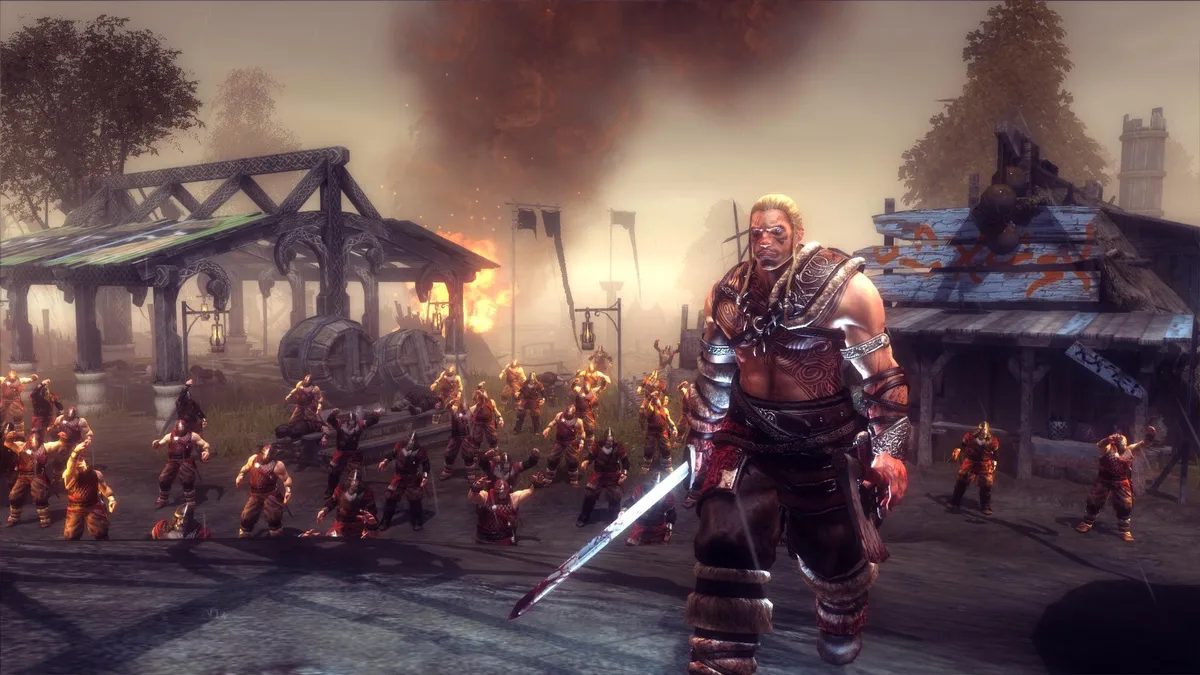
The campaign is presented as story-driven play following Skarin's journey through the world of Viking mythology. He is the uncompromising force and the plaything of the gods rebelling against their selfish agenda, and the setting is the violent and glorious mythological world in which players write legends to be told around the campfire. That narrative frame sits on top of the mechanical core: the player still explores huge worlds, fights through quests and melee encounters, tames dragons, and joins the kinsmen in battle. The story gives those systems their context without replacing them.
On PC, the documented input options are gamepad support and fully re-mapped keyboard-and-mouse controls, so both are supported ways to play. The documented release year for this Windows version is 2012, under Creative Assembly with the PC port by Hardlight and publishing by SEGA. The store record describes the PC version as re-invigorating the game for 2012 with visuals that take advantage of modern gaming hardware and with settings that can be scaled according to the player's PC. The article treats the 2012 Windows release as the point of reference and does not assume that unsupported details from any other version apply.
Getting Started: Reading the Battlefield
The documented systems suggest a few things to keep in mind when starting out. Because the campaign's battle influence is described in terms of hundreds of dynamic NPC warriors and kinsmen who can fight alongside Skarin, the liberation-and-trust progression is worth pursuing deliberately: the kinsmen's sword arm is the documented support that makes the large engagements winnable in the game's own terms. In the field, the two battle methods — targeted assassination or wading in to save stricken allies — are both presented as valid routes to turning the tide, so the right choice depends on whether the player wants to shape the fight quietly or keep allies on their feet.
The mythical powers are best treated as a separate toolkit rather than as a replacement for melee. The dragon requires the documented two-step chain — tame, then command the fire — so securing and using the beast is a deliberate process. Divine magic, by contrast, is described simply as calling on magic and the power of the gods to win the mortal war. Between the two, the player has documented answers for close combat, aerial destruction and divine intervention; the useful habit is to remember that the melee engine remains the foundation and the powers are the tools layered above it.
Scroll sideways to see the full table →
| Field | Documented detail |
|---|---|
| Title | Viking: Battle for Asgard |
| Documented release year | 2012 |
| Platform | Windows |
| Developer | Creative Assembly; PC port by Hardlight |
| Publisher | SEGA |
| Genres | Action, Adventure |
| Documented set piece | Huge battles with hundreds of dynamic NPC warriors |
| Documented powers | Dragon taming and divine magic |
Sources & further reading.
- Viking: Battle for Asgard — official game profileRetrieved Oct 27, 2026
First published .