 THE GAME ARCHIVE
Colonists, Experts and the Units of the New World
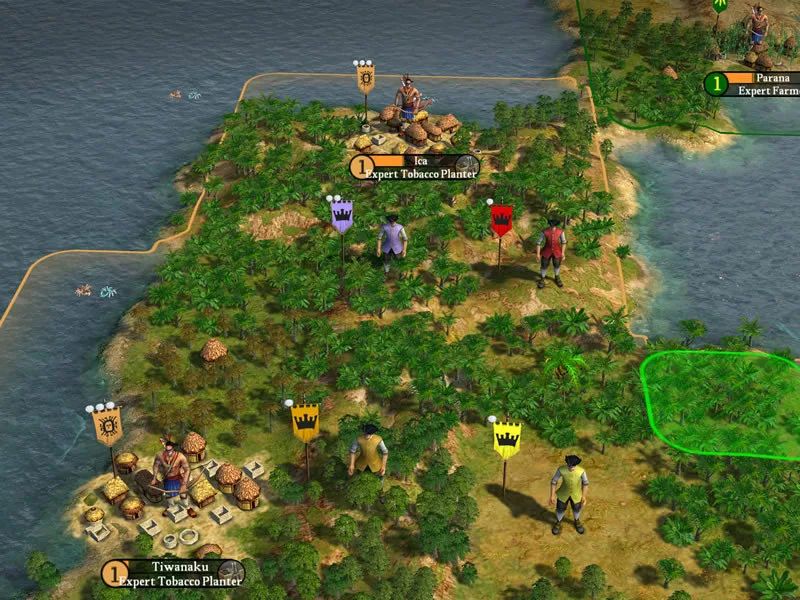
Colonists form the basic population unit for settlements in the New World, and the category includes Free Colonists, Indentured Servants, Petty Criminals, and Converted Natives. Outside a colony, these units can defend themselves but with a low chance of success. Inside a colony, a colonist can take up any profession: harvesting raw materials, creating manufactured goods, or taking up arms for defense. Experts and Masters behave like ordinary colonists except when assigned to the profession at which they excel, where they provide a significant bonus. For example, an Expert Ore Miner assigned to the Ore Miner profession creates double the ore of a non-expert under the same circumstances, while a Veteran Soldier assigned to the Soldier or Dragoon profession earns double the normal experience points. When assigned to any other job, experts perform at the same rate as a Free Colonist.
Missionaries can establish missions in native villages, but a mission cannot be founded if another colony from the same nation has already done so, a restriction that only occurs during multiplayer games. If the natives of the village go to war with you, your mission is destroyed, though you can reestablish it once peace is made. Established missions from time to time create Converted Native units in the village, which are yours to control. Converted Natives receive a bonus when assigned to generate raw materials or horses, and a penalty when creating manufactured goods. Separately, Wagon Trains transport goods overland, while certain naval vessels carry goods by water. Units can also join an existing settlement, or if not in a settlement, create a new settlement at that location.
Building Ships, Cannon and Wagon Trains in Settlements
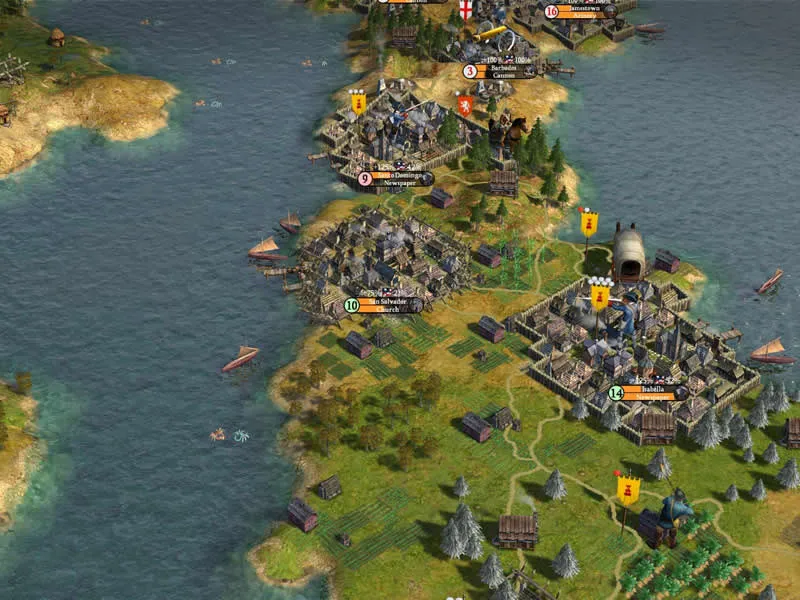
Settlements can construct only three kinds of units: ships, cannon, and wagon trains. Wagon trains are the simplest, available as soon as the colony itself is founded. Ships demand a Drydock or Shipyard first, plus a supply of lumber, ideally from a Lumberjack, and a unit working the Carpenter profession. Cannon are gated behind an Armory, or something better, and need a set quantity of Tools stored in the settlement. The manual notes such infrastructure is needed before ships and cannon can be produced at a reasonable pace.
Raw goods such as Food, Lumber, Ore, Sugar, Tobacco and Cotton are tracked as tile yields, and storage limits apply to what a settlement holds. That matters for cannon, which consume stored Tools, and for shipbuilding, which draws on lumber. Constructed vessels and wagon trains then serve the transport roles described elsewhere: wagon trains haul goods overland, while certain naval vessels carry goods by water.
Combat Strength, Injuries and Mounted Withdrawal
A unit's combat strength measures its ability to attack and defend. Some units have a combat strength of zero: they cannot attack and are automatically captured when a hostile combat unit attacks them. When a unit survives combat, it may have sustained injuries that temporarily lower its combat strength until healed. To recover, an injured unit can fortify until it regains all its combat strength, then reactivate, or it can heal by not moving during a turn. These rules make combat strength a temporary condition for surviving units, not a fixed value.
Mounted units, specifically Dragoons and Mounted Braves, possess a withdrawal ability. If such a unit is losing a battle and about to be destroyed, it has a small chance to withdraw, stopping the fight before destruction. This withdrawal applies only when the mounted unit is attacking; it cannot withdraw when defending. Separately, land units cannot attack naval units, but certain naval units can bombard units in coastal settlements. These rules define distinct combat interactions for mounted and naval forces.
Stack Attacks, Captured Units and Stacked Movement
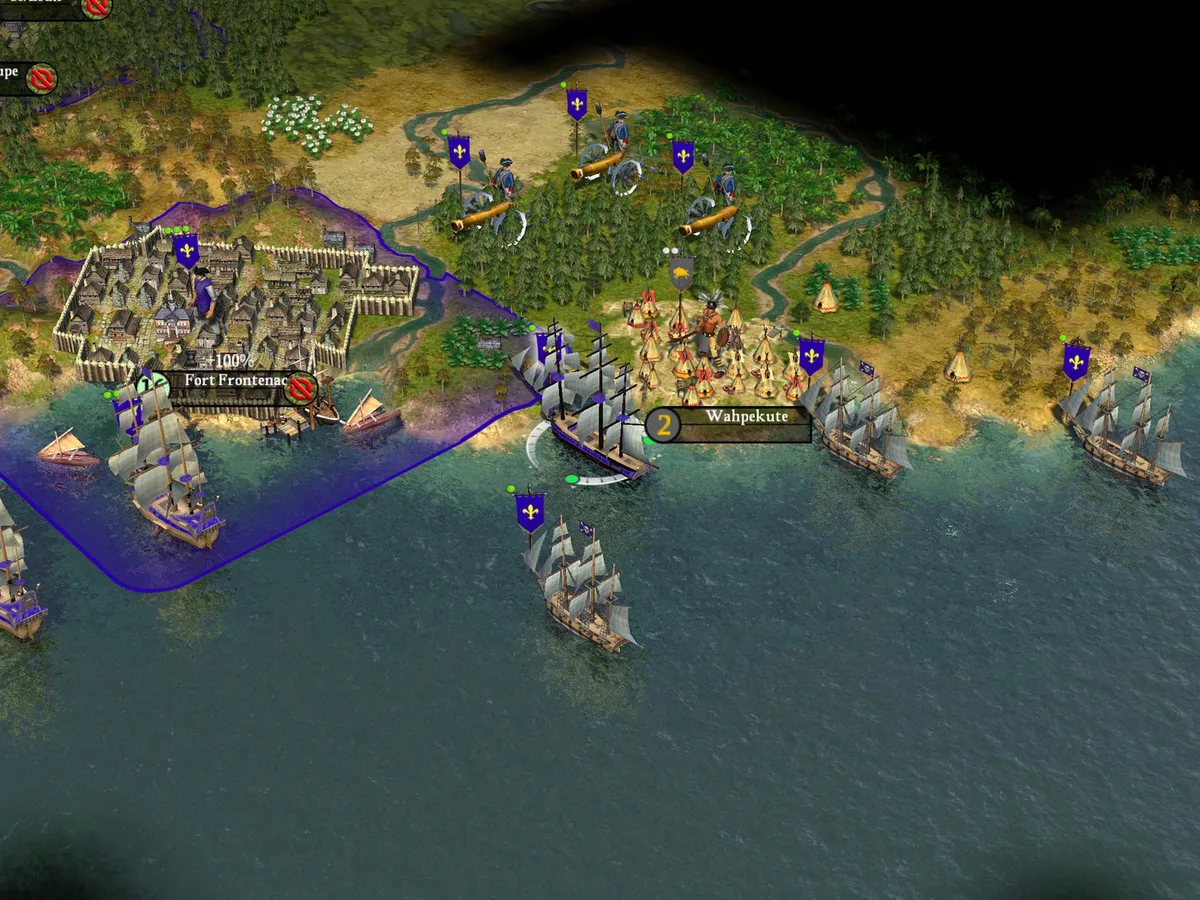
When the stack attack option is enabled and two or more military units are ordered against an enemy unit, the game picks the unit with the strongest matchup against the defender and sends that one in first. If its attack fails, the assault does not continue on its own; attacking again requires issuing new orders to another unit. Holding the ALT key while ordering an attack with multiple units selected instead triggers a stack attack, in which combat resolves immediately. Separately, two or more units in the same map space can be selected by clicking one and shift-clicking the others, and when given movement orders they travel as a group at the speed of the slowest unit. Ordering the unarmed colonists alongside a military unit is described as a way to keep them from being destroyed by hostile natives or rival colonials. Common unit orders include Go To Mode, All Units Go To, All Units of the Same Type Go To, Explore, Fortify, Skip Turn and Delete the Unit; explored units stop when no unexplored spaces remain reachable.
Attacking an enemy European settlement means fighting all combat units outside the settlement plus one or more of the units inside it. Success captures every surviving non-combat unit in the space, and native units can be captured in similar fashion by attacking native villages. Outside a settlement, enemy units may also be captured, provided they are Citizen units such as Colonists, Experts and Masters, which normally carry a combat strength of two. Wagon trains and treasure units are captured automatically. Movement itself is constrained by territory: a colonial unit cannot cross another colony's cultural borders unless the two colonies hold an Open Borders diplomatic agreement, and crossing without it counts as an act of war. Native settlements, by contrast, have no cultural borders.
Immigration, Crosses and Converting Native Villages
Immigration in the New World is driven by religious crosses. Every settlement automatically produces a minimum number of crosses, which represent the colony's religious fervor. Players can raise that output by constructing religious buildings and by assigning preachers to work in those buildings. The crosses attract immigrants, who arrive in Europe and then must be transported across the ocean to the colonies. This ties population growth to both building choices and the shipping capacity described elsewhere in the unit systems.
Missionaries extend this religious network into native villages. A mission cannot be founded in a village if another colony of the same nation has already established one there, a restriction that only arises in multiplayer games. If the village's natives go to war with you, the mission is destroyed, though it can be reestablished after peace is made. An established mission periodically creates Converted Native units in the village, which fall under your control. Converted Natives receive a bonus when assigned to generate raw materials or horses, and a penalty when creating manufactured goods.
Playing Against Humans: LAN, Internet, Hot Seat and Email
Multiplayer in this game is organized through formats rather than a single online mode: games can be played over a local area network, over the Internet, through email, or in Hot Seat form with every player sharing one PC. A dedicated Multiplayer entry on the main menu opens the relevant options, including the LAN game choice. When playing over a local network, the host can pick between traditional turns and simultaneous movement, so the pace of a session is set before play begins rather than fixed by the format itself.
The map tools carry over into shared games. Globe View offers a high-level picture of the known world, with buttons that reveal all known resources, the cultural power of settlements and villages, and enemy units. The Lines and Signs buttons let a player mark the map with information that fellow team members can see, and that marker option applies only in multiplayer. Standard play uses a combination of keystrokes and mouse clicks, with a two-button mouse and scroll wheel recommended, and keyboard shortcuts listed for movement.
Sources & further reading.
- Sid Meier's Civilization IV: Colonization — official game profile Retrieved Oct 10, 2026
- Sid Meier's Civilization IV: Colonization — official game profile — publisher-supplied gameplay manual Retrieved Oct 18, 2026
First published .