 THE GAME ARCHIVE
Clan of Champions is an Action game for Windows, released in 2012 by developer ACQUIRE Corp. and publisher NIS America. The published description is unusually compact: the game is about playing with or against friends online, each match lasts around ten minutes, and the goal is simple, to become the champion. The pitch then adds a tone for the fighting: alliances will be made and shattered, bonds forged and broken, and when your life is on the line it is every warrior for themselves in the battle-hardened online arena.
What the material actually explains is narrow but clear enough to describe honestly. There is online play, it can be cooperative or player-versus-player, sessions run about ten minutes, friends can be asked to help with difficult missions or fought as part of training, and combat offers short-range magic spells or brutal physical combat, with physical skills combinable with passive abilities to create an ultimate warrior. Everything below builds from those documented statements and avoids filling the gaps with invented controls, level routes, or difficulty settings.
The Match Format: Online, Friend-Focused, and Brief
The core structure is stated plainly: Clan of Champions is a game you can play with or against friends online, and each match lasts around ten minutes. That single sentence defines both the social frame and the pacing. Online play is the organizing mode, friends are the intended participants rather than anonymous crowds, and the roughly ten-minute match is the unit of play. The description also notes that you can play by yourself, so the game is not exclusively multiplayer, but its distinctive claims are all about the friend-based online arena.
The brevity matters for how players approach each session. A match measured in roughly ten minutes is short enough that changing your relationship with the same friends from one bout to the next is practical within a sitting. Cooperation and competition are both documented online arrangements, and the described match length applies to the game's matches generally, so the same short-bout structure frames both kinds of play. Team up with friends online and take on even more furious battles, the description says, which reinforces that cooperation sits alongside, not instead of, the competitive option.
Friends as Helpers and as Sparring Partners
Two Attack Styles: Short-Range Magic and Brutal Physical Combat
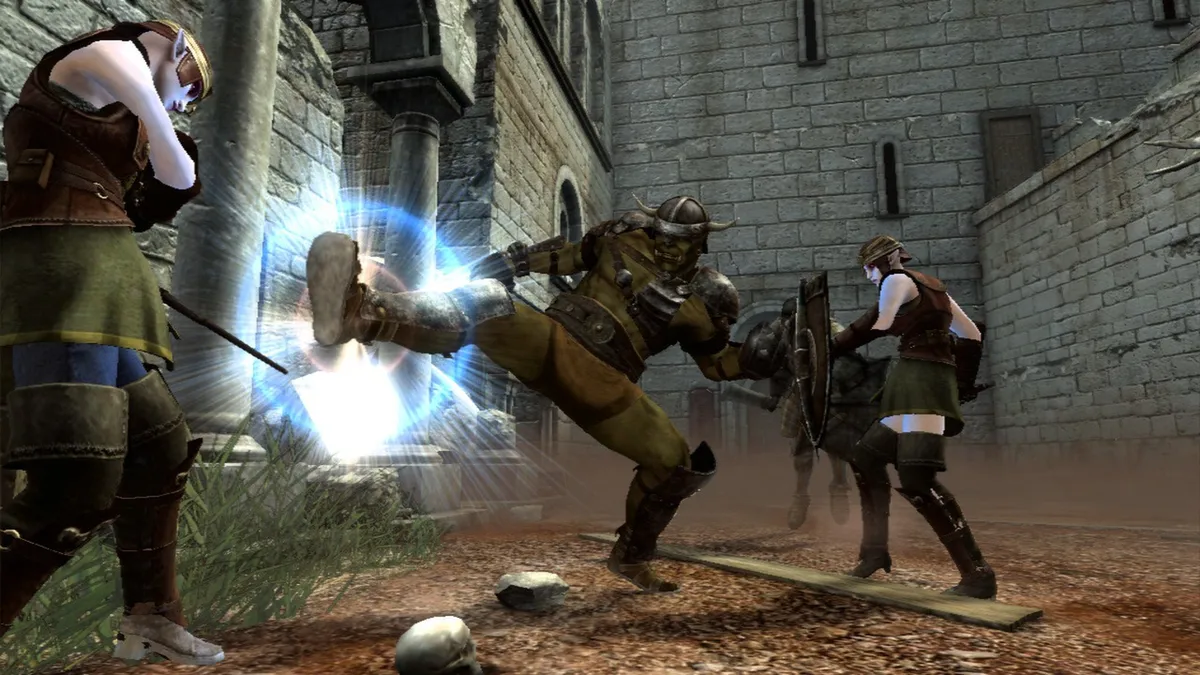
The description sets out a two-branch combat choice: blast your foes with short-range magic spells, or engage in brutal physical combat. The wording matters. Magic is short-range, so casting is not presented as a distant, safe alternative to melee; it is an option for engaging foes who are close. Physical combat is described as brutal, which frames the melee side as hard-hitting and direct. For a player deciding how to fight, the documented decision is which of these two styles to bring into a match.
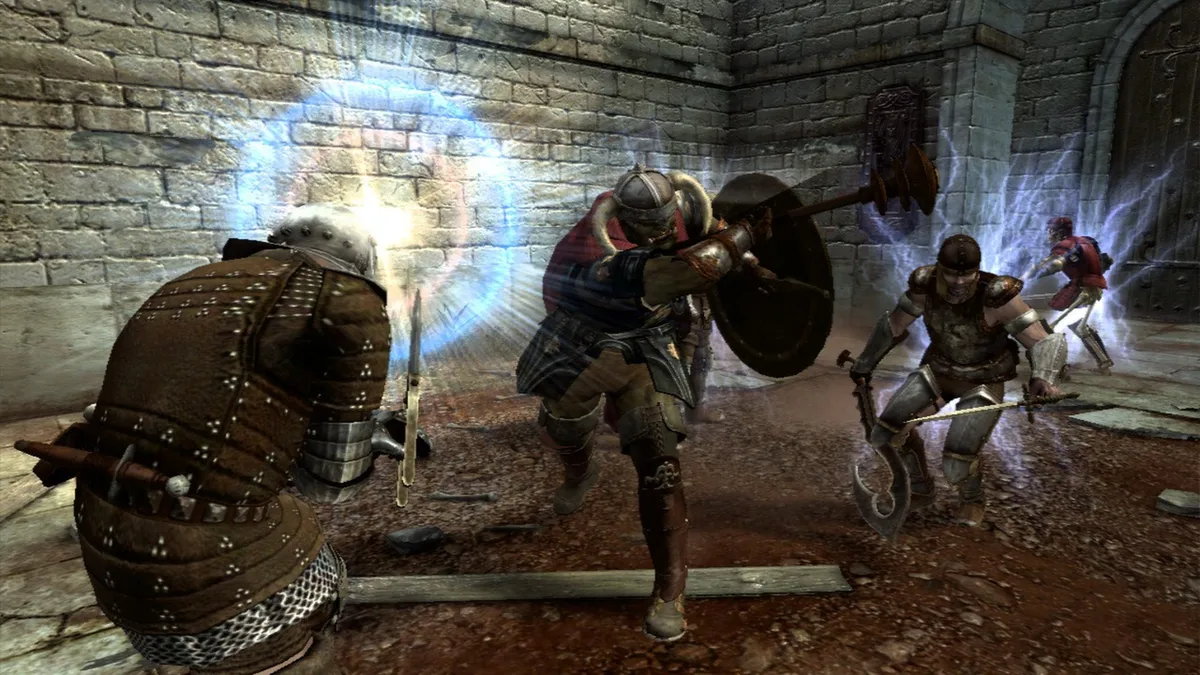
Because both branches are aimed at nearby foes, the space where they meet is close quarters. A spell-caster and a brawler would both be operating within striking distance, and the description does not claim any ranged or long-distance option. That makes the choice less about keeping away and more about how you want to resolve a close fight: with short-range magic or with physical force. The same two options are presented for the arena as a whole, so they apply to fighting friends in training just as they apply to teaming up against difficult missions.
Physical Skills, Passive Abilities, and the Ultimate Warrior
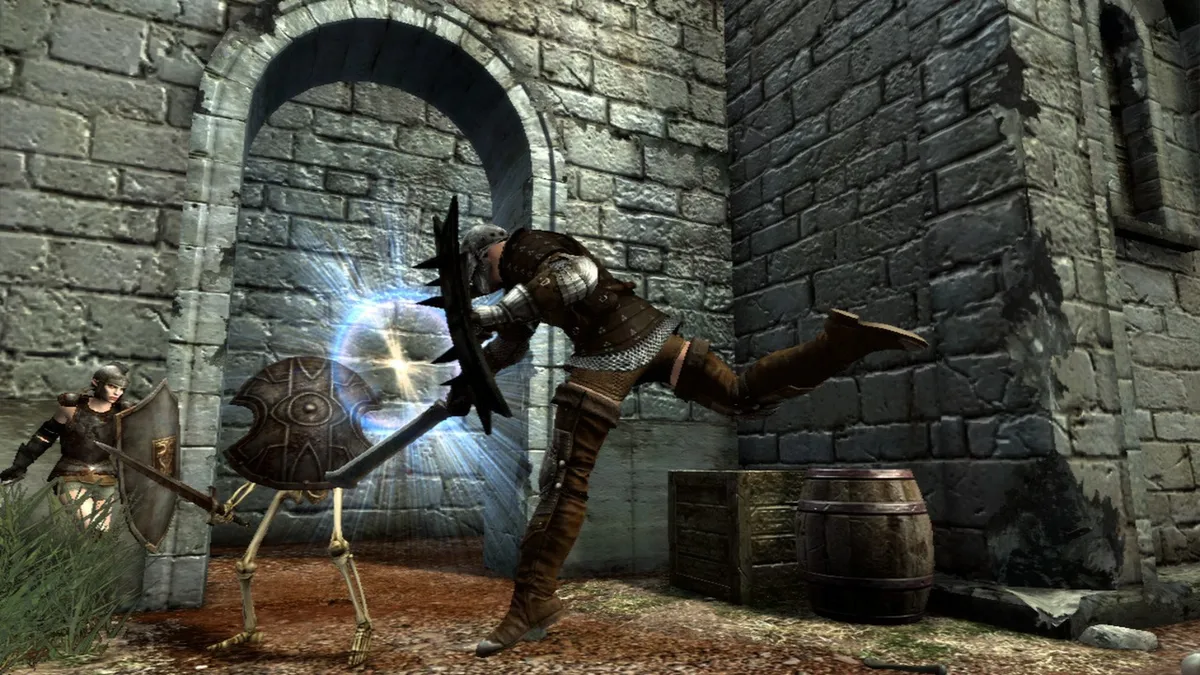
The only documented progression or customization statement is a build instruction: combine your physical skills with passive abilities to create the ultimate warrior. That tells us two things. Physical skills exist as a category to develop, and passive abilities exist as something that modifies or complements them. The stated aim of combining them is a stronger fighter, described as the ultimate warrior. It is a directive about how to invest in a physical-style character rather than a list of specific skills or ability effects.
What the source does not supply is equally worth noting for how this shapes play decisions. There is no documented list of skills, no passive ability effects, no progression currency or unlock schedule, and no stated cap or level system. So the honest takeaway for a new player is directional: if you favor the physical side described in the arena, the published guidance is to pair physical skills with passive abilities. Anything more specific, such as which combination is strongest, would be invented rather than documented.
The Shared Goal: Becoming the Champion
The stated aim is deliberately simple. Their goal is simple: to become the champion, the description says of the participants. That line is short, but it does real work in the article: it unifies the cooperative and competitive arrangements under one objective. Whether you are helping a friend survive a difficult mission or sparring against that same friend in training, the documented framing is that everyone in the arena is pursuing the champion's title.
There is a productive tension in that framing. If the underlying ambition is individual, then the friends who help with a difficult mission are also competitors for a goal only one participant can hold, while sparring against them counts as training toward the same end. This is why the description pairs the champion goal with lines about shattered alliances and every warrior for themselves. The match design and the social tone point in the same direction: cooperation helps you endure hard missions and reach the arena's larger aim, competition sharpens you against the people you cooperate with.
Starting Guidance Backed by the Description
For a first session, the documented advice is to bring friends. The game supports solo play, but its described advantages are social: ask for your friends' help when a mission is difficult, and team up with them online to take on even more furious battles. If the aim is to become the champion, the description's own logic suggests using cooperation as the route through hard content, and treating sparring as the way to compete with those same friends.
On the fighting side, decide early whether you lean toward short-range magic or toward physical combat, since the description presents them as the two documented options. If you go physical, follow the stated build guidance and pair physical skills with passive abilities toward the ultimate warrior. Fight friends in training to test what you learn, and expect each match to be short, around ten minutes, so a session can hold several attempts and several opponents without demands on many hours of time.
Scroll sideways to see the full table →
| Field | Detail |
|---|---|
| Title | Clan of Champions |
| Release year | 2012 |
| Platform | Windows |
| Developer | ACQUIRE Corp. |
| Publisher | NIS America, Inc. |
| Genre | Action |
| Online play | With or against friends |
| Match length | Around ten minutes |
| Combat options | Short-range magic spells or brutal physical combat |
| Stated build guidance | Combine physical skills with passive abilities to create the ultimate warrior |
| Stated goal | To become the champion |
Sources & further reading.
- Clan of Champions — official game profileRetrieved Oct 25, 2026
First published .