 THE GAME ARCHIVE
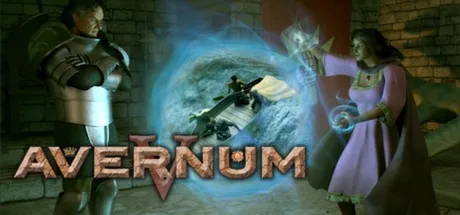
What Avernum 5 Offers
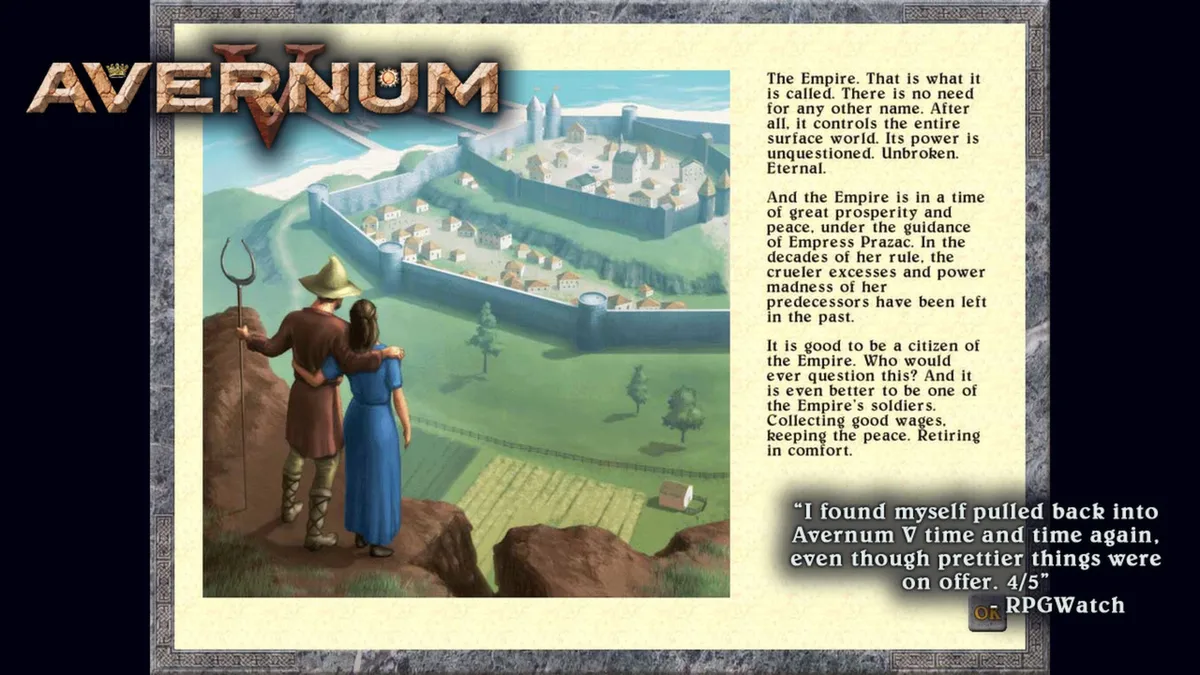
Avernum 5 is a role-playing game developed and published by Spiderweb Software for Windows, with a 2012 release date. It is listed in the RPG and Indie genres. Rather than a single overworld, it takes place in an enormous subterranean nation described as a land underground full of rogues, misfits, and brigands struggling for survival and wealth in monster-infested darkness. The game is the second chapter in the Great Trials Trilogy, a set of three games about the land's struggles against powerful forces that seek to destroy it.
The pitch is built on scale and variety. Players explore a gigantic world containing hundreds of quests, multitudes of side dungeons, and many hours of adventure. The storyline is described as fascinating, full of betrayal, mystery, and unexpected turns, and combat features clever enemies and dozens of interesting scripted encounters. Character growth is tied to learning over 50 spells and battle disciplines, while loot and equipment come from hunting hundreds of magical items or finding the materials to craft new, unique equipment.
Spells and Battle Disciplines: The 50+ Ability Pool
The central character-building promise is that you can learn over 50 spells and battle disciplines. The source treats both as learnable abilities that sit under one combined count. That framing matters for play: a party has a broad menu of magical and martial techniques to acquire, and the game's own description presents learning them as a core activity alongside exploration. The count itself is the documented scale; the source does not break it down into individual spell names, schools, prerequisites, costs, or separate spell-versus-discipline totals.
Because battle disciplines are named alongside spells, the ability pool is not purely magical. A character can be developed with both cast techniques and combat techniques in view, and the game's encounters are described as featuring clever enemies. The practical implication is that the ability list is meant to be used: scripted fights and enemy behavior are the situations where learned spells and disciplines matter. The source does not state how abilities are unlocked, whether they are purchased, trained, found, or tied to leveling, so no acquisition route should be assumed beyond the fact that they can be learned.
Exploring a Gigantic Subterranean World
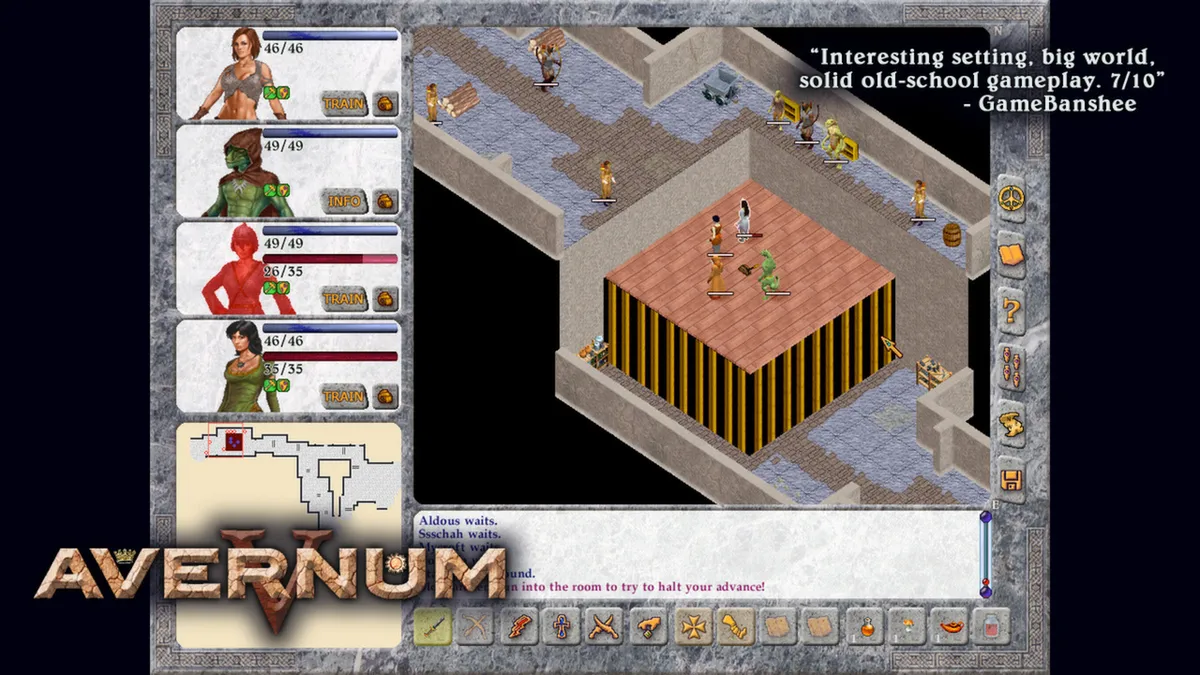
Exploration is the frame that holds the other systems together. The game promises a gigantic world with hundreds of quests and multitudes of side dungeons, and it places that content inside a subterranean nation rather than a surface kingdom. The setting is described as a land underground full of rogues, misfits, and brigands struggling for survival and wealth in monster-infested darkness. That description establishes the social texture of the world: the people encountered are not simply a unified populace but a mix of outcasts and opportunists surviving in a dangerous environment.
The quest and dungeon counts give players a reason to move through that world in many directions. Hundreds of quests and multitudes of side dungeons imply that the main storyline is not the only path through the content; the game explicitly advertises many hours of adventure. The storyline itself is described as fascinating and full of betrayal, mystery, and unexpected turns, so questing carries narrative weight as well as spatial exploration. The source does not describe quest structure, quest logs, faction systems, or how side dungeons are gated, so those specifics remain undocumented.
Combat: Clever Enemies and Scripted Encounters
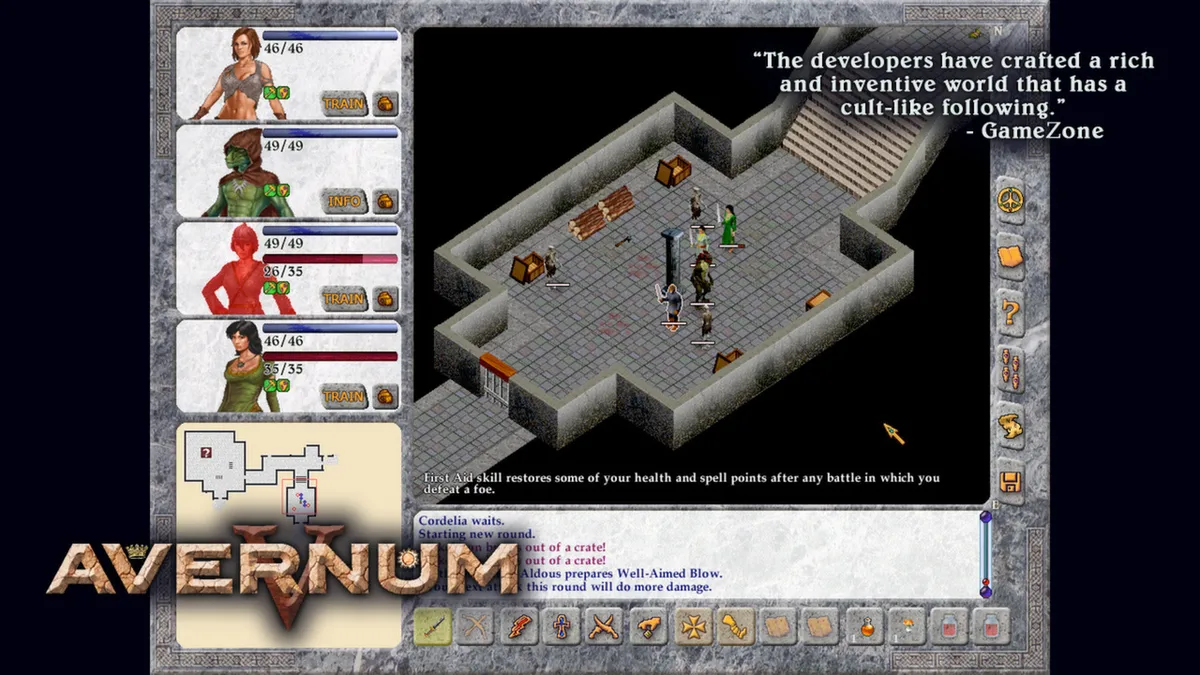
Combat is framed around clever enemies and dozens of interesting scripted encounters. Those two details work together: enemies are characterized as intelligent rather than merely plentiful, and a substantial number of fights are scripted rather than left to random generation. For the player, that means encounters are positioned as designed events within the world, and the over-50 spells and battle disciplines are the documented abilities brought to them. The source does not describe the combat engine, turn order, positioning, damage formulas, or difficulty settings, so the feature can only establish that combat is built around those enemies, encounters, and learnable techniques.
The encounters also connect to the storyline. Avernum 5's narrative is described as full of betrayal, mystery, and unexpected turns, and the game is the second chapter in a trilogy about the land's struggles against powerful forces seeking to destroy it. Scripted fights fit that structure because they can be placed at specific points in a plot rather than scattered randomly. The setting reinforces the same idea: monster-infested darkness is the environment in which clever enemies and scripted encounters occur, and the subterranean nation of rogues and misfits is the society that frames them.
Loot and Crafting: Items, Materials, and Equipment
Equipment is described through two routes. Players can hunt for hundreds of magical items, or they can find the materials to craft new, unique equipment. The first route is treasure hunting at scale: hundreds of magical items implies that loot is a major reward category across the world and its dungeons. The second route is crafting from found materials, which gives collected resources a use beyond being sold or carried. The source does not name individual items, crafting recipes, material types, or crafting stations, so the precise economy remains undocumented.
Those two routes sit alongside the ability system. A character learns over 50 spells and battle disciplines, and equipment found or crafted is the gear that accompanies those abilities into clever enemies and scripted encounters. The source presents loot, crafting, and abilities as separate advertised features rather than describing how they interlock numerically, so the safest reading is that the game offers both treasure hunting and material-based crafting as parallel equipment paths within the same gigantic world of quests and side dungeons.
Progression and Story Context
Avernum 5 is the second chapter in the Great Trials Trilogy, three games that tell the tale of the land's struggles in the face of powerful forces that seek to destroy it. That places the game's own storyline, with its betrayal, mystery, and unexpected turns, inside a larger three-part narrative. The source does not describe character levels, experience points, skill trees, or how the 50-plus abilities are earned over time, so progression should be understood through the documented scale of content and the advertised ability pool rather than through an assumed leveling chart.
Within that structure, the player's documented progression is breadth: more than 50 learnable spells and battle disciplines, hundreds of quests, multitudes of side dungeons, hundreds of magical items, and crafting from materials. Those numbers describe the amount of content and the range of options rather than a prescribed route. The game's description emphasizes exploring the gigantic world and encountering clever enemies in dozens of scripted encounters, which suggests that progression is experienced through travel, quest completion, and combat rather than through a single linear upgrade path.
Source-Backed Starting Guidance
Because the source documents scale rather than specific builds, the useful starting guidance is to treat the advertised systems as areas to engage rather than as a fixed recipe. Learn spells and battle disciplines, since the game presents more than 50 of them as learnable. Expect clever enemies and dozens of scripted encounters, so those learned abilities have designed fights to be used in. Hunt magical items or gather materials to craft new, unique equipment, because both routes are advertised as ways to improve gear. And expect hundreds of quests and multitudes of side dungeons, which means exploration is a major part of the play time.
The source does not describe a tutorial, starting class, recommended party composition, or difficulty setting. Guidance should therefore stop at the advertised feature set: abilities to learn, enemies and encounters to face, loot and crafting to pursue, and quests and dungeons to explore. Any claim about which spells to learn first, how to allocate points, or which crafting materials matter would go beyond the supplied facts.
Edition and Platform
The supplied profile lists Avernum 5 for Windows with a 2012 release date, developed and published by Spiderweb Software. It is categorized as RPG and Indie. The source does not describe other platforms, later remasters, bundled editions, or differences between the original release and any current package, so the profile should be read as covering the documented Windows release.
Scroll sideways to see the full table →
| Fact | Documented detail |
|---|---|
| Game | Avernum 5 |
| Developer / Publisher | Spiderweb Software |
| Platform | Windows |
| Release year | 2012 |
| Genres | RPG, Indie |
| Spells and battle disciplines | Over 50 learnable |
| World content | Hundreds of quests, multitudes of side dungeons |
| Encounters | Clever enemies, dozens of interesting scripted encounters |
| Equipment | Hundreds of magical items; materials to craft new, unique equipment |
| Story | Second chapter in the Great Trials Trilogy; betrayal, mystery, unexpected turns |
Sources & further reading.
- Avernum 5 — official game profileRetrieved Oct 25, 2026
First published .