 THE GAME ARCHIVE
Soldiers Who Refuse Orders: Stamina, Mental Condition, and Retreat
In Close Combat, issuing an order does not guarantee that the soldiers receiving it will advance. Their responses depend on ability, strength, stamina, and mental condition, with battlefield circumstances affecting the men under your command. Stamina belongs alongside mental condition here: the simulation accounts for both physical capacity and psychological state rather than treating obedience as automatic. Your task is therefore not simply to tell troops where to go. You must also respond when the soldiers carrying out a plan stop moving or begin withdrawing instead of continuing the advance.
The game's described assault illustrates that gap between instructions and action. Exhausted troops are taking casualties under heavy fire when the commander orders armor forward, with two infantry platoons following. Some men refuse to move; others retreat, leaving the ordered advance only partly carried out. These are distinct responses to battlefield pressure: soldiers may remain where they are or move back rather than follow the intended movement. The commander must adapt orders to that unfolding situation, dealing with the troops' actual behavior rather than assuming that an instruction has been executed.
Real-Time Leadership Through Point-and-Click Commands
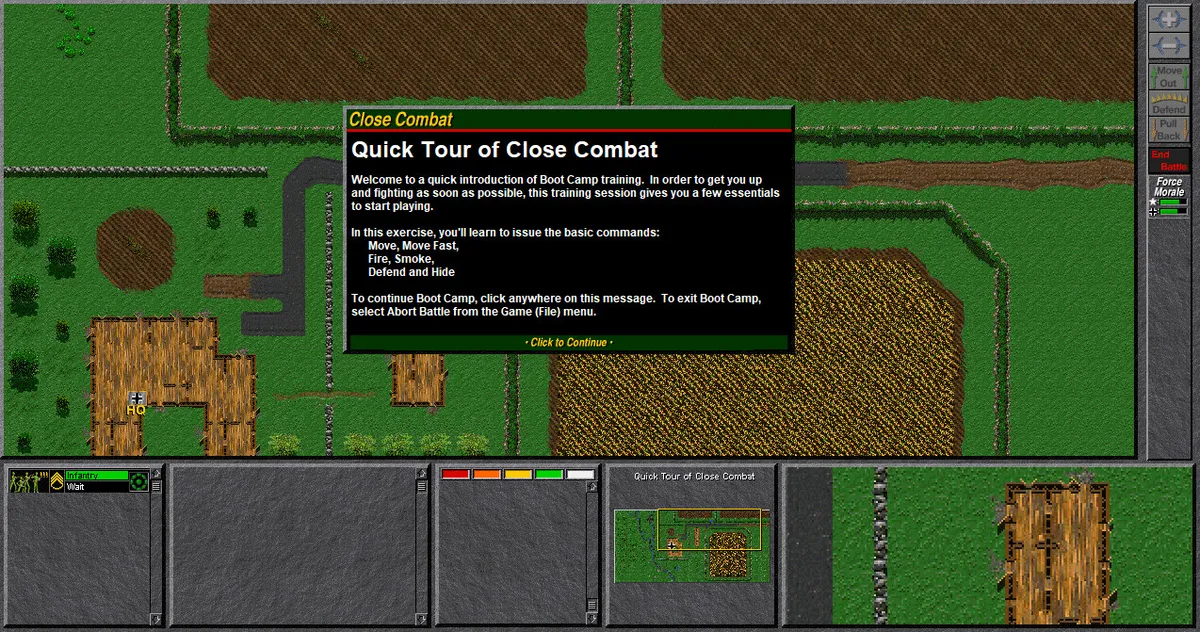
Close Combat puts command inside a continuously running battle. You issue instructions through point-and-click controls while the fighting unfolds in real time, making the interface a means of directing an ongoing engagement rather than submitting a separate turn. The same control method also provides quick access to information. Giving orders and consulting information are therefore both part of the commander's work during combat, with point-and-click interaction serving those two practical purposes.
The interface handles issuing a command; leadership concerns what that command is intended to accomplish. Close Combat places victory and defeat on leadership and strategic skill, so operating the controls is only one part of directing the battle. Its information access belongs alongside its order system: you can consult information as well as instruct your forces. Together with continuous real-time action, those functions define the section's central task—using the command interface to put a strategy into action during the fighting.
Before Battle: Deploying American or German Weapons, Vehicles, and Troops
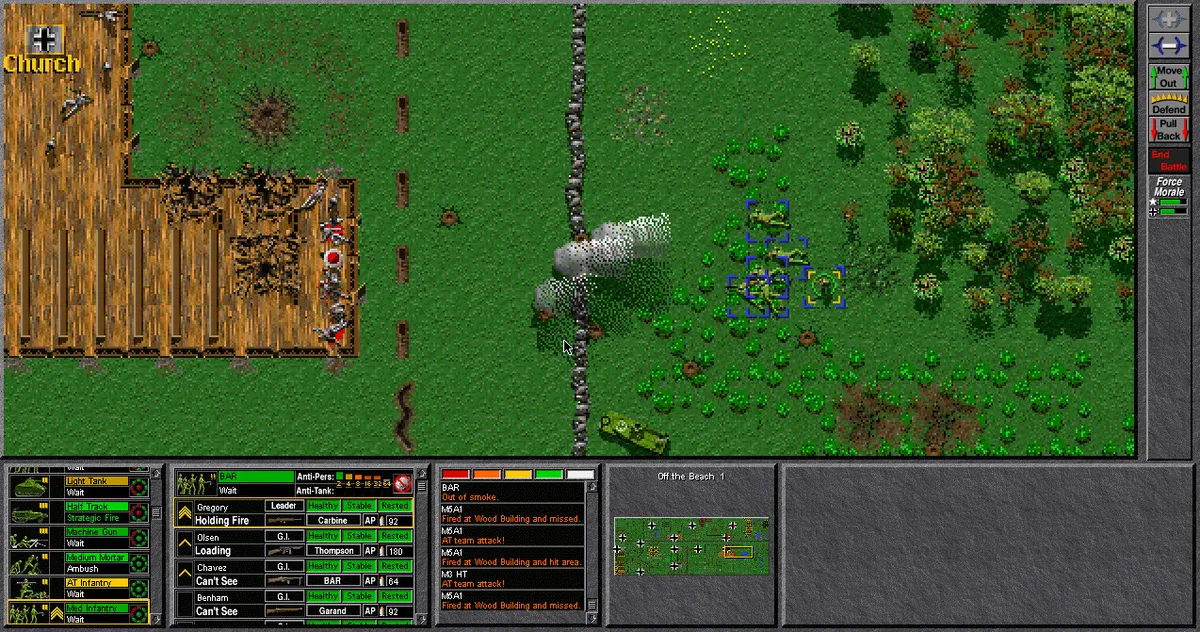
Before combat begins, Close Combat gives you a deployment phase in which to arrange your forces. The assets you deploy include weapons, vehicles, and troops, making preparation a task that covers both soldiers and equipment rather than infantry alone. This is a distinct part of commanding the force: deployment takes place before the battle starts, so your first job is to put those assets into position, not to issue orders during an engagement already underway.
You can command either American or German forces. Alongside that choice of side, the game supplies detailed information about each weapon, vehicle, and troop asset, giving preparation a concrete reference point: the forces being deployed have individual descriptions to consult. The equipment and troops are presented as realistic, with information attached to each rather than only a general description of the army. Choosing a side, examining its assets, and deploying the force establish the pre-battle portion of command.
World War II Battlefields: Bridge Objectives and Destructible Terrain
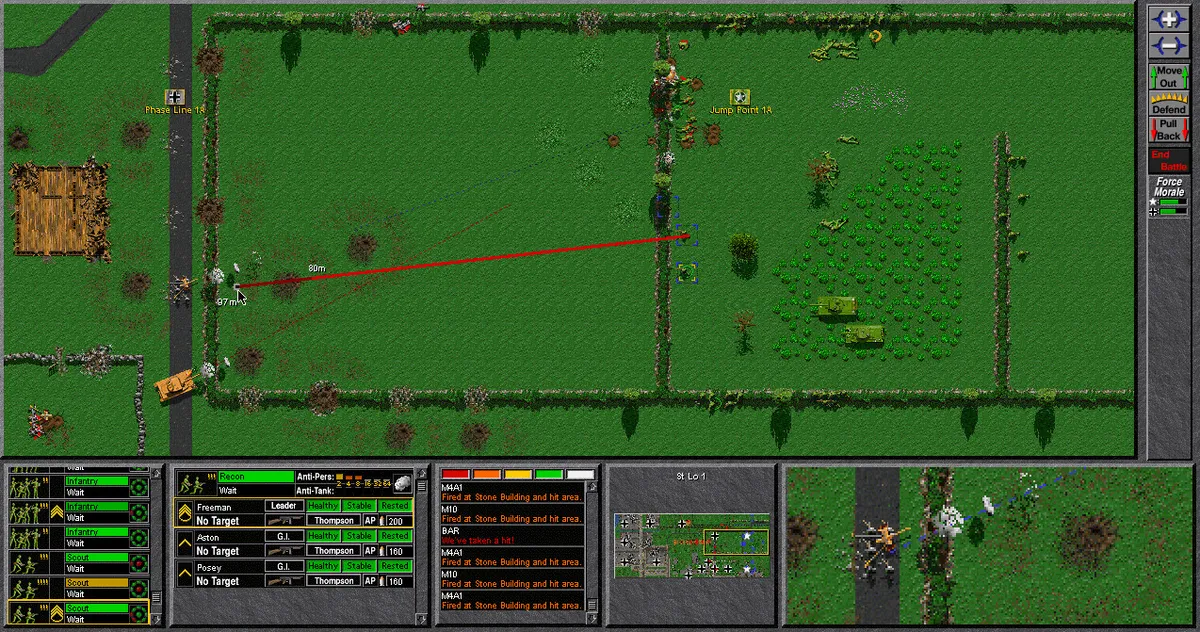
Close Combat frames its engagements as historically accurate World War II situations fought under authentic conditions. The bridge assault gives that setting a specific objective: capture the crossing under heavy fire before time runs out. It is four in the morning, and the battle is already costing lives. The objective is not simply to exchange fire with the enemy; the force has a particular place to take and limited time to take it. That combination defines the immediate command problem, with the bridge remaining the goal despite the pressure surrounding its capture.
The battlefield can also be modified: you can blast holes in buildings and hedgerows, while mortar fire leaves craters in the landscape. The terrain itself can bear the marks of the fighting.
Sources & further reading.
- Close Combat — official game profileRetrieved Nov 23, 2026
First published .