 THE GAME ARCHIVE
Boost, Flip, Spin and Slide Through Physics-Driven Kart Combat
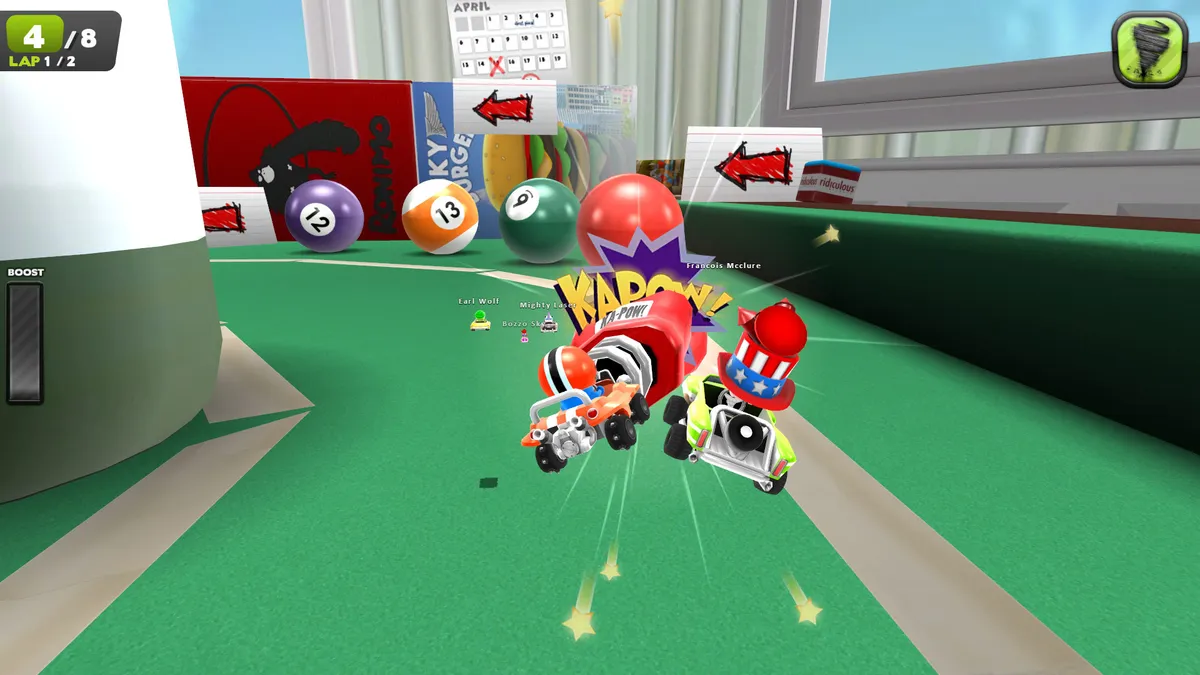
Zero Gear puts physics-driven movement at the center of its kart combat, advertising boosting, flipping, spinning and sliding as part of the action. Those four verbs give its driving a vocabulary beyond simply steering a kart around a course: the vehicle is presented as something that can turn, tumble and slide through the competition. The emphasis is on movement as spectacle as well as participation, with the official description framing the game around exaggerated vehicular mayhem. It establishes an energetic style without specifying how individual maneuvers are performed or how they affect the kart.
That movement belongs to a combat game, not just a demonstration of kart handling. Zero Gear’s description brings physics-led action and weapons together within the same rounds, making the small vehicle the focus of both driving and armed competition. The appeal presented here is the combination: an animated repertoire of boosts, flips, spins and slides alongside the disruption promised by kart combat. The supported description does not explain whether particular maneuvers counter weapons, cause damage or provide protection, so those relationships should remain open rather than being turned into undocumented tactics.
Customize Kart and Character Before Online Matches for Up to Eight
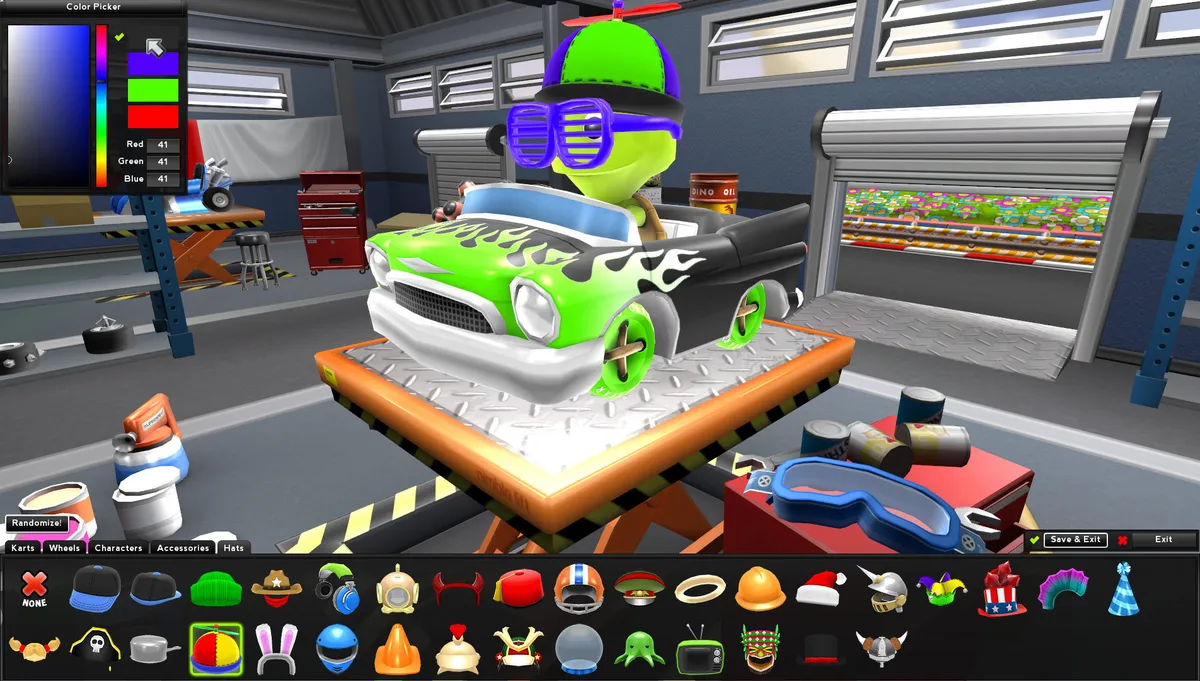
Zero Gear’s pre-match preparation covers both the kart and its driver. You can customize the vehicle and the character before entering a game mode, making the pair—not just the kart—the focus of this setup stage. The documented sequence is straightforward: outfit your kart, customize your character, then take them into competition. Customization belongs before the match rather than being one of the driving actions performed during it.
The competition itself is online multiplayer, with support for up to eight players. That figure is the stated player limit, not a requirement that every match contain eight participants. Together, these features establish the basic setup for a session: prepare a kart and character, enter a mode, and compete online within that eight-player ceiling. The customizable driver and vehicle are the starting point for the multiplayer kart combat.
Race, Tag, Goal and Target: Multiple Modes and Over 15 Maps
Zero Gear’s competitive lineup reaches beyond racing, with Race, Tag, Goal and Target among its named modes. Race is therefore one part of the selection rather than the sole format around which competition is organized. The official description lists these four modes without detailing their rules or victory conditions, so their names establish the breadth of the offering without explaining exactly how each contest plays out.
The map selection supplies a second measure of that variety: Zero Gear advertises more than 15 maps for competition. That means at least sixteen maps across the game’s roster, not a confirmed sixteen for every mode. No map names, layouts or mode-to-map assignments accompany the count. Alongside the named formats, it establishes a competitive offering with multiple settings, while leaving the precise relationship between individual maps and modes unspecified.
Weapons and Power-Ups: Tornadoes, Repulsor Shields and L.U.V. Bots
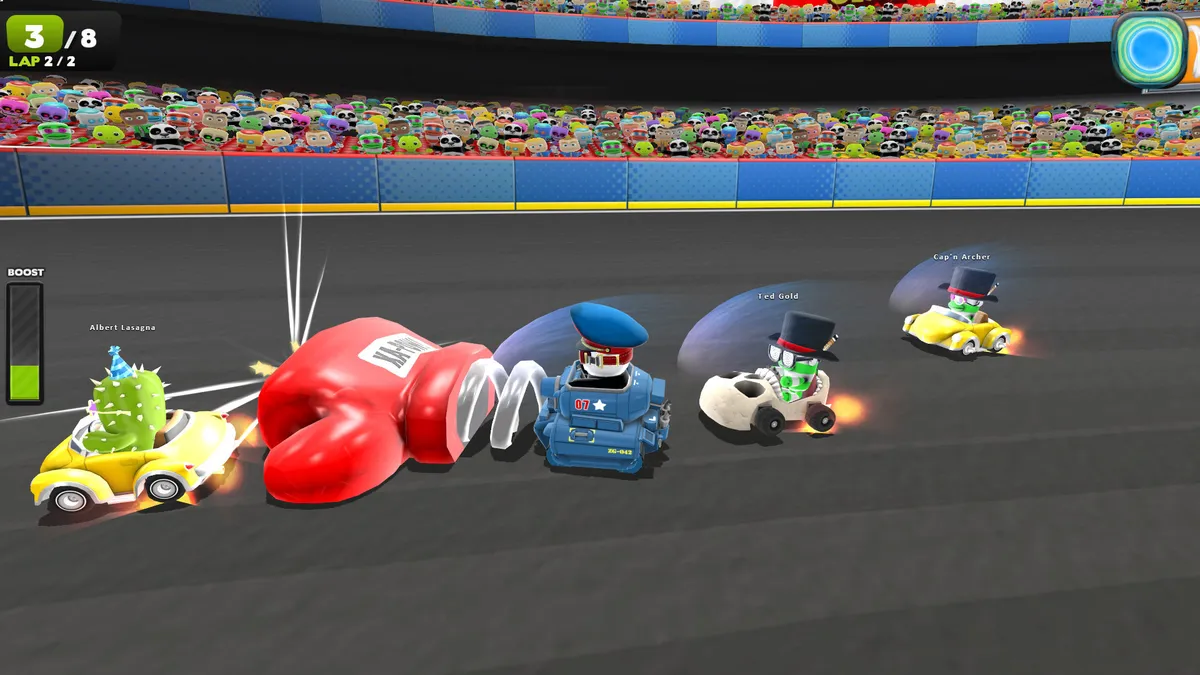
Zero Gear’s equipment lineup includes tornadoes and repulsor shields among its weapons and power-ups. The pairing gives the kart-combat arsenal a weather-themed entry alongside one named for shielding and repulsion. Both belong to the same advertised selection of outlandish equipment: the game presents its weapons and power-ups together, with these two items serving as named examples rather than a complete inventory.
The third named example is the love-seeking L.U.V. bot, which adds a romantic joke to the equipment list. Its billing contrasts with the tornado’s weather imagery and the repulsor shield’s protective terminology. Taken together, those three names establish the comic tone of Zero Gear’s weapons and power-ups, putting a love-themed robot in the same kart-combat arsenal as a tornado and a shield.
Sources & further reading.
- Zero Gear — official game profileRetrieved Nov 23, 2026
First published .