 THE GAME ARCHIVE
Point-and-Click Adventure, Classic JRPG Without the Battles
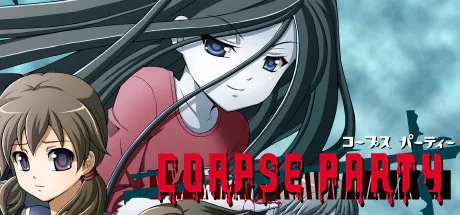
Corpse Party approaches play as a hybrid of a point-and-click adventure game and a classic Japanese role-playing game stripped of battles. The 16-bit-style 2D visuals of this remake place the action inside Heavenly Host Elementary School, and the documented loop replaces combat encounters with navigation, examination, and conversation. Because the game operates in adventure mode, progress comes from where the characters travel and what they do there rather than from winning fights; the story branches accordingly. The 2008 remake also expands the cast and adds more detailed character interactions, giving conversations and encounters with other characters a larger role than in the earlier independent RPG Maker version.
Exploration is the central mechanic: players may search every corner of the school, and that freedom feeds directly into the branching structure. The documented rules tie the story's course and its final conclusion to where the characters go and what they do, so covering more of the building and choosing different destinations produces different outcomes. In practice, scouring rooms and corridors is not optional flavor but the act that steers the plot. This is how the point-and-click adventure frame and the battle-free role-playing structure meet: movement, investigation, and interaction with characters generate the divergent routes instead of a combat system.
Examining Objects and Bodies: How the Horror Tale Unfolds
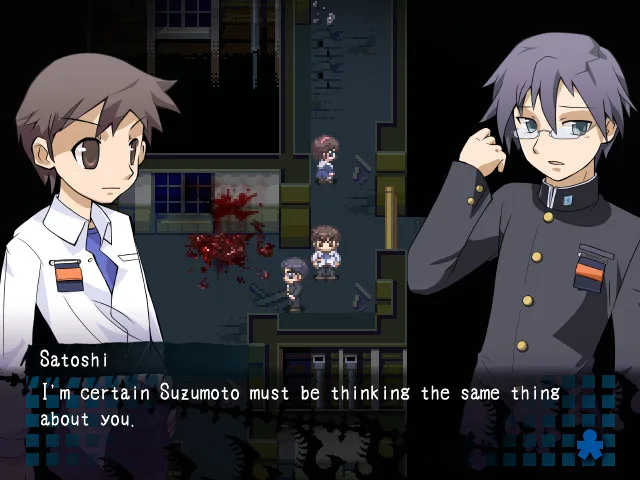
Within Heavenly Host Elementary School, the act of walking up to an object or a body and examining it is the mechanism that moves the narrative forward. Each inspection feeds into a horror tale that spans more than fifty years, so the story is assembled from the details characters uncover in the building rather than delivered in a single opening. The documented rules connect these examinations to the outcome: choices determine how the story ends and which characters survive it. Examining is therefore tied to the branching structure, since the discoveries made while checking surroundings are part of what sets the ending and the survival list.
The examinations take place in an atmospheric 2D environment, and the presentation shapes how those scenes read. The game uses 16-bit-style 2D visuals modeled after the very first RPG Maker Corpse Party, and that retro look is described as creating an intentional disconnect that sparks the imagination. The same claim places the separated groups of two or three inside a run-down, otherworldly elementary school full of vengeful spirits, deadly mysteries and corpses, so the objects and bodies being examined belong to that setting. The visual style and the school setting work together as the frame within which the long horror tale unfolds through inspection.
Split Groups and the Fight to Escape Heavenly Host
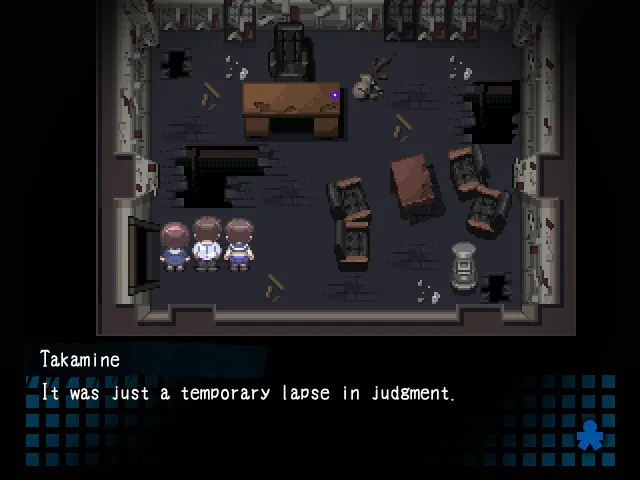
The cast is divided before the horror begins: nine main characters and several side characters are split into groups of two or three and trapped inside a run-down, otherworldly elementary school. That building is populated by vengeful spirits, deadly mysteries and corpses, so each small party faces the same threatening setting without the support of the full roster. Because the players take control of all nine main characters and the side characters across these scattered groups, the story follows several separate threads of people navigating the school at the same time.
Escape is not a matter of simply finding a door. The vengeful spirits of elementary-aged children threaten both the lives and the sanity of the trapped groups, and the only hope of escape, much less survival, is to uncover the chilling details surrounding the murders of those trapped in the school before them. That objective ties the investigation to the ending: player choices determine both how the story ends and who lives to see it through, so which characters survive depends on the decisions made while digging into the earlier victims' deaths.
Five Main Chapters, Bonus Chapters and a Fast-Forward for Ending Hunters
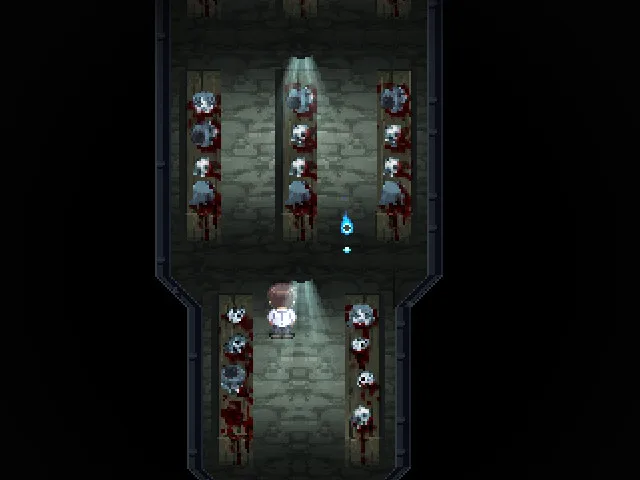
The story itself is organized into five main chapters, and each one carries its own multiple endings rather than funneling every branch toward a single shared finale. Spread across the whole game are dozens of endings, described as shocking and gruesome, so chasing down each conclusion means replaying scenes repeatedly. The scenes in these chapters also differ from those found in the earlier PSP and Nintendo 3DS versions, so the chapter content here is not identical to those counterparts.
Beyond the five main chapters, four bonus chapters extend the package. One of them is a PC-exclusive retelling of the Tooth story from Corpse Party: Book of Shadows, rebuilt with added content in the classic Corpse Party adventure style, so it plays as examination-driven adventure rather than something separate. For anyone hunting every ending, a fast-forward function is provided specifically to make replays quick. The voice cast is retained too, with more than 5,000 lines of spoken Japanese dialogue from the original indie voice actors accompanying the action.
Sources & further reading.
- Corpse Party — official game profileRetrieved Oct 28, 2026
First published .