 THE GAME ARCHIVE
Time Is Money: Core Objectives and Scoring
Every run of Crazy Taxi is built on a single continuous rule: time is money. You drive a cab through traffic-packed streets, and the clock is the resource you spend to reach each fare. Fares must be scared up, meaning you seek out passengers and race to deliver them before the timer runs dry. The stated objective is to scare up the most fares, so the winner is the cabbie who converts driving time into the largest collection of completed runs. Nothing pauses the meter for sightseeing; the frantic pace comes from treating every second as currency.
Crazy Combo is the named scoring mechanic that turns aggressive driving into Crazy Money. You string together the stunt and driving actions the game recognizes as a combo, and the payout of that sequence is Crazy Money, the currency of a successful run. The documented loop places Crazy Combo directly alongside barreling through traffic and hurdling off parking garages, so combos are chained while you barrel, hurdle, and race toward the next fare. Because only the Craziest Cabbies come out victorious, the scoring rule rewards players who keep a combo alive as they collect fares.
Arcade and Original: Two Modes, One Cab
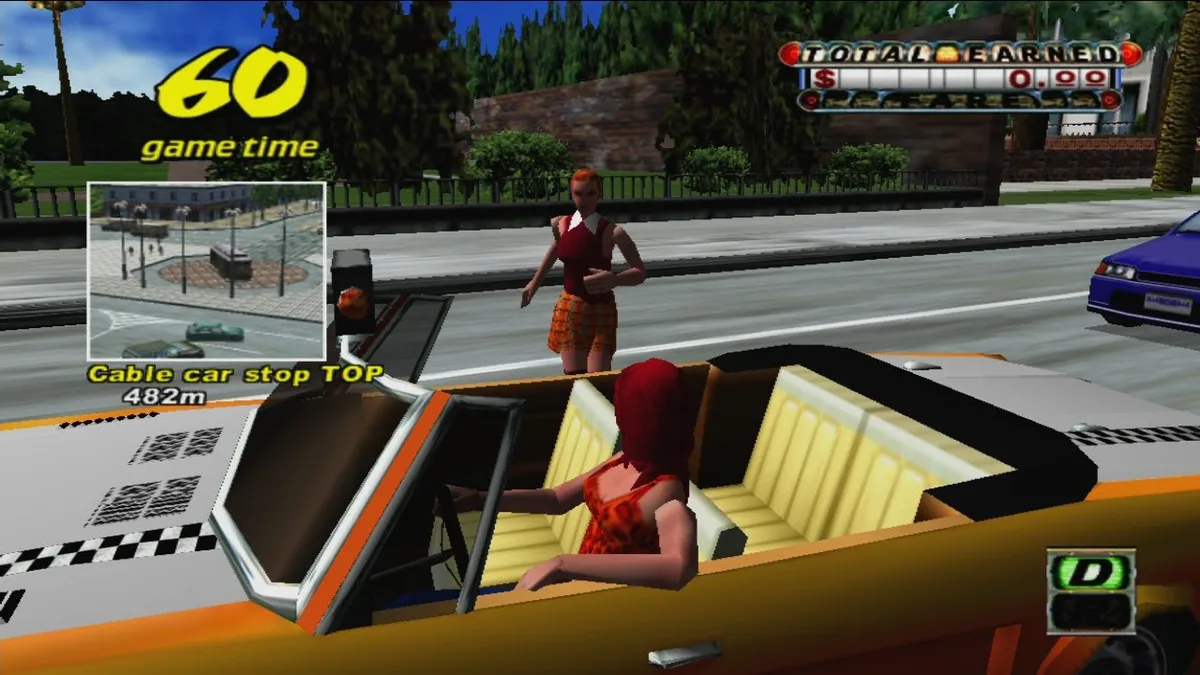
Crazy Taxi is an action racing game from Sega, released for Windows in 2011. The official description states that the game features two distinct ways to play: Arcade Mode and Original Mode. These two modes are the only documented options for the core driving experience, and no additional modes are mentioned. The game also includes sixteen mini games designed to hone your taxi driving skills, separate from the two main modes. The core objective remains consistent across both: barrel through traffic-packed streets, hurdle off parking garages, and perform Crazy Combos to earn Crazy Money in a frantic race to scare up the most fares.
Arcade Mode and Original Mode offer a variety of gameplay according to the official feature list. The specific settings, rules, or differences between these two modes are not described in the available documentation. Players can expect to drive a taxi, pick up fares under time pressure, and use the city's ramps, hills, cliffs, and parking garages for stunts. The Crazy Combo mechanic lets you chain driving actions for Crazy Money, and only the Craziest Cabbies come out victorious. The sixteen mini games provide a separate way to practice and refine taxi driving skills outside the two main modes.
Sixteen Mini Games: Practice Makes Perfect
Crazy Taxi's feature list describes sixteen mini games whose stated job is to hone taxi driving skills, and they sit apart from the two main modes. The same feature list names the core actions a cabbie repeats: barreling through traffic-packed streets, hurdling off parking garages, and chaining Crazy Combos toward Crazy Money in a frantic race to scare up the most fares. The mini games give that skill set a separate place to be drilled, so a player can work on the driving and stunt actions the city demands outside the fare chase itself.
The mini games are documented only as a set of sixteen aimed at honing taxi driving skills, so their individual rules, scoring, and line-up are not spelled out; the count is what the description gives. The split it draws is between Arcade Mode and Original Mode, which supply a variety of gameplay, and the sixteen mini games that stand beside them for practice. The city's extra large hills, angled ramps on parked transporters, tall cliffs, and steep-drop parking garages are the documented stunt surfaces those drills would prepare a cabbie to use. Only the Craziest Cabbies come out victorious, and the practice format arrives without changing the objective.
Stunts, Jumps, and the City as a Playground
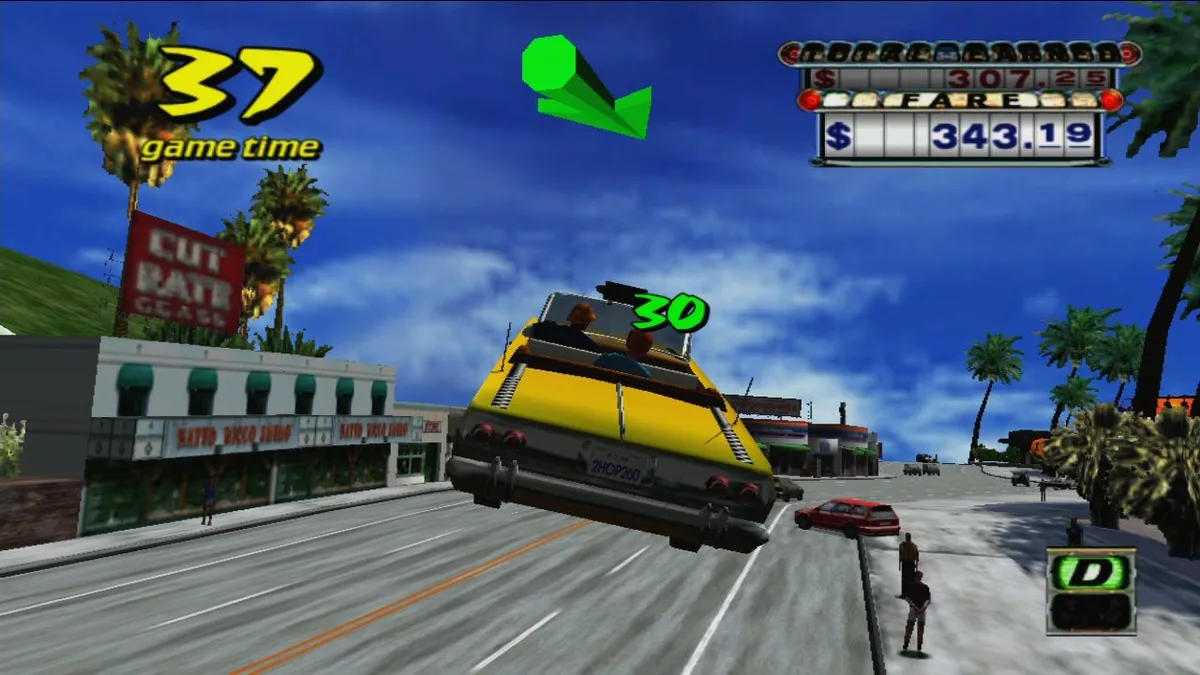
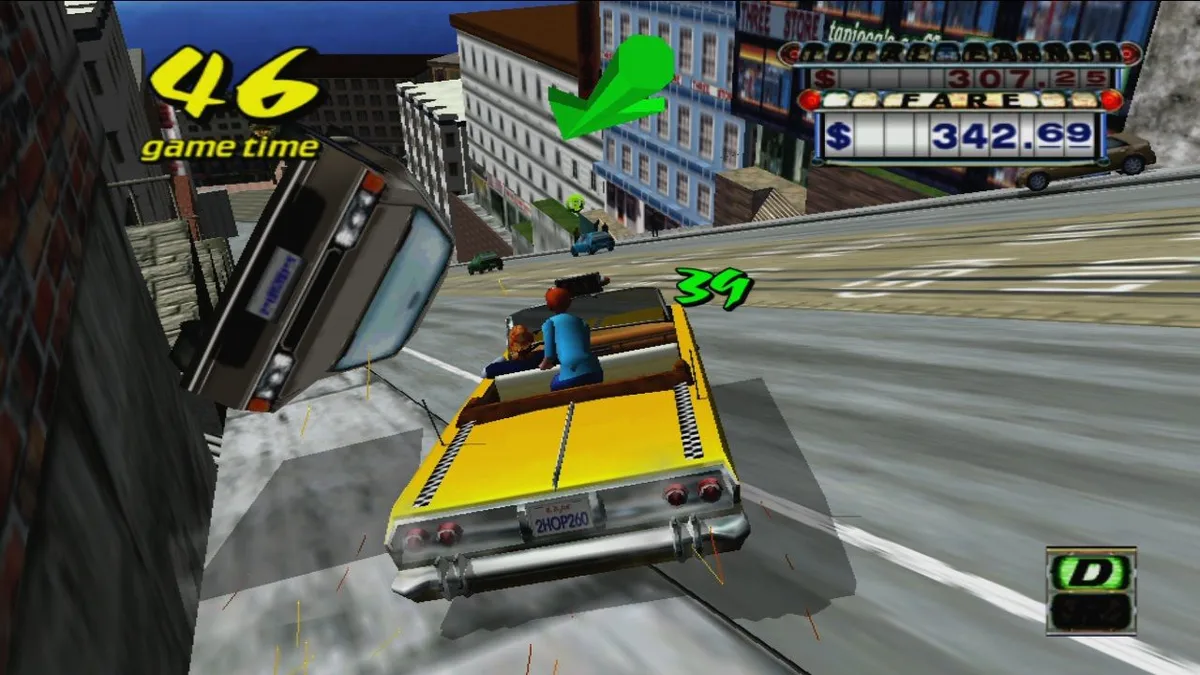
The city itself is built as a stunt course. Its extra large hills are there for extra long hang time, and parked transporters carry conveniently angled ramps you can hit to launch the cab. Tall cliffs and parking garages with steep drops supply the biggest falls, which is why hurdling off parking garages sits alongside barreling through traffic-packed streets as a documented core action. Each surface has a stated purpose: the hills for hang time, the angled transporter ramps for takeoff, and the cliffs and garages for steep drops.
Traffic doubles as an obstacle course. Painfully slow buses and cable cars are documented specifically to frustrate and annoy, so the same streets that feed your Crazy Combo also place moving roadblocks in your line. The feature list also names occasional deep sea exploration opportunities, which sit outside the ordinary street-and-garage stunt surfaces; where the game sends you there, both the slow buses and cable cars and the deep sea excursions belong to the same city the fares cross. The stunt surfaces, the traffic, and the deep sea stops all share one race to scare up the most fares.
Sources & further reading.
- Crazy Taxi — official game profile Retrieved Oct 16, 2026
First published .