 THE GAME ARCHIVE
A Time-Travel FPS Through History's Darkest Hours
Darkest of Days is an action first-person shooter built around time travel, sending the player back and forth through history to relive some of mankind's most dire hours. The campaign moves through named historical settings, including the Battle of Antietam, described as the bloodiest conflict of the Civil War, as well as both World War I and World War II. Within these events the player fights through the chaos rather than simply observing it, and the stated goal is to save certain key individuals who were never meant to become involved in these monstrous events.
The design pairs first-person shooting with deliberate approaches to key battles and situations. It is not merely run-and-gun, blow-everything-up play: the player must think about how to enter a fight and must take care while firing. That care is mechanically tied to marked figures, because certain key people who were never meant to die are distinguished by a special marker. Saving these individuals is therefore a combat consideration layered onto ordinary shooting, and the game's action unfolds against wide-open environments with dozens to hundreds of characters present at once.
Save the Key Figures, Watch the Blue Aura
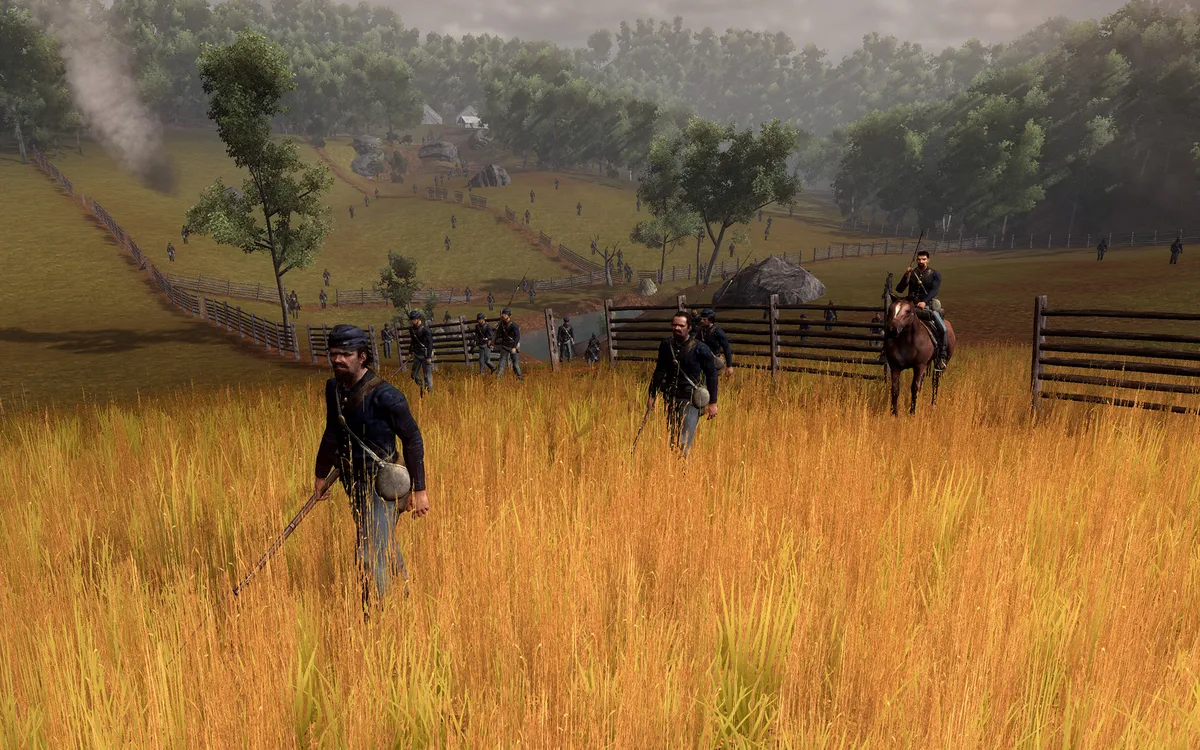
In Darkest of Days, the blue aura is the visual cue that separates ordinary targets from the people the campaign is built around rescuing. Key individuals who were never meant to become involved in these events, and who were never meant to die, are marked with that special blue glow. Because the marker sits on a living figure inside a battle, the player has to identify those marked people during firefights and hold fire around them; killing one instead of saving them carries dire consequences. The rescue objective and the shooting are therefore bound together by the same marker.
That marker changes how the player approaches combat. The game is not mindless run-and-gun, blow-everything-up play: the player must think about how to enter certain key battles and situations and must take care while fighting. Watching for the blue aura is part of that care, since a marked figure can be lost amid dozens to hundreds of NPCs moving across wide-open, dynamically lit environments. So the documented rules interact: the same battles that demand a considered approach also contain protected figures whose survival depends on the player noticing the aura before firing.
Future Weapons in Antiquity: The M-16 and Custer's Last Stand
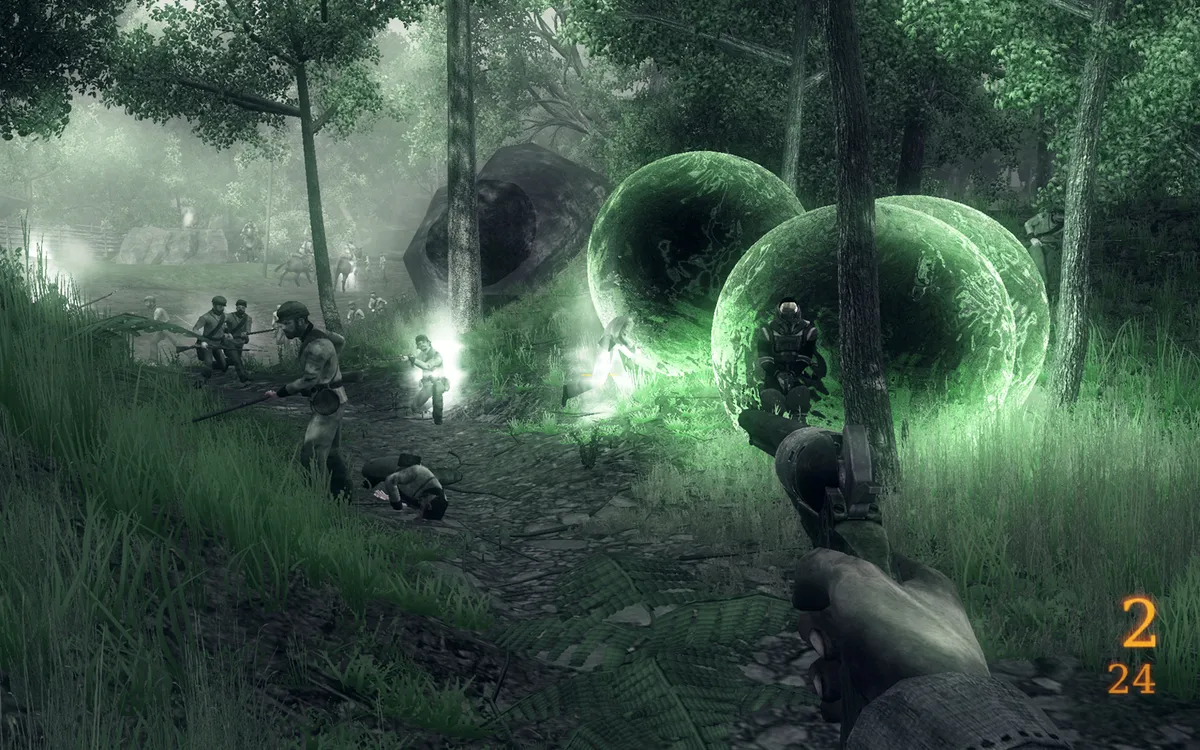
Darkest of Days puts future firearms into historical battles, though the flexibility is bounded. Not every fight or situation permits the player to carry weapons from the future, while plenty of others open the door to using them against unprepared enemies. That conditional rule shapes how an engagement is planned: a chapter may let the player bring advanced firepower to bear, and another may withhold it, so the approach to a key battle has to account for which option is actually on the table at that moment.
The same battles that may allow future weapons also contain people who must survive. Certain key figures, never meant to die, carry a special marker, and the fighting is not mindless run-and-gun or blow-everything-up play; the player must think about how to approach a situation and take care when firing. Within wide-open, dynamically lit environments holding dozens to hundreds of NPCs at once, spotting a marked figure before pulling the trigger becomes part of the tactical problem, not a separate task.
Hundreds of NPCs on the Marmoset Engine
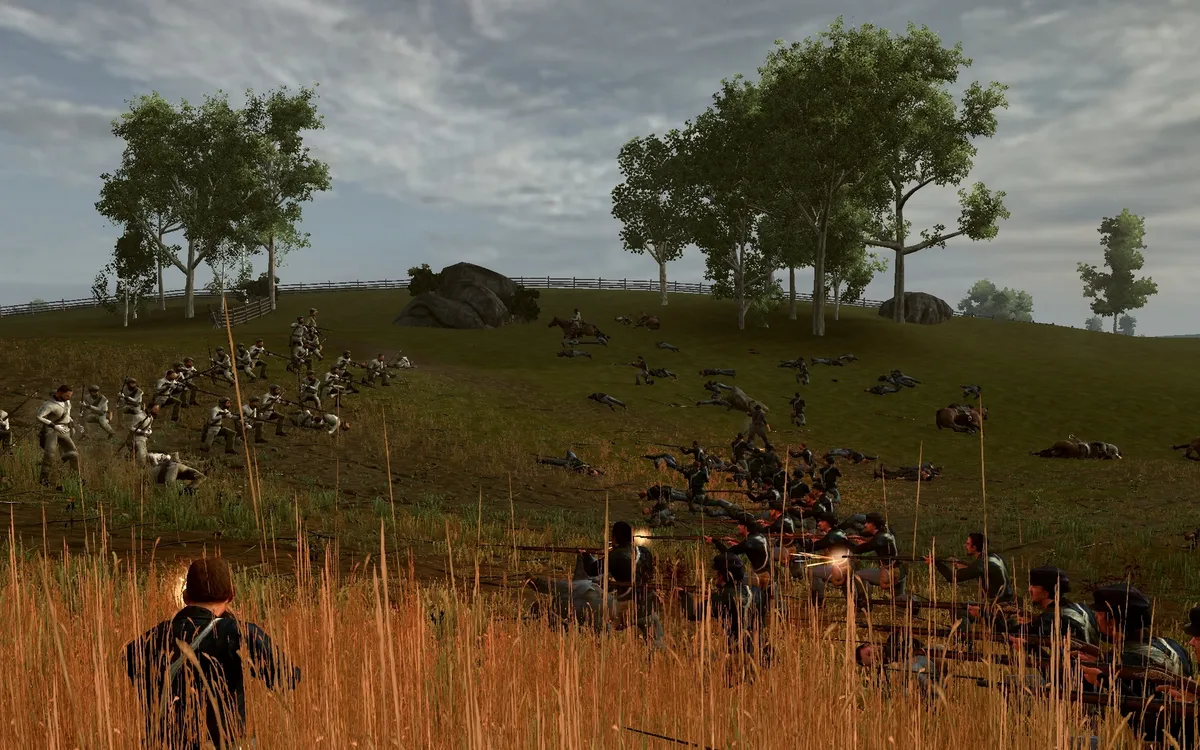
Darkest of Days runs on Marmoset, an engine built in-house by the developer 8monkey Labs rather than assembled from the Unreal toolset. That engine is the foundation for the game's graphical capabilities, and those capabilities are tied to crowd scale: battles are populated with literally hundreds of NPCs visible on the screen at the same time. The figure describes simultaneous on-screen presence, and each of those many figures runs on an advanced AI. Marmoset therefore carries both the rendering load of a crowded battlefield and the behavioral load of the computer-controlled soldiers moving within it, rather than presenting a sparse arena around the player.
The Windows version carries a Steam product date of 2010, and the developer credited for the game is 8monkey Labs. The practical shape of the Marmoset design is that historical engagements read as busy places: a player moving through a fight shares the space with a large body of computer-controlled soldiers, all rendering and reacting at once. That crowd scale is the environment in which the documented combat rules operate, rather than a change to how shooting or rescue works on its own. The stated aim is to fight through battles filled with these hundreds of NPCs on screen, with the engine carrying both the visuals and the AI behind them.
Sources & further reading.
- Darkest of Days — official game profile Retrieved Oct 20, 2026
First published .