 THE GAME ARCHIVE
A Lone Spaceman Against an Alien Zombie Attack
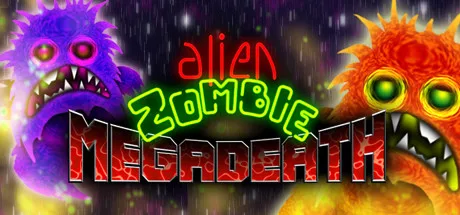
The setup is deliberately simple. A lone Spaceman is doing boring space work on a random platform in deep space when a huge, relentless alien force suddenly attacks. These are not everyday aliens but alien zombies, and even through his protective helmet the Spaceman is sickened by their smell. The player takes control of the ill-fated Spaceman and must fend off the alien zombie hordes for the sake of humanity and, as the store text jokes, the Spaceman's nostrils.
Alien Zombie Megadeath is described as a gloriously intense platform shoot-'em-up, an oldschool 2D platform shoot-'em-up with enemies coming at you from all sides, in all shapes and sizes. The player's standing instruction is blunt: you MUST blast them all to smithereens. That combination—a trapped platform worker, an encroaching zombie horde and a demand to clear out every attacker—defines the game's tone before any menu screen appears.
How the Core Shoot-'Em-Up Loop Works
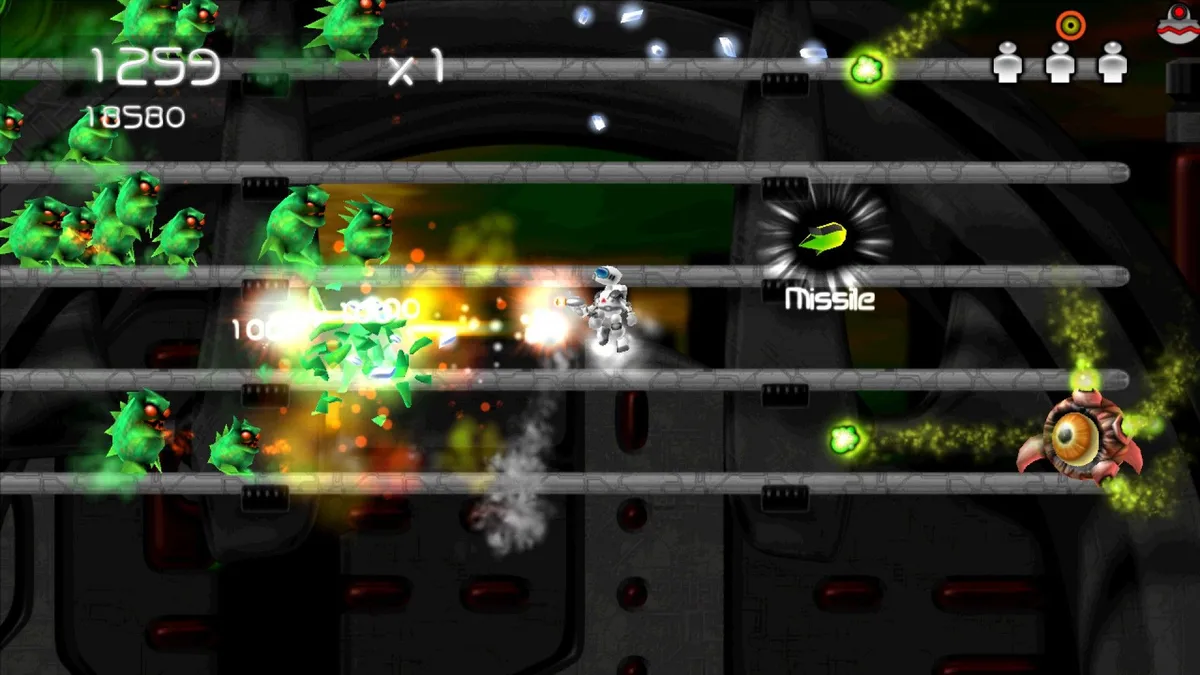
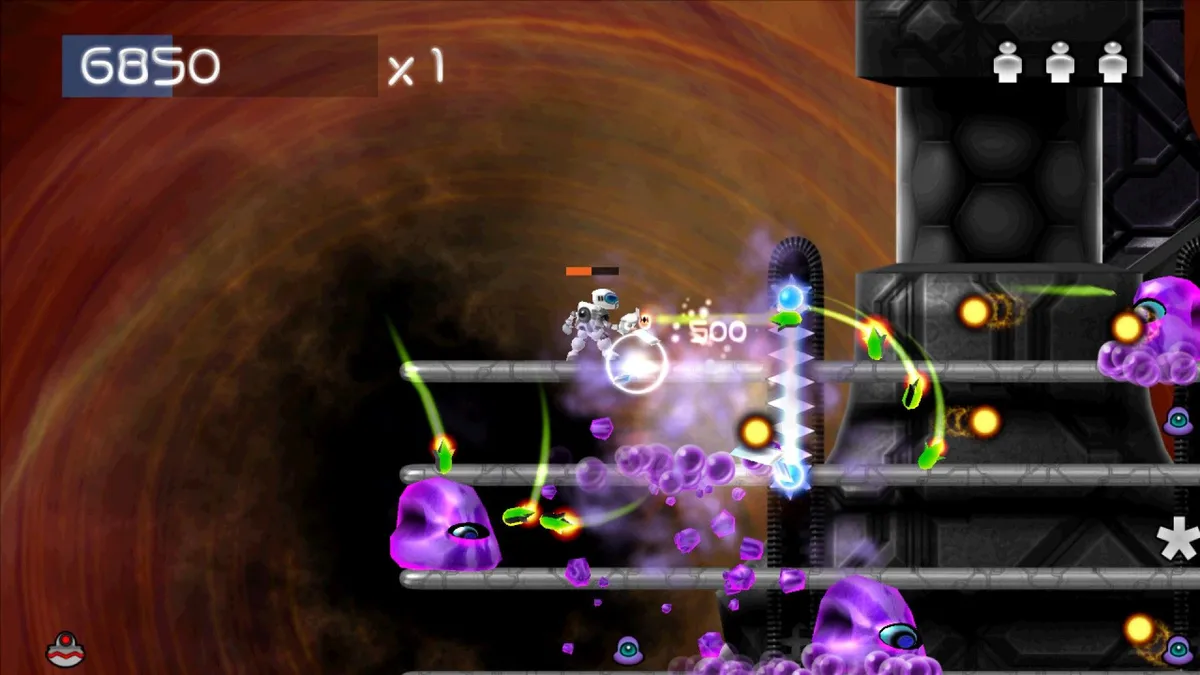
The core loop is platforming plus shooting. The action takes place on a space platform in a 2D side view, and the Spaceman faces zombies arriving from every direction rather than from a single line. Because the attackers come in all shapes and sizes, the player cannot rely on one fixed firing line: the job is to keep moving around the platform, line up shots against threats arriving from different angles, and continuously reduce the horde toward the stated goal of blasting them all to smithereens. This is arcade-style pressure rather than slow tactical footing—the description emphasizes that enemies come at the player from all sides.
The controls support a controller: the game lists joypad support among its key features. That makes the movement-and-shooting loop a pad-friendly arcade proposition, with the player steering the Spaceman across the platform while keeping fire on the surrounding zombies. The design language is explicitly oldschool and 2D, and the store describes the whole experience as gloriously intense arcade action.
The Six Game Types and What They Ask of the Player
The store lists lots of game types, including Survival, Adventure, Baby Rescue, Bomb Disposal, Jet Pack and Decoy pods. The names themselves are the documented information, so the honest way to describe them is as named variations within the same platform shoot-'em-up framework. Survival and Adventure read as the broad structural types—one built around lasting, one around a progression of play—while Baby Rescue, Bomb Disposal, Jet Pack and Decoy pods read as specific scenario hooks tied to a rescue objective, a disarming objective, a movement tool and a deployable distraction respectively.
What matters for play is that the same foundations—platform traversal, shooting from all sides, blasting zombies—are re-framed repeatedly. A player who learns to handle the horde under one format is set up to try a different named type without learning a new control scheme, because every type sits inside the same oldschool 2D platform shoot-'em-up structure. The exact internal rules of each type are not detailed in the supplied store description beyond their names.
80 Levels, Per-Level High Scores and 280 Challenge Medals
The game contains 80 levels, and crucially each level has its own high score table. That structure changes how a player approaches a stage: instead of one running total across the whole game, each platform is its own score chase. Clearing a level is only part of the objective; doing it well—scoring highly against that level's own table—is a separate layer of competition that works for both solo and local multiplayer play.
Alongside the level set, the game offers 280 challenge medals to earn. Medals and high scores sit in parallel: a stage can be chased purely for rank, or revisited to hunt challenges. Progress along that path feeds space suit unlockables, so cosmetics and reward gear are tied to completing objectives rather than bought separately. Taken together, the 80 per-level tables, the 280 medals and the suit unlocks give the game a documented progression structure that goes beyond simply reaching the end of a level list.
Local Multiplayer and Platform Access
Local multiplayer is listed among the key features, which pairs naturally with per-level high score tables: two players sharing a platform fight can compare results stage by stage. The game is grouped as Action and Indie and is available for Windows. Development is credited to PomPom and publication to Pom Pom Games, and the Steam product date is 2011.
Starting Out: What the Sources Establish
For a new player, the documented starting advice is to expect pressure from every side. Enemies arrive in all shapes and sizes, so there is no safe linear path; the realistic approach is to keep the Spaceman moving and keep shooting. Since each level keeps its own high score table, it makes sense to treat early stages as places to learn the arcade rhythm and then return for better scores. And because joypad support is listed, plugging in a controller is a supported way to play. Local multiplayer is also available for players who want company against the horde.
Design Character: Fifties B-Movie Meets Arcade
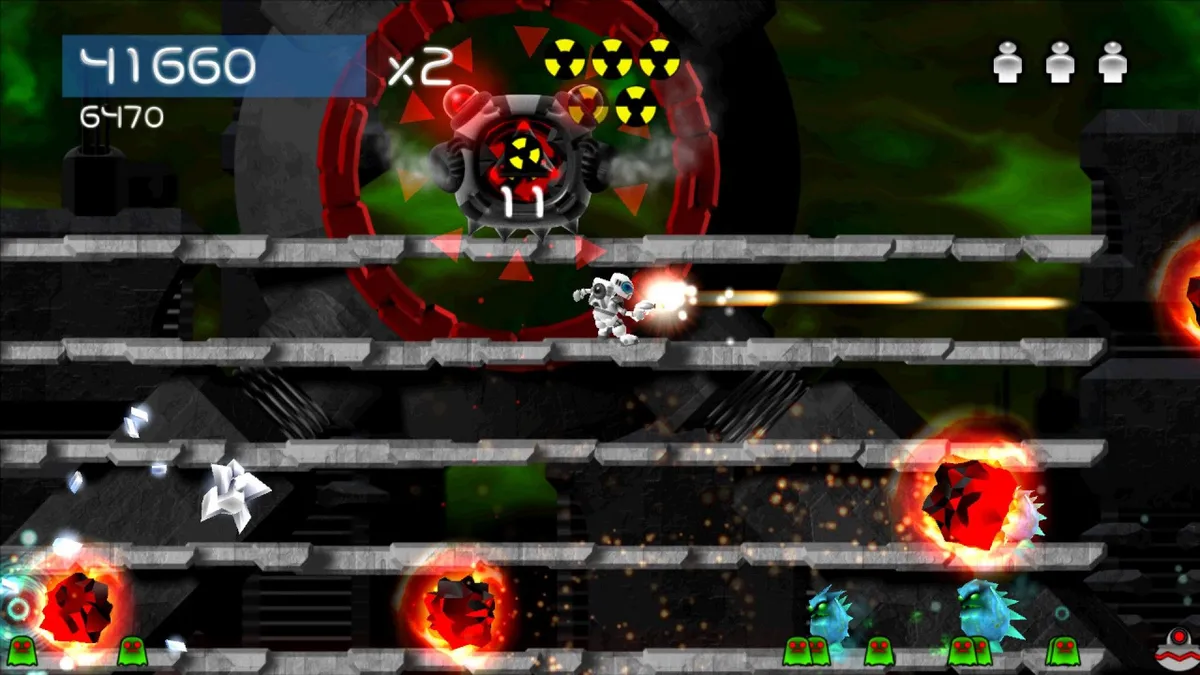
The design personality comes from the gap between an ordinary space worker and absurdly smelly alien zombies. The whole premise is built on a joke—the Spaceman fights for humanity and for his nose—and the game promises smithereens-blasting rather than grim sci-fi. That tonal choice fits the oldschool 2D platform shoot-'em-up label: colorful, loud and arcade-forward, with enemies of every shape and size filling the space around the player rather than a single intimidating boss silhouette.
What the Sources Confirm
The supplied official store description confirms the premise, the oldschool 2D platform shoot-'em-up structure, the enemies-coming-from-all-sides design, the 80 levels with individual high score tables, the game types named Survival, Adventure, Baby Rescue, Bomb Disposal, Jet Pack and Decoy pods, local multiplayer, 280 challenge medals, space suit unlockables and joypad support. It does not provide step-by-step mechanics for the individual game types, discuss ports or remakes, or give a detailed account of the challenge medal conditions. This feature therefore does not speculate beyond what those claims establish.
Sources & further reading.
- Alien Zombie Megadeath — official game profile Retrieved Oct 22, 2026
First published .