 THE GAME ARCHIVE
What Darwinia Asks You to Do
Darwinia is a 2005 strategy title from Introversion Software, released on Windows, macOS, and Linux. Its documented play blends real-time strategy, action, and puzzles around a single unusual idea: a unique gesture-based control system. Instead of a conventional command interface, the player draws shapes to summon units. Those units are programs, and the programs are what you send against the viruses threatening the Darwinians. The game's framing is therefore inseparable from its input: the act of drawing is how you bring force into the world.
The stated goal gives the fighting and herding one shared purpose: save the Darwinians, battle viruses, and solve challenges in order to restore order in a retro-inspired digital world. That sentence is the clearest guide to how the pieces fit. Viruses are the threat, Darwinians are the population you protect, challenges are the puzzle-shaped obstacles, and the world itself is a corrupted digital realm whose order has broken down.
The Premise: A Theme Park Under Attack
The setting is a digital theme park created by the eccentric Dr. Sepulveda, where evolving AI creatures called Darwinians live. Their peaceful existence is disrupted by a dangerous virus, and the player acts as a hacker whose job is to save them. The world is explicitly described as corrupted, so the premise and the mechanics point the same direction: the park's population is in danger, and the hacker's tools are the response.
The rescue work is concrete rather than abstract. The player controls programs to fight viruses, herds Darwinians, and completes objectives. The description also promises that delving into the corrupted digital realm means uncovering the mysteries threatening the Darwinians' survival. So the campaign is not only a series of fights; it is an investigation into why the park is failing and what the virus represents.
Drawing Orders: How the Gesture Interface Works
The core control rule is simple to state and central to play: you draw shapes to summon units. The gesture system is described as a unique control system that adds a fresh twist to the strategy genre. That framing matters because it locates the game's distinctiveness in the interface itself. The documented evidence establishes the drawing-to-summoning loop as the game's signature mechanic rather than spelling out a unit roster or tech tree, so readers should treat the gesture layer as the defining piece of the design.
Because summoning is a drawn gesture, the interface and the strategy layer are documented as one connected activity. The game is described as a mix of real-time strategy, action, and puzzles, and the gesture system is the control through which the player's forces are brought onto the field. The advertised strands therefore share a starting point: the drawing gesture that produces the programs players then use.
The Core Loop: Programs, Viruses, and Herding
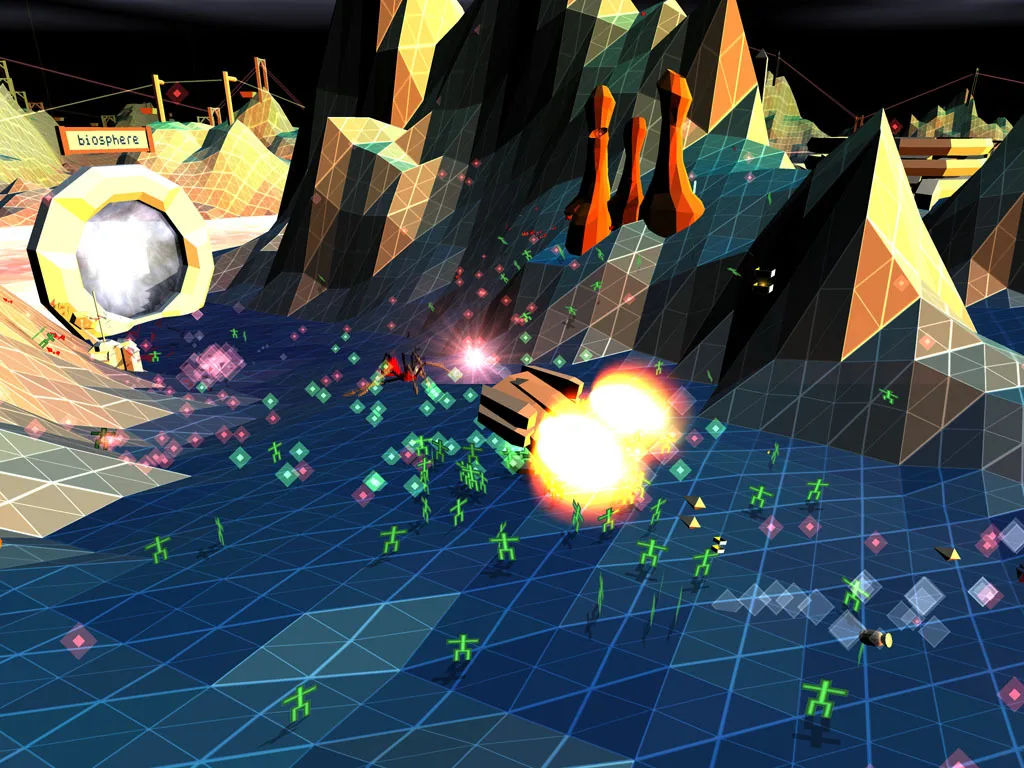
The documented loop has three repeating activities. First, you control programs to fight viruses. Second, you herd Darwinians. Third, you complete objectives. Viruses are the active hazard, so programs are effectively the player's combat arm: they are the entities sent to contest the infection. Herding is a different kind of task, because it works on the Darwinians themselves rather than on the threat. The population you are trying to save is also a population you have to move and manage.
That pairing is the heart of the design. Fighting alone would make Darwinia a straightforward real-time strategy game with an odd summoning method; herding alone would make it a management exercise. Combined, every engagement has a second question attached: what happens to the Darwinians while the programs are busy with the virus? The store description ties these directly together by describing control of programs to fight viruses, herd Darwinians, and complete objectives as one continuous set of actions.
Objectives and challenges give this loop its structure. Solving challenges is named alongside saving the Darwinians and battling viruses as part of restoring order, so progress is driven by problem-solving as much as by combat. Since the game is described as a mix of real-time strategy, action, and puzzles, the reasonable reading of the documented rules is that these are not separate modes but overlapping demands within the same corrupted world.
Progression: New Abilities, Tougher Challenges
The documented progression rule is that new abilities and tougher challenges keep the gameplay engaging as you advance. This tells the player what to expect from moving forward: the toolkit grows while the opposition scales. For a game built on a gesture interface, that matters because new abilities are new options to express through the summoning system, and tougher challenges test whether the player can apply those options to the virus and to the Darwinians at the same time.
Progress is also framed as an effort to restore order, with solving challenges named as part of how that happens. That suggests the campaign's forward motion is measured by how much of the corrupted digital world has been brought back under control rather than by a simple kill count. The themes of uncovering mysteries and protecting a population sit on top of that structure without replacing it.
Polygons and 80s Arcade Echoes
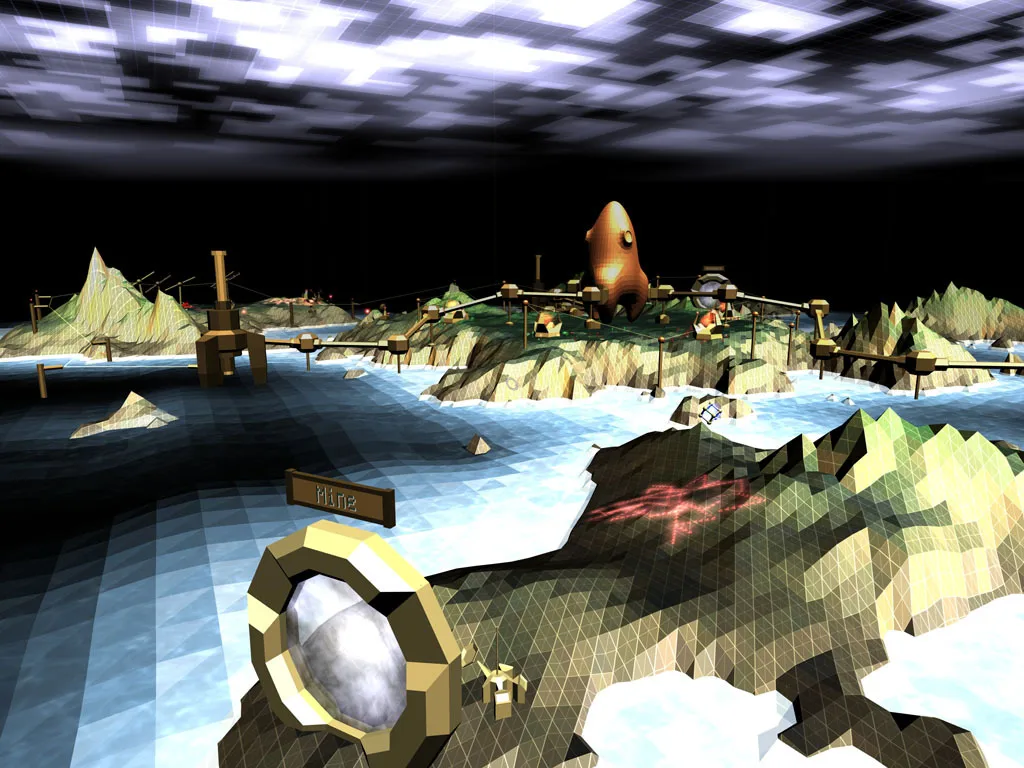
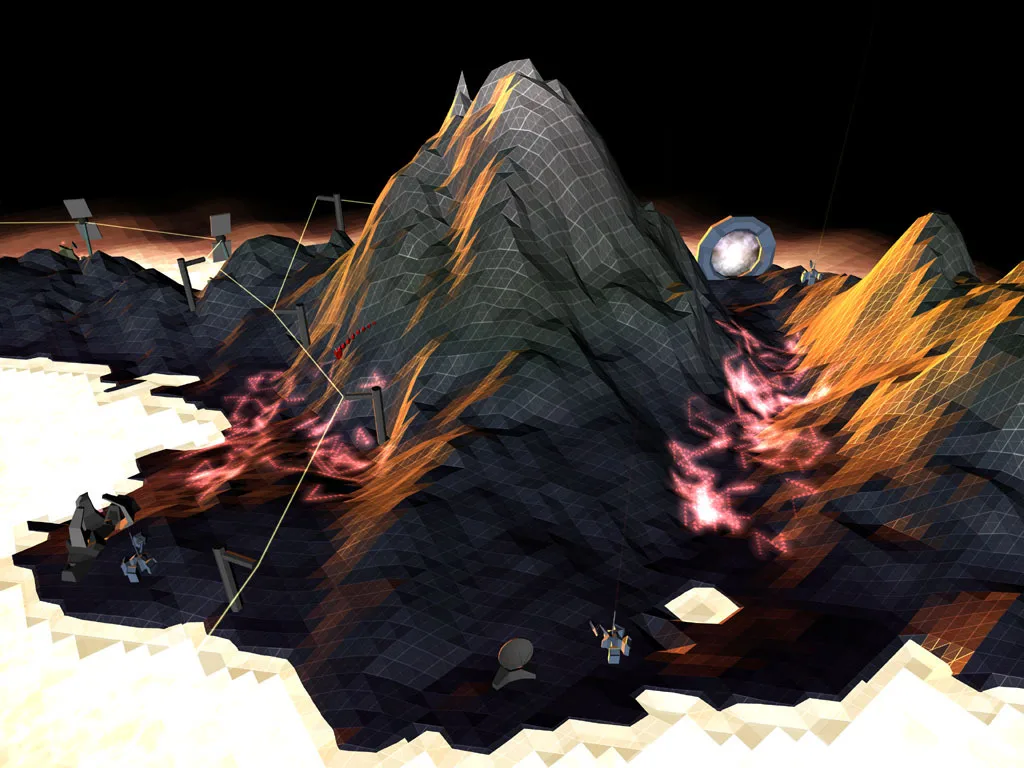
The documented look is retro-inspired and polygon-based, transporting the player to a colorful, abstract digital world. The store description explicitly calls the visuals a love letter to 80s classics like Tron and Defender, and it notes that the game combines fluid animation with its striking style to feel visually timeless. These are design-character references, not claims about how the models are constructed internally, so the useful takeaway for a player is the register: bright, geometric, arcade-flavored, and deliberately nostalgic.
The aesthetic and the fiction reinforce each other. A digital theme park full of evolving AI creatures under viral attack is a setting that suits an abstract, polygon-built world, and the 80s arcade references give that abstraction a recognizable cultural vocabulary. The result is a strategy game whose identity is carried by how it looks and how it is operated at least as much as by what it contains.
Version, Awards, and Current Access
Darwinia originally shipped in 2005 on Windows, macOS, and Linux, developed and published by Introversion Software. The official store description states that the game is now fully remastered for modern systems, so the current package should be understood as a remaster of the original rather than as identical to the 2005 release. The game won multiple prestigious awards, including the Seumas McNally Grand Prize at IGF 2006.
The supplied material does not detail edition contents, platform-specific differences, or compatibility specifics. Players evaluating the current release should treat the remastered status as the one documented distinction from the original.
Quick Facts
- Title: Darwinia
- Developer/Publisher: Introversion Software
- Release year: 2005
- Platforms: Windows, macOS, Linux
- Genres: Indie, Strategy (store classification); described as a mix of real-time strategy, action, and puzzles
- Signature mechanic: gesture-based control — draw shapes to summon units
- Core goals: save the Darwinians, battle viruses, solve challenges, restore order
Sources & further reading.
- Darwinia — official game profile Retrieved Oct 17, 2026
First published .