 THE GAME ARCHIVE
Absorb to Grow: The Core Loop of Osmos
In Osmos, the stated objective is to grow by absorbing other motes, and this absorption loop is the central action that defines the play. The game is built on physics-based gameplay rather than scripted sequences, so the interactions between your mote and the others follow physical behavior. The world is presented with dreamlike visuals, and the soundtrack is a minimalist, electronic one. Against that ambient backdrop, you steer your mote toward smaller ones and take them in, increasing your size with each absorbed body while the physics simulation governs how the collected matter behaves.
The motes function as the resource for growth: absorbing other motes is how your own mote gets larger. Because propulsion works by ejecting matter behind you, the same physical logic that lets you move also costs you mass, so each burst of thrust shrinks you a little. Growth and movement therefore pull in opposite directions within the physics-based system, and the game explicitly advises patience, framing waiting as a sound approach rather than a passive one. In practice, the core loop asks you to balance what you absorb against what you expel to reposition.
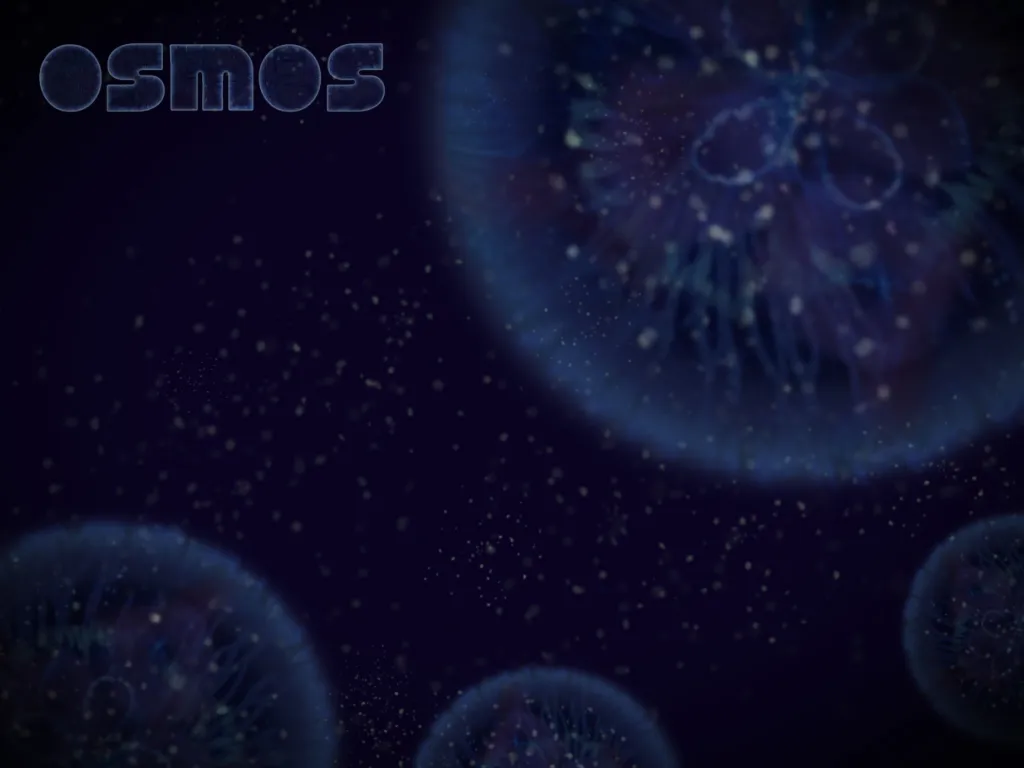
Eject Matter to Move, But Beware the Shrinkage
Movement in this section runs entirely on ejection: your mote travels by throwing matter out behind itself, and the resulting motion is governed by the same physics simulation that shapes every other interaction in the world. That single act is the propulsion system, not a separate ability layered on top of steering. Because the expelled material comes from the mote itself, every push carries a cost, and the mass you spend is mass you no longer have. The documented rule is straightforward: eject matter to move, but recognize that ejecting also shrinks you.
The stated objective here is to avoid excessive ejection so that shrinkage does not erode your mote, which puts the movement mechanic in tension with the growth goal of absorbing smaller motes. Each burst of propulsion trades size for position, so the documented guidance is to be wise about it and to relax, since good things come to those who wait. Waiting is presented as a legitimate tactic rather than idleness: holding still preserves mass while the physics simulation continues to act on the surrounding motes.

Time-Warping and Environmental Hazards
As your mote ventures past the ambient opening levels into more varied and challenging worlds, the environment itself becomes an obstacle. Attractors and repulsors act on the physics simulation, steering motes without any scripted sequence, so a path that worked in a calm level can be complicated once those forces are present. Because propulsion still comes from ejecting your own matter, maneuvering through these hazards costs mass each time you thrust. The documented lesson is to pick your moments, since ejection shrinks you and the attractors and repulsors never stop acting on the surrounding bodies.
Intelligent motes with abilities and goals similar to your own share these fields, so the physics applies to them as it does to you, and they can absorb and eject in pursuit of the same growth. To outmaneuver agile opponents, dynamic time-warping lets you slow the flow of time; speeding it up instead raises the challenge. That control sits alongside attractors, repulsors and the intelligent motes across the 47 levels and bonus content, letting you adjust tempo when a fast-moving rival or a strong environmental force would otherwise dictate the outcome.
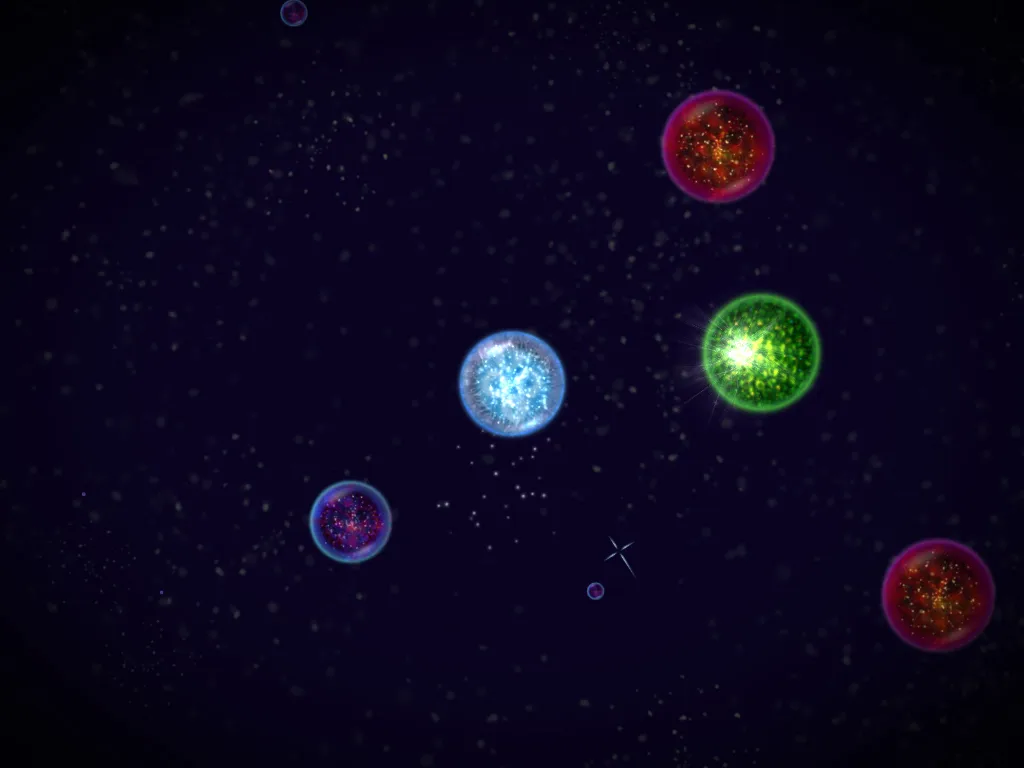
47 Levels, Bonus Content, and Procedural Play
The campaign is laid out as 47 levels, and the game ships with bonus content alongside that main set. The level list moves from serenely ambient stages into worlds that are more varied and more challenging, so the opening fields and the later ones differ in what they put in front of your mote. Across that span you meet attractors, repulsors and intelligent motes whose abilities and goals resemble your own. The same propulsion rule travels the whole route: you move by ejecting matter, and ejecting shrinks you, which is why the game advises relaxing rather than thrusting constantly.
Procedural content extends the fixed stages by letting you play random versions of any level, so a field you have already cleared can be regenerated in an altered form. That option sits in the same package as the bonus content and the 47-level progression, and it draws on the elements those levels use: attractors, repulsors and intelligent motes with abilities and goals similar to yours. Dynamic time-warping remains part of the toolset here, slowing the flow of time to outmaneuver agile opponents or speeding it up to raise the challenge.
Sources & further reading.
- Osmos — official game profile Retrieved Oct 17, 2026
First published .