 THE GAME ARCHIVE

Escape the City, One Undead Horde at a Time
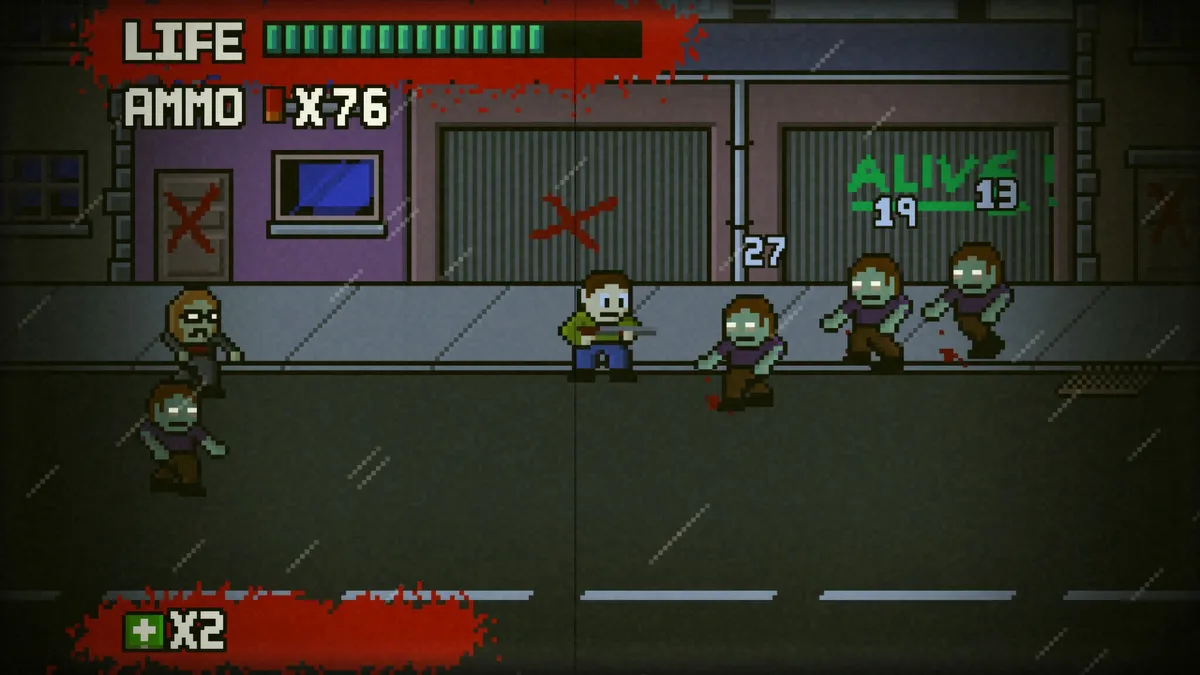
Dead Pixels frames its central objective around a single, pressing goal: escape the city. The premise begins with a toxic waste spill entering the water supply, which causes the recently deceased to rise from their graves. That event turns the urban environment into a place you must fight through rather than simply navigate. The documented loop has you blasting your way through hordes of undead, treating each confrontation as an obstacle standing between your starting position and the way out.
Survival and progress are tied together through two companion actions. While working toward the rescue that would let you leave, you search stores and houses for supplies and trade with other survivors. Those activities sit alongside combat rather than replacing it: the hordes still have to be faced, and the supplies gathered along the way feed into the broader effort to keep moving. The result is a run structured around fighting through the undead, scrounging what the city still holds, and dealing with the survivors who remain.
Loot the Stores and Houses, Then Trade With Survivors
Between fights, Dead Pixels sends you into stores and houses to search for supplies. These are ordinary city buildings rather than dedicated dungeon rooms, so the scavenging step is built into the same streets and structures you pass while working toward escape. The search is one of two activities described alongside the shooting: you gather what the buildings hold, and those findings support the run. The hordes remain active pressure during this process, so looting is described as something done on the way to rescue rather than as a separate safe phase of play.
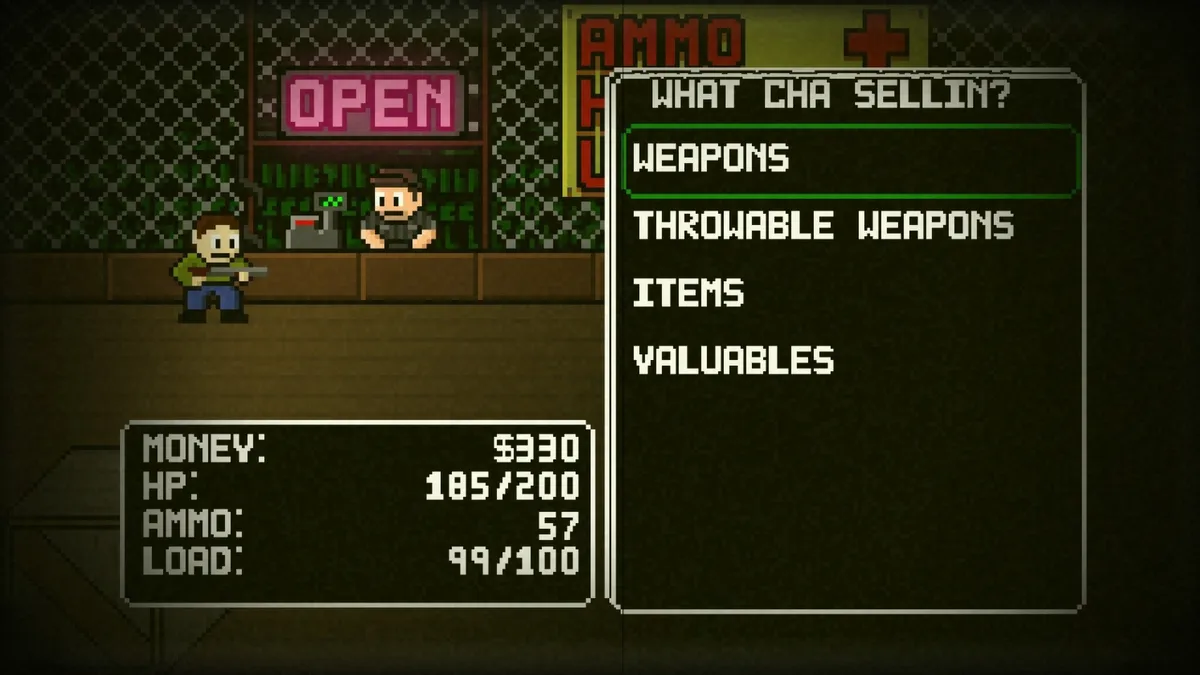
The second social mechanic is trading with other survivors. Survivors are still present in the city, and the game treats dealing with them as part of the route out, alongside blasting undead and searching buildings. Trading therefore runs in parallel with scavenging: supplies found in stores and houses are what you bring to these survivor exchanges, while the undead hordes keep the journey dangerous. The described loop thus alternates between combat, looting, and trade, with each activity tied to the same goal of escaping the city during a rescue attempt.
Over 100 Weapons, Grenades and Items at Your Disposal
Dead Pixels gives you a documented arsenal of more than 100 weapons, grenades and items. That count covers three equipment categories rather than a single weapon list, so the gear you carry into the hordes can draw from firearms, throwables and other usable items. Grenades are called out as their own category alongside weapons and items, which means the game presents explosive options as a distinct part of what you bring to a fight. The feature set treats this large pool of equipment as one of the defining elements of the run.
The equipment sits directly on the path toward escape. You blast your way through hordes of undead while working toward the rescue that would get you out of the city, and the weapons, grenades and items are the tools documented for that fighting. The same loop also has you search stores and houses for supplies and trade with other survivors, but the combat remains a constant: the hordes must be faced with whatever gear you have available. The city changing each time adds further reason to lean on the breadth of the arsenal.
A City That Is Never the Same Twice
Dead Pixels builds its central objective around a procedurally generated city, meaning the urban layout you fight through is never the same twice. The toxic waste spill that enters the water supply and raises the recently deceased sets the stage each run, but the streets, stores and houses you encounter shift from one attempt to the next. That variation puts the escape goal against fresh ground every time: the route out is not a memorized path but a new arrangement of buildings and undead hordes to blast through.
Because the city changes each run, searching stores and houses for supplies stays tied to the escape attempt rather than a fixed set of locations. The documented loop has you blast through undead hordes, search ordinary city buildings for supplies, and trade with survivors you meet on the way to your rescue. The changing layout means the places you search differ between runs, so looting and trading happen alongside combat in whatever structures the generated city provides that time.
Three Modes and Four Difficulties, Solo or Local Co-op
Dead Pixels ships with three distinct game modes, giving the escape run more than one structural form to take. Difficulty is handled separately, with four different difficulty modes sitting alongside the mode selection, so a run's challenge level is its own choice rather than something baked into a single fixed setting. Both of these counts are documented as core features, listed beside the procedurally generated city and the arsenal of weapons, grenades and items. The two systems work in parallel: the mode determines how play is framed, while the difficulty mode sets how demanding that play becomes.
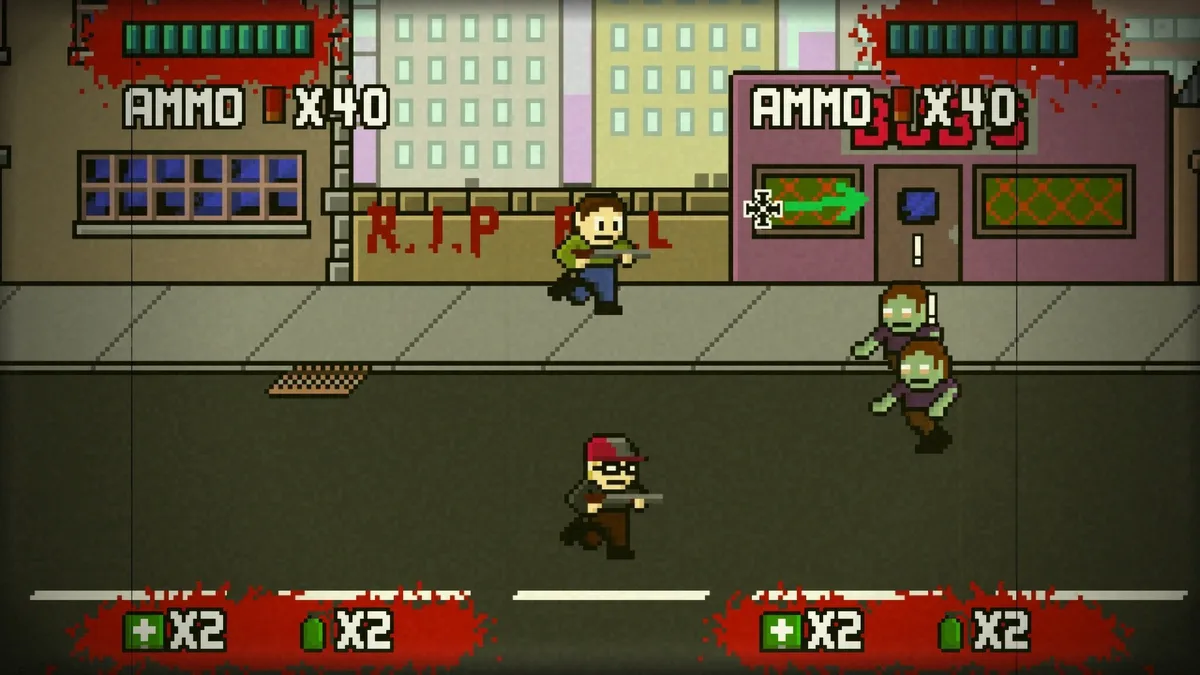
Players can take on the city alone in single player, or bring a second person in through two-player local co-op, sharing the same screen rather than connecting remotely. That co-op option sits in the same feature list as the three game modes and four difficulty modes, so the documented setup pairs a choice of mode and difficulty with a choice of how many survivors are at the controls. In cooperatively played runs, both players work through the same procedurally generated city, blasting undead hordes and searching stores and houses for supplies toward the shared escape goal.
Leaderboards and Achievements to Chase Between Runs
Dead Pixels includes online leaderboards, so the results of your escape attempts can be compared against other players' runs. The city is procedurally generated and changes every time you play, which means leaderboard positions come from runs fought through different street layouts rather than a single fixed course. Because the game also offers three modes of play and four difficulty modes, the documented scoring structure spans those separate framings and challenge levels rather than one uniform setup.
Alongside the leaderboards, the game lists 30 achievements, giving runs a second set of documented goals to pursue between attempts. These sit in the same feature list as the online leaderboards, the procedurally generated city, the three modes of play, the four difficulty modes and two-player local co-op. The Steam product record for Dead Pixels carries a product date of 2012; that is a store record date rather than proof of the original game release.
Sources & further reading.
- Dead Pixels — official game profileRetrieved Oct 28, 2026
First published .