 THE GAME ARCHIVE

Deus Ex: Invisible War is Ion Storm's first-person action-adventure, released on Windows and, as the official store describes it, set roughly 20 years after the original Deus Ex in a world clawing its way out of a catastrophic depression. The store page frames the appeal around biotech modification and "an unprecedented freedom of action" inside a dynamic, non-linear story with responsive plot branches, and around the ability to resolve conflict non-lethally and non-violently so that actions make ethical statements. The publisher manual behind this feature documents the systems that turn those promises into moment-to-moment decisions: limited biomod canisters, a shared ammunition pool, stealth as a tactical layer, modular weapons, and environmental movement.
Nothing here is hands-on testing; it reflects the publisher-supplied material only. It describes the game as sold, rather than later ports, remakes, or package extras.
The Core Loop: Spend Scarce Resources, Choose a Method
Invisible War's play pressure comes from scarcity and choice. Biomod canisters are limited, so each one spent on a slot answers whether you want one of two regular biomods, or the single black-market option for that slot; a normal canister permits only the two regular mods, a black-market canister permits only the one black-market mod, and standard canisters cannot upgrade black-market mods. Bio energy is the second scarcity: the internal batteries must be recharged at repair bots or with energy cells, and EMP hits drain them severely. The third is ammunition — one nano-mass pool is reconfigured by each weapon into everything from a pistol shot to a guided rocket or flame-thrower fuel, heavier weapons eat more per shot, and the carry limit is ten magazines.
Those constraints make loadout decisions consequential. A player leaning on an energy-hungry active biomod has to plan around recharge stops; a player who keeps a rocket launcher or flame thrower in the arsenal accepts that each trigger pull spends dramatically more of the shared pool than a pistol shot; and a player who wants non-lethal solutions can lean on the boltcaster, stun prod, and gas grenades, which the manual presents as a full alternative rather than a token option — "deadly force is always a choice, not a requirement."
Biomods: Slots, Canisters, and Limited Upgrades
Biomods are modular nanotech implants divided into active and passive types. Active mods such as Cloak, Speed Enhancement, and the Health Leech Drone must be switched on and drain bio energy for as long as they are used; passive mods work continuously without activation. The six biomod slots are mapped to number keys 1–6 for toggling, or you can open the Biomod Screen with B, highlight a slot, and confirm. The manual's practical advice is to deactivate active mods when they are not needed to save energy.
Installing a new mod or an upgrade requires an unused canister. On the Biomod Screen you highlight the slot, press the confirm key, and scroll left and right through the options currently available for that slot — two regular biomods with a normal canister, one black-market biomod with a black-market canister, or all three if you hold both canister types. The Energy Meter, a curved purple bar beside the Biomod Display, shows remaining bio energy for powering mods.
Stealth and Non-Lethal Play
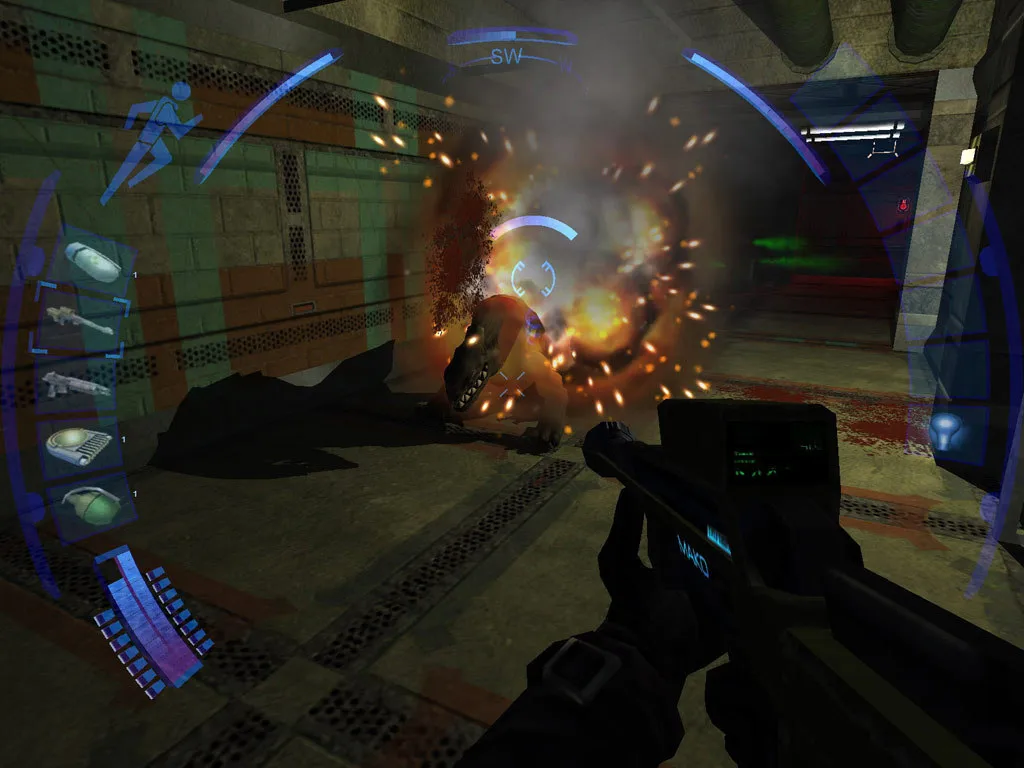
The manual treats stealth as a genuine tactical pillar, "as important as, or even more important than" offense depending on style. Two goals are named: stealthy characters can often bypass combat entirely, and even aggressive fighters improve their survival odds by using stealth to position for the most effective assault. To raise your chances of going unnoticed, move slowly or crouch and stick to dimly lit areas, and avoid hostiles' line of sight so it is easier to slip past them. The official store adds that darkness and sound affect enemy awareness.
Two mobility tools feed this: crouching, and the Move Silent biomod. Crouching is a C toggle, slows movement significantly, and makes you quieter and harder to spot — the preferred movement mode in stealth situations — while also fitting you through small openings and helping with cover. When a fight is unavoidable, the boltcaster, stun prod, and gas grenades provide documented non-lethal options, and the gas grenade emits a cloud of incapacitating biotoxin; the boltcaster injects a toxin that inflicts non-lethal poison damage over time.
Weapons, Alternate Fires, and the Shared Ammo Pool
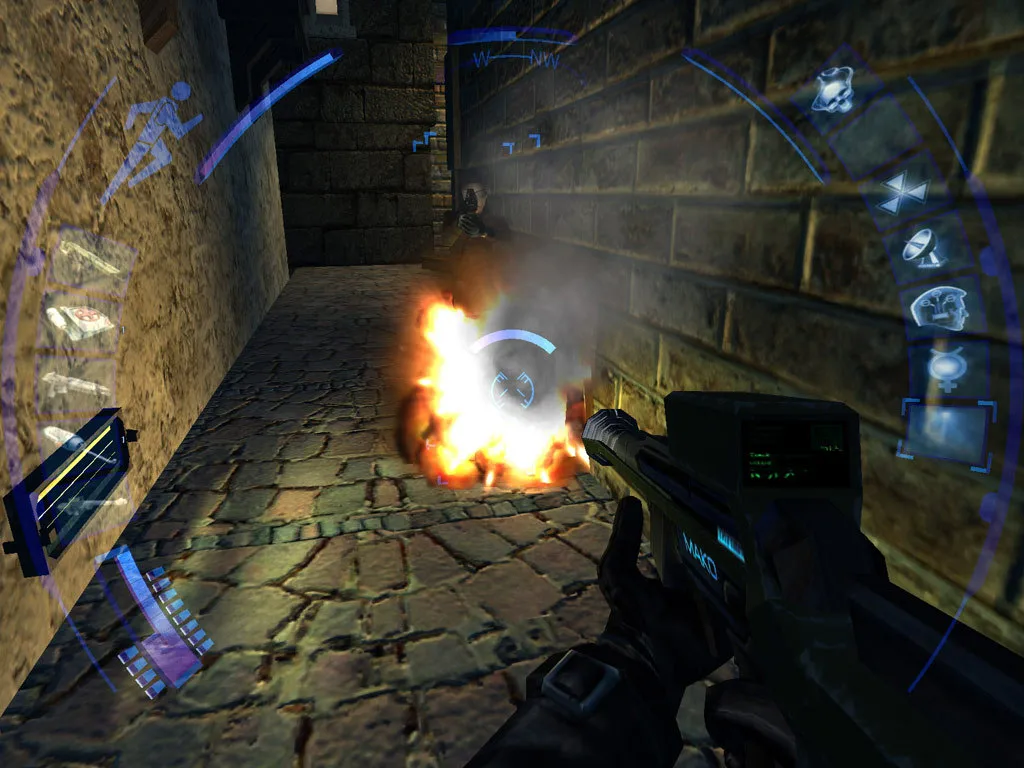
The ranged arsenal is defined as much by its alternate fire as its primary. The ballistic pistol's alt-fire is a flashlight. The boltcaster and sniper rifle use theirs for a smart scope. The shotgun's alt-fire is a smoke-canister launcher and the SMG's is a flashbang grenade launcher; the SMG's extended auto-fire causes the shot grouping to spray, which rewards burst discipline despite its fully automatic design. The mag rail is the showcase: in alt-fire it becomes an EMP beam that can be fired through walls and solid objects to strike a target without damaging what lies between.
EMP is a logic puzzle in weapon form. It is designed for bots and mechanical targets, generally does not affect organics, but because your nano-systems leave you not entirely organic, an EMP hit drains your bio energy severely — so the same effect you use to disable cameras and machines can shut down your own abilities. Grenades add a second rhythm: normally thrown, they explode after a short fuse and can be bounced off a wall around a corner; in alt-fire mode they explode immediately on contact.
Weapon Mods That Change the Economy
Weapon mods are found scattered through the game and install on the ballistic pistol, boltcaster, shotgun, SMG, sniper rifle, rocket launcher, and mag rail — but not all mods fit all weapons. Three documented mods map directly onto the scarcity pressures above. The Ammo Scavenger makes a weapon use less ammo, stretching the single nano-mass pool. The EMP Converter adds EMP damage to a weapon's output, disrupting and damaging electronics like bots and cameras. The Fragmentary Round gives projectiles an explosive impact. Which mods you actually find, and which weapons accept them, determines how far you can bend the shared ammo and energy limits in your favor.
Getting Around: Movement, Mantling, Ladders, and Falls
Movement is standard: the directional keys for direction and strafing, Z to jump. Jumping from a standstill takes you straight up and down — useful for seeing over obstacles and grabbing objects on high shelves — while pressing Z during a run jumps over or onto an obstacle. The Speed Enhancement biomod greatly increases jumping distance. Ladders climb automatically when you move toward one while looking in the direction you want to go, and mantling boosts you onto objects too high to jump onto directly: stand next to the object, face it, and press and hold Z.
Falls carry a documented cost. Missing a jump from a high elevation, or stepping over a precipice, can cause falling damage that scales with height and can be severe or fatal. Speed Enhancement and Move Silent both increase the distance you can fall without taking damage, giving those biomods a second defensive use beyond their movement role.
Field Supplies: What Heals, What Hurts
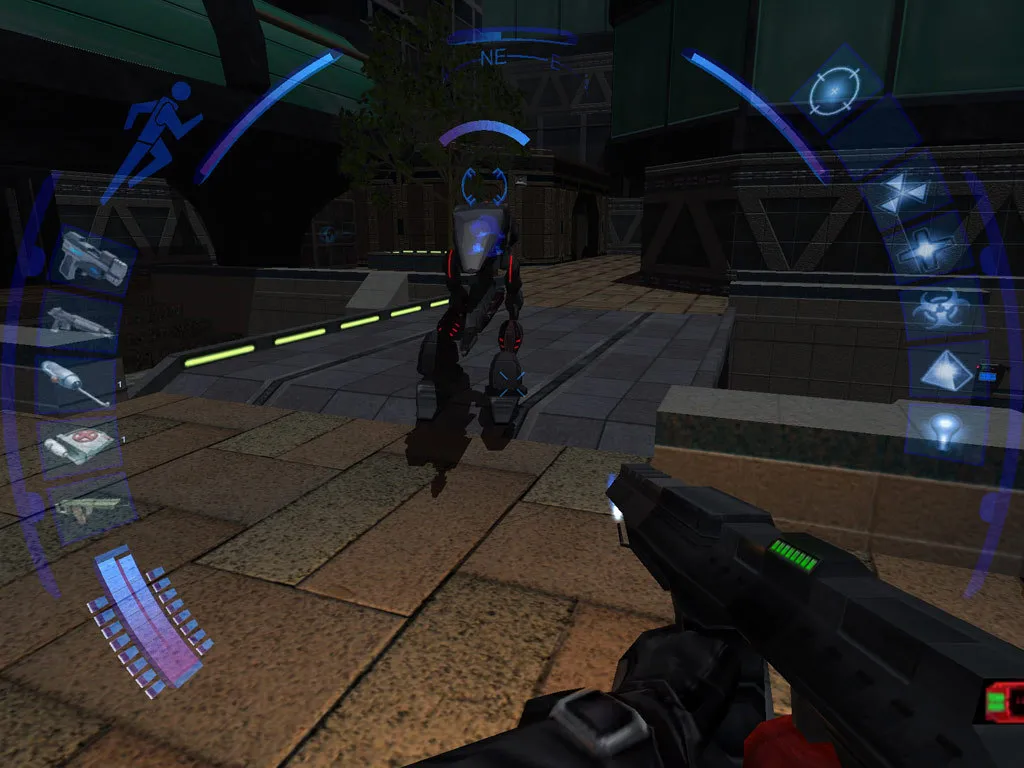
Consumables are consistent with the nano-systems fiction and each one is consumed on use. Food and drink, including water from fountains, heals a small amount of physical damage. Alcohol reacts with your nano-systems and inflicts a small amount of damage before being metabolized, and smoking a cigarette costs health outright — cheap supplies with a price. Medkits restore a small amount of lost health. Utility tools round things out: multitools bypass security, fire extinguishers put out small fires and can blind unprotected organic opponents across three uses per extinguisher, and each energy cell fully restores bio energy, stacking in a single inventory slot.
Beyond the Systems: Objectives, Movement Options, and the Game That Surrounds Them
Documented terrain interaction includes mantling and ladders, and the store promises movement options such as seeing through walls, leaping 40 feet, and radar invisibility — the kind of mobility that rewards exploring vertical and alternate routes rather than only the frontal one. On the inside of the character, objectives live in the Datavault, an internal hard drive that stores data for access at any time and cycles through three sections. The Goals Screen lists assigned mission goals waiting to be fulfilled, the Notes Screen records important messages and keycodes with completed goals also displayed there, and the Images Screen records maps, diagrams, and photographs important to the mission; Up and Down scroll through each screen's pages.
The store describes a globe-hopping campaign through real-world locations such as Seattle, Antarctica, and Cairo, and a single-player experience built around multiple solutions and varied stylistic approaches. Combined with the canister, energy, and ammo constraints, the documented systems read as a game that asks you to commit to a method and live with the cost of that commitment.
Scroll sideways to see the full table →
| System | Documented detail |
|---|---|
| Biomod slots | Six slots; toggle with keys 1–6 or the Biomod Screen (B) |
| Canister types | Normal: two regular mods per slot; black market: one black-market mod per slot; no cross-upgrades |
| Bio energy | Recharged by repair bots or energy cells; heavily drained by EMP; Meter is curved purple bar |
| Ammo | Single nano-mass pool, ten-magazine limit; heavier weapons use more per shot |
| Stealth levers | Crouch toggle (C), dim lighting, avoid line of sight, Move Silent biomod |
| Non-lethal tools | Boltcaster (toxin over time), stun prod, gas grenades (incapacitating biotoxin) |
| Weapon mods | Ammo Scavenger, EMP Converter, Fragmentary Round; not all fit all weapons |
| Datavault | Goals, Notes, Images sections; Up/Down to page through |
Sources & further reading.
- Deus Ex: Invisible War — official game profile Retrieved Oct 15, 2026
- Deus Ex: Invisible War — official game profile — publisher-supplied gameplay manual Retrieved Oct 18, 2026
First published .