 THE GAME ARCHIVE

Cargo Runs Between Towns
Cargo runs set the rhythm of Flight of the Icarus: the player takes the role of a privateer who owns an airship and uses it to ferry goods from town to town. The setting is a post-apocalyptic world whose skies are dominated by pirates and danger, so each delivery route is framed as a journey through contested airspace rather than a simple errand. The objective is to ensure the cargo reaches its destination, which gives every trip a clear finish line while pirates and enemy aircraft threaten the shipment along the way.
The core loop ties ferrying to fighting: moving goods between towns happens alongside airship combat, and the ship's deck carries a variety of deadly weaponry used to shoot down enemy aeroplanes. Keeping the ship from falling out of the sky is stated as a parallel duty, so a cargo run combines three connected jobs — fly the goods toward their destination, engage the aircraft that threaten the route, and preserve the airship's place in the air. In this pirate-dominated post-apocalyptic sky, delivering cargo means surviving the trip, not just arriving.
The View From the Deck Turrets
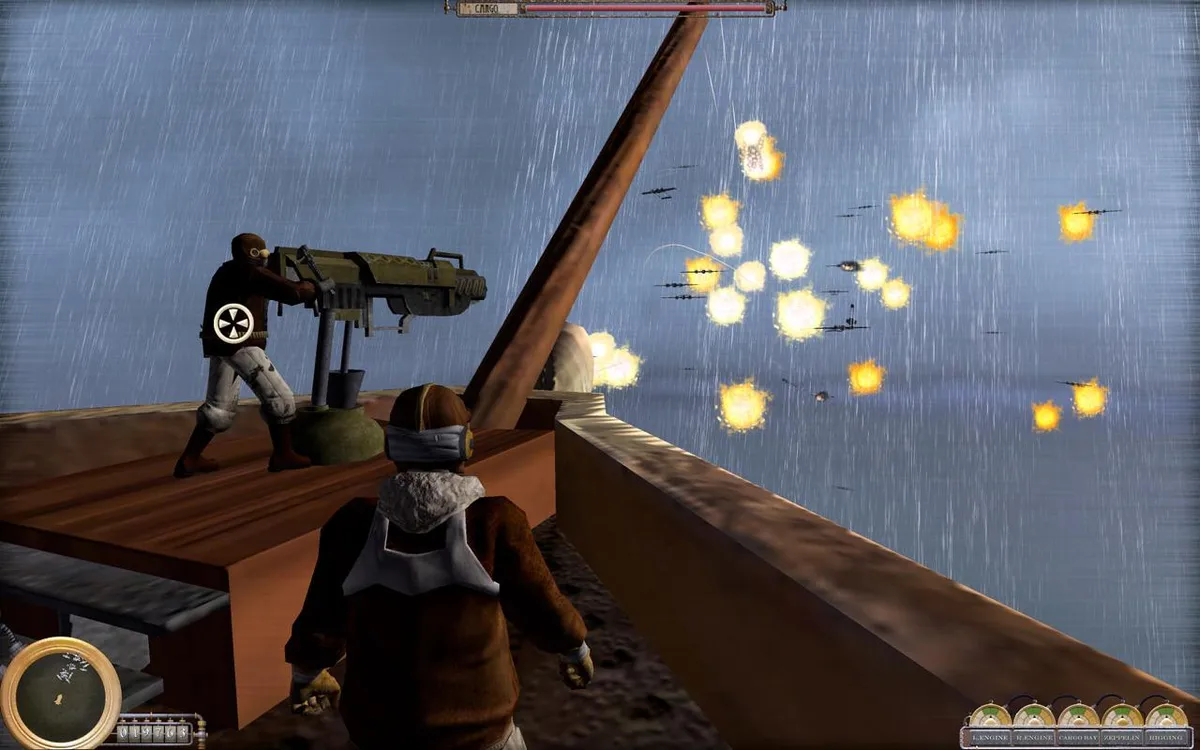
Combat in Flight of the Icarus is framed around the airship's deck, where the player fires turrets to bring down enemy aeroplanes. This shooting is described as frantic, with targets approaching from the surrounding sky while the player works the deck-mounted guns. A range of deadly weaponry is available for this task, so shooting down hostile aircraft is not tied to a single fixed gun; the deck arsenal itself is the platform for answering the pirates and enemy planes that dominate the contested skies along each cargo route.
Deck combat does not stand alone. The turret shooting is blended with repair time management mechanics whose purpose is to keep the ship afloat, so the same run asks the player to balance firing at attackers with tending to the airship. Enemy aeroplanes are the targets named for the guns, and the broader airship combat goal sits alongside the ferry goods objective. The documented relationship is straightforward: shoot down enemy planes with the deck weaponry while managing repairs quickly enough that the ship stays in the air.
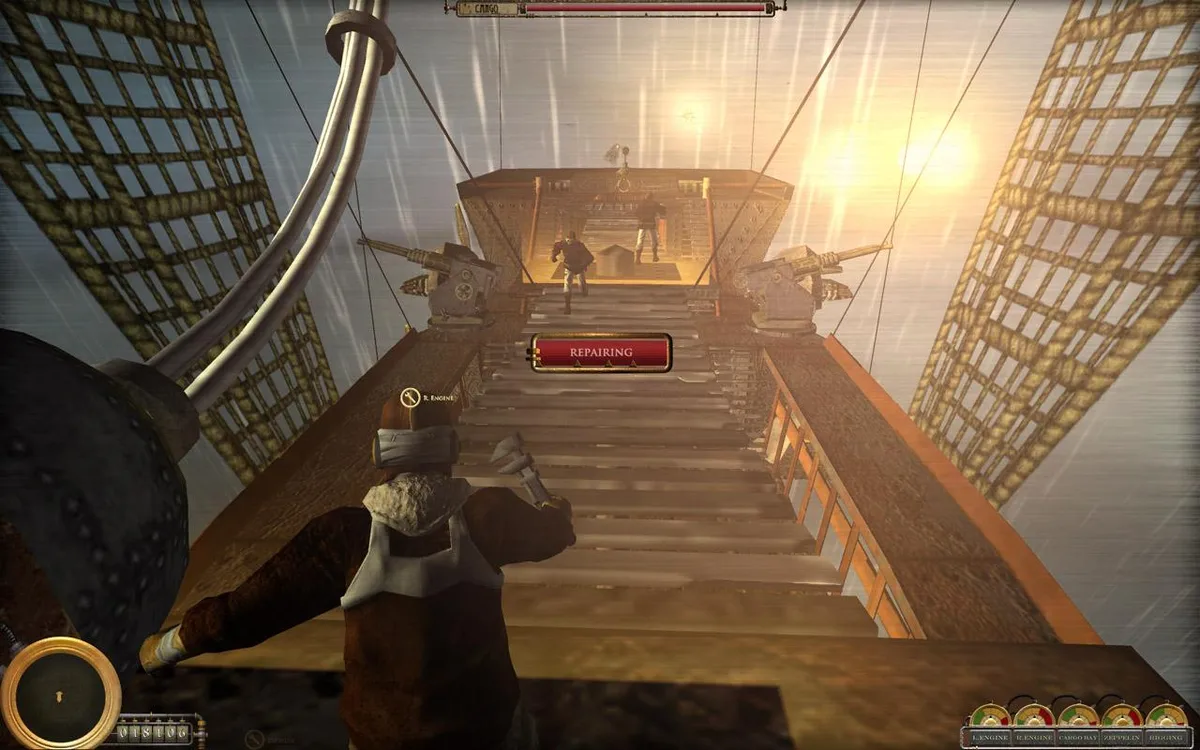
Keep the Ship Aloft: Repairs and Stability
The duty to keep the airship from falling out of the sky runs alongside the turret shooting rather than replacing it. The documented blend of deck gunnery and repair work is described as frantic, which fits a run where hostile aeroplanes keep pressing in while the ship itself needs attention. The player answers attackers with the deck weaponry, then turns to the repairs that hold the vessel in the air, so the two tasks share the same stretch of flight time instead of being separated into distinct phases.
Repair time management is the named mechanic behind staying afloat, meaning the player must decide how quickly and when to handle ship upkeep before the vessel drops. Maintenance of airship integrity to avoid falling is the stated purpose, so the repair work is not cosmetic: it is the condition for remaining airborne and continuing the cargo run. The rules interact directly with combat, since time spent managing repairs competes with time spent firing the deck turrets at enemy aeroplanes, and the ship's stay in the sky depends on fitting both jobs into the same contested journey.
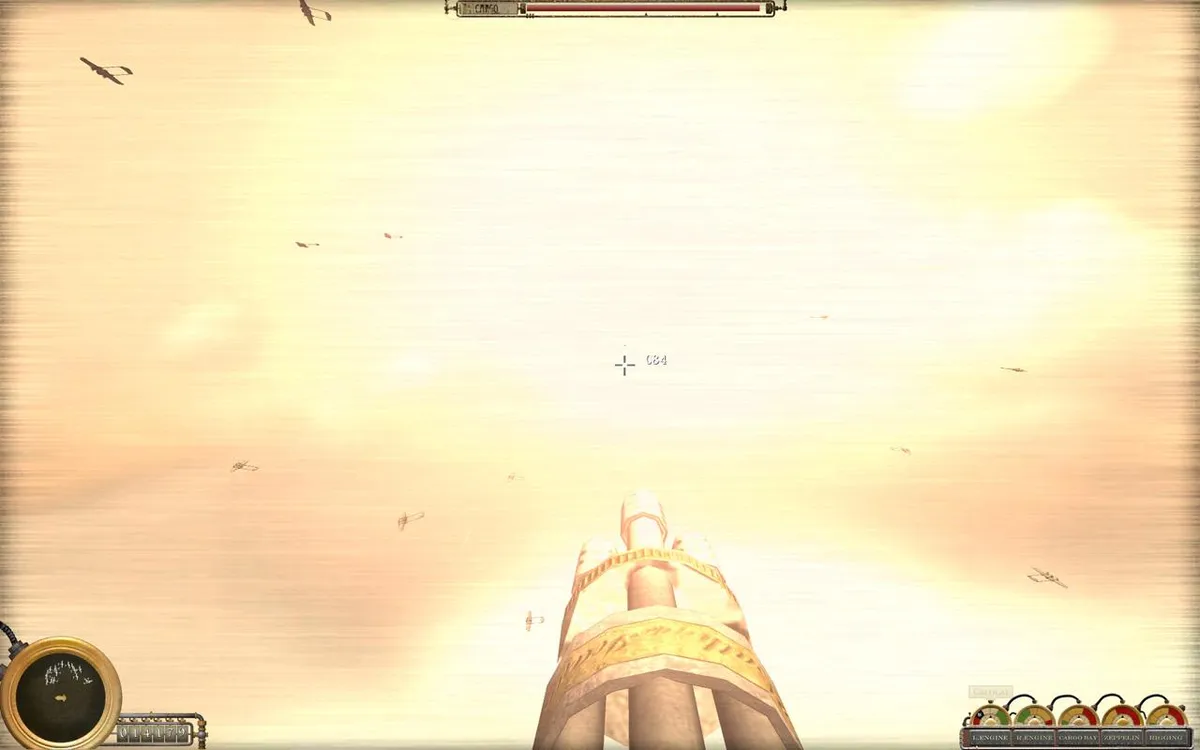
Levels, Guns, and Skyborne Threats
Across the campaign, deck gunnery is supported by a stated arsenal of eight powerful guns, giving the player a set of deck-mounted weapons to bring against hostile aircraft while working the ship's defenses. The level structure is listed as eighteen epic levels, laying out a sequence of skies to cross as the cargo runs and airship fights accumulate. The foes those guns answer are listed as four enemy types: the Duster, the Gunship, the Pirate Ace aeroplane, and an Airship, so the threats range from light aeroplanes to a rival airship.
The enemy roster shapes what the turret work looks like in practice: a Duster, a Gunship, and a Pirate Ace aeroplane are all aircraft to shoot down, while an Airship is a larger flying opponent sharing the same contested sky. Alongside these threats, time of day and weather effects change the conditions of a run, and an extra Into the Breach survival mode offers a separate scenario built around holding out. The same blend of turret shooting and repair time management carries into that survival setting, where the airship must stay afloat through sustained pressure.
Into the Breach and Shifting Skies
The extra Into the Breach survival mode gives the cargo-run structure a separate scenario built around holding out. Rather than ending a trip at a destination town, the survival setting keeps the same deck turret shooting and repair time management in play while the airship must stay afloat through sustained pressure. The documented blend of gunnery and upkeep carries over, so the mode reuses the frantic switching between firing at attackers and tending the vessel instead of replacing it with a new rule set.
Time of day and weather effects change the conditions of a run, sitting alongside the named enemies, the eighteen epic levels and the eight powerful guns. The four enemy types — Duster, Gunship, Pirate Ace aeroplane, and Airship — share the contested sky, and the survival mode's sustained pressure draws on that same roster. The catalog also lists a Fallen Hero Cap unlocked in Guns of Icarus Online with purchase of this game, a cross-promotional bonus rather than an in-run mechanic.
Sources & further reading.
- Flight of the Icarus — official game profile Retrieved Oct 21, 2026
First published .