 THE GAME ARCHIVE
What Fractured Soul Asks of the Player
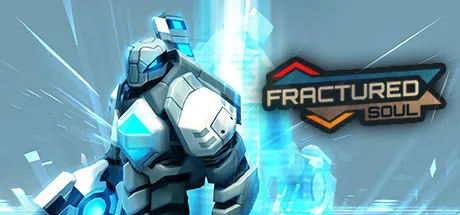
Fractured Soul is an action-platformer developed and published by Endgame Studios, released on Windows in 2015 and tagged on its official store page as action, adventure, and indie. The player controls the Entity, a character described as able to shift between realities at will. The Entity's mission is to defend the Typhon Cluster, which the official profile calls the lifeblood of all existence, from a swarm of invading hostiles. The game frames danger as arriving from all sides and presents the Entity's power as the only thing that gives the defender a fighting chance.
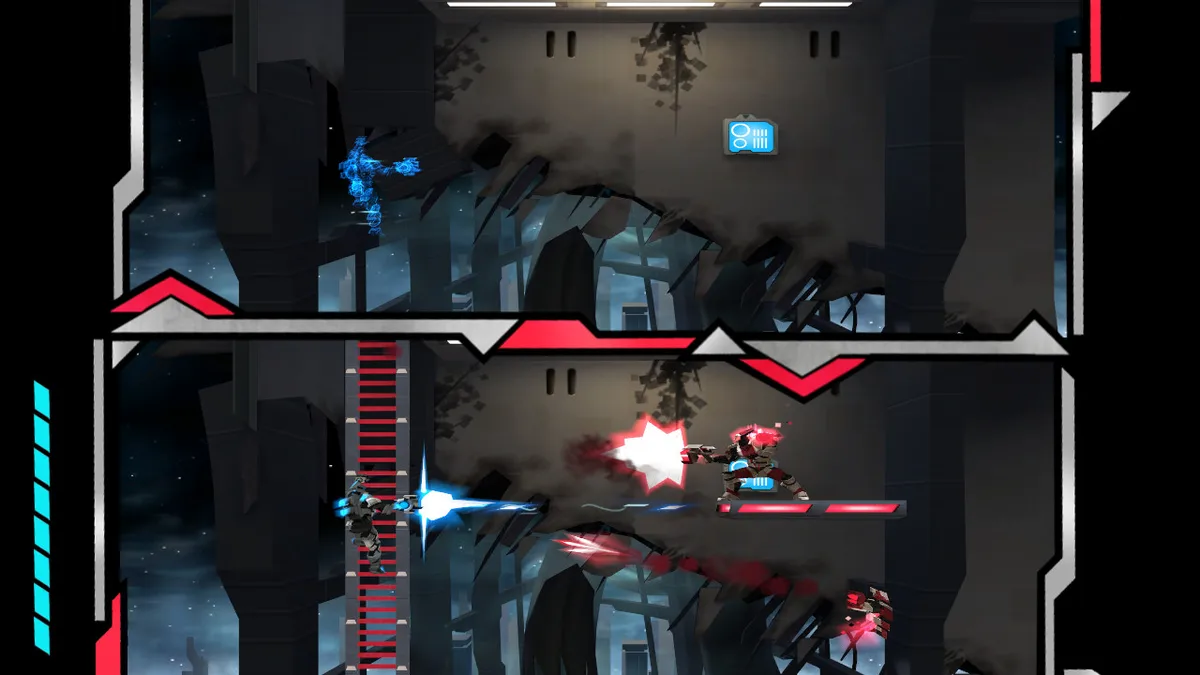
The distinctive hook is simple to state and hard to execute: the world exists twice, and the Entity can move between the two versions at a moment's notice. The official description says the ability to shift between two parallel dimensions lets the player weave through enemy fire, catch opponents by surprise, and leap over impossibly wide gaps by using platforms in both realities. It also promises that playing in two realities at once "literally adds a new dimension" to the platforming genre. Everything else in the game — combat positioning, traversal, environmental hazards, and even the cooperative option — flows from that single shift.
The Core Loop: Shift, Dodge, Surprise, Cross
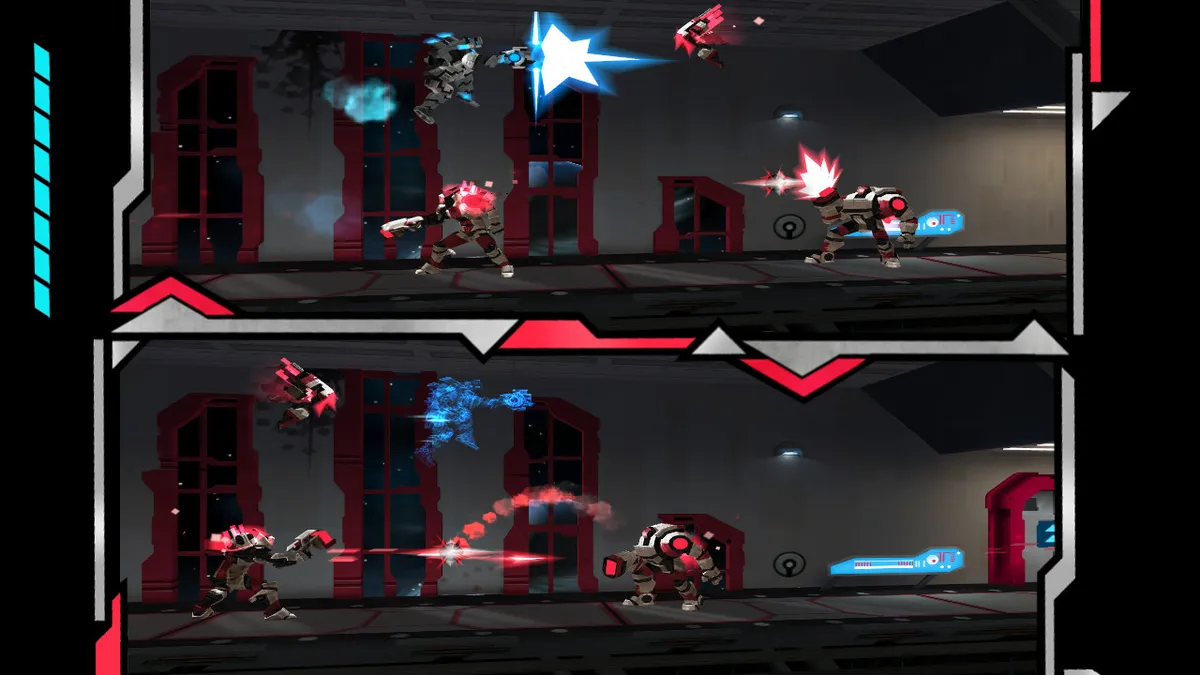
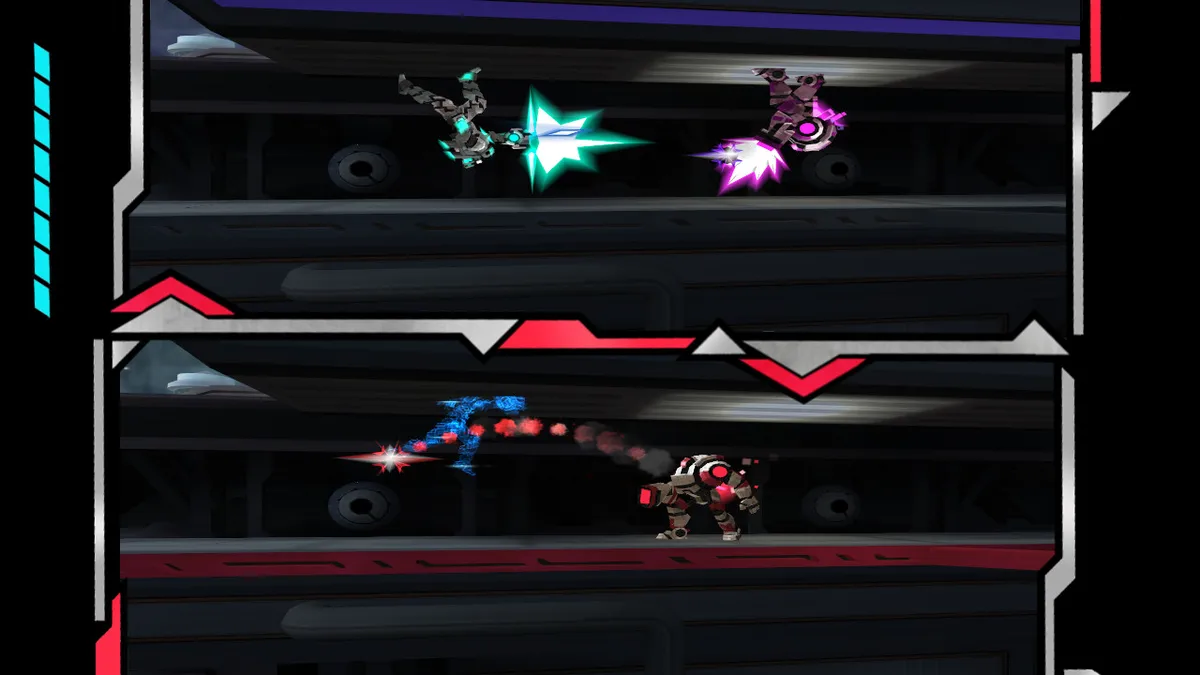
Combat in Fractured Soul is built around the shift as a defensive and offensive tool at the same time. Weaving through enemy fire means the Entity can slip out of a stream of incoming shots by stepping into the other reality, rather than absorbing or outrunning it. Catching opponents by surprise means the same shift can be turned on attackers, so the two uses of one ability pull in different directions: a dodge rewards a quick exit from danger, while an aggressive surprise rewards a shift timed to create an opening.
Traversal uses the same mechanic on gaps that no single reality could bridge. The official description says the Entity leaps over impossibly wide gaps by using platforms in both realities, so a crossing depends on footing that exists in one world and footing that exists only in its twin. That makes the shift a platforming verb, not just an escape valve: the player has to read two layouts at once, then pick the moment to move between them so the jump continues onto the other side's geometry.
The design goal, as the store page puts it, is twofold: play in two realities at once and double the action that a classic 1980s-style platformer would offer. In practice the player is never really in one dimension — the other is always one input away, and the level's geometry, hazards, and enemies have to be considered in pairs. That pairing is the game's identity and the reason its platforming is described as a twist on the familiar 80s template rather than a straight tribute.
Fire, Water, Wind and Anti-Gravity: Two Different Worlds
The two realities in Fractured Soul are not mirrored copies. According to the official profile, fire, water, wind, and anti-gravity each bring their own twist to one of the two dimensions. That means the environmental identity of a space changes when the Entity shifts: the element that defines a stretch of the other world belongs to it specifically, and the player's edge in one reality is the element they meet in the other. Because each element is assigned to a single dimension, a player facing a room has to decide which version of it suits the moment.
This is where the shift becomes a reading skill rather than a reflex. Enemy fire, a platform arrangement, and an element assigned to one world all have to be evaluated together before the player commits to a side. The platforming example the store page gives — leaping gaps by using platforms in both realities — is the clearest case: the footing in one dimension and the footing in the other are not interchangeable, and the crossing only works if the player uses each reality for what it offers. The same logic applies to combat, where catching an opponent by surprise depends on which world the attacker is not watching.
Cooperative Play: One Dimension Each
The official profile offers a local alternative to solo shifting: two can play Fractured Soul on the same PC, with the player and a friend controlling the character in one dimension each. The whole two-reality premise is therefore shared between two people on one machine, with one participant acting in one reality and the other acting in its twin. The mode is described purely in terms of the same PC and the same character split across two dimensions; the material supplied does not specify split-screen presentation or any online cooperative option, and it should not be assumed.
What cooperative play changes is the division of attention. In solo play, one player has to hold both realities in mind, alternating between dodging fire, positioning for a surprise, and reading the two platform layouts. With one dimension per player, each person's patch of the world is smaller, and the shared character still has to cross the same two-world spaces. It is a distinctive local option for a game whose entire design is about being in two places at once.
Five-Star Gates and Hardcore Bonus Levels
Beyond the standard stages, Fractured Soul includes hardcore bonus challenge levels, and the official profile explains how they open: they are unlocked through five-star performances in the main game. The bonus content is therefore gated behind strong results in the main campaign rather than offered as a menu option from the start. The same line calls these levels hardcore, marking them as the game's more demanding side content.
The practical consequence is that the rating is a progress path, not a side statistic. A player who wants the challenge levels has to earn five-star results in the main game first, which makes the campaign's rating performance the threshold between the standard and hardcore content. The published material does not list the exact number of stages, the scoring breakdown for a five-star rating, or the specific content of the bonus levels; those details are not covered here rather than guessed at.
Achievements and Online Leaderboards
Fractured Soul ships with over 100 achievements, which the official profile ties directly to putting the player's platforming skills to the test. The list is large enough to function as a second layer of goals alongside the main stages, and its framing aligns with the game's core platforming: the two-world leap, the dodge through fire, and the precise shift are exactly the kinds of skills achievement hunting tends to reward.
Online leaderboards give the same feats a public scoreboard. The official profile says the leaderboards let players see how they stack up against their friends and the world, turning runs and ratings into recorded comparisons. Together with the five-star bonus unlock, the online rankings give strong play somewhere to go after the campaign: a five-star performance opens the hardcore levels and also places the player in the comparison the leaderboards provide.
Starting Guidance From the Official Description
Because the supplied evidence is the official store description rather than a tested guide, the advice here stays inside what the game says about itself. The most reliable habit to build is treating the shift as a movement option first: the description's three uses — weaving through enemy fire, surprising opponents, and leaping gaps with platforms from both realities — are all cases of moving between worlds to solve a spatial problem. Learning to watch the geometry and hazards of the other reality while acting in the current one is the core competence the game asks for.
A second habit is to see fire, water, wind, and anti-gravity as route information. Since each element belongs to one of the two dimensions, which reality the player occupies changes the environment around them. Before committing to a crossing, it makes sense to check which reality offers the footing the jump needs and which one carries the element the player wants to handle. A third is to treat five-star performances as a goal in the main game, not an afterthought, because five-star results are the documented route to the hardcore bonus levels.
Scroll sideways to see the full table →
| Field | Detail |
|---|---|
| Game | Fractured Soul |
| Released | 2015 |
| Platform | Windows |
| Developer | Endgame Studios |
| Publisher | Endgame Studios |
| Genres | Action, Adventure, Indie |
| Core mechanic | Shift between two parallel dimensions |
| Dimension elements | Fire, water, wind, anti-gravity |
| Local co-op | Two players, one dimension each, same PC |
| Bonus content | Hardcore challenge levels via five-star performances |
| Extras | Over 100 achievements; online leaderboards |
Scroll sideways to see the full table →
| Player action | What the shift does |
|---|---|
| Avoiding fire | Move through enemy fire by changing realities |
| Attacking | Catch opponents by surprise through the shift |
| Traversing gaps | Use platforms in both realities to cross impossibly wide gaps |
| Reading hazards | Fire, water, wind and anti-gravity each shape one of the two dimensions |
| Multiplayer | Share the character, one dimension per player, on one PC |
Sources & further reading.
- Fractured Soul — official game profileRetrieved Oct 31, 2026
First published .