 THE GAME ARCHIVE

No Memories, No Self: The Player's Starting Position
The game opens with the player character waking in a decrepit old mansion, addressed by a woman with jade eyes who declares him the Master of the house and herself his Maid. He possesses no memories and no concept of self, and cannot even be certain he is alive. As a full-length visual novel, the work delivers its gothic suspense tale through text and presented scenes rather than exploratory movement. The Maid's role is to guide: she invites the Master on a journey through the mansion's lifeless halls to behold the tragedies that have befallen its residents, suggesting he may find some trace of himself among them.
The documented purpose of this tour is to explore the mansion's history and the lives of its residents. The narrative is story-driven, and the setting spans nearly a millennium, with the first door opening onto the year 1603, an era of flourishing art and theatre. The player's starting position is therefore defined by absence: no remembered identity, only the Maid's account and the tragedies she presents. Within that structure, the premise links the search for a trace of the self to the residents' misfortunes, while the span of eras provides the historical reach the journey covers.
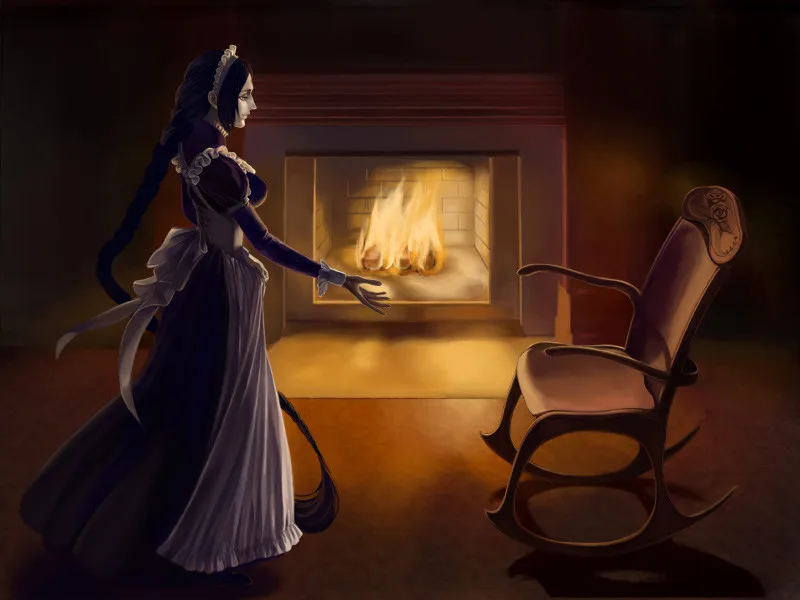
The Maid's Tour Through the Mansion's Lifeless Halls
The Maid's tour is the game's organizing activity rather than a movement system: she leads the Master through the mansion's lifeless halls so that he can behold the tragedies that have befallen its residents. The documented purpose is twofold, to explore the mansion's history and to determine whether some trace of the player's own identity can be found among those tragedies. The Master begins from an absence of memory and self, so each hall and each resident's misfortune is presented as material for that search. Time travel is part of the objective: the journey is framed as passage into other years, with a door standing between the present mansion and each destination.
The first door opens onto the year 1603, an era of flourishing art and theatre, and it establishes how the tour works: the Master crosses from the mansion's halls into a specific historical setting whose residents' tragedies are shown to him. Later stops extend the same pattern across the eras the story spans, so the mansion functions as a hub while each year supplies its own cast and misfortune. The documented rules interact directly: the Maid invites the journey, the halls and doors set its route through time, and the stated aim is to see whether the Master's identity appears among the tragedies witnessed along the way.

Four Doors, Four Eras: 1603, 1869, 1099 and the Witch
The four doors mark the tour's structure, each opening onto a distinct year whose residents' tragedy the Master witnesses. The first door leads to 1603, an era of flourishing art and theatre. The third door opens onto 1869, a technologically advanced period of constant movement, where the mansion's master is an ambitious businessman invested in the rail industry whose fixation on wealth and power drives him to neglect and mistreat his wife. The fourth door lies in 1099, which the Maid identifies as the final tale, presenting a young man who claims to be cursed and a white-haired girl named Giselle, branded a witch and marked for death.
Across these stops, the documented aim is to bear witness to four tragedies set in different times and places, experiencing the mansion's history through four distinct eras and exploring how that history bears on its characters. The rules connect directly: the mansion serves as the point of departure, each door selects a year and its cast, and the Maid frames the last stop as the concluding tale. Progress is thus a sequence of witnessed misfortunes rather than free exploration, with the concrete settings of 1603, 1869 and 1099 supplying the eras the journey covers.
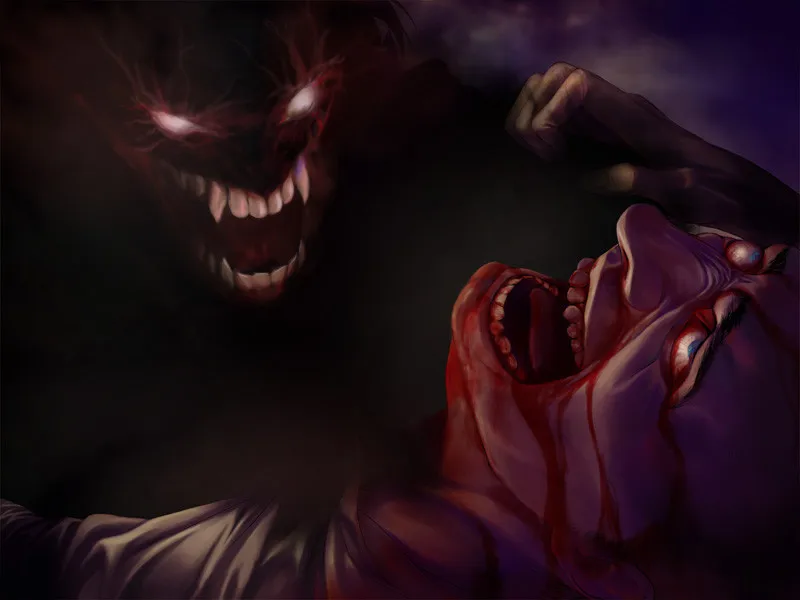
End Here or Press On: Choosing Your Own Story
Once all four tragedies have been witnessed, each set in a different time and place, the game hands the decision to the player. At that point you are free to choose whether to end your story there or press on, so the branch is a deliberate act of closure or continuation rather than an automatic transition. The choice is framed as a question of what the four tales were to you, since a dissenting voice notes that you could bear them only because they were not your own tragedies. Ending the story resolves the tour at its close; pressing on keeps it going, with the documented objective being to determine whether to stop or continue exploring.
Pressing on carries a specific narrative charge: it is the route by which the player confronts the idea that their own tragedies may be hidden among the stories already shown. The witnessed misfortunes thus feed directly into reflection on the tragedies and what they suggest about the player's own identity, rather than serving only as period spectacle. The rules interact concretely: four tragedies are witnessed, the end-or-continue branch appears, and choosing to continue opens the question of whether the Master's own loss sits concealed within the tales he beheld. Should the player end the story instead, that confrontation is declined, and the four-part tour stands as the complete account.
Sources & further reading.
- The House in Fata Morgana — official game profileRetrieved Oct 31, 2026
First published .