 THE GAME ARCHIVE
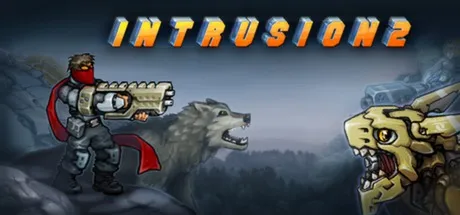
Intrusion 2 is a side-scrolling action platformer built on a specific contrast: classic fast-paced action in the style of 16-bit era sidescrollers, layered with modern physics and animation. Players fight through a science-fiction reserve planet occupied by a hostile military corporation conducting forbidden weapon research, and the things filling those levels react as simulated objects rather than following strictly scripted paths. The game was released in 2012, developed and published by Aleksei Abramenko, and listed on Steam for Windows and Linux.
Premise: A Reserve Planet Under Corporate Occupation
The documented setting is a sci-fi environment on a reserve planet occupied by a hostile military corporation conducting forbidden weapon research. That premise frames the action: the opposition is a corporate military force rather than a lone antagonist, and the terrain being fought over is a research site. The game's own feature list treats that world as a gameplay space rather than scenery, listing a highly interactive environment alongside the enemy and boss content. The sci-fi reserve planet and the corporation's research work are the two supported pieces of the premise, and the levels are the place where both are encountered.
The Core Loop: Fast Action Over Physically Simulated Ground
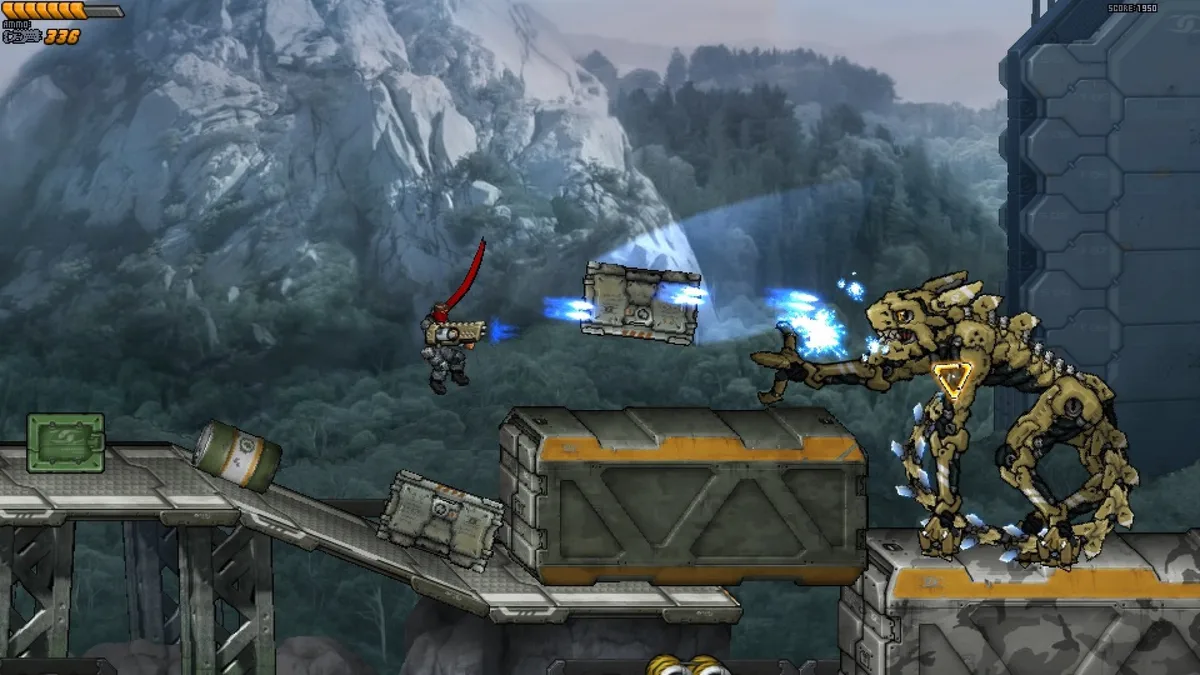
Play is organized around classic fast-paced action — running, jumping and fighting through side-scrolling levels — with modern physics and animation applied to what happens during that action. The documented consequence is that the environment is highly interactive: level objects respond to contact and force rather than being fixed decoration. In practice this shapes the moment-to-moment loop, because the same simulated world that the player moves through also contains the enemies they fight and the props around them. A game built this way invites play that uses the level itself, not only the player's direct attacks, as part of the contest.
The sidescrolling foundation establishes how levels are read: as a sideways-moving progression through platforming terrain populated with enemies and hazards. The modern-physics layer changes the texture of that progression, since objects around the player can be set in motion by contact. Because the environment is interactive, a level is not a passive corridor between fights; the objects in it can be acted on. That is the clearest supported link between the game's two halves — the familiar 16-bit-inspired action style and the simulation running underneath it.
Physics-Based Enemies and Procedural Animation
The feature list states that enemy behavior is based on physics and procedural animation. The documented rule is that foes are simulated bodies whose motion is generated rather than played back from fixed animations, and that this simulated behavior is what governs how they act during a fight. Combined with the highly interactive environment, this means the game's threats and its terrain share one physical world instead of running on separate, scripted tracks. For a player, the meaningful decision this creates is positional: where a fight happens matters, because the surroundings can be acted on and the enemies themselves are physical objects within them.
Procedural animation also changes how combat reads on screen. Because motion comes from each enemy's simulated state, the game's presentation of a fight is tied to what is physically happening to that enemy rather than to a canned sequence. The supported description stops at that level; it does not document specific enemy types, attack patterns or controls. What can be said with confidence is that the animation and behavior systems are described together, and that they sit on the modern-physics side of the design rather than the 16-bit-inspired action side.
Structure and Progression: Nine Levels, Three Multistage Bosses
The game's documented structure is nine huge action-packed levels and three multistage boss battles. The descriptors matter for how a run is likely to feel: the levels are presented as large, and the bosses are built as multi-part encounters rather than single exchanges. Boss battles are therefore checkpoints in the progression as well as combat tests, and each is documented as proceeding through several stages. The feature list does not describe the order of the levels, the placement of the bosses within them, or specific mechanics beyond the multistage nature of each fight, so those details are not asserted here.
Because enemies and terrain are both simulated, and because the levels are described as large, the documented structure supports a particular kind of advancement: pushing through long interactive spaces with physically driven opposition, punctuated by staged boss encounters. That is progression in the sense of moving through the game's content and clearing its named encounters; the supplied material does not describe unlock systems, upgrades, scoring or character growth, so it should not be assumed.
Difficulty Modes and Hard-Mode Scaling
Intrusion 2 lists three difficulty modes, and the one documented difference is that hard mode adds more enemies and dangers. Because the base game is an interactive, physics-driven environment, adding enemies and dangers means adding more simulated content and hazards to the levels the player is already moving through. A higher setting therefore changes the density of the fight rather than, on the supplied evidence, the number of levels or bosses. The three modes are the documented options, and hard mode is specifically characterized as the more crowded one.
For a player choosing between modes, the supported advice is direct: the modes exist as three options, and the demand rises on hard mode through additional enemies and dangers. The material does not state what changes between the other two settings or how difficulty affects the boss battles, so no further distinctions are claimed. What it does establish is that the game offers a choice of three difficulty levels and that the harder end of that choice is defined by more opposition in the levels.
Visual and Design Identity
The design identity the game describes for itself is a blend: the look and action language of classic 16-bit era sidescrollers in a sci-fi environment, with modern physics and animation underneath. The 16-bit inspiration is supported as a stated influence, not as a claim about pixel counts or display resolution, and the sci-fi environment is supported as the setting for the reserve planet and corporate research premise. The distinctive element the feature list emphasizes is the combination itself — familiar sidescrolling presentation with simulation-driven objects and bodies.
Starting Guidance
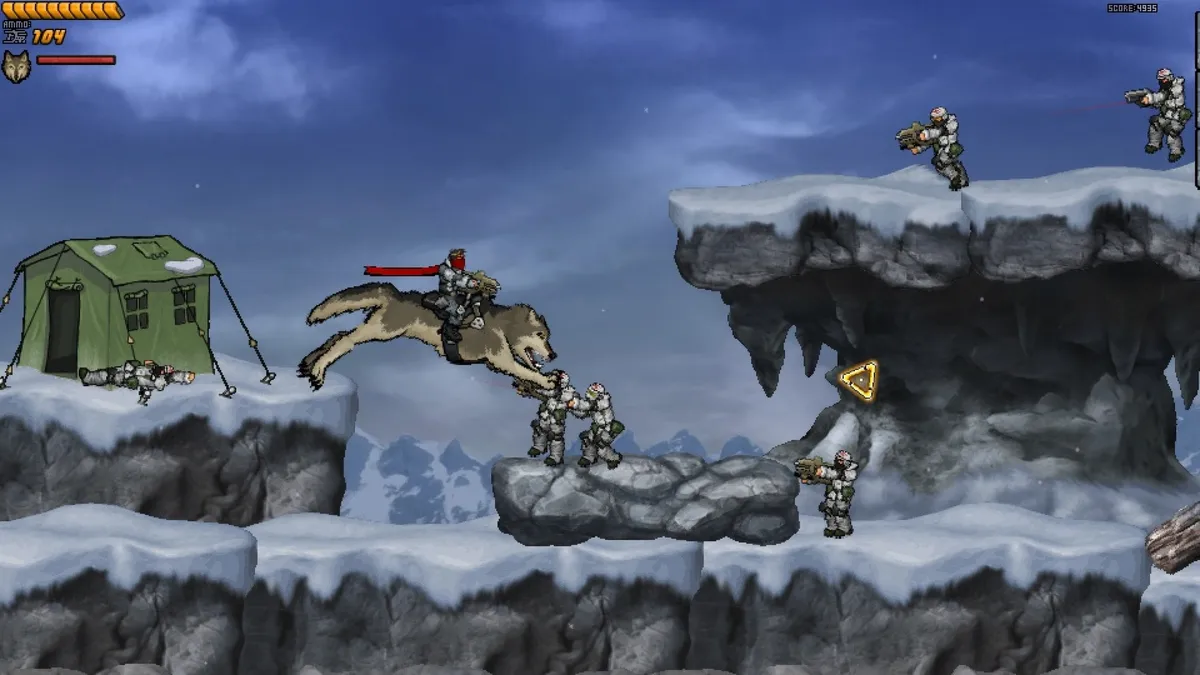
Read the terrain as part of the fight. The game's supported design centers on an interactive environment combined with physics-based enemies, so the most useful early habit is to notice objects and surfaces around a fight instead of treating them as backdrop. Treat the action as fast-paced and keep moving, since that is the action style the game describes for itself. Pick a difficulty with the documented trade-off in mind: hard mode adds more enemies and dangers, while three modes are available in total. Expect the boss content to unfold in stages rather than resolve immediately, because the game lists three multistage boss battles.
Current Official Access
Intrusion 2 is listed on Steam for Windows and Linux, with Aleksei Abramenko credited as both developer and publisher, and the release year given as 2012. The official store page is the documented source for those details. The supplied material does not describe remakes, ports beyond the listed platforms, or additional package contents, so the article treats the game as the 2012 release and does not claim edition differences.
Scroll sideways to see the full table →
| Detail | Documented value |
|---|---|
| Title | Intrusion 2 |
| Release year | 2012 |
| Developer / Publisher | Aleksei Abramenko |
| Platforms | Windows, Linux |
| Genres | Action, Indie |
| Levels | 9 large action-packed levels |
| Boss battles | 3 multistage boss battles |
| Difficulty modes | 3 modes; hard mode adds more enemies and dangers |
| Enemy behavior | Based on physics and procedural animation |
| Environment | Highly interactive |
Sources & further reading.
- Intrusion 2 — official game profileRetrieved Oct 27, 2026
First published .