 THE GAME ARCHIVE
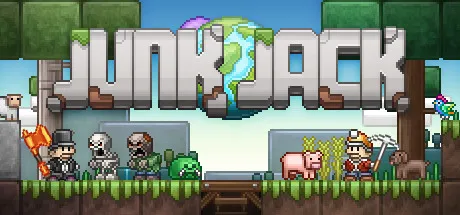
Junk Jack makes home improvement the centre of a sandbox that stretches across planets. You build and furnish a home, explore procedural worlds, and collect loot that can either become equipment or go on display. That choice gives exploration two useful destinations: an item can contribute to what you wear, or become part of the place you are making. Farming, creature keeping and crafting add other projects alongside travel and combat, rather than reducing the game to a single collecting activity.
A Home That Gives Collections a Purpose
Building draws on hundreds of placeable objects, blocks and decorations. These provide both construction materials and ways to furnish the resulting space. Craftable, customizable furniture sets extend that work beyond putting down a structure: choosing furnishings is another part of developing the home. A useful starting project is therefore a building you want to improve, not merely a collection of objects you want to acquire. The game's stated focus on home building gives those individual choices a shared purpose.
Dedicated display objects make the connection between collecting and decorating concrete. Shelves hold rare treasures, while mannequins display equipment pieces. A wearable does not have to remain something you actively equip to have a place in your project; displaying equipment is itself a supported use. If collecting appeals more than fighting, these objects offer a clear home-building goal: arrange the things you find into a collection you can see, rather than treating every discovery solely as potential equipment.
Crafting: Grid or Single-Click Simplicity
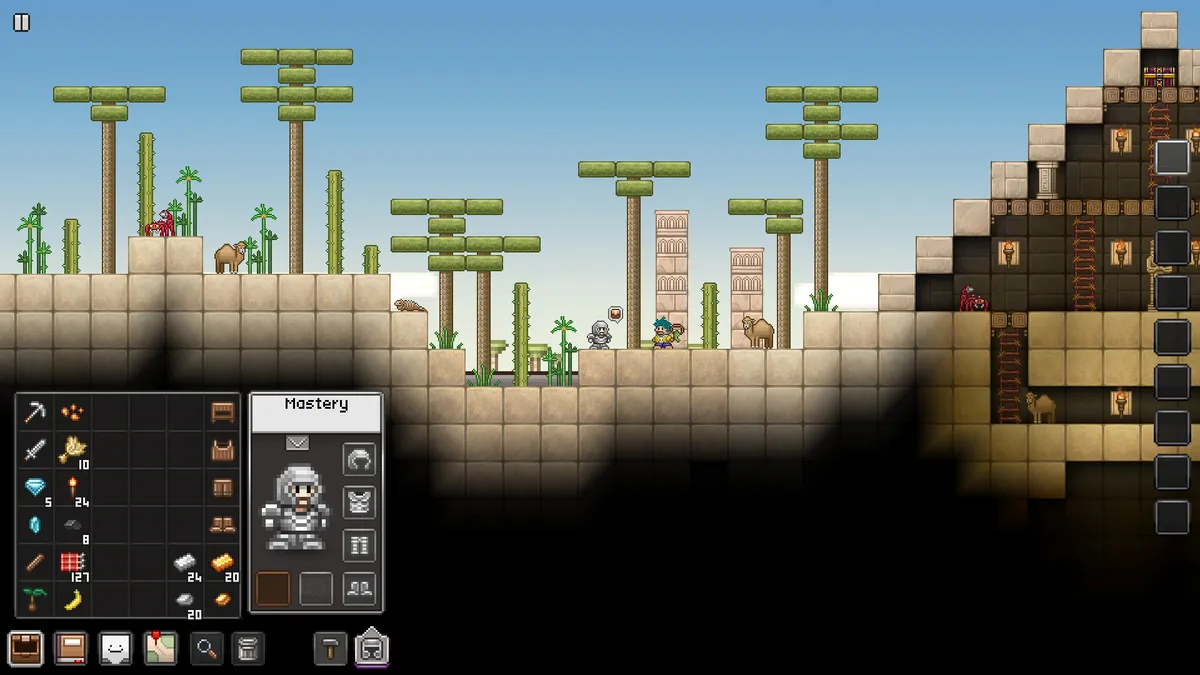
Junk Jack offers more than one thousand different crafts and two crafting styles: a crafting grid or simple mode. Simple mode allows items to be crafted with a single click, making it the documented option for players who prefer a more direct crafting interaction. The meaningful choice here is how you engage with crafting, not a stated change to the results or recipe requirements. Choose the grid if that format interests you, or simple mode if you want the single-click approach.
Growing plants and cooking form a documented production chain: cultivate plants, then use them in food recipes. That makes a growing project a source of ingredients for another activity. Potion crafting has a separate named workstation, the chemistry bench, which supports hundreds of potions. For a practical starting focus, choose between developing the plant-to-food connection and exploring potion production at the bench. These are concrete projects with different outputs, rather than interchangeable descriptions of a generic crafting system.
Flowers offer another kind of cultivation, built around mixing seeds to grow thousands of unique flower combinations. Unlike the explicitly stated route from crops to cooking ingredients, the documented attraction here is the range of combinations you can grow. Players interested in cultivating variety can make seed mixing a project of its own, while those who want a direct connection to food preparation can concentrate on plants used in recipes.
Following Pets, Breeding Animals and Tank Displays
Creature keeping involves several distinct actions. Tameable pets can be collected and will follow you around, making companionship an observable part of play. Capturing and breeding animals provides a different project, with cows, sheep and pigs among the named examples. The distinction helps when choosing what to pursue: a following pet answers the desire for a companion, while capture and breeding centre the activity on keeping and reproducing animals. Neither needs to be treated as merely another form of decorative collecting.
Fishing connects creature collection back to the home through fish tanks. You can fish and display captured animals in tanks, giving the catch a visible destination. For someone building a collection-focused home, this complements shelves and mannequins without serving the same purpose: treasures, equipment and aquatic captures each have their own display option. A tank project therefore joins two activities—catching and exhibiting—rather than ending when the fish is collected.
Portal Travel, Combat and Equipment Choices
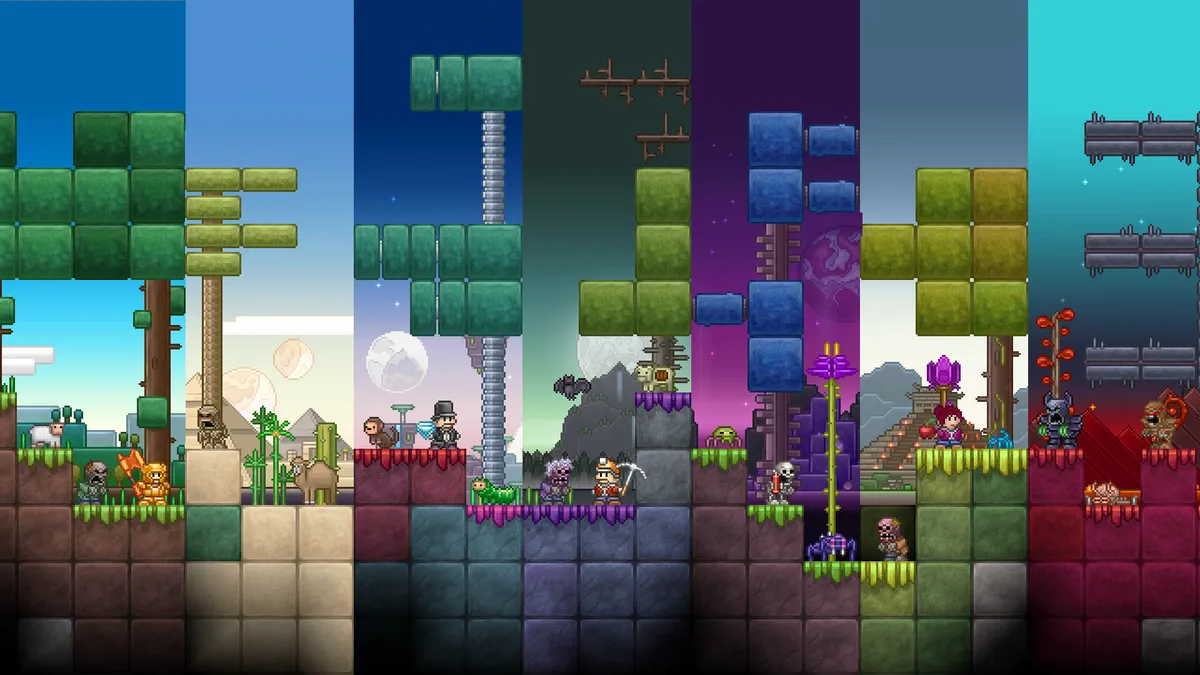
Portals provide travel between 12 planets with distinctive handcrafted environments. Worlds are also procedurally generated and differ each time you create a new one. Those features describe different aspects of exploration: the planets supply a set of destinations, while generation varies newly created worlds. Exploring them brings monsters to combat, crafts to learn and loot to equip or display. Discovery can consequently develop both your collection and your crafting interests, rather than serving only as a route to another fight.
Combat involves hordes of mobs and many weapon types. Alongside weapons, the equipment system contains hundreds of wearables with individual stats. Those statistics give you a concrete basis for considering equipment rather than treating every wearable as equivalent. When exploring, consider a find's equipment use before deciding whether to display it at home. This is the documented connection between discovery and character equipment: loot can be equipped, while wearable items have distinct statistics.
Construction Beyond Decoration
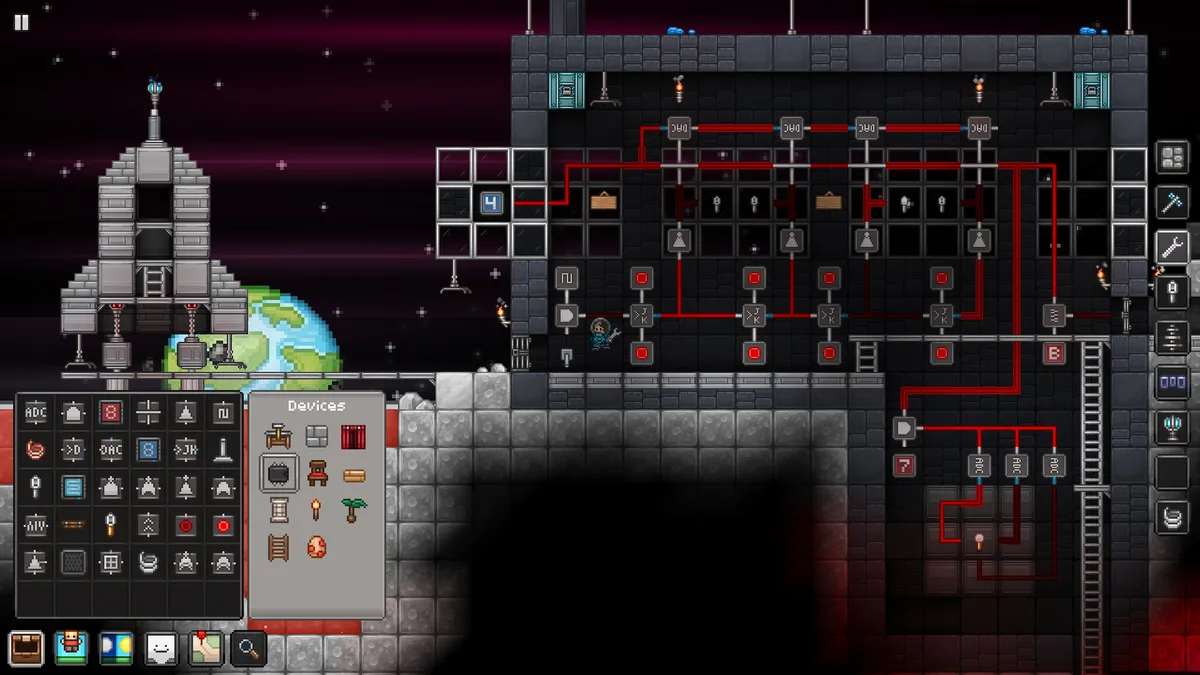
Electronics expands construction into intricate contraptions, with even complete CPUs among the stated possibilities. This gives technically minded builders a different ambition from furnishing rooms or arranging collections. Creative mode is also available for building, providing a mode explicitly directed toward construction projects. Together, these features broaden what a building goal can mean in Junk Jack: it might be a furnished home, a carefully presented collection, or an electronic creation whose appeal lies in assembling a working contraption.
Sources & further reading.
- Junk Jack — official game profileRetrieved Nov 3, 2026
First published .