 THE GAME ARCHIVE
Lightning Katana: Cutting Through Enemy Fire
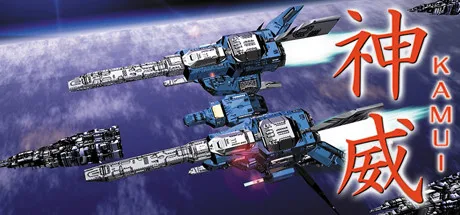
KAMUI is a fighter craft built around brain fusion technology derived from the Xaffiquel Theory, and that framework carries directly into its combat design. The Lightning Katana is the tool the game documents for eliminating enemy fire: bullets can be cut down rather than slipped past, turning incoming patterns into something the player actively dismantles. Within the same 2D arcade shooting action that spans high and low altitude planes, this gives the craft a defensive option tied to its weapon rather than to movement alone, and the six stages are described as meticulously designed levels where that destruction applies.
The Lightning Katana sits alongside a separate auto-targeting Lightning Attack, and the score multiplier system is built on that attack rather than on the katana itself. The two mechanics therefore divide labor: one erases the bullets flowing toward KAMUI, while the other feeds the multiplier through automatic targeting. The documented difficulty settings and rank system surround these systems, with settings selected from several options and difficulty tuned toward precise enemy placement and algorithms. The connected systems described are the fighter, its bullet-destroying katana, the auto-targeting attack, the multiplier, and the rank and difficulty framework.
Auto-Targeting Lighting Attack and the Score Multiplier
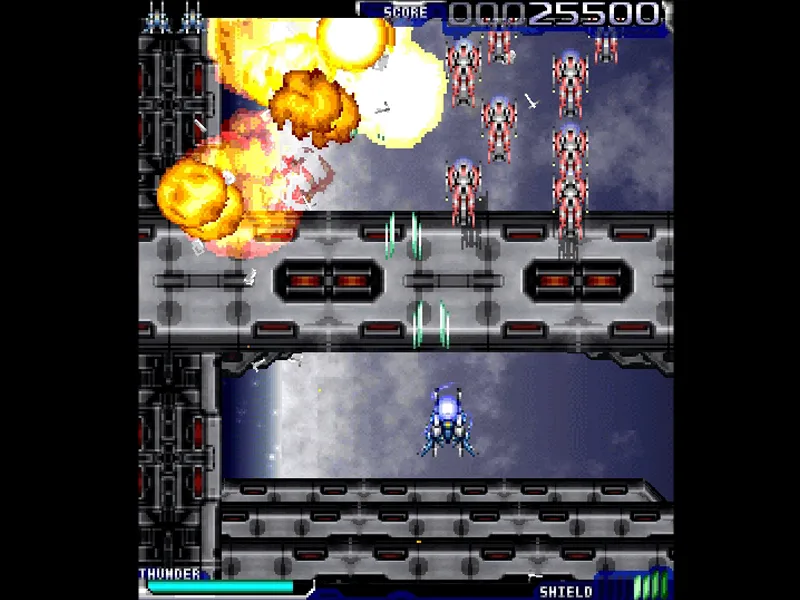
The auto-targeting Lightning Attack is the mechanic the score multiplier is built on, so scoring in KAMUI depends on an offensive system that picks its own targets rather than on the Lightning Katana. The katana handles enemy bullets directly, cutting them down as they approach, while the Lightning Attack feeds the multiplier. Keeping the two apart matters: a player who leans on bullet destruction trims incoming fire, but the scoring gain is tied to the automatic attack instead. The documented rules place both tools on the same fighter craft across the 2D arcade shooting action over high and low altitude planes.
These systems operate inside a wider framework: six stages of meticulously designed levels and presentation, several selectable difficulty settings tuned toward precise enemy placement and algorithms, and a rank system. The multiplier does not stand alone, because it shares the aircraft with the bullet-destroying katana and runs through the same stages under those difficulty conditions. The concrete interaction is between an automatic attack that drives scoring and a manual-style weapon that removes enemy fire, both scoped by the documented 2D arcade shooting action over high and low altitude planes. A Steam product record date appears in the catalog, but no original release year is documented here.
Difficulty Settings, Rank System, and the Six Stages
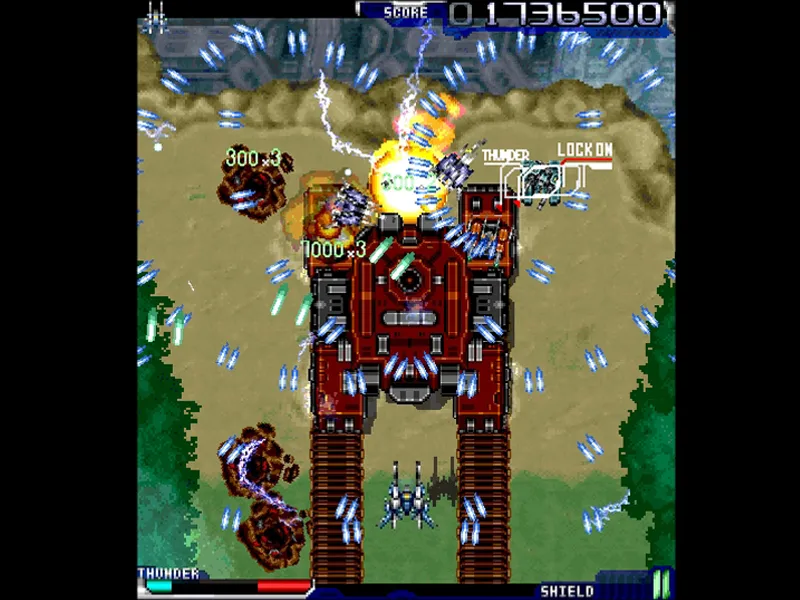
Difficulty in KAMUI is handled through a rank system that can be approached in two ways. The player may choose from several difficulty settings built around precision enemy placement and algorithms, tailoring the challenge before play begins. Alternatively, the game can adjust the difficulty automatically according to the player's demonstrated skills, letting the rank system respond to performance rather than a fixed selection. Both routes sit within the same finely tuned framework, so the enemy positioning and algorithmic behavior defined by the settings shape how the six stages play out under whichever method is active.
The campaign spans six stages of meticulously designed levels and presentation, staged as 2D arcade shooting action across high and low altitude planes. Within those stages, the documented systems interact: the Lightning Katana destroys enemy bullets, the auto-targeting Lightning Attack drives the score multiplier, and the selected or auto-adjusted difficulty determines enemy placement and algorithms throughout. A Steam product record date appears in the catalog, but no original release year is documented here, so the six stages are best understood through their design description rather than a dated release history.
TATE Display and the Fight Over High and Low Altitude
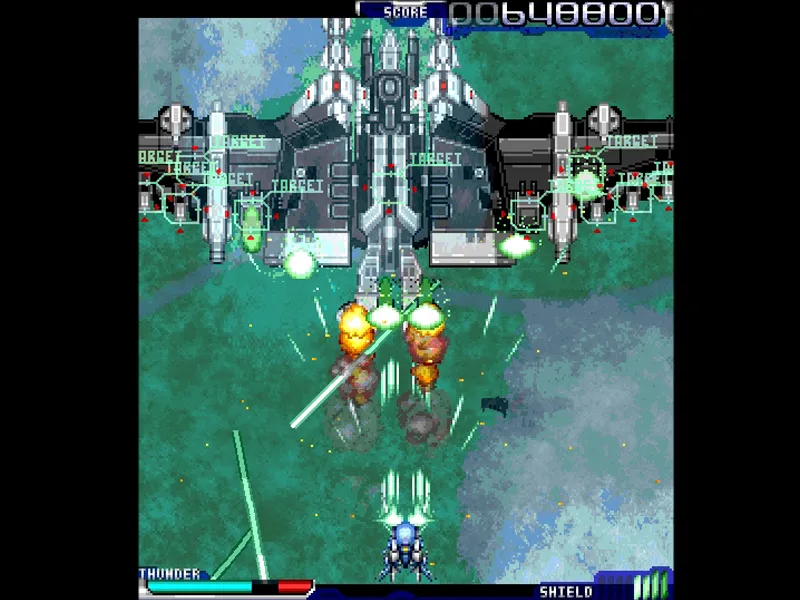
The English version adds a TATE rotated display mode, and that option sits alongside the high and low altitude planes the action moves across. Rotating the screen so its long axis runs vertically changes the shape of the window through which those two altitude planes are framed, giving a taller view instead of a wider one. The six stages of meticulously designed levels and presentation remain the same content; the rotated mode only alters how that content meets the display, and the catalog presents it as an addition specific to the English release rather than a change to the shooting itself.
The rotated display does not change the documented combat rules: the Lightning Katana still destroys enemy bullets, the auto-targeting Lightning Attack still drives the score multiplier, and the difficulty settings and rank system still shape enemy placement and algorithms across the six stages. A Steam product record date appears in the catalog, but no original release year is documented, so the TATE option is best described as an English-version display addition rather than tied to a dated release history. The same high and low altitude shooting is simply presented through a rotated orientation.
Sources & further reading.
- KAMUI — official game profileRetrieved Oct 30, 2026
First published .