 THE GAME ARCHIVE

What the Player Actually Does
Kingpin: Life of Crime is a Windows action game from Xatrix Entertainment, published by Interplay, listed on Steam with a 2009 product date. The manual frames the play loop in concrete, interconnected terms: you recruit street gang members, order them around, take cash off the bodies you leave behind, and convert that money into better hardware. The distinctive wrinkle is that your crew is not decorative. A hired member follows, holds ground, attacks a chosen victim, or cracks a safe on command, so the same cash that buys a Tommy gun can instead buy a second gunhand.
Everything below is drawn from the publisher-supplied manual and store description. The manual documents default keys, weapon behavior and menu options; it does not describe an actual play session, so the guidance here explains the documented rules and the choices they imply rather than hands-on findings.
Building a Crew and Barking Orders
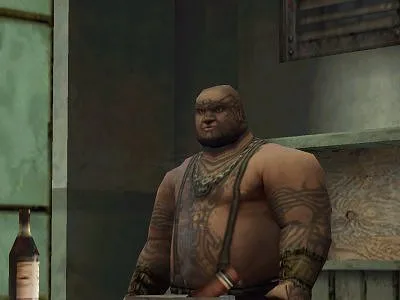
Recruits are easy to pick out on the street because they wear distinctive gray-blue shirts. Walk up and press Y to open a positive conversation; if the character is available, he names the fee required to join. Answer the offer with Y to hire or X to decline. The manual is explicit that you need enough money on hand to cover the quoted price, which makes recruitment a spending decision rather than a free pickup.
Once a member is hired, point the cursor at him and issue one of three orders. Y means Follow Me or Move Out of the Way; X means Hold Position; Q sets an Attack Desired Target mode that also covers opening a lock or safe. The attack sequence is a short chain: point at the recruit, press Q, then place the cursor on the intended victim and press F, the activate key. That makes Q a targeting mode rather than an instant command, so positioning happens before the trigger. The same Q mode is the manual's route to safe-cracking, which ties crew direction directly to the cash economy.
In practice the order set creates a small tactical vocabulary. Hold Position keeps a member parked as a guard or a distraction while you move elsewhere. Follow Me relocates him, and doubles as a way to clear a body out of a doorway. Attack Desired Target commits him to a specific opponent rather than letting him pick. Because every order routes through the cursor, you generally decide who is being commanded and what they are being commanded to do before giving the keypress.
Everyday Movement, Interaction and Body Search
Traversal runs on a handful of default keys. Tap A to jump, and the jump carries farther if you are already moving forward or running, so momentum is part of the move. Hold C to duck and crawl forward, releasing it to stand back up. Hold Left Shift for sneak mode; the manual stresses that this is not a toggle, so the key must stay down for as long as you want to stay quiet and avoid detection. That means sneaking costs a held finger at all times, which shapes how you plan an approach.
F is the activate key and works on anything that needs using: switches, levers, doors and the like. Approach and press. Dead bodies use a two-key sequence: hold C to crouch, then press F. When an enemy dies he drops keys, weapons and ammunition on the ground near him, but money must be taken directly off the corpse, so the search matters for income. Search bodies promptly; the manual notes they tend to get dragged off after a while, which makes looting a timed habit rather than a chore to save for later.
Melee, Pistols and the Tommy Gun
The lead pipe on the 1 key is the default weapon, only a marginal step up from bare hands. It is weak for damage but useful for breaking fences, opening crates and other chores you would rather not spend ammunition on. Its short reach means staying in motion during a fight, though against an unarmed opponent it can still kill or seriously maim. Double-pressing 1 selects the crowbar, which can be bought early, offers extended reach and twice the damage, and also breaks fences; the manual calls it the best option when no gun is available or affordable.
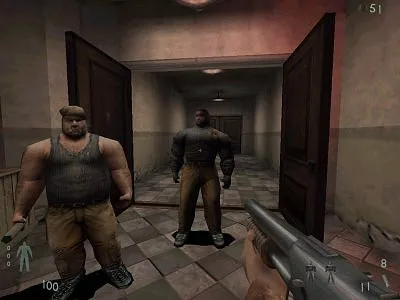
The .45 semi-automatic pistol on the 2 key is the first projectile weapon, and the manual states you need it to finish the first level. It packs a decent punch but is wildly inaccurate past roughly 15 feet, and thugs can absorb several shots. The shotgun is strong close in, offset by a long reload and a very wide spread at long range. The Tommy Gun on the 4 key fires .45 rounds at a high rate of fire, making it the most powerful lead-shooter for cutting through a crowd, though it loses accuracy at long range.
Ammunition often lives in distinctive green rectangular crates that hold various ammo types. Shooting one makes it explode; hitting it with the pipe or crowbar breaks it apart and reveals the contents. That makes melee a supply tool as well as a fallback: the same pipe that is poor at killing is the safe way to open a crate you do not want to detonate.
Heavy Hardware: Grenade Launcher, Bazooka and Flamethrower
The grenade launcher on the 6 key tosses a timed fragmentation grenade that does not explode on contact. The delay is the point: the manual recommends it for clearing out rooms at a distance, tossing a grenade through a window and waiting, while warning that a careless shot can cost you your anatomy. The bazooka on the 7 key fires a flaming projectile that inflicts incredible damage on impact and throws shrapnel in all directions, and its splash damage is powerful enough to kill most enemies outright even when the projectile itself misses.
The flamethrower on the 8 key sprays a fiery liquid that sticks to whatever it touches; once a target is on fire, it keeps burning. That lingering burn is a different effect from the bazooka's instant blast, so the two weapons answer different situations: one spreads damage across a group at impact, the other keeps working on anyone it caught. Managing all of these is simple on paper. Press R to reload the displayed weapon, and G to toggle the weapon up and down, holstering it out of sight.
Spending Cash at the Pawn-O-Matic
Weapons, ammunition and health do not typically lie on the ground waiting to be picked up. Caches exist at points in the game, but the manual warns they are usually heavily guarded, so visiting the Pawn-O-Matic is the safe way to enlarge your arsenal. Inside, weapons are unusable; you deal directly with the shopkeeper through the Pawn-O-Matic interface, with an on-screen box handling the transaction. The HUD tracks money for exactly this purpose, alongside ammunition counts and hire icons showing how many henchmen you have and what commands you have given them.
Cash ties the systems together. The same money buys store goods and covers a recruit's named hire fee, and it comes from fighting and from searching bodies, where it must be taken directly off the corpse. A player is therefore always choosing between a gun on the wall and a gunhand on the street. The HUD readout of hire icons and current orders supports that reading: it lets you see at a glance what your money has bought and what your crew has been told to do.
Network Rumbles, Difficulty and Visual Options
A network game begins with the Start Network Server option, which opens a setup screen. The Initial Map chooses which arena loads first, and the Rules choice switches between traditional Deathmatch and Bag Man. Three numeric limits control the session: the Time Limit counts minutes and a value of zero means no limit; the Frag Limit sets the death toll at which the game restarts, or restarts and loads the next map; and the Cash Limit applies specifically to Bag Man.
Internet play can run through SegaSoft's HEAT.NET service, which the manual describes as fast, free and supported by dozens of dedicated servers across the United States, with automatic matchmaking. Offline, the Game menu offers skill settings ranging from extremely easy to nearly impossible, so a session can be tuned before it starts. The Visuals menu selects one of several OpenGL modes and adjusts screen modes and settings, while the Options screen customizes keyboard, mouse or joystick controls along with audio and gameplay options.
Starting Advice from the Rules
Three habits follow directly from the manual. First, get to a Pawn-O-Matic early, since the safe route to a real arsenal is buying rather than raiding guarded caches, and the pistol is required to finish the first level. Second, loot promptly: money only comes off bodies, and bodies get dragged off, so the crouch-plus-F search should happen right after a fight. Third, treat the crowbar as a budget insurance policy; it is cheap, hits twice as hard as the pipe with longer reach, and opens the same fences and crates. Only after those routines are set does saving for a recruit make sense, because a hire fee is a named cost you must be able to meet.
Scroll sideways to see the full table →
| Default key | Function |
|---|---|
| Y | Positive talk / yes; with cursor on recruit: Follow Me / move out of the way |
| X | Negative talk / no; with cursor on recruit: Hold Position |
| Q | Order Attack Desired Target / open lock or safe (then F on target) |
| F | Activate switches, levers, doors; confirm attack target |
| C | Hold to duck and crawl; with F to search bodies |
| A | Tap to jump; carries farther when moving or running |
| Left Shift | Hold for sneak mode (not a toggle) |
| R | Reload displayed weapon |
| G | Toggle weapon up and down (holster) |
| 1 / double-1 | Lead pipe / crowbar |
| 2 / 4 | Pistol / Tommy Gun |
| 6 / 7 / 8 | Grenade launcher / bazooka / flamethrower |
Sources & further reading.
- Kingpin — Life of Crime — official game profile Retrieved Oct 20, 2026
- Kingpin — Life of Crime — official game profile — publisher-supplied gameplay manual Retrieved Oct 20, 2026
First published .