 THE GAME ARCHIVE
Turn-Based Battles and Random Battlefield Obstacles
King's Bounty: Legions is a 3D online strategy game built around turn-based combat in a fantasy universe of magic, wondrous creatures and wicked monsters. Players take the role of a knight, forge armor in the smithy, upgrade troops and learn new spells while assembling an army drawn from over 50 creatures. Each battle runs as a sequence of turns, and whether the opponent is a friend's army or a horde of creatures, spells are planned around their duration and cooldown before committing to a fight.
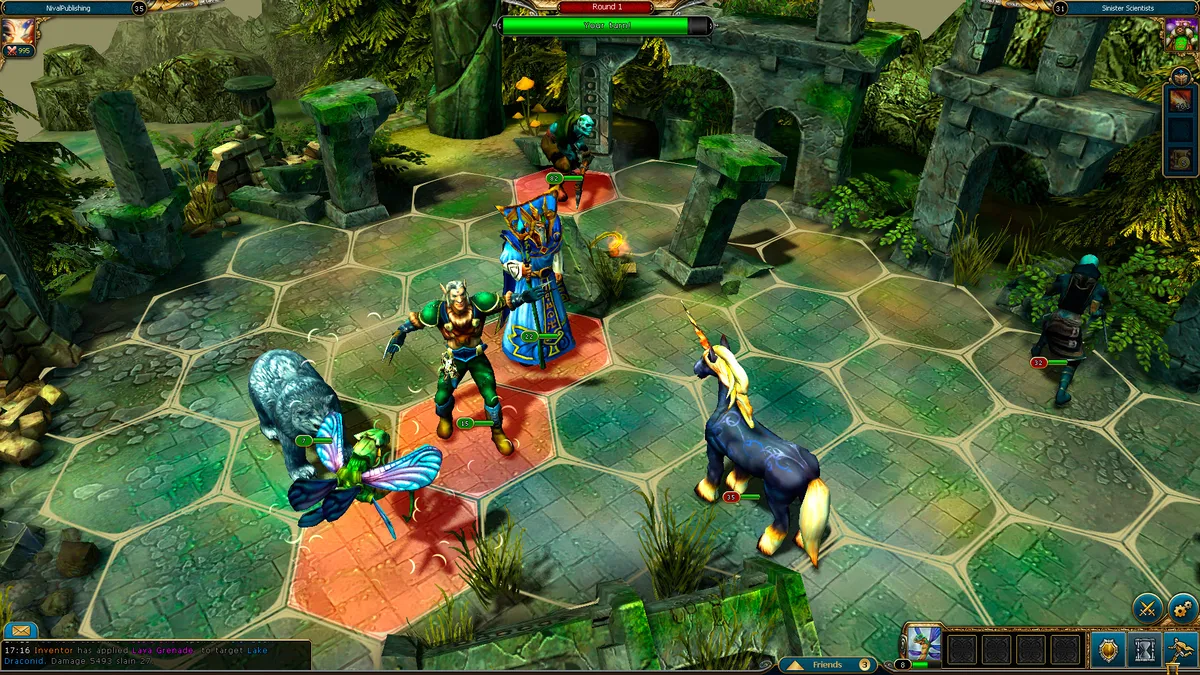
The battlefield itself changes between engagements: obstacles are randomly generated, so no two fights share the same layout. This randomness sits alongside the turn-based structure, meaning positioning and creature abilities must be weighed against whatever cover or barriers appear. Armies are built by calling all sorts of creatures to the banners, and their abilities are used to emerge triumphant from any fight. The same combat frame applies when battling friends' armies or hordes of various creatures across the game's universe.
Combat Spells: Duration and Cooldown Timing
Combat spells in King's Bounty: Legions are planned around two timing factors: how long an effect lasts and how long must pass before the spell can be used again. Because battles proceed as a sequence of turns, a spell cast in one turn carries into later turns according to its duration, and its cooldown gates when it becomes available once more. The game's guidance to plan carefully how to use combat spells points to this interaction, so a player weighs whether to spend a spell now or hold it for a later turn when its effect will matter more against a real opponent in PvP.
Spell use is acquired through progression rather than fixed from the start: players upgrade troops and learn new spells while assembling their army. That means the spell options available in a given battle depend on what has been learned beforehand, and each added spell brings its own duration and cooldown into the turn-based plan. The turn sequence sets the clock against which both timers are measured, tying spell learning, duration and cooldown into the same combat frame. Joining a clan and earning an aura that improves the hero's leadership also feeds into the army that carries these spells into battle.
Creature Roster and the Five Combat Styles
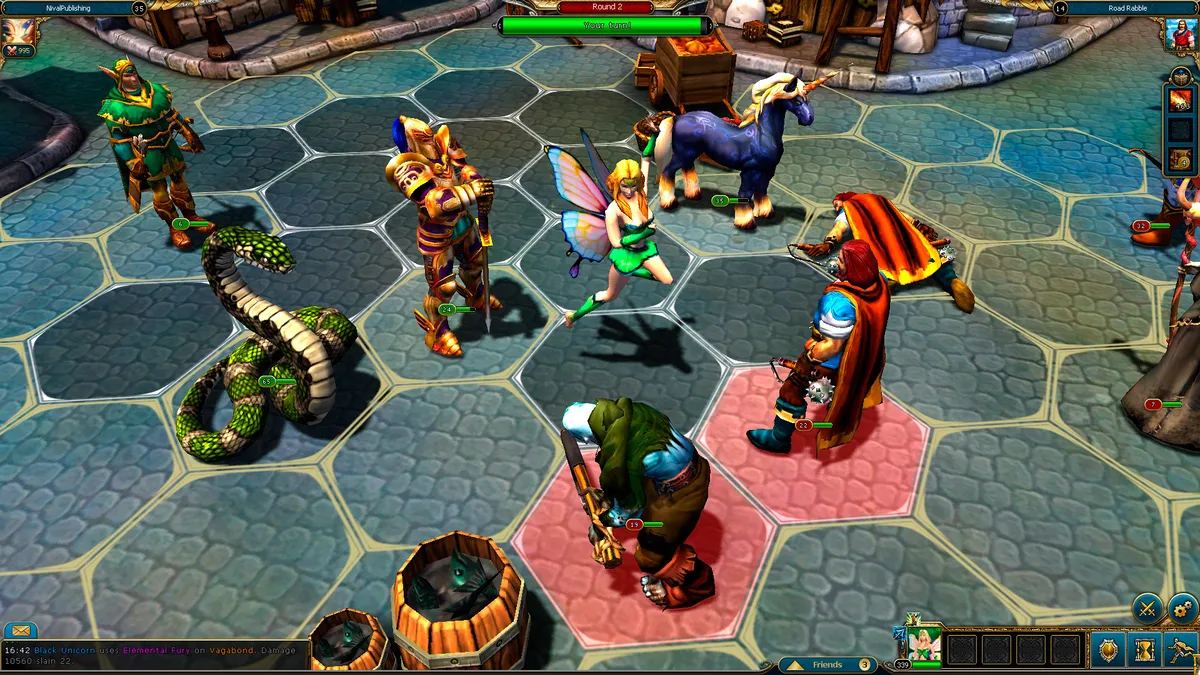
Army building in King's Bounty: Legions centers on calling creatures to the player's banners, drawing from a roster of more than 50 creatures that fall into five distinct combat styles. The documented example is the archer, which is effective against healers and mages, while healers fare better against mages. Assembling the army is therefore a matter of matching creature abilities against the styles an opponent fields, since these counters decide which units hold the advantage in a given fight.
Those creature abilities are used to emerge triumphant from any fight, and the game frames this as part of becoming a knight who forges armor in the smithy and amasses an army. Troop upgrades and newly learned spells feed into the same force, so the roster a player brings to a battle reflects prior progression rather than a fixed starting set. The documented style counters, such as archers against healers and mages, sit alongside these upgrades as the concrete rules governing how creature choices interact.
PvP Matchmaking, Ratings and Garrison Sieges
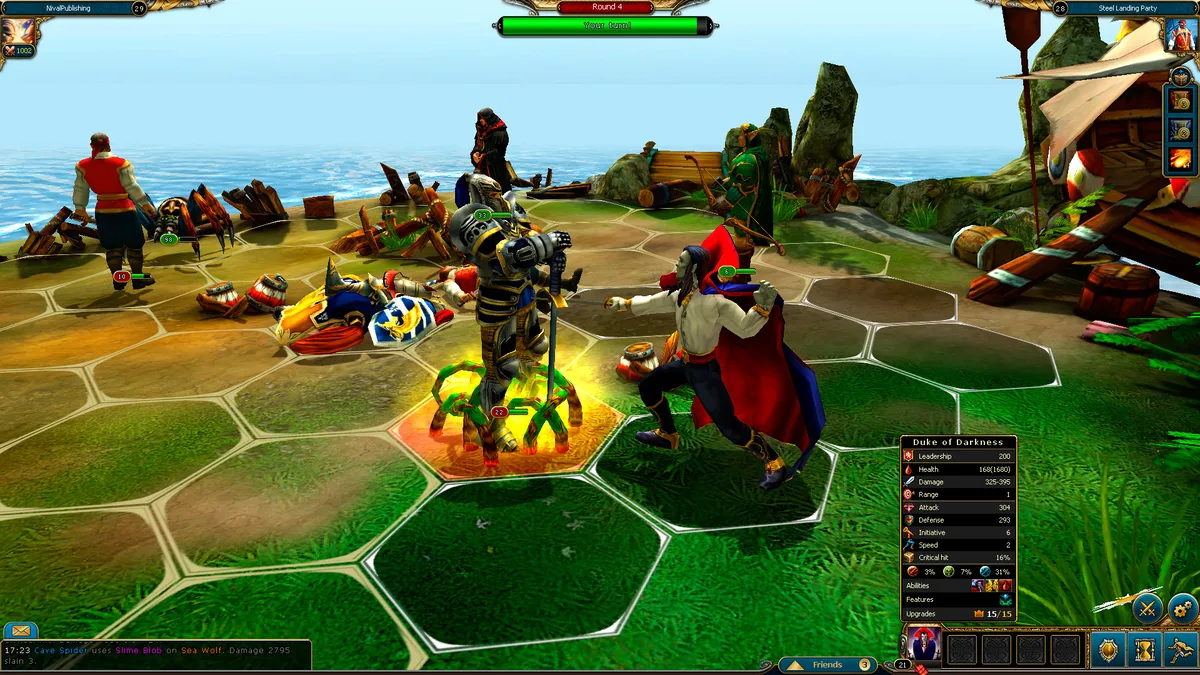
In player-versus-player mode, the automatic selection system matches you against an equal opponent drawn from anywhere in the world, and these are real people who do not necessarily fight by the rules. Beating them moves you upward through the ratings, with the top of the standings as the goal. Because the opposition is human rather than scripted, the fixed assumptions that work against creature hordes do not apply; the same turn-based combat and random obstacles carry over, but the opposing army is assembled and commanded by another player.
Alongside rated duels, you can siege enemy garrisons to procure elements used to craft runes that enhance your army. The resource loop rewards volume: the more you fight, the more valuable resources you acquire for crafting your hero's gear, so repeated PvP matches and garrison raids feed the smithy and rune work. Joining a clan adds a shared aura that improves your hero's leadership, tying cooperative membership to the strength of the force you field in these matches. Together, ratings, sieges and crafting form the documented progression path around the combat.
Clans, Auras and Cooperative Play
Clan membership in King's Bounty: Legions is tied to a shared aura that raises the hero's leadership. Working together as a clan to earn that aura feeds directly into the force a player fields, since leadership governs the army. The clan layer therefore connects cooperative membership to the same turn-based battles and PvP engagements covered elsewhere, where the army assembled carries learned spells and upgraded troops into fights against other players.
Beyond rated duels, players can lay siege to enemy garrisons to procure elements used in crafting runes that enhance the army. The resource loop is tied to volume of combat: the more a player fights, the more valuable the resources acquired for crafting the hero's gear. Clan auras, garrison sieges and the smithy's rune work thus link cooperative membership and repeated fighting to the strength of the force taken into battle.
Troop Upgrades, Quests and Cross-Platform Armies
Progression in King's Bounty: Legions is tied to the knight and the smithy. Players upgrade their troops and learn new spells, and the game tasks them with forging armor in the smithy before amassing an army. Questing is the other documented progression thread: the game asks players to complete hundreds of quests, with the stated aim of truly earning the king's bounty. So upgrades, spell learning and quest completion all feed the same knightly project of building a stronger force, rather than sitting apart from the battles.
The game runs its armies across platforms on a single shared server. PC players and owners of mobile devices play together there, so each person can pick PC, iOS or Android and still stay connected to friends. That shared server is the concrete setting for the social layer: players wage battle against friends and share achievements, and they can join a clan or create their own, reinforcing their own garrison while assaulting others' positions. Cross-platform play and clan membership thus meet in the same online space.
Sources & further reading.
- King’s Bounty: Legions — official game profileRetrieved Oct 28, 2026
First published .