 THE GAME ARCHIVE
Nonlinear Platforming Through a Massive, Open World
Dust: An Elysian Tail builds its platforming around nonlinear routes rather than a single forced path through each area. Players move through a massive, open world where the level design is meant to reward exploration and experimentation: reaching a ledge or distant section may depend on how you approach the terrain rather than on following one prescribed sequence. That openness ties the moment-to-moment jumping and traversal to the broader structure of the game, since the world itself is expansive and filled with characters, quests and secrets to encounter along the way.
Exploration in this open world is also how the game's hidden content is surfaced. Ancient secrets and powerful upgrades are described as hidden throughout the massive world, so the platforming routes and the search for those discoveries feed into each other: wandering off the obvious path is the documented way to find them. The same expansive setting holds friendly villagers, unique characters and quests, giving each stretch of terrain a reason to be revisited. The documented loop is therefore straightforward: explore the open world, experiment with nonlinear platforming, and uncover secrets and upgrades as you go.
Easy-to-Learn, Hard-to-Master Combat
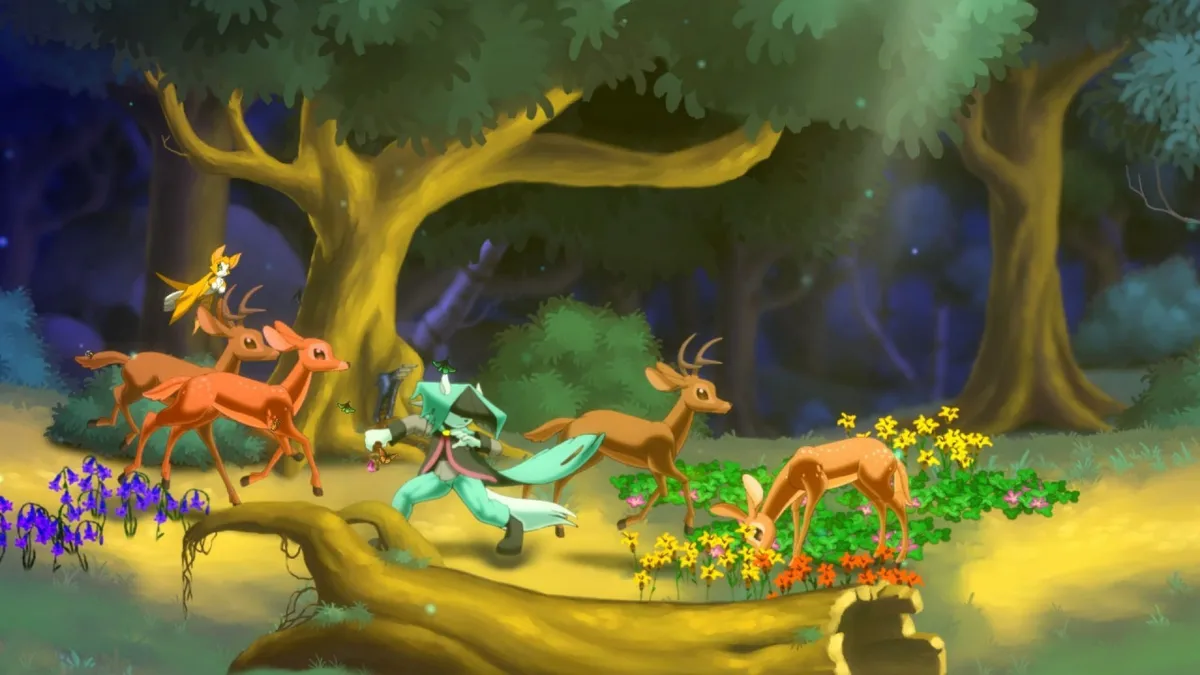
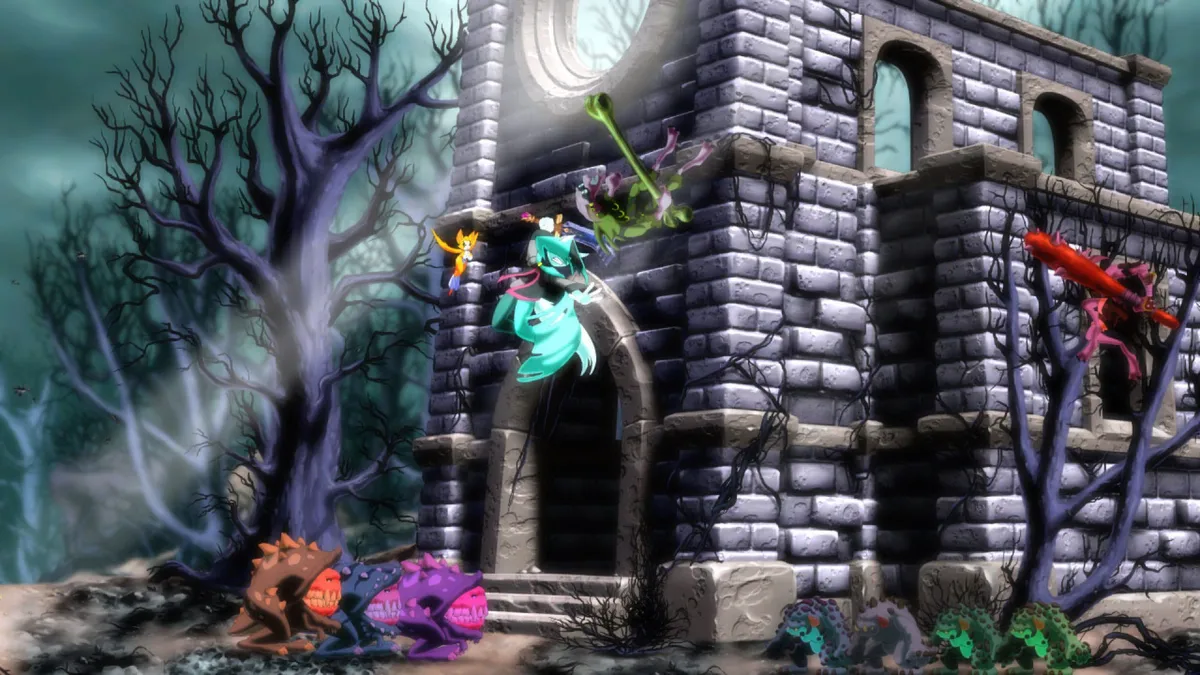
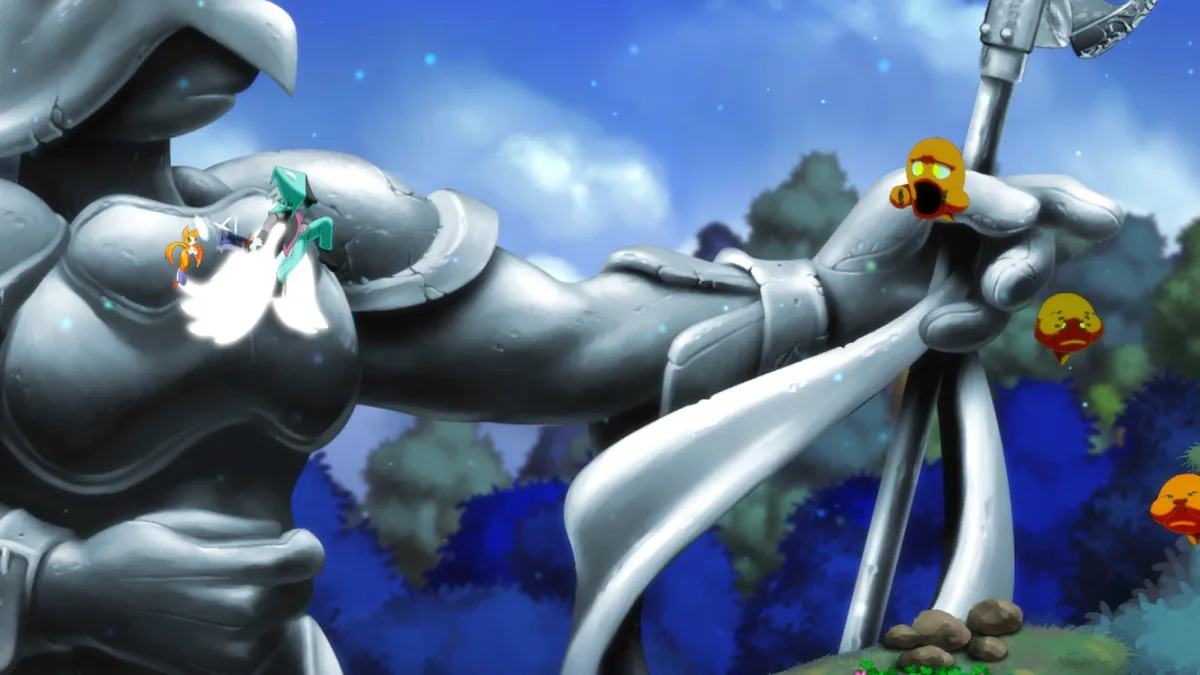
The combat in Dust: An Elysian Tail is described as easy to learn yet difficult to master, and it sends the hero into battle with two named tools: the mythical Blade of Ahrah and Fidget, the blade's diminutive guardian. The fighting escalates to encounters with dozens of enemies at once, so the documented challenge is handling crowds rather than single duels. The journey carrying this combat runs through peaceful glades, snowy mountaintops and beyond, with the Blade said to turn its wielder into an unstoppable force of nature.
Combat sits inside a larger action-adventure framework: the game is presented as a traditionally animated tale, now at 1080p, with a fully voiced cast and a deep, rewarding storyline. The warrior Dust is searching for his true identity, and alongside fighting to uncover his own past, players uncover the story of an ancient civilization on the brink of extinction. The conflict therefore runs on two tracks, the personal mystery of Dust and the fate of that civilization, with quests from friendly villagers and hidden ancient secrets tying the fighting to the search.
Quests, Secrets and Hidden Upgrades
Friendly villagers are the documented source of quests in Dust: An Elysian Tail, and the game is described as offering a variety of them. Because these quest-givers sit inside a massive, open world that also holds unique characters, quests and secrets, the errands run alongside exploration rather than replacing it. The same world that hides its collectibles also contains the people who hand out tasks, so a player moving across the terrain can meet characters and pick up quests in the course of the journey, with no documented fixed order imposed on that process.
Ancient secrets and powerful upgrades are described as hidden throughout that same massive, open world. The documented rules tie the upgrades to discovery: they are not described as a shop purchase or a scripted story reward, but as things hidden in the world for the player to find. The secrets are grouped with them as part of the same hidden content. So the documented interaction is that quests from villagers and the search for hidden upgrades both draw the player into the open terrain, and the search for the hidden upgrades depends on probing the world's hidden places.
Gamepad, Mouse-and-Keyboard or Keyboard-Only
Dust: An Elysian Tail lists three supported control schemes on its store profile: a gamepad, a mouse-and-keyboard combination, and keyboard-only controls. These are presented as full support options alongside the rest of the feature list, so the game does not lock players into one input device. The same profile groups that controls line with the action-adventure description: a traditionally animated tale, now in 1080p, with nonlinear platforming and combat against dozens of enemies. The control choice sits alongside the world content, not apart from it.
Whichever input is used, it serves the same documented activities: moving through a massive, open world, experimenting with nonlinear platforming routes, and finding powerful upgrades hidden throughout that world. The controls are not tied to separate modes or content in the profile; they are simply listed as full support for the one adventure. Discovering the hidden upgrades depends on probing the world rather than on the input device, and the keyboard-only option is offered on equal footing with the gamepad and mouse-and-keyboard setups.
Sources & further reading.
- Dust: An Elysian Tail — official game profileRetrieved Oct 28, 2026
First published .