 THE GAME ARCHIVE
LEGO The Lord of the Rings arrived on Windows in 2012, developed by Traveller's Tales and published by Warner Bros. Interactive Entertainment. It is catalogued as an action-adventure title that retells the story of The Lord of the Rings motion picture trilogy — The Fellowship of the Ring, The Two Towers, and The Return of the King — through the visual language and loose humor of LEGO play.
What separates this entry from a simple movie tie-in is the way its LEGO identity feeds into systems rather than sitting on the surface. The game pairs a single continuous quest — carry Frodo toward Mount Doom and destroy the Ring — with an open world, a crafting-style Blacksmith Shop, and a broad unlockable roster. The result is a structured loop where exploration, combat, collection, and co-op all pull on the same set of rules.
The Premise: Fellowship, Fellowship, Fellowship
The frame story is fixed: Frodo must leave his home and carry an ancient magical ring to the only place it can be destroyed. To help him, a Fellowship is formed — Aragorn the Ranger, Gandalf the Wizard, Legolas the Elf, Gimli the Dwarf, Boromir of Gondor, and Frodo's Hobbit friends Sam, Merry, and Pippin. Players relive that legend through LEGO mini-figures as they explore, solve riddles, and fight their way across Middle-earth.
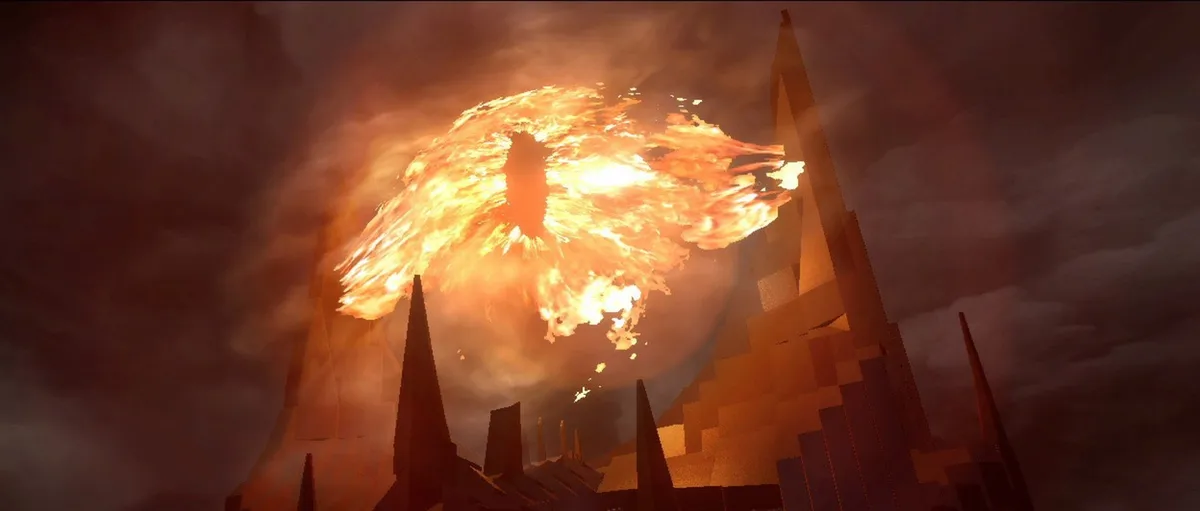
The narrative scope is intentionally wide. Rather than adapting a single film, the game works across all three, letting the story jump between multiple storylines. That structure is not just a menu convenience — the Palantír, or Seeing-stone, is described as a tool for exactly this kind of switch, which ties a piece of Middle-earth lore to a practical play mechanic.
 View full image ↗
The Core Loop: Explore, Fight, Collect, Forge
At the center of play is a loop that starts with movement through an open-world version of Middle-earth. The store description frames exploration generously — the whole open world is presented as traversable — and pairs it directly with battles against Orcs, Uruk-hai, the Balrog, the Witch-king, and other creatures. Exploration and combat are not separate activities with a loading screen between them; they happen in the same space.
The third beat is collection. Players gather weapons and magical items, including the Light of Earendil, Elven rope, swords, and bows. The fourth and most distinctive beat is the Blacksmith Shop, where Mithril — described as the most precious metal in Middle-earth — is used to collect, combine, and forge new items. This turns loot into a craft loop rather than a checklist, and it is the clearest example of a LEGO-branded system carrying real mechanical weight.
Around those four beats sits a problem-solving layer. Riddles are woven into the quest rather than isolated in a puzzle menu, and the Palantír's ability to jump between storylines gives the game a way to relocate the player without breaking the fiction. Read together, the loop is: travel, fight, solve, collect, return to the forge, and unlock more of the roster.
Systems That Give the Loop a Shape
The Blacksmith Shop is the deepest system described. It supports collecting, combining, and forging, with Mithril as the material that drives it. Because the shop is framed as a place rather than an abstract menu — "in the Blacksmith Shop" — it reads as a hub the player returns to between excursions, which in turn gives Mithril collection a purpose beyond inventory clutter.
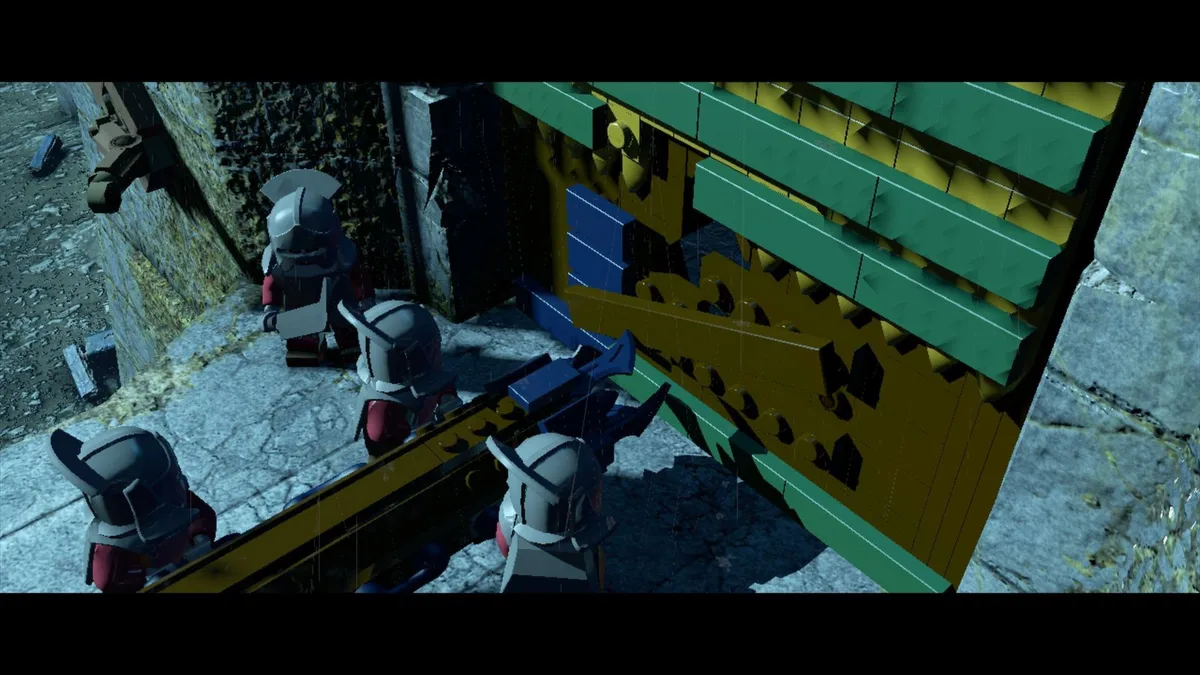
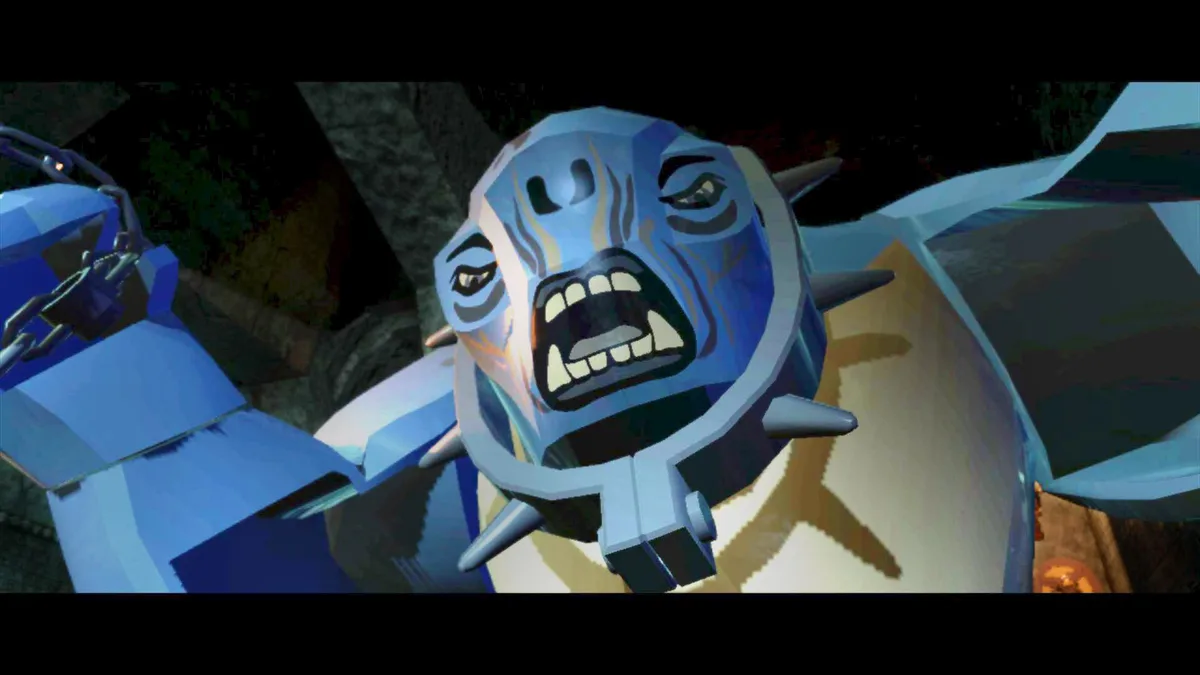
Combat is defined by its opposition. The named foes — Orcs, Uruk-hai, the Balrog, the Witch-king — are not interchangeable; they map onto recognizable escalation points from the films, so the enemy list doubles as a rough difficulty and spectacle curve. The game also supports fighting with a range of tools rather than a single default attack: swords and bows sit alongside magical items like the Light of Earendil and Elven rope, suggesting that different encounters or puzzles reward different loadouts.
The Palantír functions as a navigation-and-structure system rather than a combat tool. By letting players jump between multiple storylines, it solves a specific design problem unique to adapting three films at once: how to let a player move around a large narrative without abandoning the thread they were following.
 View full image ↗
Progression: Roster, Loot, and Co-op
Progression runs on two tracks. The first is the character roster: the game ships with more than 80 playable characters, including Frodo, Aragorn, Gandalf, and many others, and discovering and unlocking them is presented as a core activity rather than a post-credits bonus. The second is equipment, split between collectible weapons and forged items from the Blacksmith Shop. Between a large roster and a craft loop, the game asks players to keep returning to old areas with new capabilities in mind.
The second player-facing structure is co-op. The game supports play with family and friends through an easy access drop-in, drop-out option, which matters for the loop described above: because exploration, combat, and collection share one continuous world, a second player can join without waiting for a separate mode. That design choice also makes the roster less of a solo checklist — a second player is another chance to use an unlocked character.
Starting Out: What the Evidence Supports
The most useful starting guidance the source material directly supports is about priorities rather than routes. First, treat Mithril as a resource worth gathering early, because the Blacksmith Shop converts it into forged items rather than simply consuming it. Second, keep the roster in view: with more than 80 playable characters, unlocking is part of the main play pattern, so exploring off the critical path has a payoff that is documented rather than implied. Third, if a second player is available, use the drop-in, drop-out co-op, since the game is explicitly built to support it in the same world.
 View full image ↗
Design Identity: LEGO as a Rule, Not a Skin
The game's look is unmistakably LEGO, but the more interesting decision is that the LEGO framing changes how the story is told. Heroes come to life as mini-fig characters delivering dialogue from the films, so the adaptation keeps the source performances while replacing the bodies. That combination — familiar lines, unfamiliar forms — is what lets the game be both a retelling and a parody without abandoning the plot.
The same logic applies to the Palantír. In the films it is an object of dangerous vision; here it is the mechanism for jumping between storylines. Rather than inventing a generic level-select screen, the game reuses a piece of the fiction as interface. It is a small choice, but it is the kind of choice that keeps adaptation work coherent: the tool the player uses is also a thing the characters would recognize.
Finally, the Blacksmith Shop gives the LEGO theme mechanical expression. LEGO play is about combining pieces into something new; the shop takes that idea and makes it literal, with Mithril as the input and forged items as the output. That is a stronger justification for the license than visual resemblance alone.
Edition and Access Notes
The 2012 release year cited here belongs to this official store entry for the Windows version; it describes the game as catalogued by the publisher's store profile and should not be read as a full release history across every platform. Likewise, this article does not assess how the game currently runs on modern hardware, what a present-day store package includes beyond what is listed, or whether any later collections have changed the content described here. Those questions need their own sourcing.
LEGO The Lord of the Rings is interesting less for what it adapts than for how much of itself it turns into rules. A single quest — carry the Ring to Mount Doom — anchors an open world; a forge turns Mithril into gear; a roster past eighty characters rewards exploration; and drop-in co-op lets a second player share the same loop. The LEGO surface is the hook, but the Blacksmith Shop, the Palantír, and the unlock structure are what give the game something to do once the joke lands.
Scroll sideways to see the full table →
| Field | Value |
|---|---|
| Game title | LEGO® The Lord of the Rings™ |
| Release year (this store entry) | 2012 |
| Platform listed | Windows |
| Developer | Traveller's Tales |
| Publisher | Warner Bros. Interactive Entertainment |
| Genres | Action, Adventure |
| Source of record | Official store profile |
Sources & further reading.
- LEGO® The Lord of the Rings™ — official game profile Retrieved Oct 10, 2026
First published .