 THE GAME ARCHIVE
Invasion Mode: Build the Arena Before the Fight
Invasion Mode is the signature multiplayer mode in Madballs in Babo: Invasion, and the arena is assembled before any fighting begins. Players take turns placing map tiles, so each participant contributes pieces that shape the battlefield rather than loading into a fixed layout. Because the tile combinations change from match to match, the construction phase becomes part of the mode itself: the arrangement chosen in turns determines the combat space that follows once the map is complete and gameplay starts.
The mode is also built around deployables, which come in two documented kinds. Rocket turrets are active deployables, while healing towers are passive ones. These give the tile-built arena a layer beyond geometry: a player can place offensive or restorative structures alongside the map pieces being laid down. The match size is flexible too, with the game described as matching all game sizes, so the turn-based tile placement and deployable placement sit within multiplayer matches of varying player counts rather than one fixed format.
Ten Classes, Two Factions, Five Archetypes
Across two warring factions, Madballs in Babo:Invasion offers ten character classes, and every one of them carries two special abilities. The classes are sorted into five archetypes: Assault, Heavy, Runner, Flyer and Support. On the weapon side, each faction fields five unique weapons, and every weapon has two distinct firing modes. So a class choice comes with an ability pair, a weapon set tied to the faction, and a second way to fire that gun.
The roster also pulls in the Madballs toy line, with Oculus Orbus and Horn Head appearing as in-game characters. Around that setup, the game places emphasis on fast-paced, visceral action that is easy to pick up and play while still offering a real strategic challenge. The archetype labels, the ability pairs and the dual-mode weapons sit underneath that action frame: the ten classes spread across the five roles, and the faction-specific weapons with their two firing modes are what each class brings into a match.
Campaign Structure: Ten Levels, Co-op and Enduro
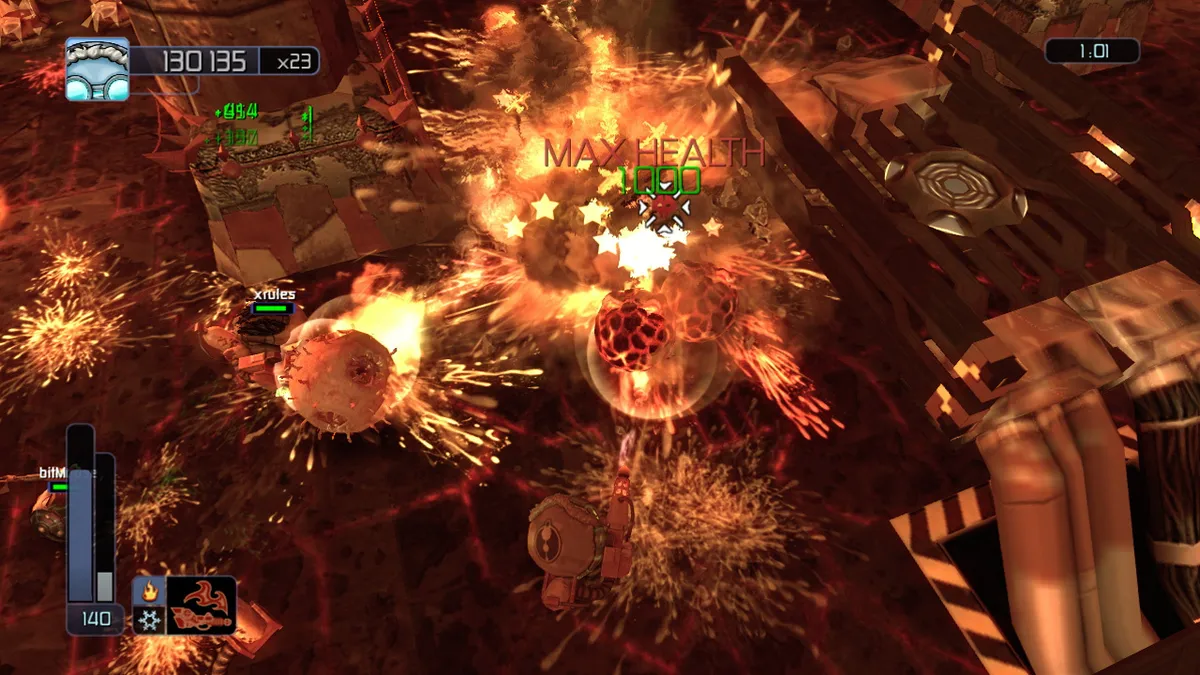
The campaign is organized as ten levels, and the single-player side presents them as a stretch of repeatable gameplay rather than a one-pass sequence. Each level can be taken on alone, meaning a solo player works through the same set of stages with repetition built in. That makes the individual level the basic unit of the campaign: it is something a player can return to and run again, not a stretch that is consumed once and then closed off.
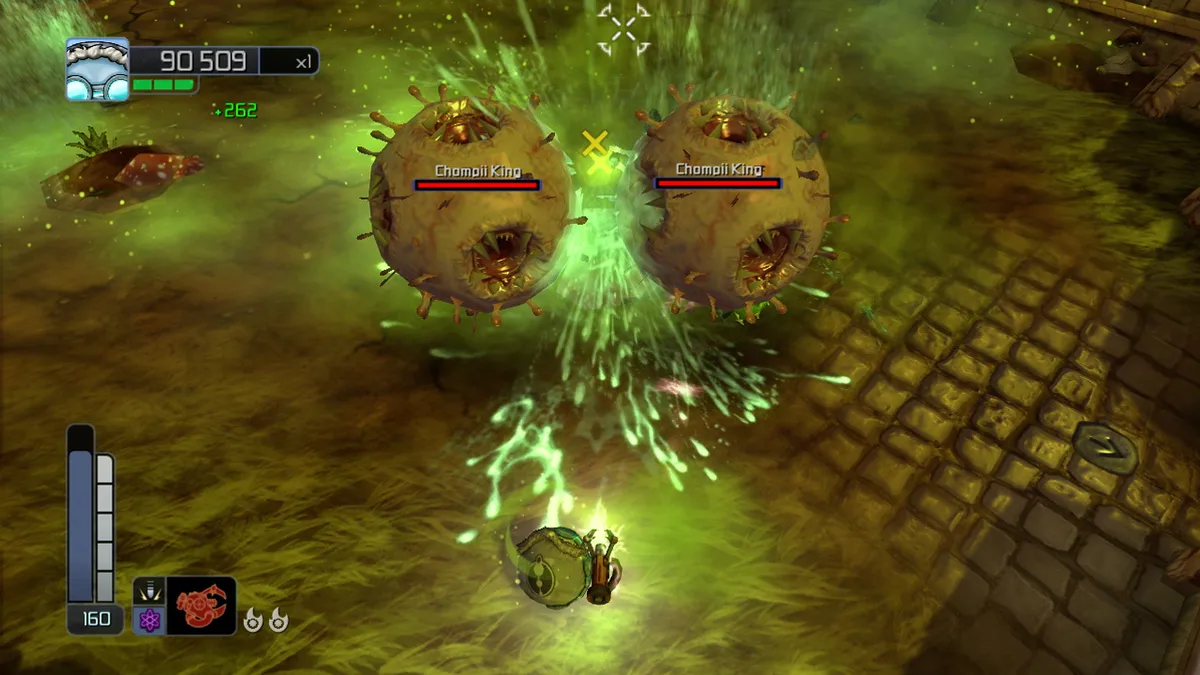
Co-op supports two to four players online, and it offers two arrangements built on those same levels. A group can challenge an individual campaign level with friends, picking a single stage rather than committing to the full run. Alternatively, a group can play the whole campaign in Enduro mode, which links the levels into one continuous cooperative run. The split is therefore between dropping into one chosen stage and carrying the entire campaign through as a single cooperative sequence, with both formats drawing on the same ten-level structure.
Sixteen-Player Multiplayer and the Cross-Platform Split
Multiplayer in Madballs in Babo:Invasion is documented as supporting sixteen players across twenty-one maps intended to match all game sizes. That headcount belongs to the competitive side rather than the campaign, which is handled separately as solo play or two-to-four-player online co-op. Within a sixteen-player match, Invasion mode still runs its turn-based opening: players place map tiles to create the multiplayer map before fighting begins, so the same construction step precedes combat regardless of how full the lobby is, followed by the documented deployables such as rocket turrets and healing towers.
The multiplayer also spans Windows and macOS, and the store profile advertises cross-platform play that pits PC against Mac. That split is a platform arrangement rather than a separate mode: the PC and Mac builds are described as able to meet in the same multiplayer space. In-game voice chat lets players talk to the other participants during a match, so the shared tile-placement phase, the map pool sized for all player counts, and direct conversation between players apply regardless of which of the two supported systems each person is running. The profile also lists 2009 as the Steam product date for the store listing.
Unlocks, Secrets and the Long Campaign Trail
The campaign trail in Madballs in Babo:Invasion carries its own collecting layer: the profile lists fifty unlocks and fifty secrets to find during campaign gameplay. These are tied to the ten-level structure, so the stages a solo player can repeat are also where the unlock and secret count is worked through. The same levels that support repeated solo runs and two-to-four-player online co-op host the search for these items, whether a group picks a single campaign level with friends or carries the whole run in Enduro mode.
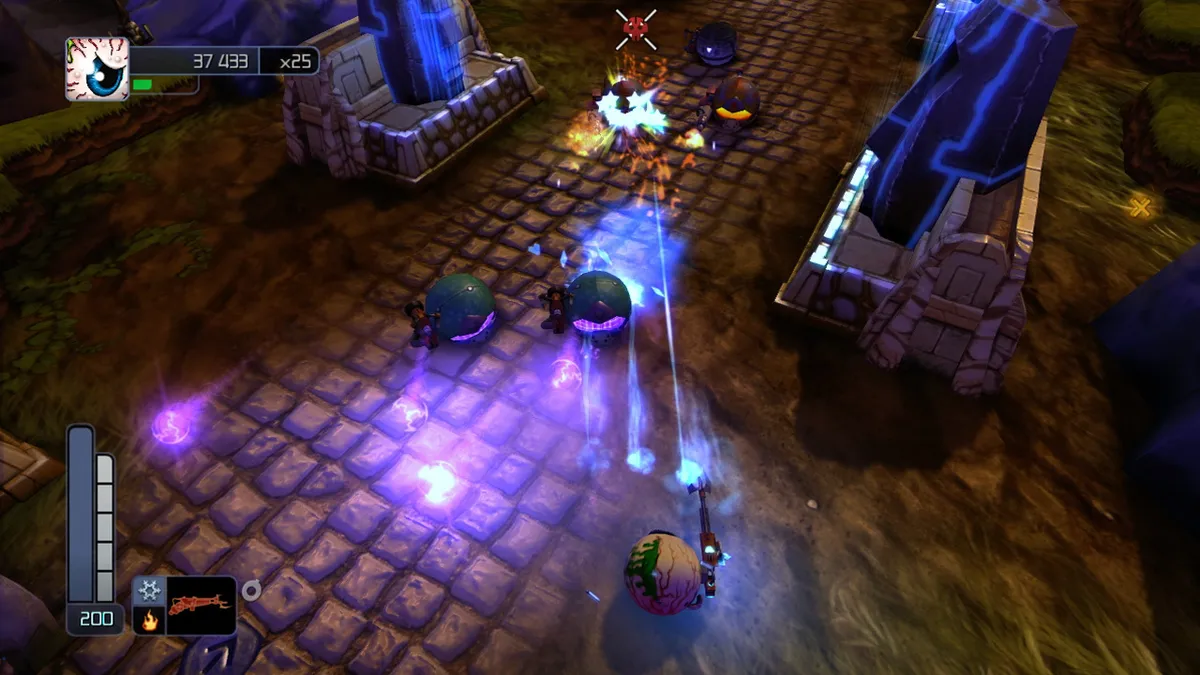
Beyond that collecting layer, the action frame the profile describes is fast-paced and visceral, pitched as easy to pick up and play while still offering a real strategic challenge for hardcore players. The documented combat pieces sit inside this frame: ten classes across five archetypes, each class with two special abilities, plus faction-specific weapons with two firing modes and Invasion mode deployables such as rocket turrets and healing towers. The store profile also lists 2009 as the Steam product date for the listing.
Sources & further reading.
- Madballs in Babo:Invasion — official game profile Retrieved Oct 21, 2026
First published .