 THE GAME ARCHIVE
Seven Factions: Building Cities While Commanding Armies
MegaGlest puts you in command of one of seven factions: Tech, Magic, Egypt, Indians, Norsemen, Persian or Romans. Its real-time strategy combines city development with army command, rather than separating construction and combat into distinct phases. Workers build up your city while scouts travel to new places, and newly produced units need orders even as existing forces fight. The opening can seem slow, but the first clashes bring these jobs together: you are directing combat while continuing to supervise the workers, exploration and fresh units that also require your attention.
The scale of command can extend well beyond a small fighting force. More advanced matches can involve controlling over 100 units, with large games reaching hundreds for each player. At that scale, combat micromanagement sits alongside broader strategy and general unit management; directing a battle is only one part of the work. Orders for newly produced troops remain part of the same real-time workload as scouting and city construction. MegaGlest's emphasis is on handling those overlapping responsibilities and commanding armies, rather than on following a storyline through its faction setting.
Single-Player Opposition: Aggressive AI and Adjustable Strength
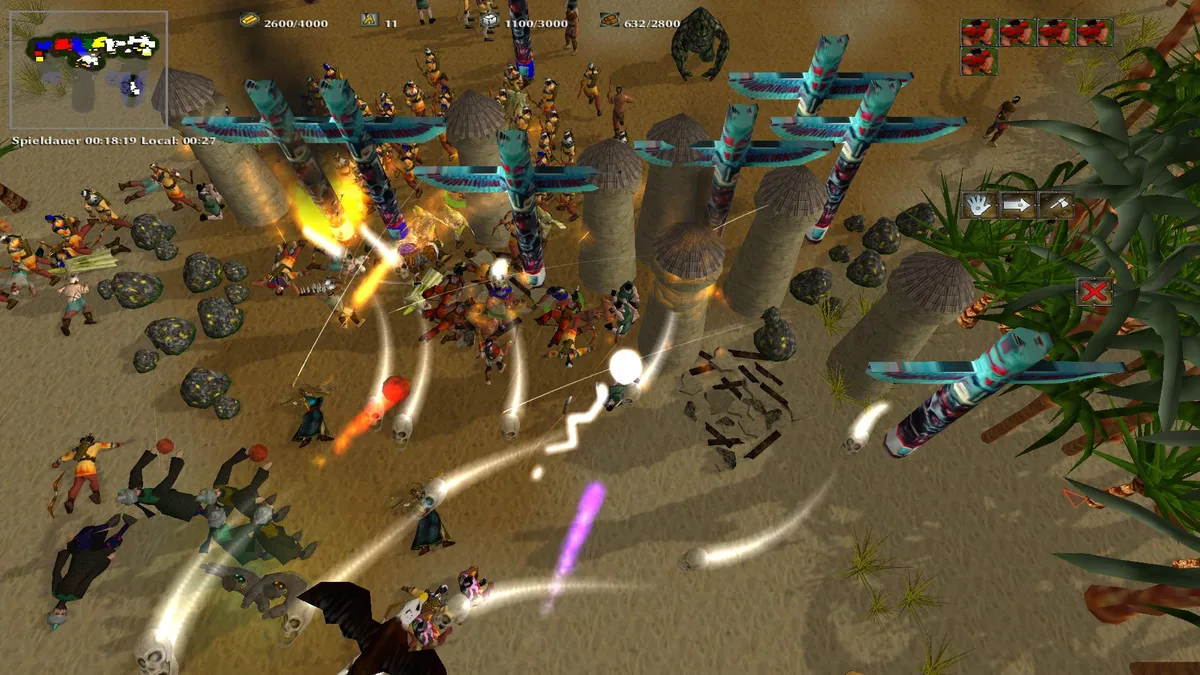
MegaGlest's single-player opposition is built around computer players described as strong and aggressive, with randomness in their behaviour. Aggression and randomness are separate features of that opposition: the AI is not simply presented as a passive force, and its behaviour includes a variable element. The game's description explicitly warns that computer opponents can quickly overrun a player, making their aggression a central consideration when setting up a solo match.
AI strength is adjustable across multiple steps, so single-player setup is not limited to accepting one fixed level of opposition. Those strength settings sit alongside the computer's aggressive, partly random behaviour: the adjustable element is how strong the opposition is, while aggression remains part of its documented character. The warning about being overrun accompanies this setup option, placing the emphasis on the selected computer strength before a match begins rather than presenting every solo game as an equivalent challenge.
Co-op Against the Computer or Human Rivals: Matches for Up to Eight
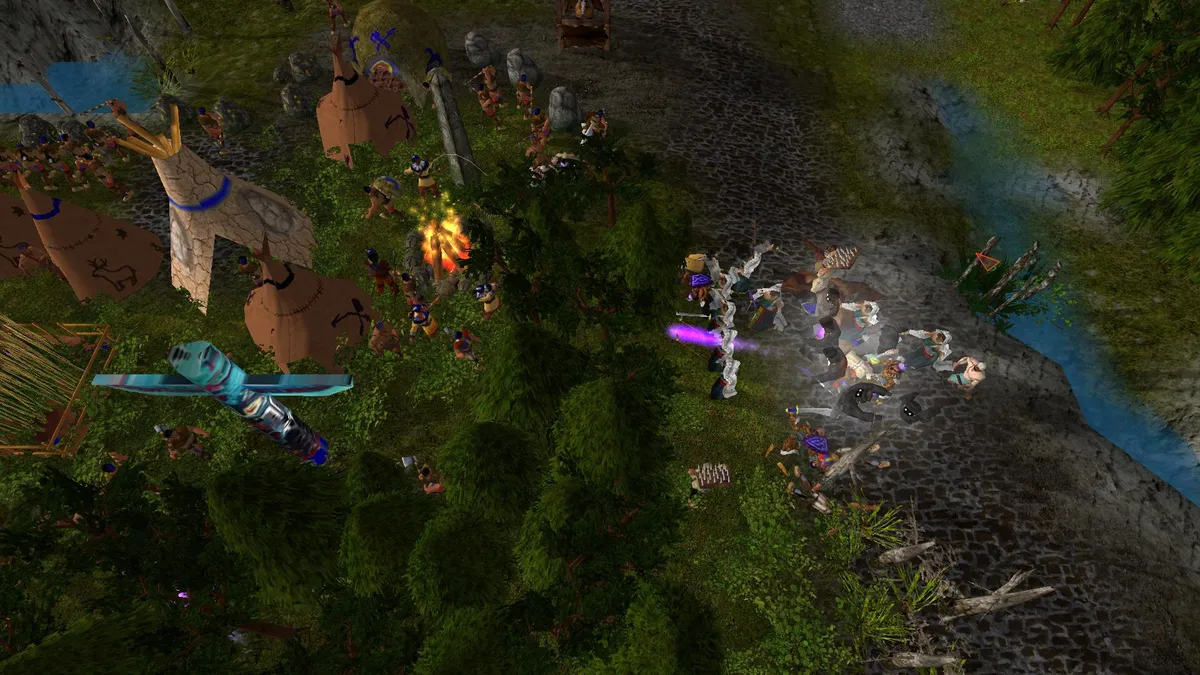
MegaGlest's cooperative multiplayer lets human players take on computer-controlled opponents together. The computer is therefore not restricted to solo matches: it can also provide the opposition for a group of people playing on the same side. This is a distinct alternative to competing against the other human participants, with co-op built around humans fighting the AI rather than treating every person in the match as a rival.
For competitive play, human-versus-human matches are also supported, and multiplayer accommodates up to eight players. That is the documented match limit, not a requirement to assemble eight people before playing. The choice between cooperative opposition and human rivals establishes who you fight; the player limit establishes the maximum size of the match. Online play also requires a stable internet connection, a practical condition that applies when taking these multiplayer battles online.
More Than 80 Maps, 19 Tilesets, and Tools to Expand the Battlefield
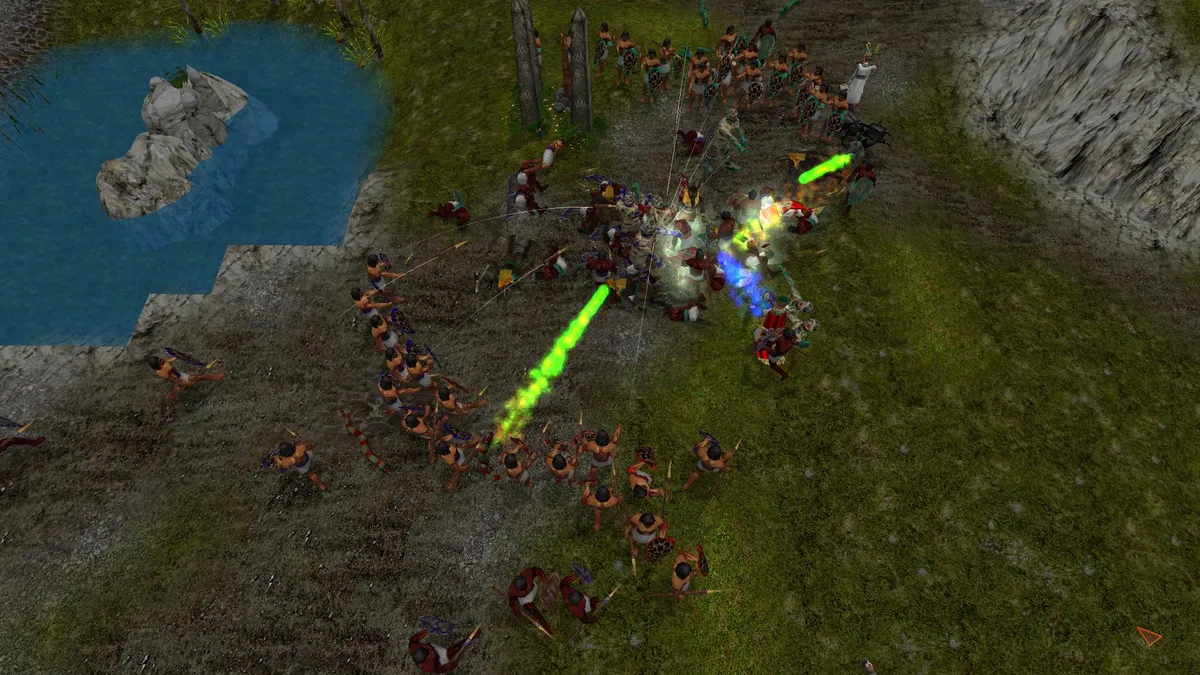
MegaGlest includes more than 80 maps and 19 environment tilesets, giving its battlefield collection two distinct components: the maps themselves and the environmental sets. Those counts describe the included content, rather than a total that depends on downloading extras. To add more, use the included mod manager, which offers additional content as free downloads. The supplied map collection is therefore a starting library, with an in-game tool for expanding it.
Creating a battlefield is a separate option from downloading one. MegaGlest includes a map editor for making new maps, so content expansion is not limited to selecting additions through the mod manager. The two tools serve different tasks: the manager obtains additional content, while the editor lets you author maps yourself. Alongside the existing maps and environment tilesets, that editor supplies a way to build beyond the included battlefield collection.
Sources & further reading.
- MegaGlest — official game profileRetrieved Nov 4, 2026
First published .