 THE GAME ARCHIVE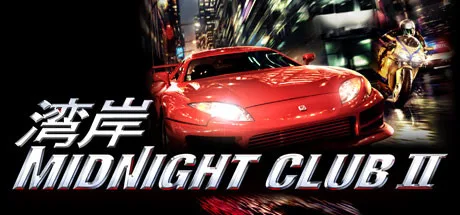
A Syndicate Ladder Spread Across Three Night Cities
Midnight Club 2, developed by Rockstar San Diego and published by Rockstar Games as a Windows racing game, frames its play around a simple premise: the world's most notorious drivers gather each night on the streets of Los Angeles, Paris, and Tokyo. You enter as a novice challenger trying to penetrate that secret society of street racers, and the structure of the game follows from there — one rival at a time, in open city streets, with the finish line as the only real authority.
What separates the game from a track-based racer is the claim it makes for itself: there are no rules, you drive anywhere in the city, and you find the fastest route to win. That single design choice — the city itself as the course — reshapes every other system around it, from vehicle choice to route planning to how a rival is beaten.
Three Cities, Each a Whole Drivable Stage
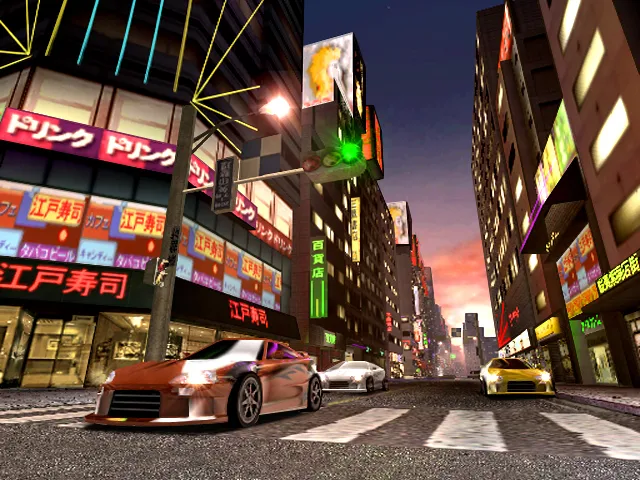
Los Angeles, Paris, and Tokyo serve as the three venues, and the documented framing is that each hosts the same nightly gathering of notorious drivers. Because the game promises you can drive anywhere in the city, each venue reads as a complete drivable space rather than a closed circuit. The location you are racing in is therefore part of the challenge: the streets, turns, and connections of that city are the raw material you work with when plotting a line to the finish.
The practical consequence is that a race becomes a route-finding problem as much as a driving one. Since the game states outright that you drive anywhere and find the fastest route, the player's job is to read the city and commit to a path, then adjust when the streets do not cooperate. In Tokyo, Paris, or Los Angeles, the same checkpoint objective plays out against a different map, which is why the three-city structure is a gameplay feature and not just a change of scenery.
Choosing a Tuned Car or Bike Before the Night Begins
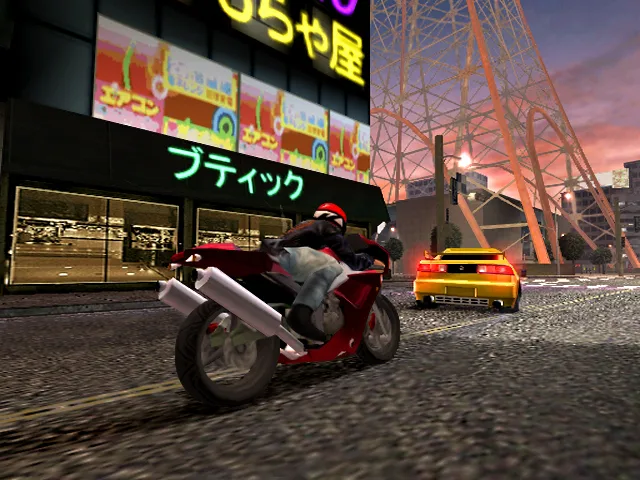
The documented starting step is a choice: select from a collection of performance-enhanced cars or bikes, then go compete head-to-head to make a name for yourself. The player is not handed an assigned machine. The roster is split between four-wheeled and two-wheeled options, and the verb the game uses for them — performance-enhanced — signals that the choice is meant to be about capability, not just looks.
Because that initial pick sits at the front of the experience, it sets the terms for the first head-to-head contests. A bike and a car frame the same city differently, and the player who has chosen a ride has already begun making a strategic decision about how to attack checkpoints across an open map. Later, the progression system gives this opening choice weight, since wins are what hand over an opponent's upgraded ride — the garage does not stay the way you first arranged it.
The Core Loop: Checkpoints, Finish Line, Any Route
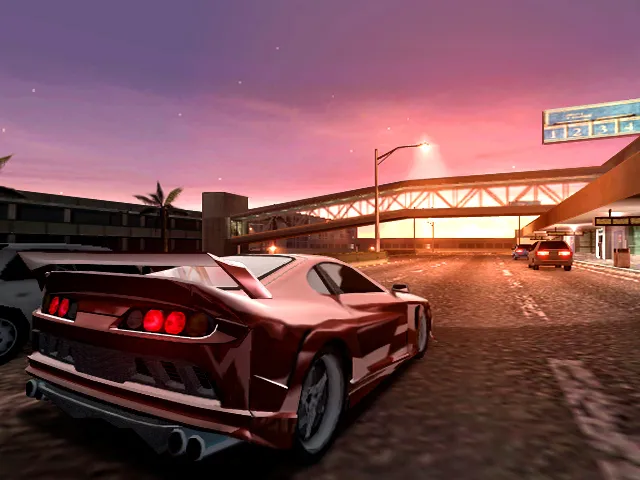
Each race is structured around two obligations. You must hit the checkpoints, and you must arrive at the finish line before your opponent has a chance. The documented rule explicitly permits whatever routes, shortcuts, and driving methods are necessary to do both. That is the mechanic that makes the game tick: the checkpoints anchor the race, but between them the player is free to improvise, and the opponent is bound by the same freedom.
The role of checkpoints in this open format is easy to underestimate. They are the only thing that converts a free-roaming city into a race: without them, the fastest route would simply be the shortest distance between two points. Because the player must reach each checkpoint in turn, the skill becomes sequencing — finding a line that touches every required gate while still cutting the tightest possible path between them. The finish-line requirement then adds a final decision: whether the accumulated lead is enough, or whether the last leg demands a riskier shortcut.
The mode itself is head-to-head, and the game describes these as meetings with other members of the syndicate. That makes each race a direct contest: someone is on the other side of the same checkpoints, hunting the same finish. The player is not racing a clock or a ghost. The opponent provides the pressure, and the open-city rules mean both racers are making the same route calculations in real time.
The Police as a Standing Constraint
The opposing racer is not the only hazard. The game states that the cops know you are out there and warns you not to get caught. The police are documented as an active threat to avoid rather than a scripted story beat. In practice this compounds the route-finding: the boldest shortcut may be the fastest line, but it may also run you into trouble with the authorities. A player weighing checkpoints and finish order must also weigh exposure.
This is where the game's stated freedom meets its stated risk. The no-rules framing licenses you to take any route, and the police warning is the counterweight: the environment is open, but it is not empty of consequence. The chase dynamic is documented only at that level — the cops are present, they know you are out there, and getting caught is the failure state to avoid — but that is enough to make a night of racing feel like more than a two-car sprint.
Progression: Beat a Rival, Take the Ride
The documented progression path is one-by-one. As a novice challenger aiming to penetrate the secret society, you work through its members, trumping them all individually, with the ultimate goal of being crowned international champion. Each successful race against a rival does two things: it advances that climb, and it awards you the defeated adversary's suped-up ride. The game frames this bluntly as adding insult to injury.
This connects the racing loop to a growing garage. The upgraded rides of defeated opponents become your options, so the reward for route-finding mastery is a better machine for the next contest. The choice made at the start — car or bike, which tuned model — is therefore not a permanent identity. It is the first entry in a collection that expands with each rival you beat, and the player who wins consistently is steadily reshaping their own garage around the opponents they have already overcome.
The championship goal also gives the ladder a direction. The player is not simply racing indefinitely; the documented endpoint is the crowning as international champion. Within that arc, the individual nights in Los Angeles, Paris, and Tokyo are the units of progress, and each head-to-head win is the currency that moves you from novice to contender to champion.
Design Identity: Open Streets, No Corners Cut
The game's identity rests on the intersection of its venue design and its racing premise. Three distinct cities, each fully drivable, and a rule set that throws out prescribed lines. The visual character is bound up in that: the streets of Los Angeles, Paris, and Tokyo are meant to be navigated, not simply passed through, and the racing identity is inseparable from the illegal-syndicate, night-street framing the game builds around them.
Taken together, the documented features describe a coherent design: an open city, a checkpoint framework, a one-on-one rival structure, a police presence, and a progression that grows your garage from your opponents' rides. None of these systems is described in exhaustive mechanical detail, but the way they interlock is clear. The route you choose is your main lever on the race; the race is your main lever on the garage; and the garage is the record of the rivals you have beaten on the way to a championship.
Starting Guidance: Where to Put Your Attention
Two documented starting steps frame early play. First, choose a vehicle from the performance-enhanced cars and bikes, then compete head-to-head to establish your name. Within each race, the stated objective is to use whatever routes, shortcuts, and driving methods are necessary to hit the checkpoints and reach the finish line before the opponent. The practical reading for a new player is to treat the open city as the real course: locate the required checkpoints, decide on a personal line through them, and keep the finish-line margin in mind.
A second piece of starting guidance follows from the police warning and the prize system. The game tells you the cops know you are out there and not to get caught, and it tells you that a win earns the opponent's suped-up ride. So the early race is a balancing act: push a route that gives you the fastest checkpoint sequence, but remember that an overreach can end in a capture rather than a win, and a win is what builds both your reputation and your garage.
Quick Facts
- Title: Midnight Club 2
- Release year: 2008
- Platform: Windows
- Developer: Rockstar San Diego
- Publisher: Rockstar Games
- Genre: Racing
- Cities: Los Angeles, Paris, Tokyo
Sources & further reading.
- Midnight Club 2 — official game profile Retrieved Oct 17, 2026
First published .