 THE GAME ARCHIVE
Mirror's Edge is a first-person action-adventure in which you play a courier called Faith in a city where information is heavily monitored. Couriers known as Runners move sensitive data away from prying eyes. A crime has been committed, your sister has been framed, and you are being hunted. That setup frames a game whose defining idea is that you move — not shoot — your way out of trouble.
This feature is scoped to the official store profile for the game, which lists a 2009 release year, Windows as the platform, DICE as developer, Electronic Arts as publisher, and the genres Action and Adventure. Those are the boundaries of what the supplied material supports: original release history, ports, remasters, sequels, and current compatibility sit outside its scope.
The Core Loop: Evasion, Route Reading, and Escape
The documented shape of play is a loop of evading, capturing, and escaping. Rather than treating combat as the default answer, the game frames speed and agility as the tools that let Faith evade pursuers, capture objectives, and perform daring escapes. The official description presents this as a mix of chase, puzzles, strategy, and intense combat — not a single repeated verb.
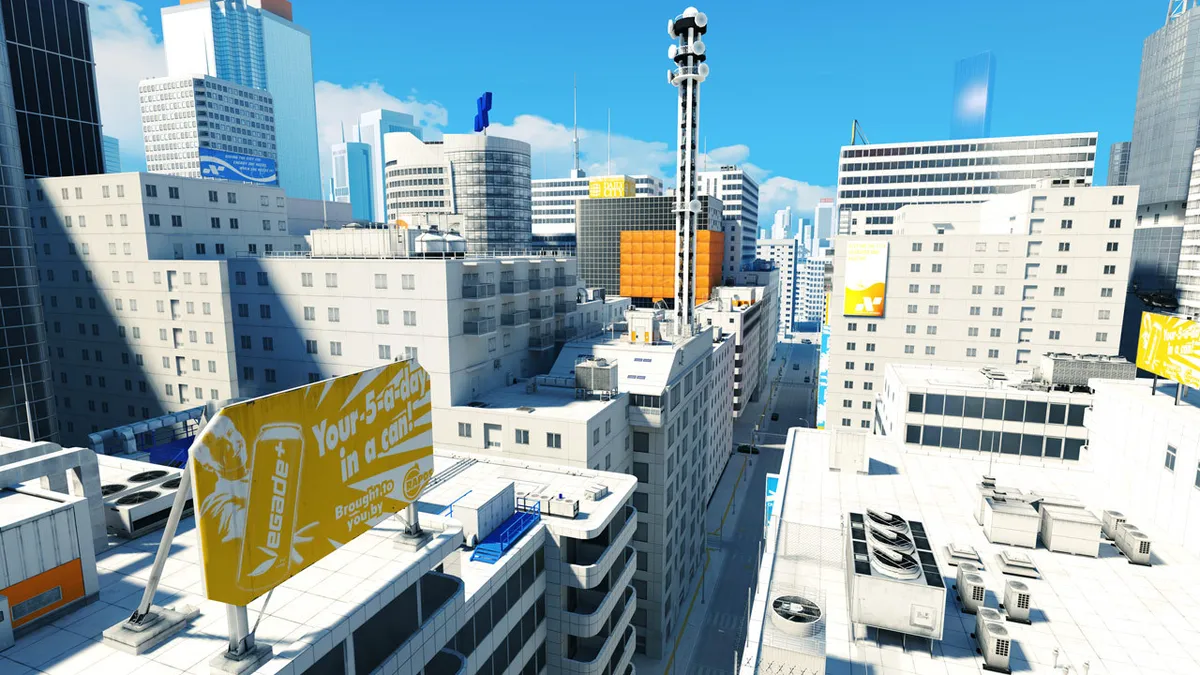
What binds those modes together is the idea of flow. The official material describes flow as what keeps you running and what keeps you alive, and Runner vision as the means of seeing it: rooftops become pathways and conduits, opportunities and escape routes. In practice the loop is as much about reading space — spotting a continuous line across a cityscape — as it is about reacting to a threat in front of you.
The consequence for how you think about each encounter is that the environment stops being neutral. The official text describes acrobatic movement turning every level of the urban environment to your advantage and salvation, a different proposition from treating terrain as cover. The route itself is the resource you are managing.
 View full image ↗
Mechanics: Wall-Runs, Leaps, and Vaults
The movement vocabulary is documented as wall-runs, leaps, and vaults, and the design intent behind them is chaining. The official wording describes stringing an amazing arsenal of these moves into fluid, acrobatic movement, which tells you that the interesting unit of play is the sequence rather than any individual input. A vault only matters because of the wall-run that set it up and the leap that follows.
Immersion is described in physical rather than atmospheric terms. In first person, every breath, every collision, and every impact is said to be acutely felt; heights are described as creating real vertigo, and collisions and bullet impacts as creating genuine fear and adrenaline. That framing explains a design choice — the camera is placed to make the body present — and it also implies why misjudging a jump carries weight in a way a detached view would not.
Combat exists alongside movement rather than replacing it. Speed and agility let Faith disable and disarm unwary opponents, but the qualifier matters: the documented target is an opponent who has not yet noticed you. That supports reading confrontation as a timed option — viable when you have the drop on someone, less appealing once you have lost the initiative and the better move is to keep moving.
Runner Vision as a Wayfinding Language
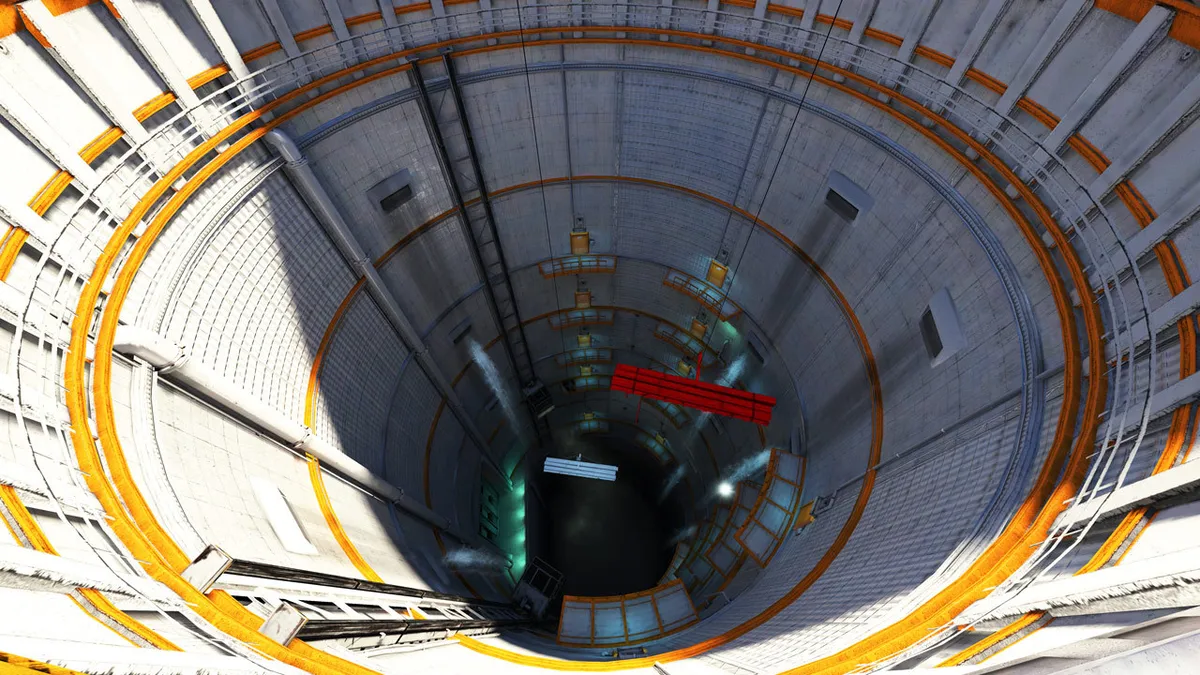
Runner vision lets you see the city the way Runners do, turning rooftops into pathways, conduits, opportunities, and escape routes. The interesting design decision is that this is framed inside the fiction rather than bolted on: rather than a floating objective marker, the guidance is presented as a courier's trained perception of an urban landscape.
Combined with the first-person perspective and the emphasis on chained movement, that produces a specific kind of skill: identifying a route while already committed to motion, rather than stopping to plan. The official description treats seeing the flow as the thing that keeps you running, which is less a mechanical label than a statement of how the game wants you to read its spaces.
 View full image ↗
Starting Guidance the Source Can Support
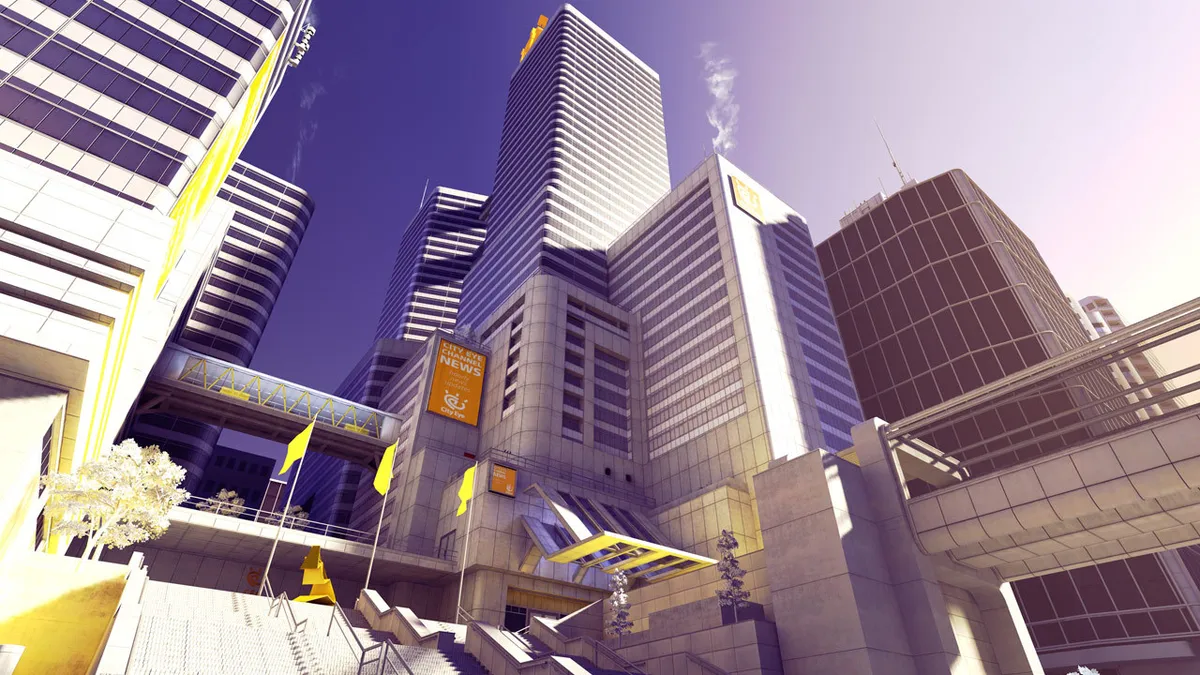
The evidence here supports general approach guidance drawn from documented mechanics, not a step-by-step walkthrough. Treat movement as the solution rather than the interruption. Chain wall-runs, leaps, and vaults instead of treating each as a stop-and-start action. Use Runner vision to read rooftops as routes. And treat direct combat as a condition-dependent choice — supported when an opponent is unaware, avoidable when they are not.
 View full image ↗
What Makes the Design Distinctive
Three documented choices define the game's identity: a first-person camera, a mobility-centered move set, and a fiction that recasts urban infrastructure as a courier's network. First-person perspective is common in the era, but it normally serves aiming. Here the official description ties it to physical sensation — vertigo, impact, adrenaline — making the camera a body rather than a sight.
The second distinctive element is an inversion of how environment usually functions. Rooftops — which typically read as level boundaries — are recast as conduits and escape routes, and acrobatic movement is described as converting the urban environment into an advantage. That combination is the cleanest statement of the game's thesis available in the source: the city is not an obstacle course to endure but a network to learn.
A third theme is that the game mixes modes rather than repeating one. The official description lists chase, puzzles, strategy, and intense combat together, and it places combat inside a broader loop of evasion, capture, and escape. Read alongside the movement vocabulary, that suggests a structure in which any given stretch of the city may ask you to outrun, outthink, or disengage, with route-reading carrying over between all three.
Scope and Provenance
Every factual statement here comes from a single official source: the game's store profile. The 2009 release year, the Windows platform listing, and the DICE and Electronic Arts credits apply to that entry as listed; they are not presented as a full release history. Deriving further product-history or packaging details from this profile alone is not possible.
Scroll sideways to see the full table →
| Field | Value |
|---|---|
| Title | Mirror's Edge™ |
| Release year (per profile) | 2009 |
| Platform listed | Windows |
| Developer | DICE |
| Publisher | Electronic Arts |
| Genres | Action, Adventure |
| Documented movement | Wall-runs, leaps, vaults |
| Documented opponent interaction | Disable and disarm unwary opponents |
| Documented modes | Chase, puzzles, strategy, combat |
| Not documented in source | Controls, items, weapons, progression, objectives, resources, gates, enemies, puzzle detail |
Sources & further reading.
- Mirror's Edge™ — official game profile Retrieved Oct 10, 2026
First published .