 THE GAME ARCHIVE
Spore, released in 2008 and developed by Maxis with Electronic Arts as publisher, asks the player to act as the architect of their own universe. The official description frames it as a single-player adventure that runs from a single cell to a galactic god, with the creature you evolve placed inside a universe built from your own creations. That premise is the game's hook: the player is not only guiding an organism through biological change, but authoring the setting, the supporting objects, and the eventual spacefaring hardware that surrounds it.
Five Stages, Five Styles of Play
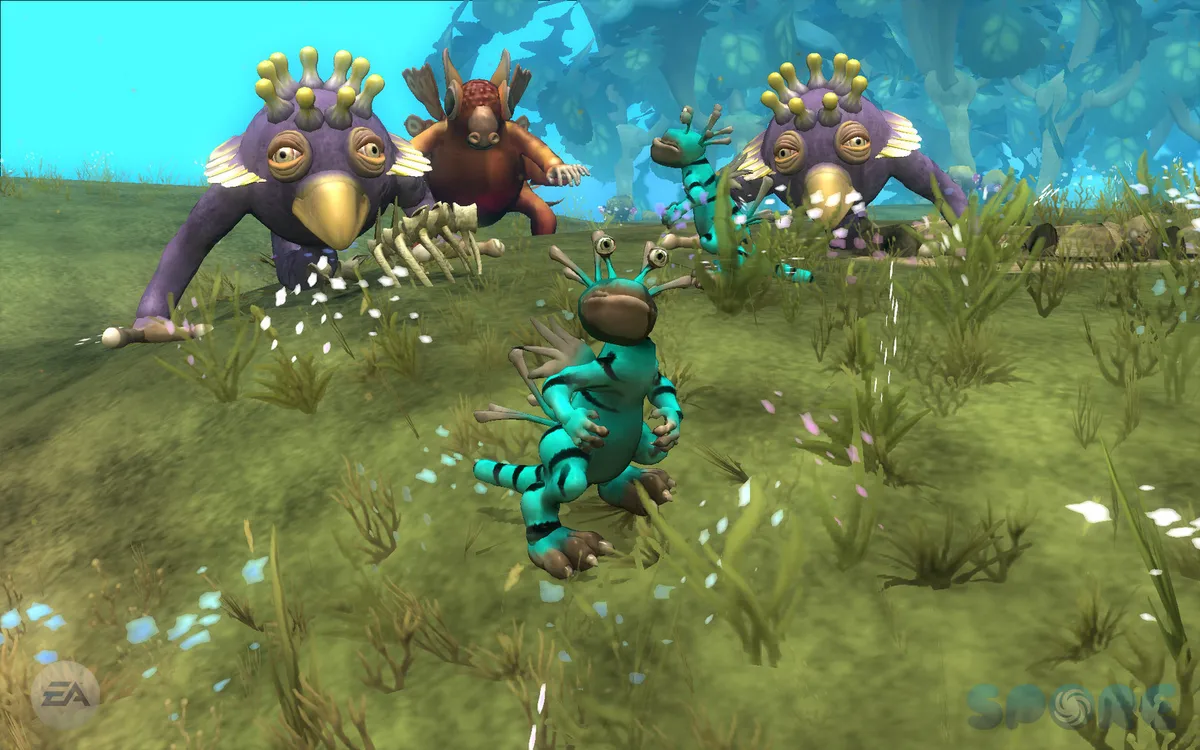
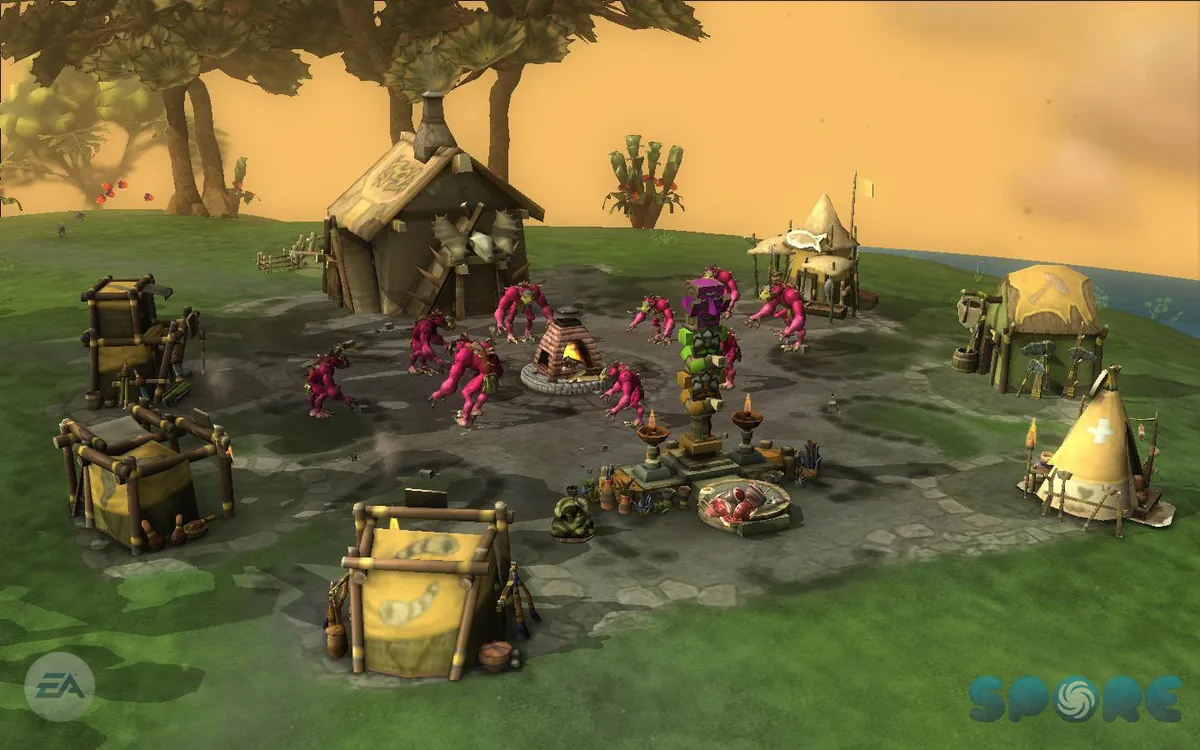
The documented structure of Spore is a chain of five stages: Cell, Creature, Tribe, Civilization, and Space. Each one is described as having its own style, challenges, and goals, which matters because it means the player is not repeating one activity for the whole run. The game changes its demands as the organism changes scale. A tide pool organism and an intergalactic traveler do not present the same problem, and the design uses that difference as its pacing device.
 View full image ↗
Two Ways to Enter the Game
Spore does not force a single route through its content. The official description gives two entry points: start in the Cell stage and nurture one species from a humble tidepool organism all the way to intergalactic traveler, or jump straight in and build tribes or civilizations on new planets. For a retro run today, that means the player can choose between the long continuity of one creature lineage and the shorter, more immediately large-scale experience of a later stage. The description is explicit that what you do with your universe is up to you, so the choice is not a hidden toggle but a stated design feature.
Creation Tools as the Core System
The most distinctive system in Spore is the suite of creation tools. The description calls them powerful yet easy to use, and it lists what they cover: creatures, vehicles, buildings, and even starships. This is the mechanical heart of the "universe of your own creations" pitch. The player is not choosing from a fixed faction roster or a preset vehicle list. Instead, the editor is where the player's intent becomes a tangible object that then participates in the stages. Because the tools span everything from a creature body to a starship hull, the same creative act scales with the game, from microscopic to macrocosmic.
 View full image ↗
Choices That Carry Forward
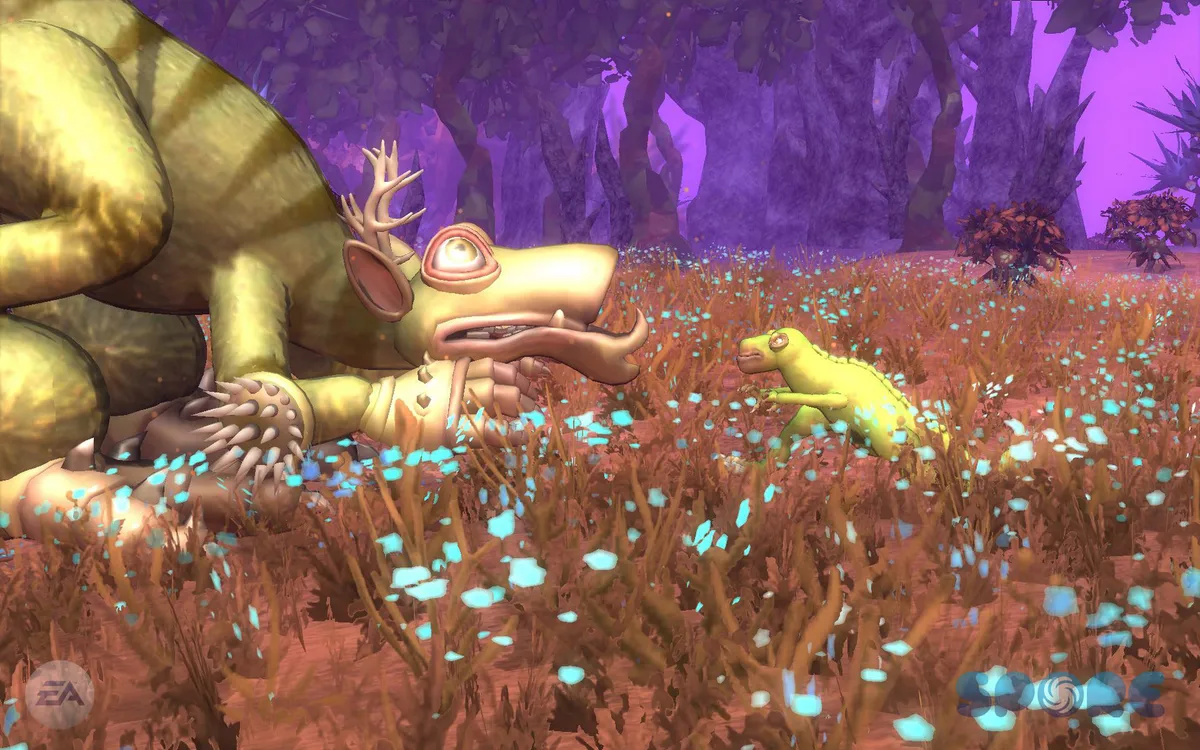
Spore ties progression to consequence. The official wording says the choices you make reverberate through generations and ultimately decide the fate of your civilization. Read mechanically, this positions the early decisions as inputs to the later stages rather than as isolated, resettable experiments. A creature shaped in one stage becomes the lineage that reaches the next. That continuity is what makes the long route through all five stages meaningfully different from dropping into a later stage: the later stage inherits a history rather than starting blank.
Source-Backed Starting Guidance
If the goal is to see the full arc the game describes, the supported path is to begin in the Cell stage and carry one species forward, since that is the route the description presents as nurturing a single organism from tidepool to traveler. If the goal is to reach the large-scale content quickly, the supported alternative is to jump directly into building tribes or civilizations on new planets. Which of those suits a given player is a judgment the source does not make for them, and the game is described as leaving the decision open.
 View full image ↗
What Makes the Design Distinctive
Spore's distinguishing move is to combine a staged evolution structure with player-authored content. Many games let you customize a character; fewer describe customization extending from creatures to vehicles, buildings, and starships inside the same progression. The five-stage layout gives that customization a timeline. The Cell stage is a starting point rather than a tutorial to be discarded, and the Space stage is the far end of the same run rather than a separate game. Whether a player experiences the whole chain or a single segment, the creation tools are the constant that links the stages together.
Scope of These Details
The release year, developer, publisher, platform listing, and genre tags referenced here belong to the official store entry for this game. The platform listed there is Windows. That information describes this catalog entry and should not be read as a claim about every historical release, port, or re-release of the game. The gameplay details in this article come from the official description of the five stages and the creation tools rather than from a hands-on test of the current build.
Scroll sideways to see the full table →
| Field | Value |
|---|---|
| Title | SPORE™ |
| Release year | 2008 |
| Developer | Maxis™ |
| Publisher | Electronic Arts |
| Listed platform | Windows |
| Genres | Action, Adventure, Casual, RPG, Simulation, Strategy |
| Evolution stages | Cell, Creature, Tribe, Civilization, Space |
Sources & further reading.
- SPORE™ — official game profile Retrieved Oct 10, 2026
First published .