 THE GAME ARCHIVE
Boots on the Ground: Soldier Controls and Movement
Soldier movement in Nuclear Dawn uses a standard first-person key layout: W moves forward, S moves backward, A strafes left, and D strafes right. Left Shift sprints, the Space bar jumps, and left Ctrl crouches. Combat upkeep is handled with R to reload the current weapon, while F triggers the class Special Ability. The E key operates panels on bunkers and armouries, and Q opens the radial radio menu for squad communication. These bindings cover traversal, combat readiness, class powers, and interaction with team structures.
The shooter side sits inside a hybrid model that pairs first-person combat with real-time strategy base-building and a commander role. Soldiers fight as armoured, assault, or stealth infantry across war-torn post-apocalyptic landscapes modelled on modern cities, choosing among ten distinct load-outs. The gunplay is described as hard, fast, and unforgiving, leaning on skill and tactics rather than twitch reflexes and map memorization. Across four classes, more than three dozen weapons are available, and the largest Source multiplayer maps host squad-based 32-player battles on six maps.
Four Classes, One Food Chain: Exo, Stealth, Assault and Support
Nuclear Dawn's combat revolves around class interaction, where each role's size, speed, health, and load-out come paired with a Special Ability built to counter another class. The Exo is the slowest and most heavily armored, carries the most powerful weapons, and demands the most skill to use effectively; it can enter lockdown mode to become a living turret. The Stealth class is the fastest and least armored, carrying precise assassination and sniping weapons, and can activate a cloaking device that renders it invisible to enemy eyes.
The counter-relationships close the loop. Stealth units are the premier Exo-killers, since cloaking lets them close on the slow, heavily armored target. The Assault class is moderately armored with normal running speed, and its weapon set covers the widest range of tactical options; its tactical visor reveals cloaked Stealth players, making Assaults the best Stealth killers. The Support class rounds out the four with versatility, health monitoring, and a variety of grenades, filling a role distinct from the armor, cloak, and visor abilities of the other three.
The Commander's War: Base Building, Research and Resource Points
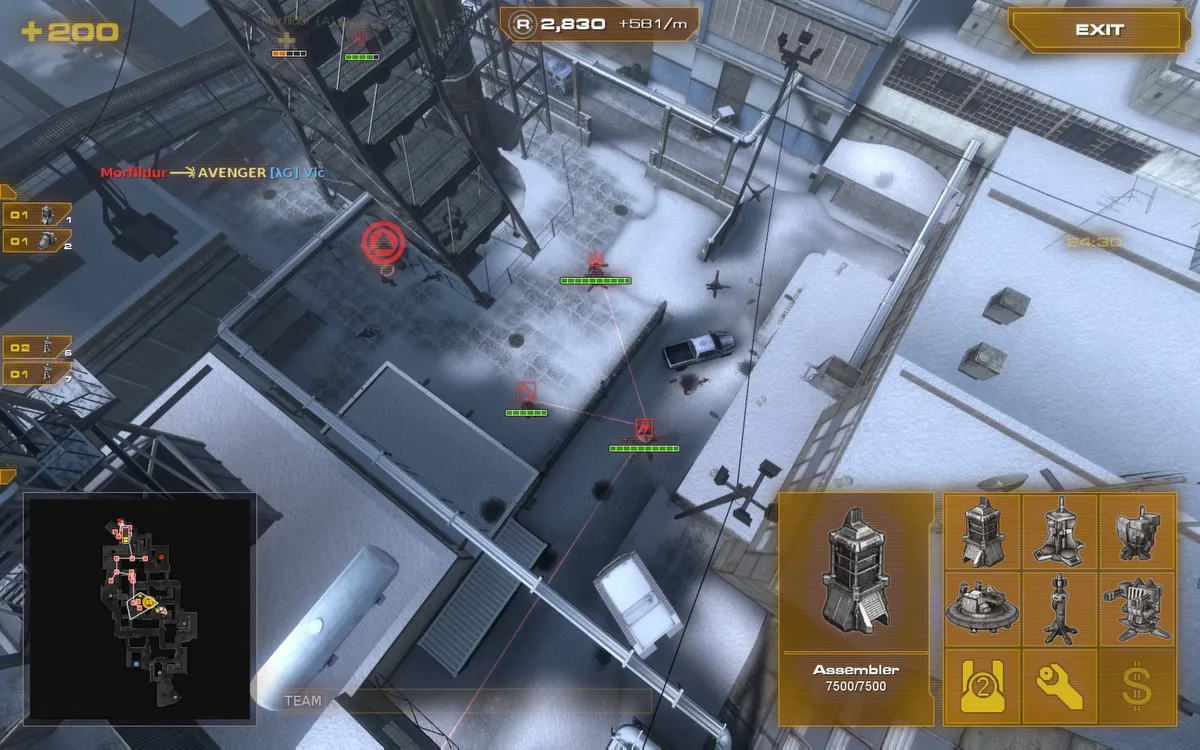
In Warfare, the full hybrid experience, the commander plays a real-time strategy game while the infantry fight below. Each team has one commander who produces structures, chooses from a full complement of defensive and offensive buildings to shape a fortress, and sets up forward bases to push the assault toward the enemy. The two factions, the Empire and the Consortium, build along completely separate paradigms, so the same commander role yields different structure sets depending on the side. Research opens advanced technologies, and the commander can also call down devastating strikes on the opposition.
Resource points tie the two layers together. In Warfare, soldiers are called to capture and hold resource points while their commander advances and fortifies the base, and control of those points, production structures, and strategic placement drives territorial dominance. The progression builds toward a single end: the teams fight until one can lay waste to the enemy bunker, which is the mode's ultimate goal. Every capture therefore feeds the commander's building and research rather than standing alone as a score.
Warfare vs. Team Deathmatch: Two Ways to Play
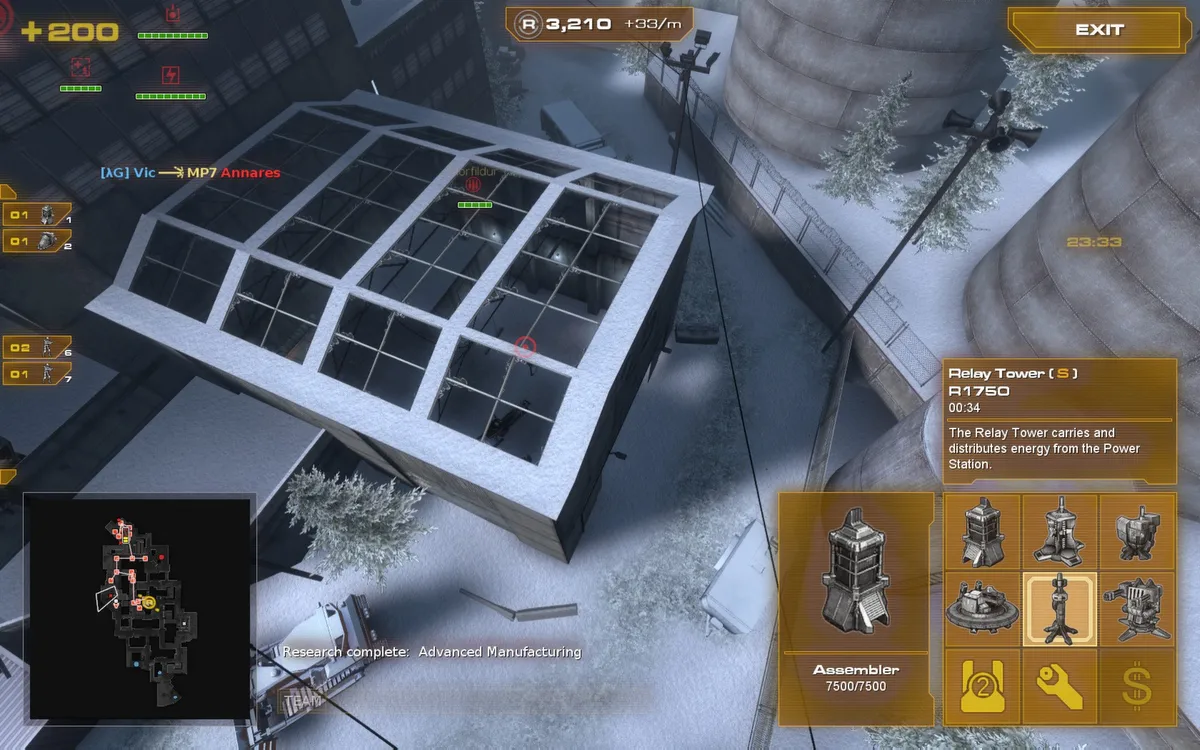
Warfare is the full hybrid mode: two teams of up to 32 players field one Commander each, and full real-time strategy functionality is switched on. Infantry are called to capture and hold resource points while their Commander advances and fortifies the base, producing structures from defensive and offensive sets and pushing forward bases toward the opposition. The factions build along separate paradigms. Research opens advanced technologies, and the Commander can call down strikes on the enemy. Squad-level coordination runs alongside all of it, with the Commander directing the team toward victory.
The two modes share the roster but not the rules. In Warfare the closing objective is the enemy bunker: resource points feed the Commander's building and research until a team can lay waste to the opposing base. Team Deathmatch strips the strategy layer out entirely, disabling all RTS functions for a straightforward shoot-fest between two teams. So the same classes and weapons carry over, but the map logic changes: no resource-point captures, no structures, no Commander issuing build orders. What remains is team-on-team gunplay with nothing but kills deciding the outcome.
Ranks, Unlocks and the Six Source City Maps
Nuclear Dawn tracks soldier progress through a 60-rank system. Each rank feeds into a set of 12 unlocks per weapon, alongside achievements and gizmos, so time spent in battle steadily expands what a player can bring to the field. The rank ladder therefore runs parallel to the class load-outs rather than replacing them: the four classes and their combined arsenal of more than three dozen weapons remain the foundation, while unlocks layer additional options on top of that base.
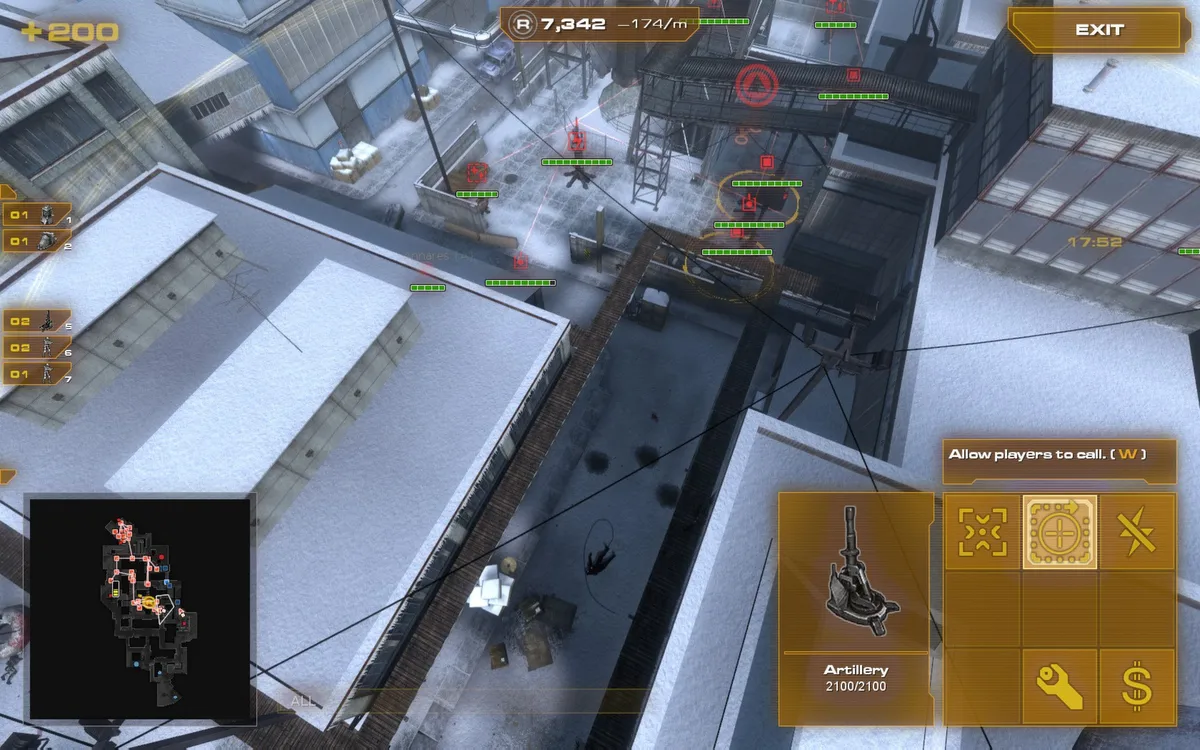
The fighting takes place across six maps, which the catalog describes as the largest and most detailed built in Source multiplayer to date, each modelled on a modern city. Squad-based 32-player battles run on these city settings, and terrain shapes where resource points and forward bases matter. The game itself runs on the Left 4 Dead 2 version of the Source engine, modified to carry the hybrid first-person shooter and real-time strategy play, with Steam Workshop support for adding custom maps to the rotation.
Sources & further reading.
- Nuclear Dawn — official game profile Retrieved Oct 19, 2026
- Nuclear Dawn — official game profile — publisher-supplied gameplay manual Retrieved Oct 19, 2026
First published .