 THE GAME ARCHIVE
The Elder Scrolls IV: Oblivion Game of the Year Edition bundles the base role-playing game with two major expansions and packages them as a single Steam release dated to 2009. The official product description frames the appeal less as a fixed storyline and more as a sandbox: you can pursue the main quest at your own pace, or wander off and invent your own goals in what the publisher calls a richly detailed and vibrant game world.
What Kind of Game Is This?
Oblivion is a role-playing game where the player shapes the experience. The store copy invites you to "live another life in another world" and to build any character you can imagine, spanning archetypes like the noble warrior, the sinister assassin, or the wizened sorcerer. The game frames those choices as the foundation of play: you decide who your character is, then use that identity to move through a vast open world. This is an intentionally broad pitch, and the documented mechanics reinforce it by letting choice, not a rigid class script, sit at the center.
The Core Gameplay Loop
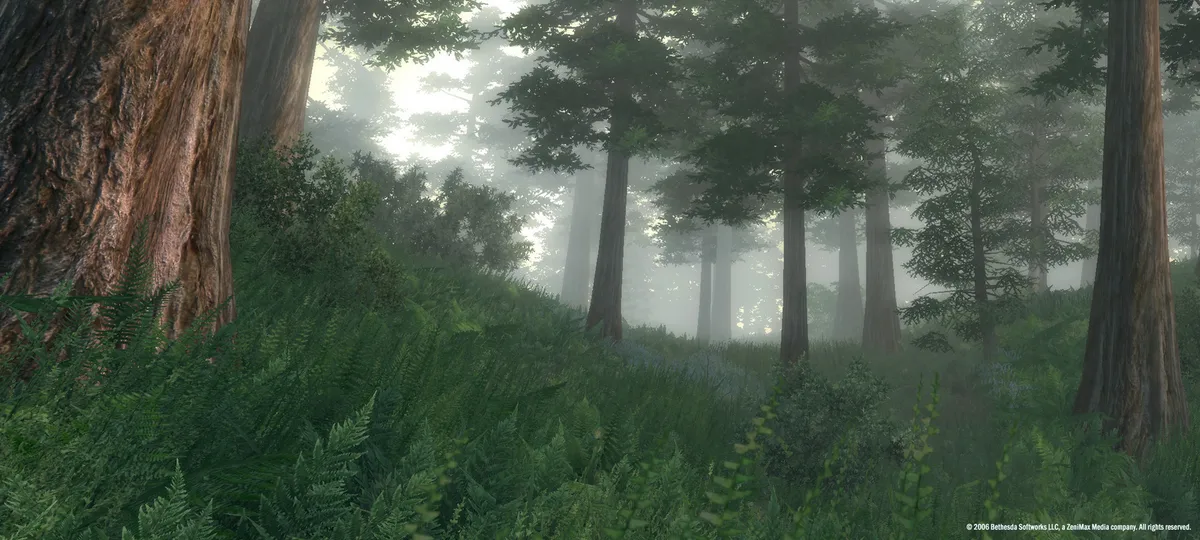
At the broadest level, the loop is exploration and questing in an open world. You can follow the main quest line or set that aside and find challenges of your own, which means the game does not force a single order of operations. Questing feeds into progression: the description states that players develop their character through various skills and abilities, and that the expansions add further quests and content on top of the base game. In practice, that combination suggests a rhythm of travel, discovery, combat or social encounters, and gradual character growth rather than a linear mission chain.
The main quest is one thread among many, not a corridor. Because you "can unravel the main quest at your own pace," the pacing decision belongs to the player, and the world itself is presented as somewhere to explore and find your own challenges. That design puts exploration in direct competition with the critical path, which is a core part of the game's identity in its own marketing.
 View full image ↗
First-Person Melee and Magic
Combat is described as a first-person melee and magic system, with an emphasis on intensity: the copy says the system brings first-person role-playing to a new level "where you feel every blow." That phrasing matters for how the game presents itself. Rather than an abstract, top-down exchange of numbers, the framing puts you behind the eyes of your character and gives melee swings and spellcasting physical weight. The blend of sword and sorcery in one combat space is part of what the publisher treats as a headline feature.
Radiant AI: Schedules and Living Characters
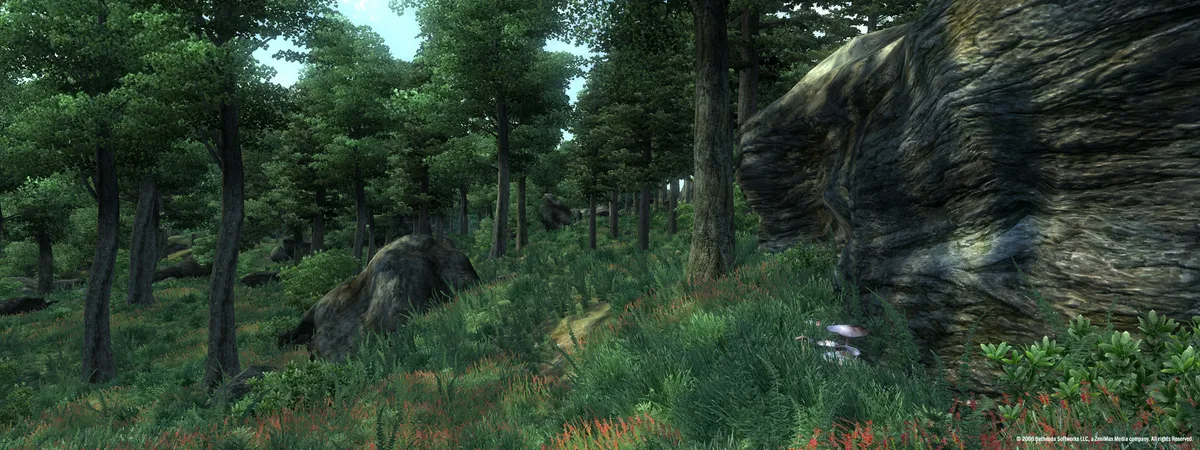
One of the more distinctive documented systems is Radiant AI. The official description says it gives the game's characters full 24/7 schedules and the ability to make their own choices based on the world around them. Non-player characters eat, sleep, and complete goals on their own. For the player, this changes the texture of a town or a road: rather than static quest dispensers, the population is described as following routines that continue whether or not you are watching. That creates opportunities for emergent situations, since characters are not simply waiting for the player to trigger them.
 View full image ↗
What the Expansions Add
Knights of the Nine adds a faction storyline. The Knights have long been disbanded, and the player is invited to reclaim their former glory across an epic quest line that traverses the far reaches of Cyrodiil. This is progression framed as restoration: you are rebuilding an order rather than simply finishing a checklist, and the arc is explicitly tied to a faction identity.
The Shivering Isles is the larger expansion concept. It provides new lands to explore, described as a world created in Sheogorath's own image and divided between Mania and Dementia. The setting is presented as unlike anything in the base game, which gives the expansion a distinct visual and narrative identity rather than more of the same terrain. It also introduces new foes: hideous insects, Flesh Atronachs, skeletal Shambles, and amphibious Grummites, among others. For players, that means a new environment, a new bestiary, and additional quests and content layered onto the existing world.
Source-Backed Starting Guidance
- Start by deciding what kind of character you want to role-play, since the game explicitly supports archetypes from warrior to assassin to sorcerer.
- Treat the main quest as optional in timing: you can pursue it at your own pace or set it aside.
- Expect to spend time simply exploring if you want to find your own challenges, because the world is the primary content space.
- If you want structured goals, look toward the expansions: Knights of the Nine gives a faction quest line, while Shivering Isles adds new lands and foes.
- Plan for growth over time, since progression is tied to developing skills and abilities rather than a fixed level path.
 View full image ↗
Design Character and Setting
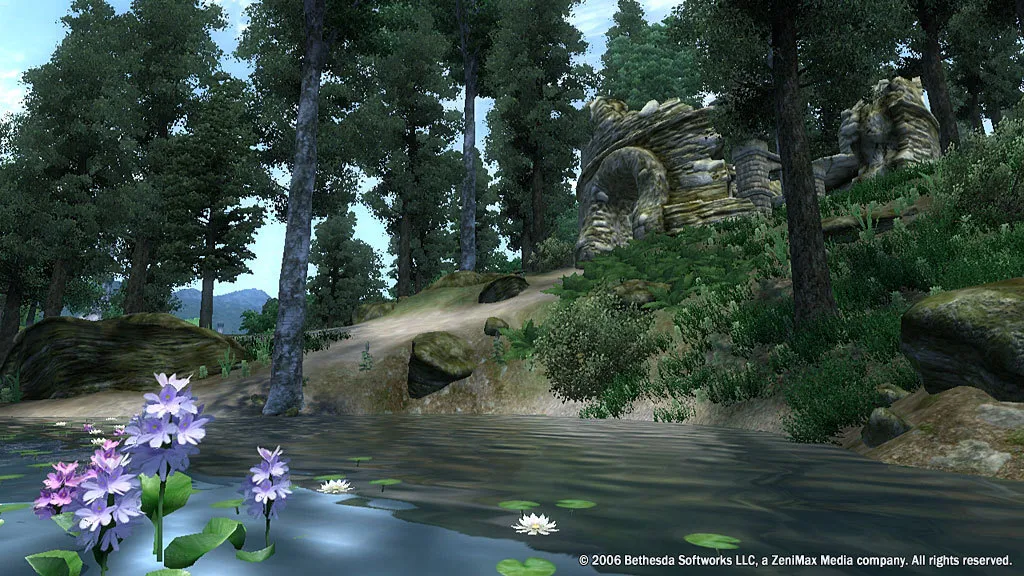
The visual pitch is a world that is "richly detailed and vibrant," and the copy leans on the idea of stepping inside it rather than viewing it from afar. Combined with the 24/7 character schedules, the design goal is a place that feels inhabited: people have routines, the landscape is meant to be looked at, and the expansions add regions with their own aesthetic logic. The Shivering Isles in particular is defined by division and duality, split between Mania and Dementia, which is a striking contrast to the more conventional fantasy terrain of the base setting.
Edition Scope: What This Release Is
This page describes a specific packaged edition: The Elder Scrolls IV: Oblivion Game of the Year Edition, dated to 2009 and listed for Windows. It is developed by Bethesda Game Studios and published by Bethesda Softworks, and it sits in the role-playing genre. The Game of the Year version includes the Knights of the Nine and Shivering Isles expansions, which is the main practical difference from a bare base-game copy. The 2009 date applies to this Steam entry; it should not be read as a claim about the original base game's release timing.
Oblivion's Game of the Year Edition packages an open-ended role-playing game with two expansions that each push in a different direction: one restores a fallen knightly order, the other opens a surreal realm ruled by a Daedric prince. What ties them together is the underlying design bet, that a player given a large, inhabited world and the freedom to ignore the main path will find their own story. That bet is the through-line of the edition's documented feature set.
Scroll sideways to see the full table →
| Documented feature | What the source says |
|---|---|
| Freeform play | Pursue the main quest at your own pace or explore and find your own challenges |
| Character creation | Build characters across archetypes such as warrior, assassin, or sorcerer |
| Combat | First-person melee and magic system |
| Radiant AI | Characters keep 24/7 schedules and make choices based on the world |
| Knights of the Nine | Restore a disbanded faction across a quest line in Cyrodiil |
| Shivering Isles | New lands split between Mania and Dementia, plus new foes |
| Progression | Character development through skills and abilities; expansions add quests and content |
Sources & further reading.
- The Elder Scrolls IV: Oblivion® Game of the Year Edition (2009) — official game profile Retrieved Oct 10, 2026
First published .