 THE GAME ARCHIVE
Two Heroes, One Job: The Shape of Munch's Oddysee
Oddworld: Munch's Oddysee is the third Oddworld adventure, and its Steam release is a Windows action, adventure and strategy game from Oddworld Inhabitants. Players guide two characters at once: Abe, the Mudokon champion, and Munch, his aquatic Gabbit partner. The pair's goal is to reclaim the last gabbit eggs on Oddworld, which have been packaged in a can of gabbiar. The premise is not just a framing device; it explains why the game is built around two bodies with different capabilities rather than one hero who can do everything.
The cooperative rule is the spine of the design: players use Munch and Abe together to make their way through the trials of Oddworld, leveraging both characters' unique strengths. That means the game repeatedly asks who should handle a given obstacle. Abe can climb and jump to reach new areas, then run to escape from dangerous enemies. Munch can swim around the new realms of Oddworld; on the ground, he can zip along with a wheelchair power-up. Neither toolkit replaces the other, so progress depends on alternating and combining them.
Oddworld: Munch's Oddysee also presents itself as "new and improved 3D," with lush rivers, towering mountains and hundreds of trees that bloom or die. That visual framing matters to play because the environments are not a static backdrop; the game is asking players to move through spaces that read as a world rather than a set of abstract puzzles. Interacting with dozens of different oddball races is part of the same design: from the heavily armed Big Bro Sligs to the cute but ferocious Fuzzles, the inhabitants can be recruited, manipulated or fought.
Abe's Toolkit: Climb, Jump, Run, Chant and Spooce
Abe's movement is about verticality and escape. He can climb and jump to reach new areas that are otherwise out of range. Once he has moved through a space, he can run to escape from dangerous enemies. That combination gives Abe two different jobs in a single area: he is the character who can get up and over, and he is also the character who can disengage when a route goes wrong. In practice, a climb into a new area can also become a retreat if the run is needed.
Abe's chant is his psychic tool. When all else fails, he can chant to take control of an enemy's soul, then use their guns to clear a path to safety. The design intent is not simply to remove an enemy; it is to convert an enemy's capability into a route. A gun-carrying foe becomes a temporary tool, which means the choice of when to chant can matter more than the fighting itself. Abe can also use spooce, or spiritual power gained by harvesting SpooceShrubs, to possess other creatures as well.
The psychic powers are explicitly ways to "extend their reach and get others to do the dirty work." For Abe, that includes letting his chant roar to take possession of a gun-toting Big Bro Slig and clear almost anything out of the way. The spooce route broadens the roster of possible hosts beyond one enemy type, so the player is not locked into a single possession answer. If Abe cannot mesmerize someone into getting the job done, the game still has a second solution through Munch.
Munch's Toolkit: Swim, Roll and Hijack Machines
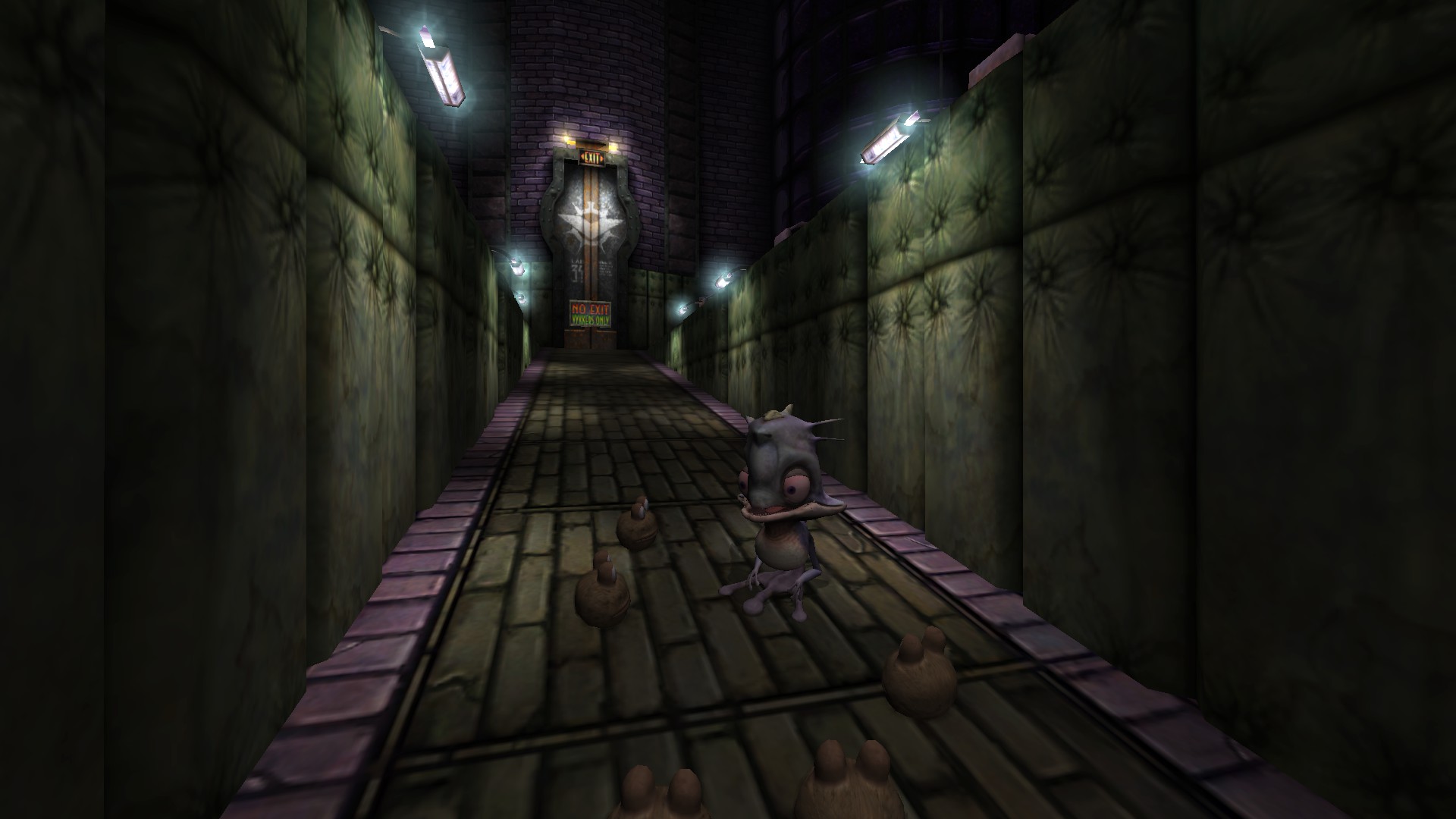
Munch's movement opens routes Abe cannot use. He can swim around the new realms of Oddworld, so water is his terrain rather than a barrier. When he is on the ground, he can zip along with a wheelchair power-up, giving him a fast land option that contrasts with Abe's climbing and jumping. The result is a practical division: Abe handles the high routes and the places where a run is needed, while Munch handles water and the stretches where wheeled speed is the better answer.
Munch's most distinctive tool is his remote control head port. It lets him hijack nearby machines, including cranes and 50-caliber Anesthesia bots, to tackle the really tough obstacles. The crane example is telling: to move yapping Slogs out of the way, the player uses Munch's head port to fire up the crane and drop those Sloggies in their pen. That is a spatial task solved by operating hardware rather than by fighting, and it shows how the port turns Munch into the character who can make the environment itself act.
The two psychic routes are deliberately different. Abe's chant can mesmerize a gun-toting Big Bro Slig and turn its weapon against the level; Munch uses the head port when a target cannot be possessed, hijacking machines so they do the work instead. That gives the pair a clean split for planning: enemies and creatures are handled through possession, including possession fueled by spooce harvested from SpooceShrubs, while machinery and the problems machines can solve fall to Munch's hijacking.
Possession and Power-Ups: Turning Others Into Tools
Abe's possession begins with his chant, which can overwhelm a gun-toting Big Bro Slig and turn its weapon against nearby obstacles. He can also spend spooce, the spiritual power harvested from SpooceShrubs, to possess other creatures. Munch takes a different route: his remote control head port hijacks machines such as cranes and 50-caliber Anesthesia bots, letting him operate them directly to move heavy objects or subdue tough enemies. The two methods give each hero a way to make hostile forces or equipment do work they could not handle alone. The documented design intent is that these powers extend their reach and get others to do the dirty work.
Power-ups sit alongside possession as another form of leverage. Every friendly character you can find becomes a fighting ally, including Fuzzles and Mudokons. When the player needs to get somewhere quickly or get over a wall right now, Oddworld's consumer power-ups such as Expresso and Bounce amp up Munch and Abe's abilities to perform cool moves. Expresso and Bounce are therefore not just collectibles; they are the temporary answer to a movement problem, while possession and ally recruitment are the answer to a force problem. For the more direct approach, the player can instead possess high-caliber weapon-toting enemies.
These options overlap on purpose. A blocked route might be opened by hijacking a crane, by dropping Sloggies into their pen, or by blasting a path clear with a possessed enemy's weapon. The player is not forced into one solution, but the choice still has consequences: possession may depend on a suitable enemy or on harvested spooce, ally recruitment depends on finding a friendly character, and power-ups are temporary amps to movement. Reading the obstacle and picking the method is the core decision the systems create.
"Frustration Free" Progression: QuikSave, Unlimited Lives and Navigation Aids
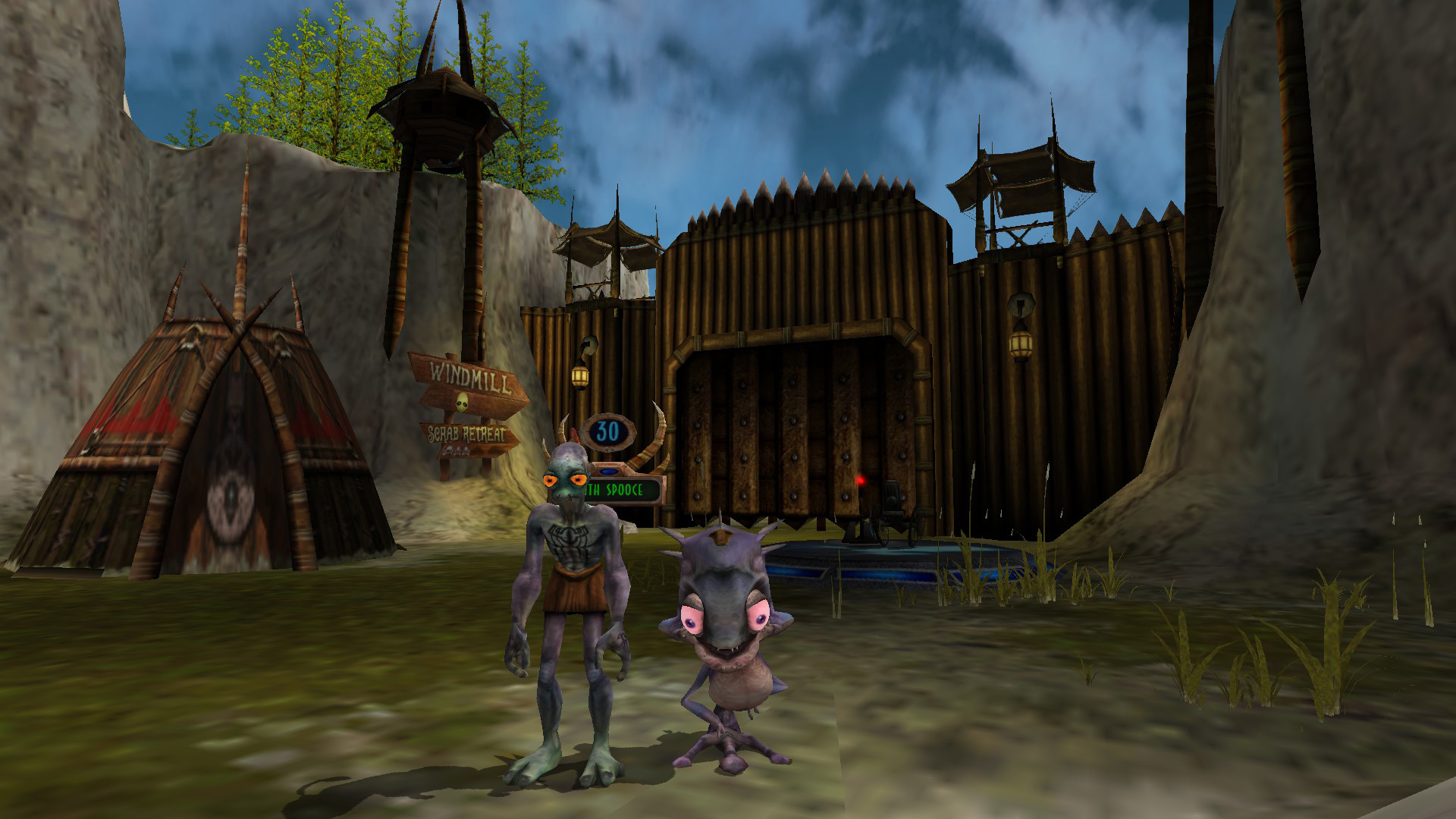
Oddworld: Munch's Oddysee labels its approach "Frustration Free" gaming, and two rules carry most of that promise. The first is easy QuikSave, which lets the player store progress quickly. The second is unlimited lives, so falling or dying does not drain a counter and force a restart from an earlier point. Together they change how a failed attempt feels: a segment can be retried, a tricky task redone, or an idea tested, with QuikSave available to bank what worked. Both are game systems, not host-console backup, restore or suspend features.
That progression is backed by three navigation aids: an intelligent cinematic camera, an auto-targeting system and a no-stick navigation system. The game's own description groups them as the reason playing is a breeze. The practical effect is that the camera frames the action, targeting handles aiming when enemies such as the heavily armed Big Bro Sligs appear, and no-stick navigation moves the characters without demanding stick input. These aids work in the same direction as QuikSave and unlimited lives: they reduce the cost of an attempt and keep the player moving through the world.
Because lives are unlimited and saves are quick, the game's difficulty is not meant to come from attrition. The pressure instead sits in the cooperative puzzles and in sequencing abilities correctly: knowing when Abe should climb, when Munch should swim, when a machine should be hijacked, and when a possessed enemy should clear the way. A failed sequence is cheap to retry, so the player can experiment with the tools rather than protect a limited resource. The frustration-free framing and the two-character design reinforce each other; the forgiving systems exist to let the cooperative ideas breathe.
How to Approach the Game: A Source-Backed Starting Plan
The first habit worth building is to treat Abe and Munch as a team rather than as two separate characters. The game is designed around using Munch and Abe cooperatively, so when progress stalls, the useful question is which character's unique strengths match the obstacle. Abe is the answer for climbing and jumping to reach new areas, and running to escape from dangerous enemies. Munch is the answer for swimming around the new realms and for zipping along on the ground with the wheelchair power-up. Switching rather than forcing is the intended rhythm.
The second habit is to look for the indirect solution. When a direct approach is not working, the game offers possession and hijacking as alternatives. Abe's chant can take control of an enemy's soul and use their guns to clear a path to safety, and spooce from SpooceShrubs can possess other creatures as well. Munch's remote control head port can hijack nearby machines, including cranes and 50-caliber Anesthesia bots, to tackle really tough obstacles. If one method does not fit, the other character often has a different route to the same goal.
The third habit is to use the forgiving systems. Because there are unlimited lives and easy QuikSave, a failed attempt is not a major setback; it is an opportunity to test whether a different character or a different tool works. The game's profile groups the intelligent cinematic camera, auto-targeting and no-stick navigation as reasons playing is a breeze, so there is little value in fighting the controls. Bank progress with QuikSave when a sequence works, and treat a death as a cheap experiment rather than a reason to stop.
The 2016 Port and What It Adds to the Package
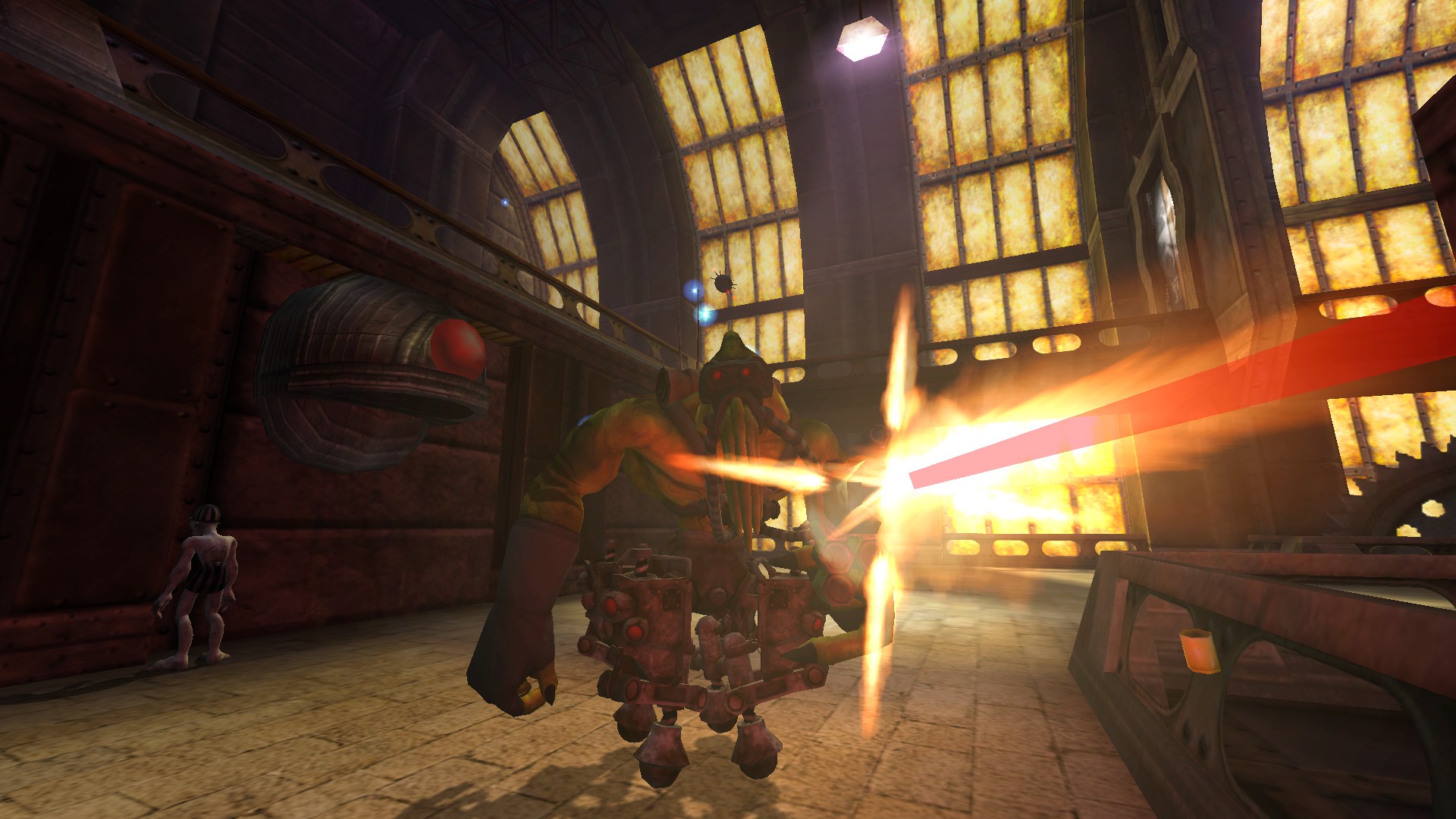
The 2016 port targets 60 FPS, includes higher resolution textures, better quality cut-scenes, improved audio, higher poly models, numerous fixes and improvements, and trading cards, badges, emotes and backgrounds. The 60 FPS target applies to the same cooperative campaign described above, so Abe's climbing and chanting, Munch's swimming and wheeled movement, and machine hijacking all run on that cadence. Higher resolution textures and higher poly models change how the characters and environments render during play, while improved audio covers the soundscape around those actions.
The port's update notes also mention higher quality pre-rendered cut-scenes, fixes to camera inversion and targeting during real-time cut-scenes, a few new "HD" character models, audio quality improvements, sound effects from Munch's Oddysee HD, brightness adjusted on first boot to better match the Xbox version, and a video player that uses the original 4:3 aspect ratio. These are package and presentation changes layered onto the same gameplay systems, not a different game. The Steam extras such as trading cards, badges, emotes and backgrounds sit outside the in-game actions and are delivered through the platform.
It is worth separating the original game from the port. Oddworld: Munch's Oddysee is a 2010 Windows release from Oddworld Inhabitants, and the 2016 port is a later version of that same Windows game with the listed technical and content additions. The cooperative rules, psychic powers, power-ups and "Frustration Free" systems belong to the game itself; the 60 FPS target, higher resolution textures, higher poly models, improved audio and Steam extras are what the 2016 version adds. For a reader deciding whether to revisit the game, the port is the current official Steam package rather than a remake.
Quick Fact Table
- Abe: climb, jump, run, chant, spooce. Munch: swim, wheelchair power-up, remote control head port. Psychic powers: possession of enemies and objects. Power-ups: Expresso and Bounce. Friendly allies: Fuzzles and Mudokons. Progression: unlimited lives and easy QuikSave. Navigation aids: intelligent cinematic camera, auto-targeting, no-stick navigation. 2016 port: 60 FPS, higher resolution textures, higher poly models, improved audio, trading cards, badges, emotes and backgrounds.
Sources & further reading.
- Oddworld: Munch's Oddysee — official game profile Retrieved Oct 16, 2026
First published .