 THE GAME ARCHIVE

Katana Attacks and Stolen Energy: Growing Stronger Makes You a Target
Plain Sight puts a katana in the hands of a ninja robot and sends the fight through space, with leaps over planetoids forming part of its combat setting. Destroying another robot does more than remove an opponent: the kill lets you steal that robot’s energy. Attacking and gathering strength are therefore linked, rather than separate activities. The energy taken from defeated opponents makes your robot bigger, stronger and faster. A successful katana attack feeds that growth, tying the robot’s physical size and capabilities to the energy collected through kills.
That growth comes with a distinction between becoming powerful and actually winning. Holding a large reserve of stolen energy makes you a target; simply keeping it does not win the match. The same resource that increases your size, strength and speed is also energy another robot can steal by killing you. Combat therefore connects two opposing roles: you attack opponents to take their energy, while remaining a potential source of energy for them. A larger, faster robot still participates in that exchange, rather than escaping it through accumulated strength. Energy must ultimately become points, not merely a bigger robot.
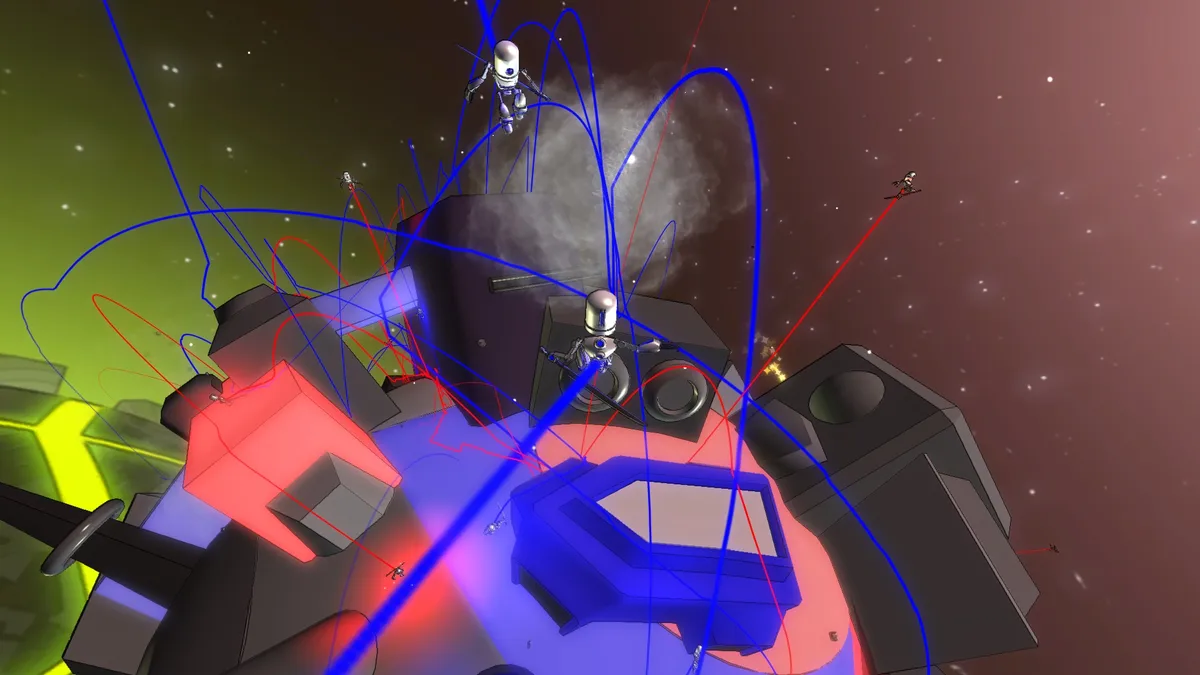
Self-Destruct Scoring: Turn Energy into Plasma, Then Respawn
Self-destruction is the action that turns stored energy into points in Plain Sight. Press the self-destruct button and your robot becomes a ball of plasma that absorbs enemies. The scoring step is therefore also an attack: rather than simply exchanging a reserve for points, you detonate into a form that can take opponents out with you. Converting energy and catching enemies belong to the same action, with the plasma ball providing the connection between them. Your robot’s destruction is not merely the end of an attack; it is how you score.
The number of opponents absorbed matters: taking out more enemies with the plasma ball produces a better result. That gives the detonation two connected ingredients, the energy being converted and the opponents caught in the blast, rather than making it only a way to dispose of your robot. After detonating, you upgrade your robot, respawn and return to the fight. Self-destruction thus sits between gathering energy and rejoining combat, completing a scoring cycle without ending your participation in the match. The next robot returns to fighting after the previous one has become plasma.
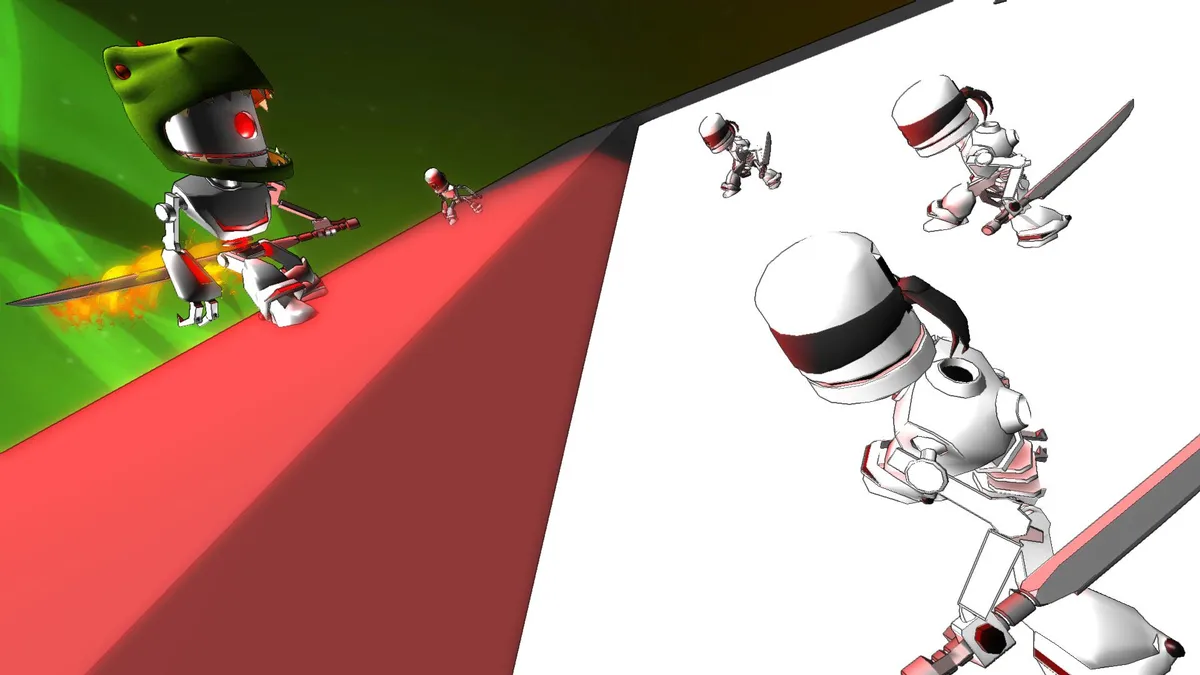
Mode Objectives: Deathmatch, Robozilla, Target Detonations and Team Scores
Plain Sight’s mode objectives range from Deathmatch to a joint attack on an oversized opponent. In Robozilla!, mini ninjas work together to bring down the gargantuan Robozilla, giving the group a named enemy to fight rather than a target area to reach. Lighten Up sets a different task: detonate on a designated area while carrying as much energy as possible. The best detonation earns the points for that round. Here, the objective combines a location requirement with an energy requirement: the contest is about delivering a high-energy explosion at the target.
For team competition, the options include standard Team Deathmatch and Weakest Clink, a variation with a communal score bank. That shared bank is the stated scoring distinction between the two team formats, rather than the target-area detonation contest used in Lighten Up. Capture the Flag supplies another objective: its flag takes the form of a beacon, while retaining the familiar capture-the-flag format. Across these modes, the specific objective matters: fighting Robozilla, detonating at a marked area, sharing a score bank and pursuing a beacon are separate tasks.
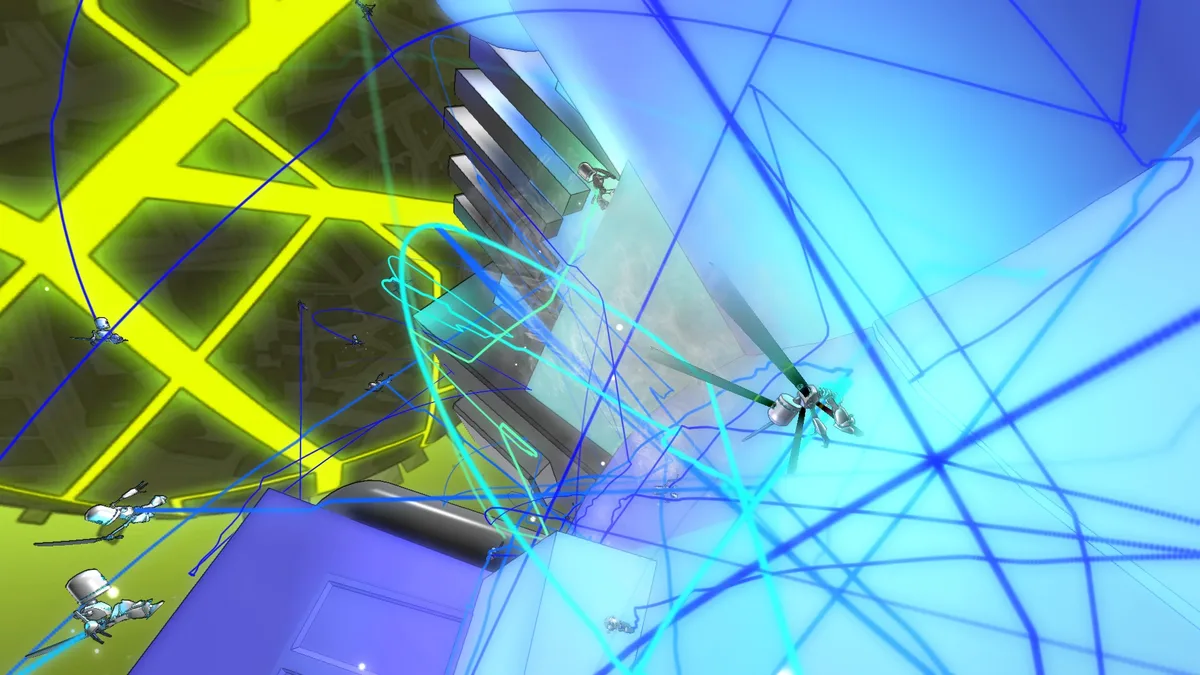
The Wider Arena: Maps, Player Counts, Power-Ups and Robot Upgrades
Plain Sight provides 13 multiplayer maps, with battles supporting up to 20 players. Those figures describe the arena selection and the player limit separately: there are 13 maps to fight across, while 20 is the maximum supported battle population, not a required head count. Alongside multiplayer, an offline practice mode offers a place to work on your skills outside online competition. Practice is a separate option from joining a multiplayer battle.
Plain Sight lets you spend experience points on a selection of 30 different robot upgrades, while in-game power-ups help level the playing field during battles.
Sources & further reading.
- Plain Sight — official game profileRetrieved Nov 12, 2026
First published .