 THE GAME ARCHIVE
Four-Squad Battles: Turrets, Drones and Mid-Mission Support
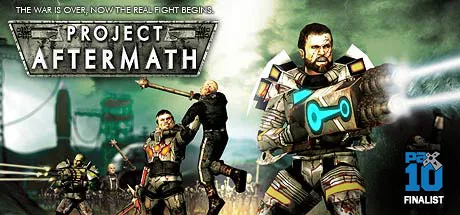
Project Aftermath puts up to four soldier squads under your command in massed battles against enemy hordes. Its retro-futuristic combat also includes tactical deployment: alongside commanding those squads, you can create turrets and deploy drones that hunt enemy grunts. These are distinct parts of the battlefield toolkit, with the drones specifically assigned a hunting role. The action therefore extends beyond the soldiers themselves, combining squad command with turret creation and drone deployment during play.
Mid-mission support covers both calling for backup and requesting equipment changes. The distinction matters: one request brings support into the battle, while the other concerns the equipment your force uses. Loadouts are not restricted entirely to preparation before a mission; equipment-change requests are part of the in-game tactical deployment system. Together with turrets and grunt-hunting drones, these requests give squad command several concrete companion actions: create an emplacement, deploy a hunter, call for help or request different equipment.
Classless Heroes: Experience, Equipment and Spoils-Funded Research
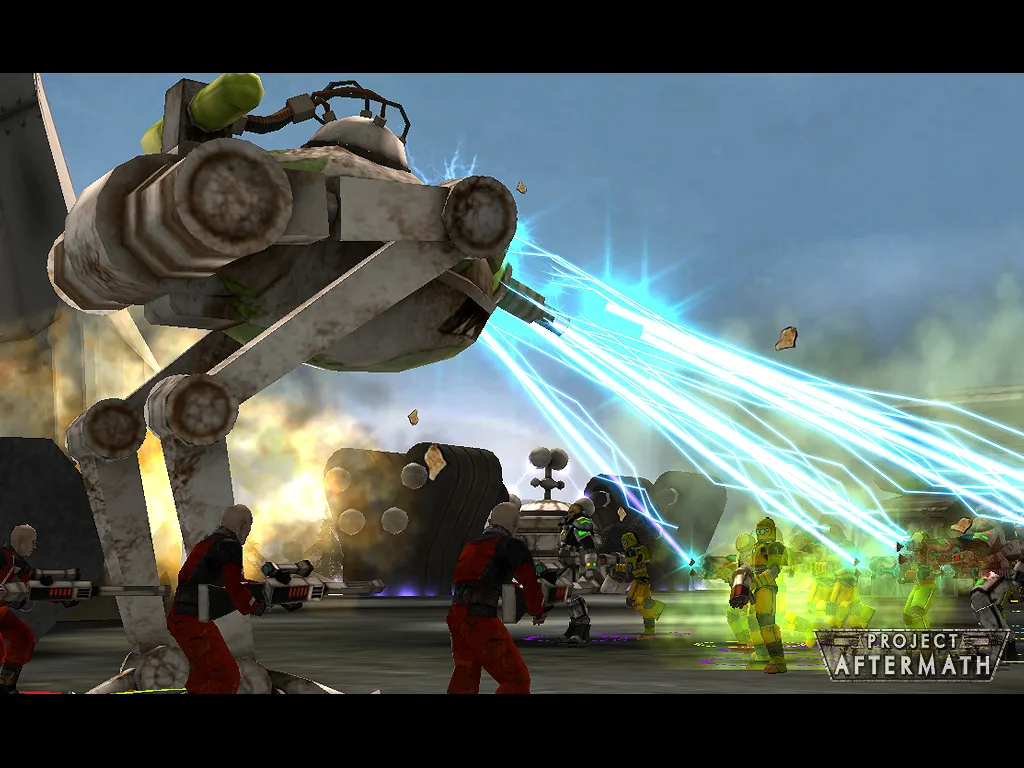
Project Aftermath lets you command as many as four Heroes, with experience making them more powerful. Those Heroes are classless: squad equipment is something you assemble to suit your approach rather than a loadout defined by a character class. Experience and equipment therefore provide two distinct parts of their development. One increases the Heroes’ power as they gain experience; the other lets you configure the force through item selection. With more than 100 items supporting thousands of combinations, the classless system gives squad building a substantial equipment pool to work with.
That equipment pool covers weapons, armour, power-up augmentations and spell-like special attacks, so configuring a squad involves more than choosing its weapons. You can draw on these different categories to equip the soldiers around your playing style. Research connects this customisation to the spoils of war: those spoils fund research into new items, feeding further equipment options into squad building. Alongside the Heroes’ experience-based growth, this gives progression an equipment component, with battlefield spoils serving as the means of researching additional items rather than experience doing all the work.
Alien-World Missions: Capture, Rescue and Hidden Treasures
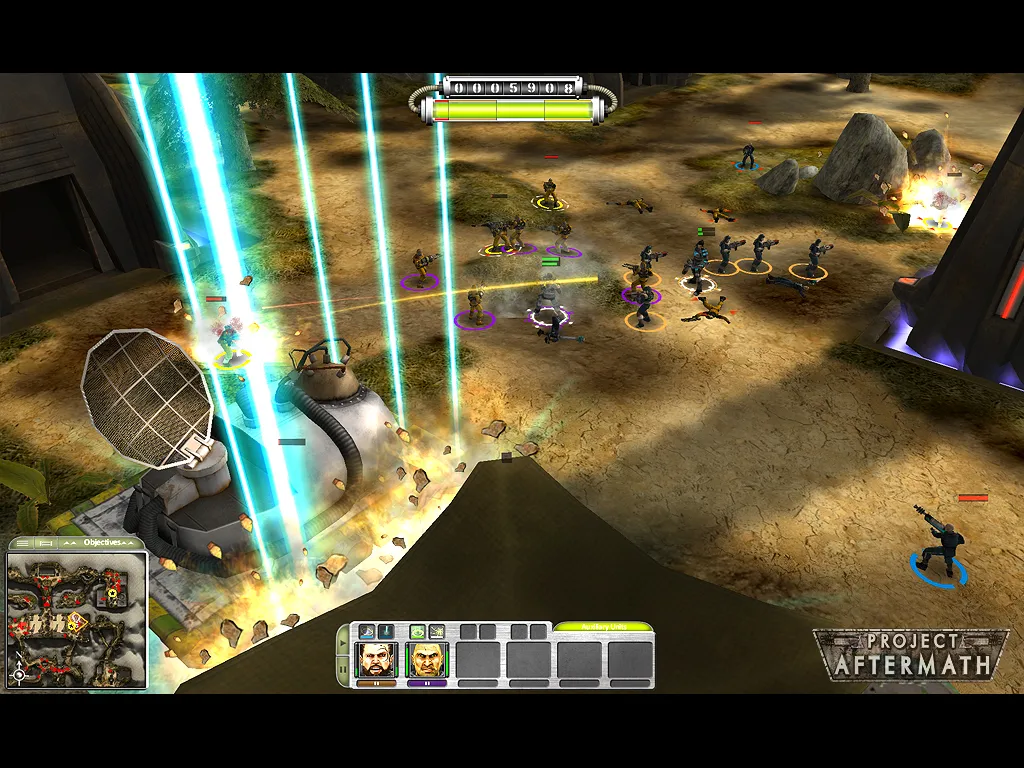
Project Aftermath takes its action across 10 missions on a mysterious alien world, with objectives that include capturing strategic locations and rescuing hostages. Those tasks give the fighting specific targets: a location to capture or people to rescue, rather than enemies alone. Alongside those 10 missions are 20 Challenge missions, providing a separate set of tests. The mission offering thus combines the alien-world action with a larger collection of challenges.
Exploration supplies another objective alongside capture and rescue: search the landscape for hidden treasures. The planet is also a subject of discovery, with secrets to uncover about both the world itself and the enemy encountered there. These are distinct reasons to investigate the surroundings—finding concealed treasure and learning more about the setting and its opposition. The alien landscape is therefore more than the backdrop for mission objectives; it also contains things to seek out.
Replay with Less: Equipment-Based Difficulty, Rewards and High Scores
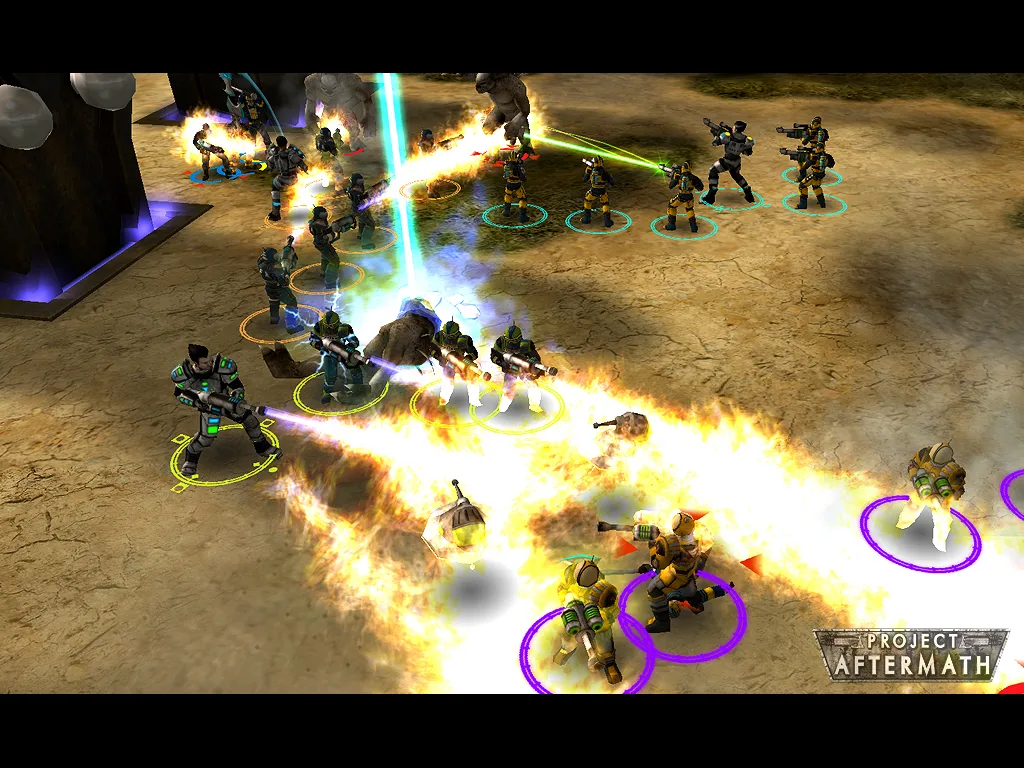
Project Aftermath makes equipment a way to set mission difficulty: heavily equip your Heroes for a stronger assault, or under-equip them for a tougher attempt. Replaying with fewer soldiers and items also earns greater rewards, giving a reduced force a purpose beyond simply making combat harder. These rules connect the size and equipment of your force to the replay challenge. Instead of returning with more resources every time, you can take soldiers and items away and pursue the greater rewards attached to doing more with less.
Online high score tables provide another target for those leaner deployments. The equipment-based difficulty system links under-equipped Heroes with attempts to challenge those tables, while heavier equipment supports a more forceful approach to the mission. There is also recognition for battlefield performance through Honours, which are collected for exceptional skill in battle. Greater replay rewards, a place on the high score tables and skill-based Honours give repeat attempts distinct goals: reduce the force you bring, compete for scores, or seek recognition for how well you fight.
Sources & further reading.
- Project Aftermath — official game profileRetrieved Nov 12, 2026
First published .