 THE GAME ARCHIVE
What ProtoGalaxy Asks of Its Players
ProtoGalaxy frames the alien invasion as a fleet-scale problem. A mysterious, powerful race arrives to enslave the entire galaxy, and the player's fleet becomes humanity's last hope; the stated objective is to end the attacks and rebuild a home for survivors, with the invaders in hot pursuit and the dangers of the unexplored at every turn. The catalog lists the game as an Action and Indie Windows title developed and published by Source Studio Ltd., with 2010 given as the year.
What distinguishes the game in its published feature list is how those verbs fit together. Teams of up to four explore the galaxy together in a mode documented as online cooperative play; ships are customized from a huge selection of parts; physics is used both to solve puzzles and to defeat enemies; and a built-in galaxy editor lets players create their own galaxy and download galaxies made by other players. Action, smart puzzles and deep adventure are listed alongside those systems, so the four-player exploration, the parts-based ship building and the physics problem-solving are presented as one connected loop rather than separate modes.
Four-Player Co-Op as the Default Frame
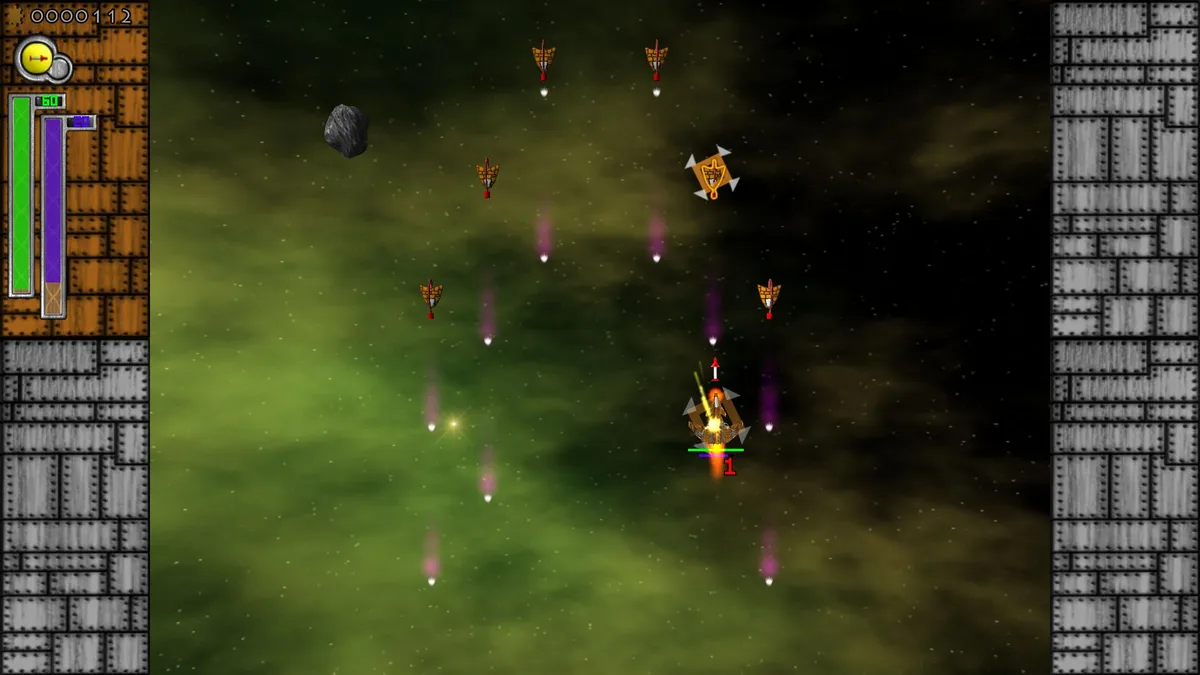
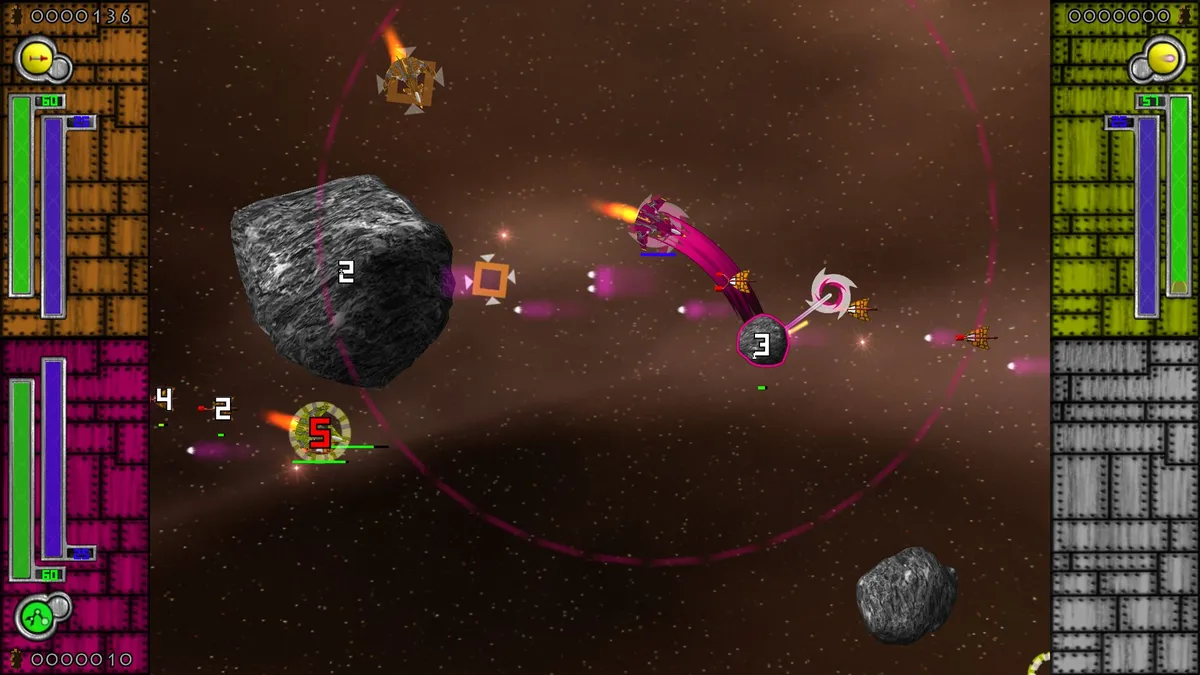
The cooperative feature is stated plainly: team up with up to four players and explore the galaxy. The material documents the mode as online cooperative play, so the four-player fleet is a networked arrangement rather than a couch-shared one as far as the supplied text records. Because the same feature list puts customization and physics under that umbrella, the practical picture is a small crew of players each bringing a ship assembled from the parts pool into the same shared galaxy, where puzzles and enemy encounters are the shared work.
The game does not document solo play, class roles, or a roster of pilots in the supplied material, so the co-op count is the clearest structural fact about how a session is organized. Players should read the four-player limit as the size of the fleet working the same galaxy, not as a matchmaking lobby count for a separate mode; the exploration, puzzle and combat verbs all appear on the same key-feature list as the team-up line.
Ship Customization From a Huge Parts Selection
Ship customization is built around choosing from a huge selection of parts, so a vessel is assembled from that broad pool of components rather than picked from a fixed list of finished hulls. That single mechanic is what makes the fleet a personal construction project: the parts a player selects define the ship they bring into four-player exploration and into the physics work of puzzles and combat.
The documented wording does not break parts into categories, weapons, armor or engine tiers, so no build archetypes should be invented. What can be said is that the customization sits next to the puzzle-and-combat use of physics, meaning the outfitting choice is paired with how the ship then behaves against obstacles and enemies. Because the parts pool is described as huge, the meaningful decision a player faces is which combination to fly rather than whether to customize at all.
Physics as a Tool for Puzzles and Combat
Physics in ProtoGalaxy is documented as a shared tool rather than scenery: the fleet uses physics to solve puzzles or defeat enemies. The same wording ties physics to both obstacle clearance and confrontations with the invaders pursuing the fleet, so a co-op team can approach a puzzle or a hostile force through the physical behavior of the game world. Because ship customization runs on the same feature list, the parts chosen for a vessel feed into how a player can apply physics to those problems.
The exact physics objects, force values and puzzle solutions are not described in the supplied material. What the feature list supports is the design intent: the world's physical behavior is the lever players use, and the same lever serves both the puzzle layer and the enemy layer. In a four-player frame that suggests coordination—one crew tackling a physical problem together—but the text should not be stretched into claims about specific contraptions or combat verbs.
The Built-In Galaxy Editor and Downloaded Galaxies
ProtoGalaxy includes a built-in galaxy editor, letting players create their own galaxy using the in-game tools rather than limiting play to the shipped galaxy. The same key-feature list adds that new galaxies can be downloaded from other players for endless gameplay, which is the documented source of the game's endless content: players make galaxies, and other players pull them in. The editor is also documented as the construction method behind Proto Defense, the added mode, so the tool serves both player-facing creation and the official map.
The supplied evidence records the act of creating a galaxy and the act of downloading galaxies from other players; it does not detail the editor's interface, its object set, or the rules of a finished galaxy. What can be said is the loop: build a galaxy, share it, and download someone else's. That loop sits on the same feature list as four-player team exploration, parts-based ship customization and physics used in puzzles or against enemies, so the editor is presented as a counterpart to the main game rather than a detached tool.
Proto Defense: Co-Op Turret Defense and Boss Fights
Proto Defense is described as an online multiplayer co-op turret defense map built using the ProtoGalaxy Editor and presented as the game's first online multiplayer co-op turret defense experience. The setup asks teammates to defend Earth from alien invaders together. The documented Rules of play: pick from a big selection of turrets, and reposition turrets at any time to deal extra damage, so placement is not final and a defense can be adjusted as the situation develops. The same mode includes taking down huge bosses, competing in leaderboards for the highest score, and tackling eight new challenging achievements.
Taken together, the turret mechanics give the mode a simple defensive loop: pick turrets from the sizable selection, then reposition them when needed to keep covering the approach. The repositioning is documented as a way to deal extra damage, not merely to correct placement, so moving a turret is a livable tactical action. Proto Defense is framed as an Arcade map, and the catalog lists the game as Action and Indie for Windows from Source Studio Ltd., with 2010 given as the year.
Source-Backed Starting Guidance
The documented systems point to a few practical habits for a new crew. Assemble the ship around the huge parts selection before heading out, since customization is the front the feature list leads with and the same pool is what every player in a four-player team draws from. Treat physics as the answer to both puzzles and enemies, so the same mindset serves obstacle clearance and combat. In Proto Defense, expect to move turrets after placing them, because repositioning is documented as a way to deal extra damage.
For endless content, download galaxies from other players, and use the built-in editor to make your own galaxy when the shipped content runs thin. Those two acts are the documented sources of the game's replay value. Controls, difficulty settings and the exact rules of a finished player-made galaxy are not described in the supplied material, so fresh crews should not assume any particular control scheme or level route before playing.
Scroll sideways to see the full table →
| Field | Value |
|---|---|
| Title | ProtoGalaxy |
| Year | 2010 |
| Platform | Windows |
| Developer / Publisher | Source Studio Ltd. |
| Genres | Action, Indie |
| Co-op | Up to 4 players, online cooperative |
| Addition | Proto Defense (Arcade turret defense map) |
Sources & further reading.
- ProtoGalaxy — official game profile Retrieved Oct 19, 2026
First published .