 THE GAME ARCHIVE
Mission Planning Computer: Briefing, Gear, and Waypoints
The Mission Planning Computer organizes the pre-mission phase into a Briefing Room, Gear Room, and Planning Room, switched through a navigation bar that also saves and loads mission plans, opens Options, and exits to the Main Menu. The Briefing Room carries the operational information around the top of the screen, while the Gear Room handles operative and equipment selection. This screen structure sits inside the larger cycle of planning, execution, and debriefing, in which you command an international anti-terrorist unit and assign operatives, customize their kit, place waypoints, and pursue objectives such as hostage rescue, bomb defusal, and terrorist elimination.
In the Planning Room, a Map Window shows a large image of the mission area beside a Map Toolbar; you lay down waypoints there to build the route a team follows whenever you are not directly controlling it. The map scrolls by moving the mouse cursor past the top, bottom, left, or right edge of the room, and the W, S, A, and D keys scroll up, down, left, and right. With fifteen linked missions, the plan you draw on the map determines where a squad goes before you take over an operative.
Gear Room Loadouts: Weapons, Ammo Types, and Attachments
The Gear Area shows an operative's loadout as a set of images in the middle of the screen; clicking an image opens the list of available gear in the Information Area on the left. Primary Weapon is split into Weapon and Ammo. There are 64 real-world weapons across sub-machine guns, shotguns, assault rifles, and sniper rifles, and you also assign armor and items such as heartbeat sensors, grenades, and explosive charges. Ammo choice changes how the round behaves: full metal jacket is the standard load, jacketed hollow point does more damage to unarmored targets but less against body armor, and shotguns load 00 buckshot or slugs.
Every weapon carries a default concentration-based zoom of 1.5x, toggled with the Left Shift key; pressing it again zooms back out. Sniper rifles use a special scope that reaches 5x and 10x magnification, so the optic you take into a mission sets how far an operative can pull a target closer before firing. Pairing a scope with the right ammunition keeps the rifle useful at range while the ammo type decides whether the shot favors soft targets or armored ones.
Teams, Operatives, and Skill Growth Between Missions
The roster sorts every Rainbow operative by specialty: Assault, Recon, Sniper, Demolitions, and Electronics. Assault specialists handle combat with any weapon except sniper rifles, while Recon specialists focus on stealthy movement and staying undetected. Snipers work with sniper rifles, Demolitions specialists place and deactivate explosives, and Electronics specialists place and manipulate electronic devices. These skills feed the assignment system in the mission planning cycle: with three teams of up to four operatives each, you match each slot to the specialty a task requires before customizing gear and plotting waypoints.
Skill growth runs on points earned by finishing missions, applied to attributes including Assault, Demolitions, Electronics, Sniper, Stealth, Self Control, and Leadership. Those attributes govern behavior on assignment: Self Control sets how long an operative waits before firing when a miss is likely, so a higher value means longer holding and more accurate timing; Leadership shortens the delay between your orders and teammates' responses; Observation governs how alert computer-controlled characters are and how likely they are to see and hear others. Operatives left off a mission still train and improve slightly with time, so the roster develops even between deployments.
Rules of Engagement: Assault, Infiltrate, and Recon
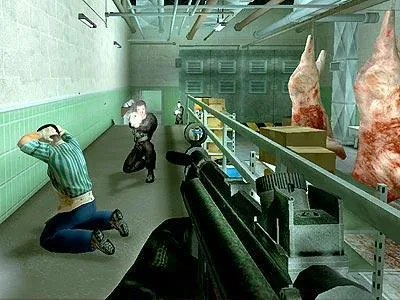
Rules of Engagement govern how your AI teammates react to tangos, and the F key cycles the indicator between three settings. On Assault, the squad engages every tango it encounters. Infiltrate restricts fire to silenced weapons, but if the team takes fire, it engages all tangos regardless of whether those weapons are suppressed. Recon is the most restrictive: teammates only engage when fired upon. Separately, you decide when your own operative fires, but on Recon missions any engagement by you is an automatic mission failure, so the setting and your own trigger discipline must stay aligned.
Those settings plug into the broader 15-mission linked campaign, where you rescue hostages, defuse bombs, recover intelligence, and eliminate terrorist forces across locations such as Italy, Croatia, Greece, and Rio de Janeiro. The manual frames the action around one-shot, one-kill lethality and states that missions grow gradually harder as your skills sharpen, with objectives that include recovering intelligence to help in later missions. Recon's failure condition and Infiltrate's silenced-weapon rule therefore shape which approach suits a given objective rather than acting as free-floating toggles.

Firefights: Reticle Bloom, Reloads, and One-Shot Lethality
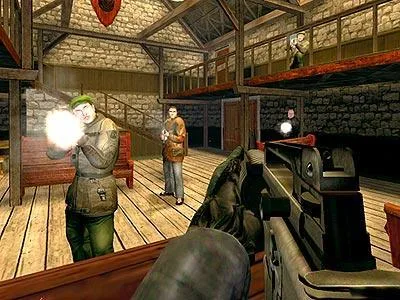
Firing is bound to the left mouse button, and each shot jolts the view according to that weapon's recoil; dragging the mouse down counters the climb, though pulling too fast widens the reticle. Accuracy is read through four lines around the reticle that spread outward as you move and look around, then close in when you settle. Every weapon has its own bloom rate, so the gap between the lines tells you how far rounds may land from center. The ROF control cycles a weapon's rate of fire, and some weapons fire more than a single round per trigger press; a brief press still releases one or two rounds.
Reloading uses the Z key. Letting a magazine run dry forces the slowest reload, because the magazine is swapped and a round is chambered by pulling the charging handle. A tactical reload performed while ammunition remains, or before entering combat, is quicker. Combat follows one-shot, one-kill lethality, and bullets penetrate doors, so a shot through a barrier can still connect. Armor changes damage, which ties directly to ammunition: jacketed hollow point rounds hurt unarmored targets more but fare worse against body armor, while full metal jacket is the standard load.
Beyond the Campaign: Cooperative and Adversarial Multiplayer
Multiplayer splits into two broad families chosen when a server is created: Cooperative and Adversarial. Cooperative covers Mission, Terrorist Hunt, and Hostage Rescue, where players work together against computer-controlled enemies; the manual describes running single-player missions alongside other people and defending mission-based scenarios against computer-controlled terrorists. Adversarial offers Survival, Team Survival, Bomb, Hostage, and Pilot, each with team-based objectives. The create-server screen also exposes general options such as a server name and password, so a session can be locked, alongside settings that vary by game mode.
Beyond the mode list, the create-server screen carries a Kit Restriction tab for banning equipment, plus options for difficulty levels, player limits, and bomb timers. Friendly fire can be toggled so teammates can hurt one another, and a teammate killer penalty lets a player killed by a teammate penalize the offender into being a spectator next round; radar can also be allowed so players use teammate radar to coordinate. The catalog lists Adversarial Terrorist Hunt, Adversarial Scattered Hunt, and Capture the Enemy among the added modes, with new multiplayer maps including Chemical Factory, Ferry Boat, University, Italian Alleys, and Jungle.
Sources & further reading.
- Tom Clancy's Rainbow Six® 3 Gold — official game profile Retrieved Oct 19, 2026
- Tom Clancy's Rainbow Six® 3 Gold — official game profile — publisher-supplied gameplay manual Retrieved Oct 19, 2026
First published .