 THE GAME ARCHIVE

Equipping Weapons and Entering Combat
In Risen 2: Dark Waters, combat begins only after a weapon has been equipped, so the inventory is the first stop before a fight. Opening the inventory lets you look at the clothes or armor you wear and choose a hand by clicking its column, then pick an item to equip. Blade weapons, spears and throwing weapons belong in the left hand, while the right hand is reserved for firearms and Dirty Tricks items. A weapon that requires a skill you have not yet learned cannot be used, so the equipment you can actually ready depends on the abilities you have acquired.
Once a weapon is equipped, the action key—the left mouse button—drives interaction: pressing it while a person, enemy or item's name is visible talks, picks up, opens doors, uses beds, cooks meat over a fire, or performs a slash or parry in combat. The same key attacks with the main weapon, and a secondary action key switches to the secondary weapon during a fight. Because equipping happens through inventory clicks, a player can change the weapons available in each hand before stepping into combat mode and then alternate between them with the primary and secondary keys.
Attributes and Glory Points
Attributes in Risen 2: Dark Waters are raised only by spending Glory points, and Glory points come from two activities: accomplishing tasks and defeating enemies. Once enough have been collected to raise an attribute, the increase is made in the matching submenu by clicking on the attribute you want to improve. The cost is not fixed—the number of Glory points required grows with each level, so later increments demand a larger stockpile than earlier ones. Five attributes structure this progression: Blades, Firearms, Cunning, Toughness and Voodoo.
Each attribute feeds a specific group of skills. Blades raises the base value for slashing weapons and thrusting weapons, while Toughness raises the base value for the Blade Proof, Bullet Proof and Intimidate talents. Cunning raises the base value for Thievery, Dirty Tricks and Silver Tongue, and Voodoo raises the base value for Death Cult, Black Magic and Ritual. Many skills of a given attribute can only be learned once that attribute reaches a certain value, so raising an attribute also governs which skills become available.
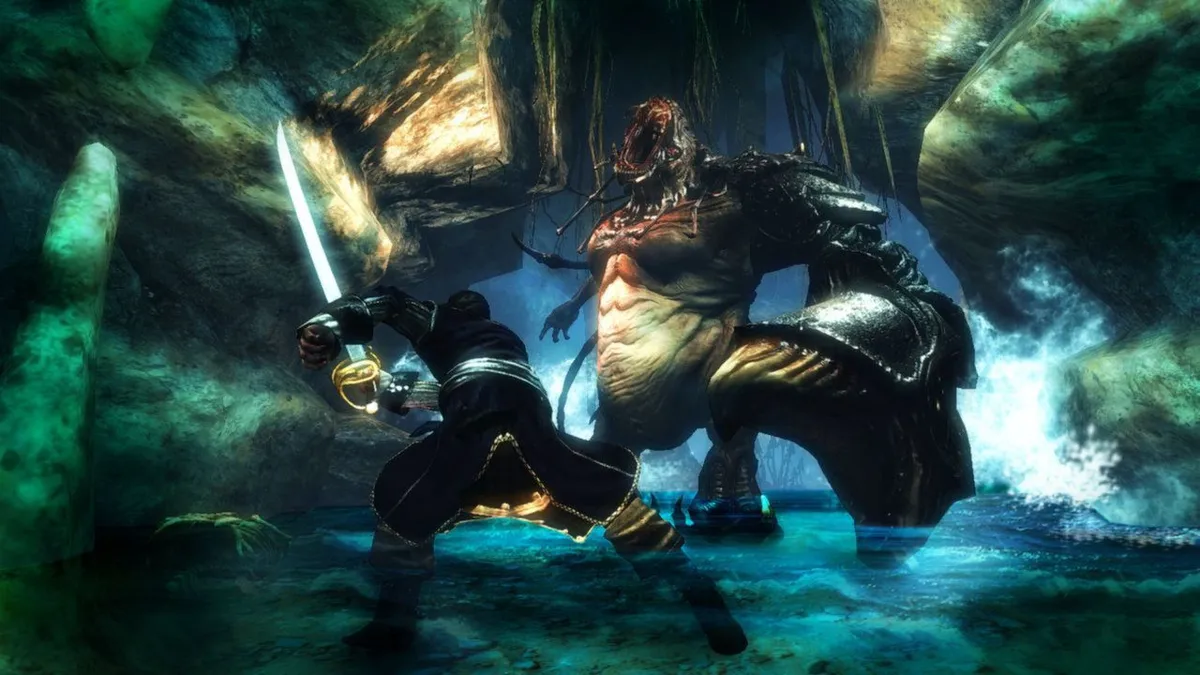
Thievery: Lock-picking, Sneaking and Silver Tongue
Lock-picking is a Thievery skill that requires both the learned ability and a lock pick to open the locked chests and crates scattered through the game world, which hold useful items. Each lock on a door or chest is built from several bars, and a better lock has more bars. The bars must be opened in a particular sequence. Dirty Tricks, another Thievery skill, can be used during combat by throwing sand or salt at opponents.
Sneaking is the most basic thief skill: moving silently makes it easier to creep up on unsuspecting enemies or victims, and non-player characters do not wake when you enter their houses at night to steal. Changing into Sneak mode where no one can see you avoids suspicion, and getting caught brings serious trouble. Silver Tongue persuades non-player characters without bribery or violence and can affect quest outcomes.
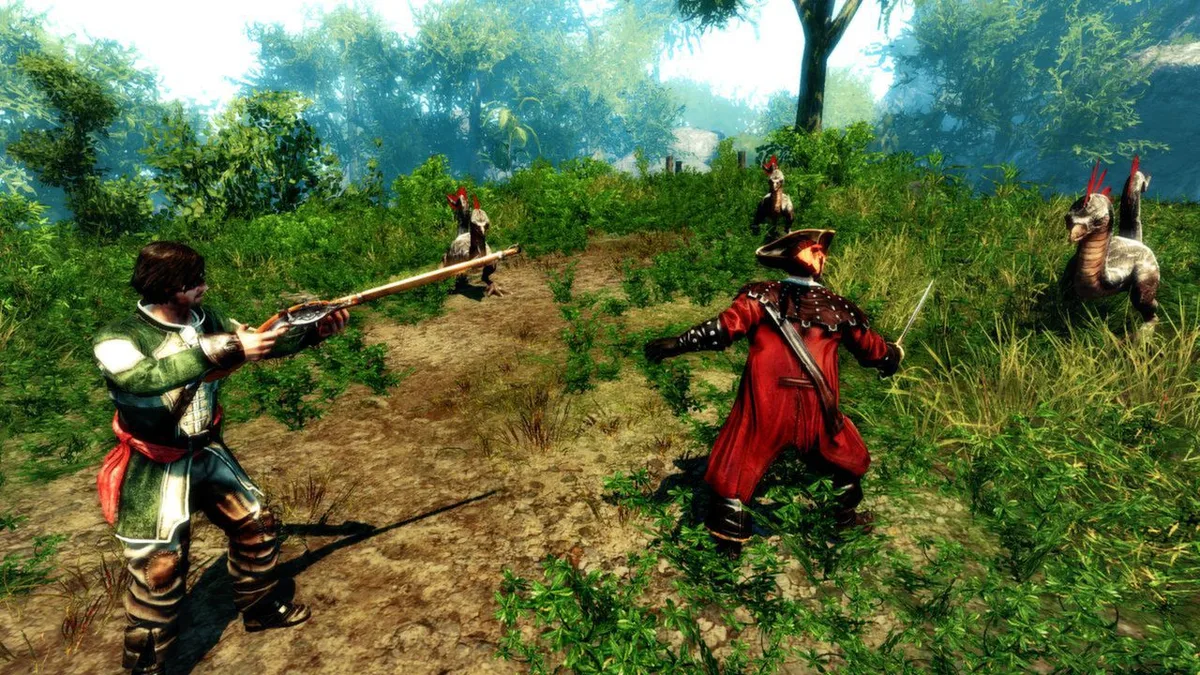
Voodoo, Crafting and Firearms
Voodoo is the domain of the natives, and mastering it lets you torment enemies in ingenious ways and obtain powerful magical devices. Making voodoo dolls, rings and amulets calls for three things at once: the required skills, a schematic in your inventory, and the necessary ingredients, which you can harvest yourself or buy from merchants if you are lucky. With those in hand, any voodoo altar can be used to produce these items. The same altars support rituals, so the altar, the schematic and the gathered components are the concrete requirements that gate this crafting path.
Firearms crafting opens once your Firearms value reaches 6. According to the manual, at that point you can also make blades if you have apprenticed as a smith, and you can build guns, meaning pistols and muskets. The work itself needs a gunsmith to teach you the proper skill, and after that a workbench, a schematic, and the right parts combine to build the gun.
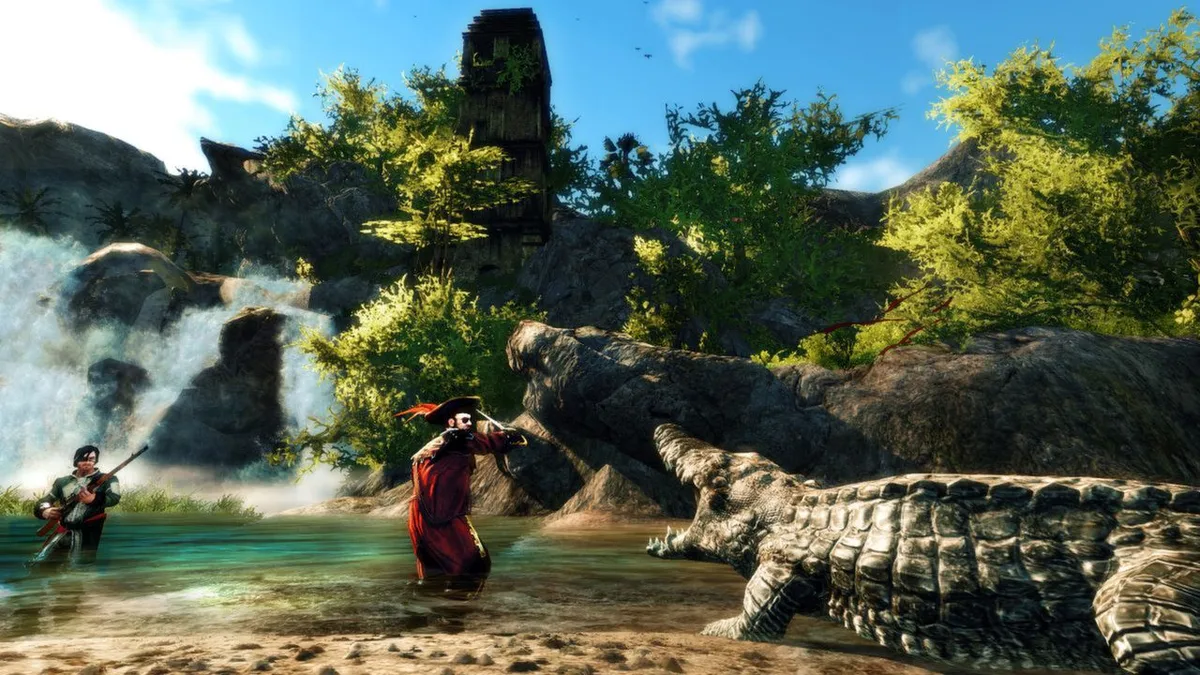
Survival: Provisions, Sleep and the Day-Night Cycle
Health in Risen 2: Dark Waters can be restored through provisions, a category that covers herbs, food and drinks. Herbs are the stronger option and refill more of the health bar than ordinary food does. These items reach the player through several routes: merchants sell provisions, mushrooms and similar plants can be picked in the wild, and animals can be hunted so that raw meat, fish or poultry is cooked over a camp fire before eating. Cooking is therefore a concrete step that turns a hunt into a usable meal rather than a raw ingredient.
Sleeping requires an unused bed, and it is only possible when no enemies are nearby and no fight is underway. The length of the sleep has no effect on how much health is regenerated; the character wakes up refreshed regardless of how long the rest lasted. Sleep also passes time, which matters because some quests can only be started or completed during the day or at night. A full day and night cycle changes many aspects of the game world and its interactions, so waiting in a bed is a way to reach the hour a task demands.
Maps, Treasures and Trading
Navigation in Risen 2: Dark Waters rests on the sea chart, which is in your possession from the beginning. It shows all the islands of the Southern Seas, with a blue arrow marking your current position. When you mark trainers, merchants or quest-relevant people in the logbook, they appear on the chart as red and green dots. Separate region maps provide detailed overviews of particular islands, areas or towns and the people tied to tasks, but unlike the sea chart they must be obtained first.
Treasure hunting begins with a special treasure map; once you hold one, the buried site is marked in the countryside. Treasures usually lie in remote places such as caves or isolated beaches, so reaching them takes travel. Trading follows a simple merchant exchange: click the wares you want to buy, sell or buy back, and gold and goods change owners, with prices shown in gold. Selling an item and later buying it back costs only what the merchant paid you originally.
Scroll sideways to see the full table →
| System | What the manual documents |
|---|---|
| Combat entry | Combat mode requires an equipped weapon; unlearned-skill weapons cannot be used |
| Hands | Left hand: blades, spears, throwing weapons. Right hand: firearms, Dirty Tricks items |
| Action key | Left mouse button: talk, pick up, open doors, use beds, cook, slash, parry |
| Glory points | Earned by tasks and defeated enemies; each attribute level costs more Glory |
| Attributes | Blades, Firearms, Cunning, Toughness, Voodoo |
| Lock-picking | Requires skill and a lock pick; locks have bars opened in sequence |
| Gunsmithing | Firearms value 6 plus gunsmith training, workbench, schematic and parts |
| Sleep | Unused bed, no enemies nearby; refreshes health and passes time for day/night quests |
| Sea chart | Owned from the start; blue arrow for position, red and green dots for marked people |
| Region maps | Detailed island/area/town maps that must be obtained first |
| Trading | Buy, sell and buy back wares; buyback costs the original sale price |
Sources & further reading.
- Risen 2: Dark Waters — official game profile Retrieved Oct 19, 2026
- Risen 2: Dark Waters — official game profile — publisher-supplied gameplay manual Retrieved Oct 19, 2026
First published .