 THE GAME ARCHIVE
Build While Riding, Then Link Into Loops and Cobra Rolls
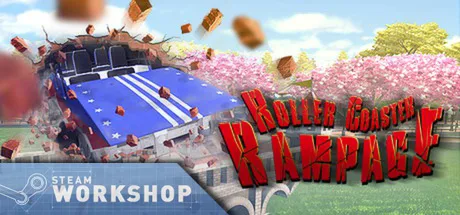
In Roller Coaster Rampage, track construction happens during the ride: a procedural coaster engine builds rails in real time as you travel. Your passage leaves both track and supports behind, so the structure you create remains part of the space you are riding through. Circle back and those earlier rails and supports become obstacles. Building and riding therefore share the same terrain, with the growing coaster supplying obstructions on a return pass. The construction mechanic is not separate from navigating the ride; it produces the physical trail you can encounter again.
Alongside the track you generate, isolated sections offer structures to connect with while still riding. Loops and cobra rolls are among these linkable pieces, with barrel rolls, a helix, bat wings and inverted bat wings also listed. Dynamic linking lets the ride join existing track rather than consist entirely of newly generated rails. Connecting sections is also a competitive objective: players compete to link the most pieces. That gives these structures a role beyond their shapes, since each is a potential connection in the contest to join more track sections.
Manual Maneuvers: Corkscrews, Big Jumps and Sliding Back Onto Rails
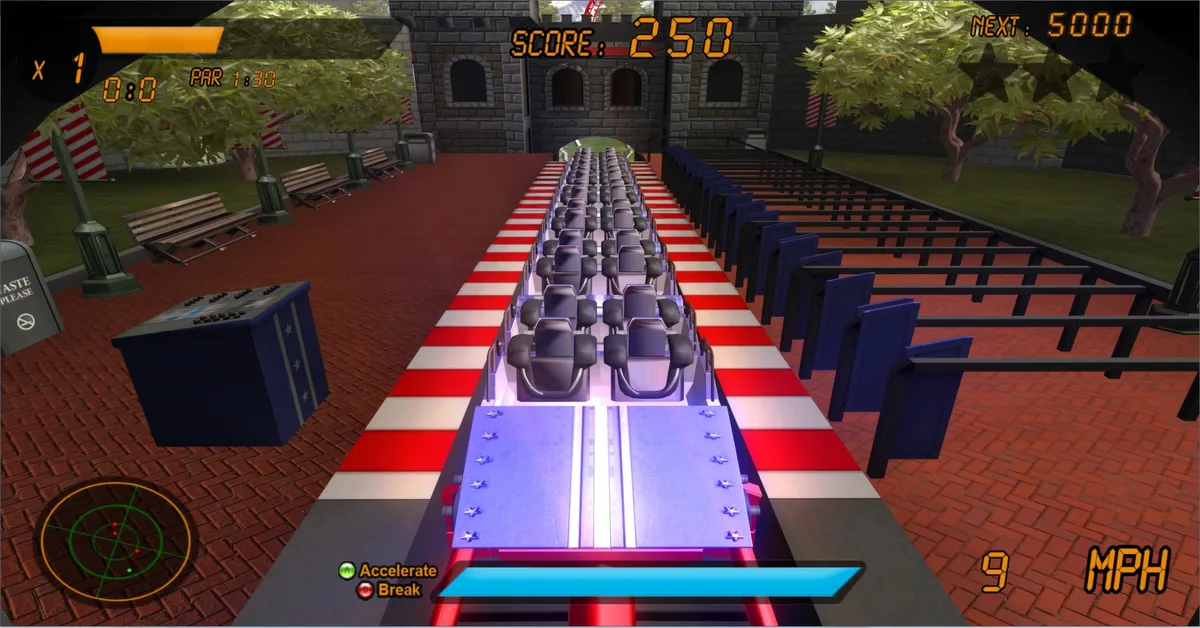
Manual maneuvers are a competitive objective in Roller Coaster Rampage, with players trying to perform the best maneuvers rather than simply ride along. The named stunt repertoire includes corkscrews, barrel rolls, outside loops and inverted loops. These are maneuvers to perform during the ride, distinct from the existing track sections available to connect with. Barrel rolls appear in both categories: as a stunt you can perform and as a track shape you can link into.
Large jumps take the coaster off the rails, with a front-seat replay presenting the airborne ride. Leaving the track also has a separate mechanical role: coasters can derail, slide and then link back onto rails. That sequence allows a ride to move from rail travel into a slide and return to the track, rather than treating every derailment as the end of the run. Alongside the looping stunts, jumps and sliding provide maneuvers that extend beyond movement along the rails themselves.
Chase First Place With Gems, Recognized Stunts and Destruction
Collecting gems is one of Roller Coaster Rampage’s competitive objectives: the contest is to gather the most, alongside pursuing first place on the leaderboards. Stunts also feed into that ranking through an AI stunt recognition system. Performing maneuvers is therefore more than a visual flourish; the game recognizes stunts and rewards them, with more stunts leading to higher leaderboard placement. Gem collection and recognized maneuvers give the ride two distinct competitive pursuits, pairing the search for collectibles with repeated stunt performance rather than making leaderboard position solely a matter of collecting gems.
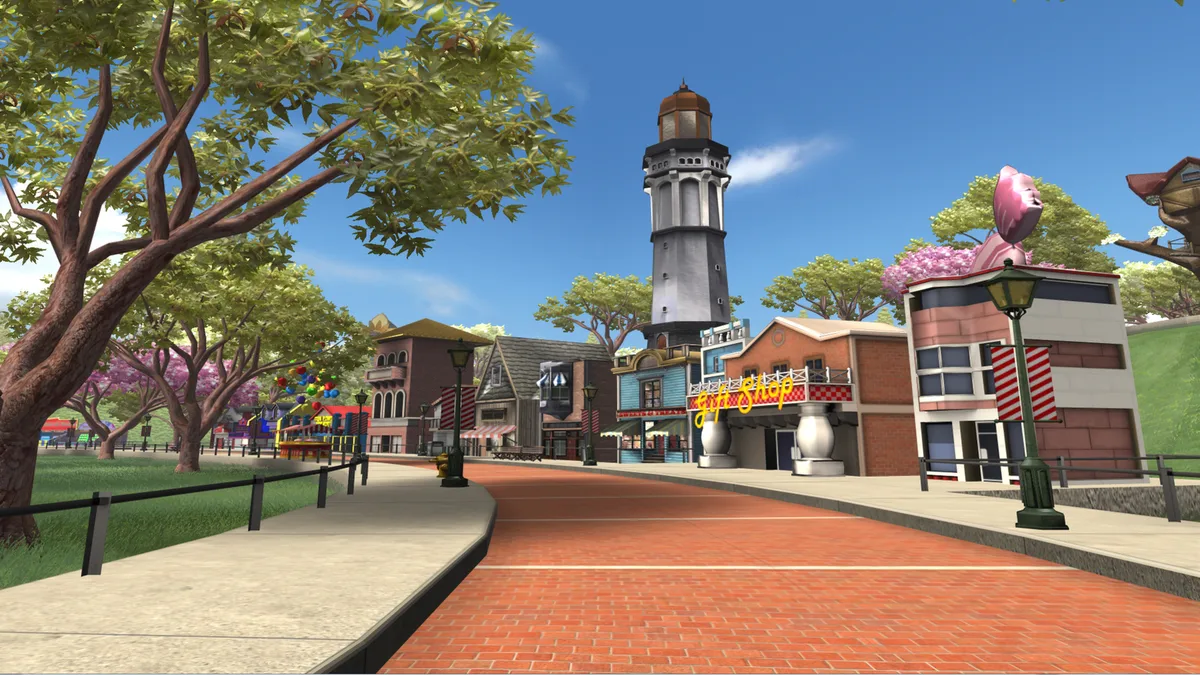
Destruction adds another source of points to the competition. The environments are destructible, and breaking them provides extra points toward leaderboard placement, giving environmental damage a scoring role alongside recognized stunts. Those points contribute to the pursuit of a higher ranking rather than serving only as spectacle during the ride. In-game leaderboards include both Global and Friends listings, so the ranking system covers a worldwide table as well as a friends-based comparison. Achievements and Stats sit alongside those leaderboards as additional built-in records of play.
Thirty Campaign Challenges or Freeride Coaster Creation
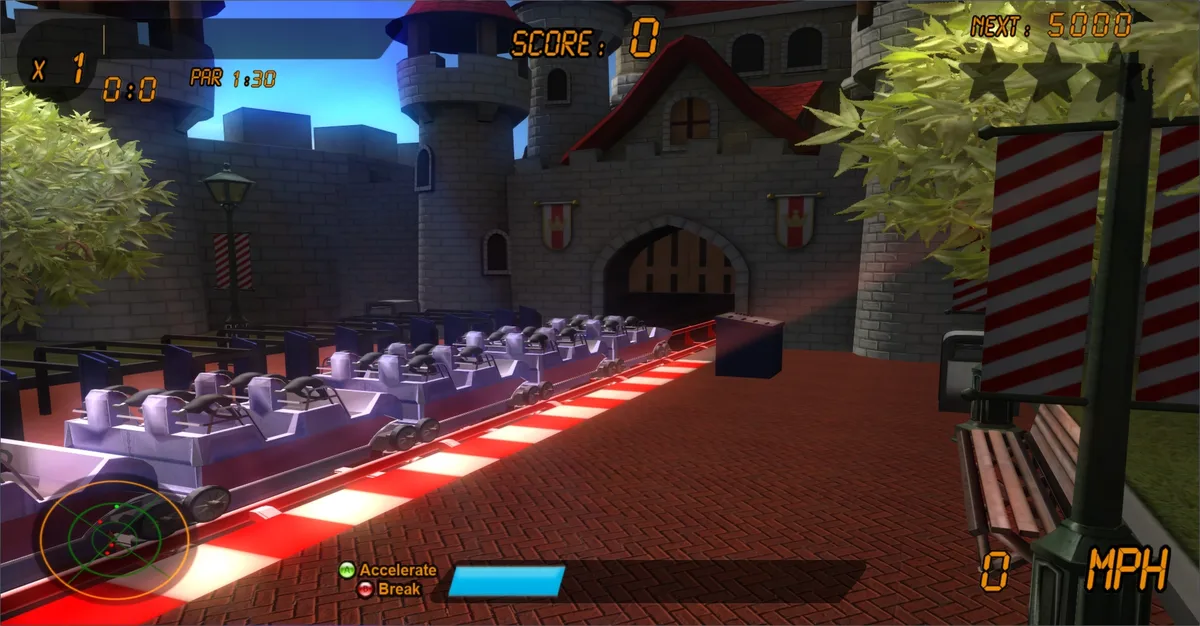
Campaign mode organizes Roller Coaster Rampage into 30 challenges, with difficulty increasing across that set. It gives the arcade coaster riding a defined sequence of challenges rather than the creation-focused brief of Freeride. The game also includes preferred and alternate paths, providing different paths to take on repeat play. Those route options sit alongside the campaign’s escalating difficulty: the challenge count describes the campaign’s scope, while the path alternatives provide another reason to revisit the riding itself.
Freeride focuses on creating wild coasters. Custom RGB settings let players choose colors for the rails, supports and ties, shaping the structure’s appearance. Once a custom design is finished, players can take a front-seat ride in it.
Sources & further reading.
- Roller Coaster Rampage — official game profileRetrieved Nov 14, 2026
First published .