 THE GAME ARCHIVE
Saints Row: The Third is an action game developed by Volition and published by Deep Silver. The official Steam entry documents a 2011 release and lists Windows and Linux as its platforms. That profile is the only source behind this feature, and it frames the game through premise and spectacle rather than systems documentation: the store description sells scenarios, not menus.
When the Saints Became a Brand and the Syndicate Came Calling
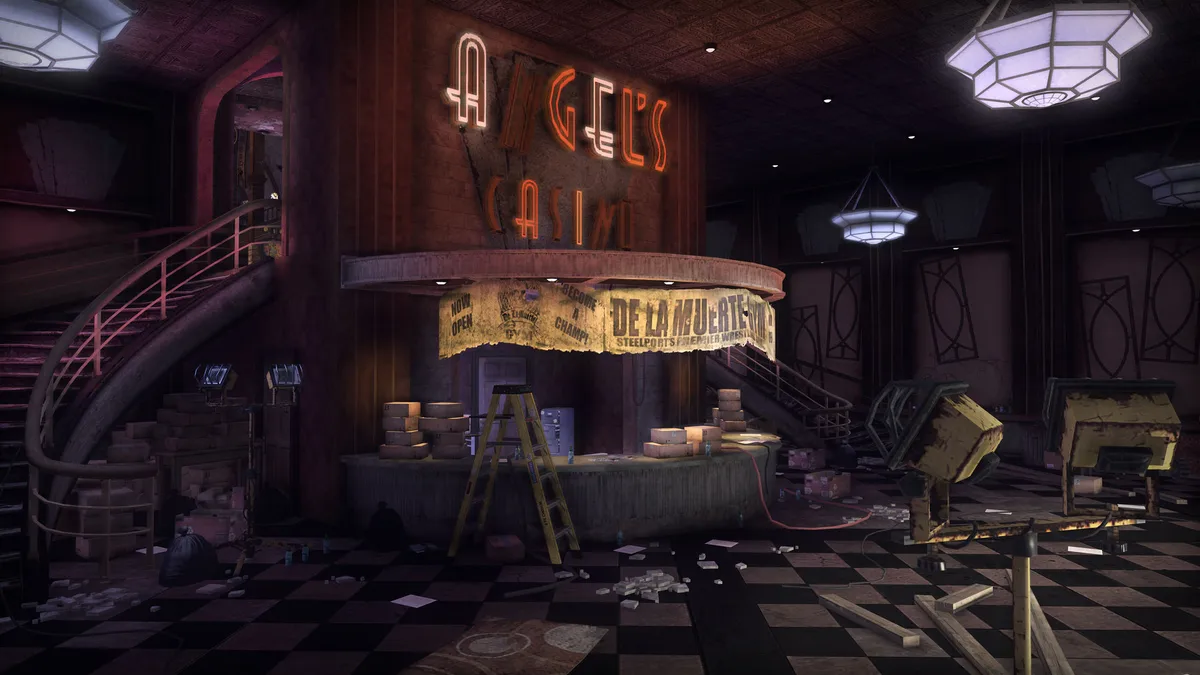
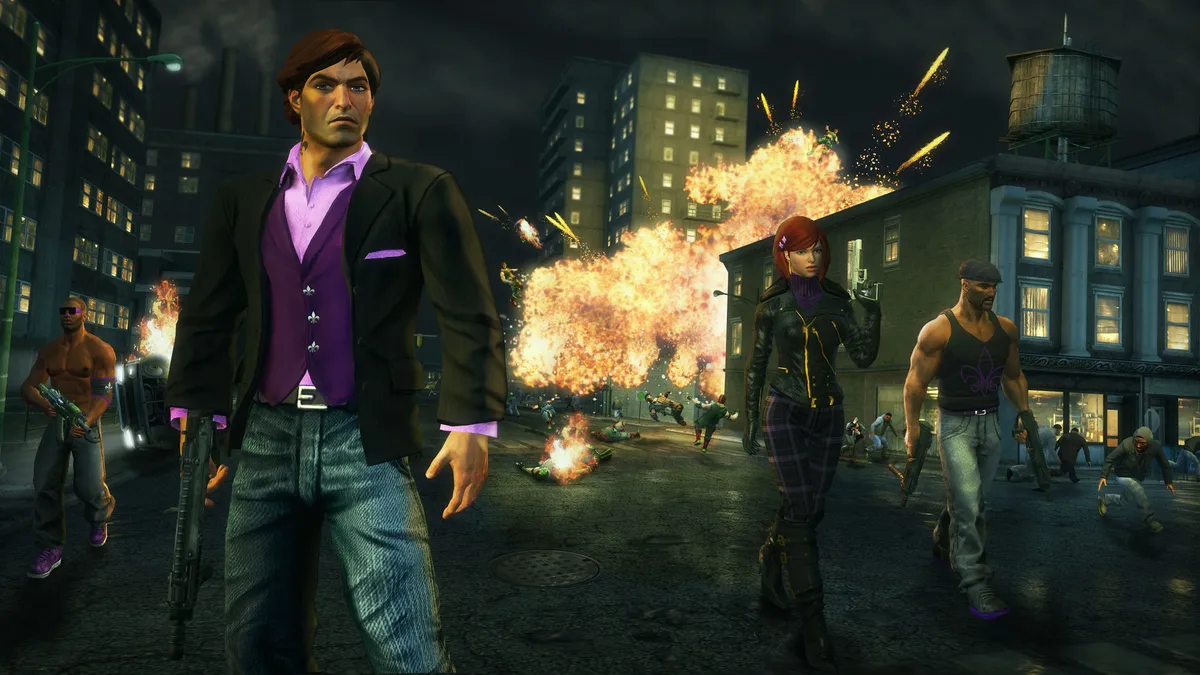
The official description places the game years after the Third Street Saints took Stilwater. In that time the gang has evolved from street outfit to household brand, complete with Saints sneakers, Saints energy drinks and Johnny Gat bobble head dolls sold in stores. The Saints rule Stilwater, but their visibility draws a bigger fish: the Syndicate, described in the store text as a legendary criminal fraternity with operatives around the globe, which demands tribute from the Saints.
The player's answer is refusal. Rather than pay, the Saints take the fight to Steelport, a metropolis described in the store text as once-proud but reduced to a struggling city of sin under Syndicate control. That single decision supplies the game's stated objective: take on the Syndicate and ignite a city-wide war that will set Steelport on fire.
 View full image ↗
A Loop Built Around Escalating Absurdity
The store text is explicit about what kind of action game this is meant to be: it promises the most outlandish gameplay scenarios ever seen, and the conflict with the Syndicate is the engine that drives them. Read against the premise, the implied loop is straightforward — the Saints arrive as outsiders in a Syndicate-held city, and the campaign is the process of contesting that control through increasingly theatrical missions.
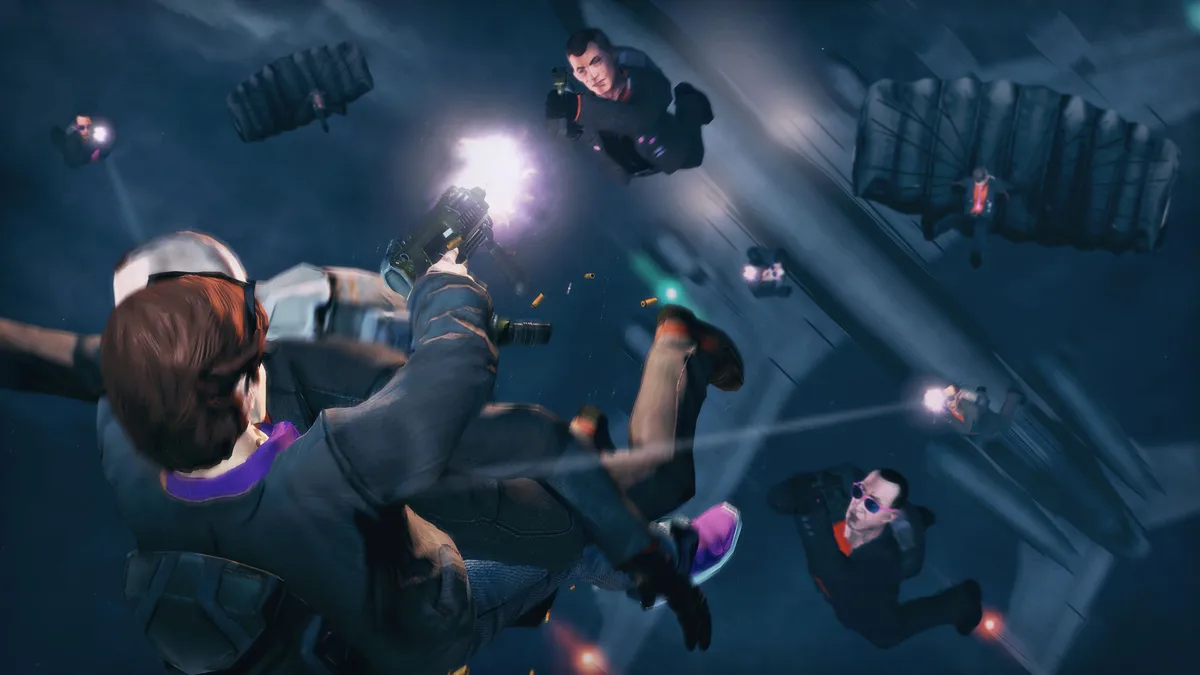
The description names three concrete activities as its examples of that escalation. One is skydiving in a tank. Another is calling in a satellite-targeted airstrike on a Mexican wrestling gang. The third is defending yourself against a highly-trained military force using only a sex toy. These are advertised as representative rather than exhaustive — the store copy presents them as samples from a larger set of deliberately absurd scenarios.
What follows from those examples is a design sensibility rather than a rule set. A tank is a heavy ground vehicle; putting one midair turns a normally grounded tool into a stunt. A satellite-targeted airstrike implies calling down an off-screen asset on a marked target. Using a sex toy as a weapon against trained soldiers inverts the expected relationship between weapon tier and enemy threat. Each example works by breaking a normal expectation of how that category of thing behaves in an action game.
Gang-as-Brand: The Narrative Frame
The detail that separates this premise from a plain turf-war setup is the brand language. The Saints are not just powerful; they are commercial, with licensed merchandise and a public profile. The Syndicate's demand for tribute reads as a hostile takeover from a larger, more organized enterprise, and the Saints' refusal reads as a refusal to be absorbed.
That frame also explains Steelport's role. The city is not neutral ground; the store text states it is under Syndicate control, which makes the Saints' arrival an invasion of someone else's territory. The scale is deliberately larger than the previous city — a global fraternity against a hometown brand — and the store text uses that scale to justify the war's city-wide scope.
 View full image ↗
Starting Guidance the Source Can Actually Support
The official profile supports only broad orientation. Expect a 2011 action game from Volition, published by Deep Silver, with builds listed for Windows and Linux. Expect the Saints-versus-Syndicate conflict to be the organizing premise and expect set pieces like the three named examples to be part of the draw.
 View full image ↗
Where the Source Goes Quiet
Everything above traces back to one page, and that page is a pitch, not a manual. It does not document controls, progression systems, mission structure, enemy design, difficulty settings, save behavior or multiplayer modes. The specific examples of absurd scenarios are named, but the systems that govern them — how the tank gets airborne, how an airstrike is requested and what it costs, how the melee-adjacent sequence is triggered — are not described in the source text at all.
That absence is the honest shape of this source. The store description is good evidence for tone, premise and the intended flavor of set pieces; it is not evidence for how any of those set pieces play, how long the campaign runs, or how the game has aged. Padding those gaps with invented detail would misrepresent the source, so they are left standing as open questions.
One further scoping point: the 2011 release year applies to this Steam entry as documented. The profile does not describe the game's original release history across other platforms, nor does it address later ports, remasters or re-releases. Those are separate questions that this source does not answer.
What the Game Is Selling
Saints Row: The Third, as its official profile presents it, is a game about scale and swagger. The Saints start as a brand with a city and end up at war with an international criminal fraternity. The advertised appeal is not mechanical depth but the willingness to stage a tank skydive, a satellite strike on a wrestling gang and a deeply undignified last stand as if they belong in the same campaign.
For a retrospective, that makes the premise the most useful thing the source offers. It explains why the game chose spectacle over restraint and why Steelport matters as a stage: it is a city already owned by someone else, and the Saints' arrival is the disruption the description promises to escalate until the whole place is on fire.
What a reader should take away is narrow but real: a documented premise, a documented roster of absurd scenarios, and a documented publishing identity. What remains to be researched is nearly everything about how the game actually feels to play — and that research has not been done here.
Scroll sideways to see the full table →
| Item | Documented value |
|---|---|
| Game title | Saints Row: The Third |
| Release year | 2011 |
| Developer | Volition |
| Publisher | Deep Silver |
| Genre | Action |
| Platforms listed | Windows, Linux |
| Named set pieces | Tank skydiving; satellite-targeted airstrike on a Mexican wrestling gang; defense against military forces using a sex toy |
| Stated objective | Take on the Syndicate and take the fight to Steelport |
Sources & further reading.
- Saints Row: The Third — official game profile Retrieved Oct 10, 2026
First published .