 THE GAME ARCHIVE
You Are the Celestial Object: Growth and Life
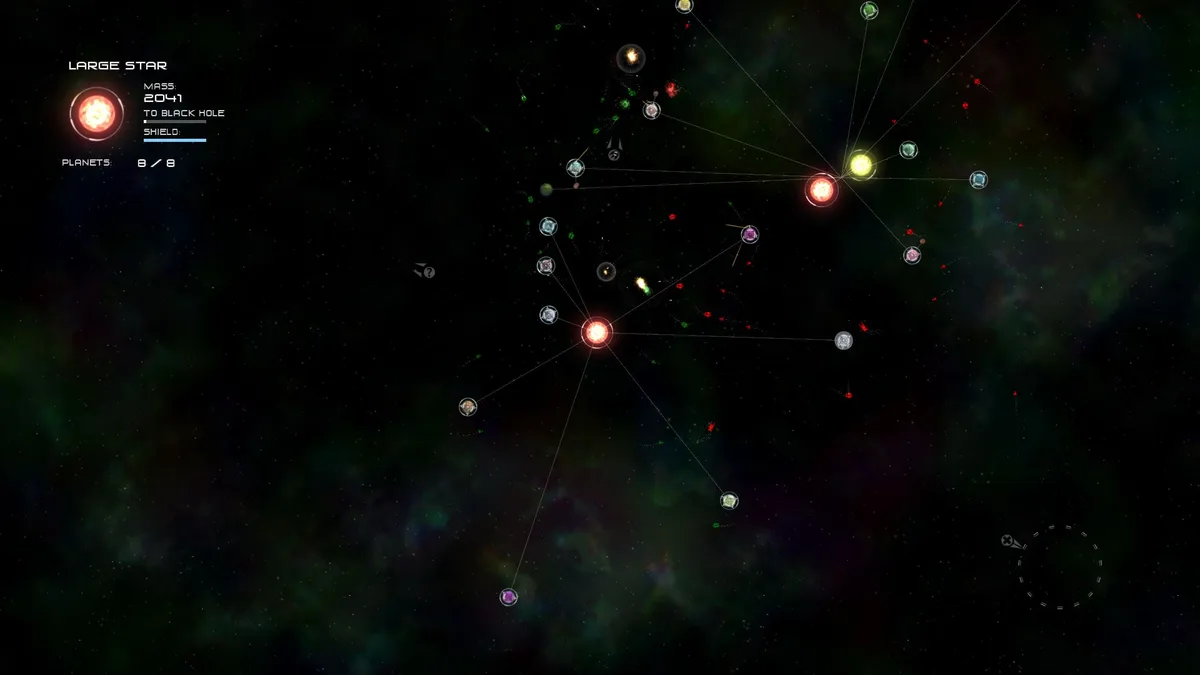
In Solar 2, you do not watch stars from a distance or simply shoot asteroids; you embody those celestial objects directly. The universe is an open-world sandbox set in an infinite abstract space, and one documented path is constructive play. Growing your system is the central action, followed by nurturing life on the planets you hold. A resident god-like figure assigns many bizarre and varied tasks, giving you something to prove yourself against, but the sandbox also allows you to disregard that figure entirely and concentrate on seeing how large you can grow.
Constructive play extends beyond your own planets: once life takes hold, you can attack enemy life in huge space battles. Growth and nurturing therefore sit alongside combat rather than replacing it, and the same body you use to expand your system can be turned toward aggression. The god-like figure's tasks form one route through the sandbox, while ignoring those tasks and pursuing size forms another. The documented rules do not prescribe a single order for these activities; growing the system, nurturing planets, and battling enemy life are presented as parallel options within the infinite universe.
Wrecking Balls in Orbit: Destructive Play
Destructive play in Solar 2 turns your own celestial body into a projectile. The documented option is to crash into other objects and cause chaos, treating the abstract universe as a field of targets rather than a system to cultivate. This sits in deliberate contrast to the constructive path of growing your system, nurturing life on your planets, and fighting enemy life in huge space battles. Instead of building, you are colliding, and the same open-ended infinite setting that supports expansion also supports the decision to create disorder by ramming whatever you encounter.
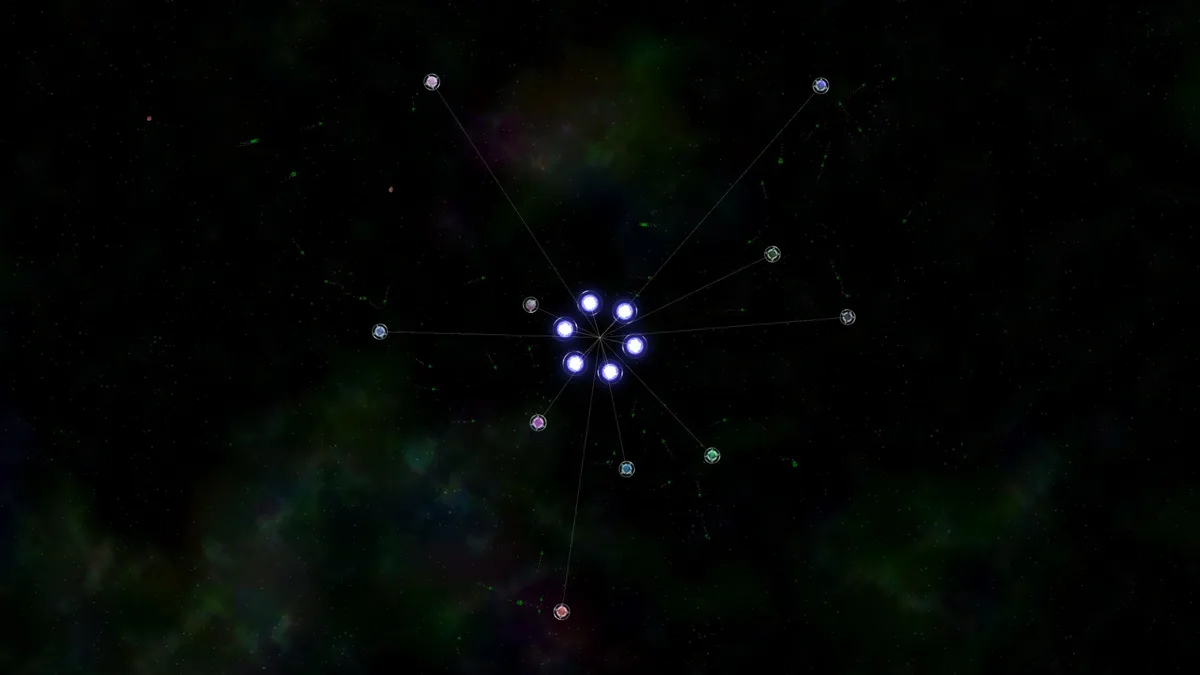
The wrecking-ball approach extends the same destructive idea to the objects that orbit you. Rather than keeping planets or moons as passive parts of a growing system, you can use your orbiting objects like wrecking balls, swinging them into other bodies to cause further chaos. This mechanic grows directly out of the game's central conceit that you are the celestial object: the things held in your orbit become a weapon you carry. It operates alongside the simpler tactic of crashing yourself into others, giving two documented ways to play destructively within the same infinite sandbox.
Stealing Planets and Serving a God-Like Figure
Stealing planets from other systems is the documented acquisition move in this section, and it can be combined with the wrecking-ball use of orbiting objects. If you swing your held bodies into others, that collision causes chaos, while taking planets from rival systems pulls them into your own arrangement. The two actions share the same orbit-centered logic: the objects you hold are your tools, whether the goal is damage or collection. Nothing in the documented rules says stealing must serve only constructive growth; it sits on the described list beside crashing and swinging.
The resident god-like figure supplies many bizarre and varied tasks as a way to prove yourself, and the missions are non-linear within open-world gameplay. That means the offered route is not a required sequence. You can ignore the figure and instead see how big you can grow, according to the documented alternative. The contrast is concrete: one path responds to assigned tasks, the other devotes itself to expansion. Because the open-world missions are non-linear, the sandbox does not force the assigned route ahead of the growth route.
An Endless Sandbox Universe With No Boundaries
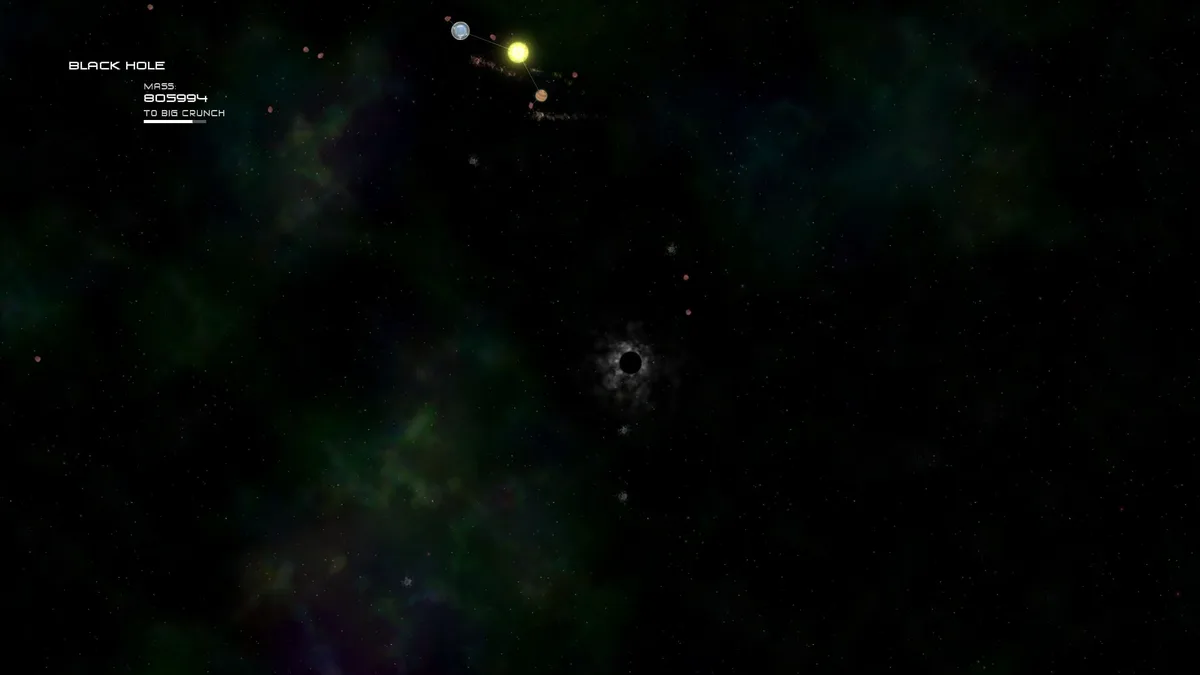
The sandbox itself is presented as an infinite abstract universe, and the game's feature list makes the lack of boundaries explicit. Within that setting, the world is described as a dynamic abstract sandbox universe that changes and evolves as you do, so the surrounding environment is not fixed scenery around a static playfield. The same feature list also names drifting forever in ambient space as an activity, framing idle travel through open space as a legitimate way to spend time rather than a failure to pursue objectives. These elements sit alongside the constructive and destructive options, but they describe the character of the space itself: endless, abstract, evolving, and available for aimless drifting.
The resident god-like figure assigns many bizarre and varied tasks, and the missions are described as non-linear within open-world gameplay, so the assigned route is not a fixed sequence. The documented alternative is to ignore that figure and see how big you can grow, which means expansion can proceed without answering the tasks at all. Because the world changes and evolves as you do, growth is not merely a number attached to a stationary map; the dynamic sandbox is described as responding to your development. The eccentric humor noted among the features colors the tasks and the drifting alike, wrapping the open-ended structure in a comedic tone rather than a solemn one.
Sources & further reading.
- Solar 2 — official game profile Retrieved Oct 18, 2026
First published .