 THE GAME ARCHIVE
What Sonic & SEGA All-Stars Racing Asks of the Player
Sonic & SEGA All-Stars Racing is a 2010 racing game developed by Sumo Digital and published by SEGA for Windows. Its premise is a high-speed, high-skill racetrack showdown in which a field drawn from the Sonic & SEGA universe takes to the track by car, monster truck, bike and even aeroplane. You are not simply chasing the fastest lap. The race asks you to stay ahead of the pack by dodging traps, to launch outrageous character moves at the people in front of you, and to keep an eye out for the hidden lines that cut a course short.
What makes the setup distinctive is the vehicle spread. Every character drives their own unique vehicle, and the documented range runs from sports cars and bikes to planes and even a giant banana, each machine used to perform bespoke special manoeuvres. Picking a racer is therefore not cosmetic: it decides the machine you steer and the special move you bring, and the rest of the race rules hang off that choice.
The Grid: 20 Characters, One-Off Machines
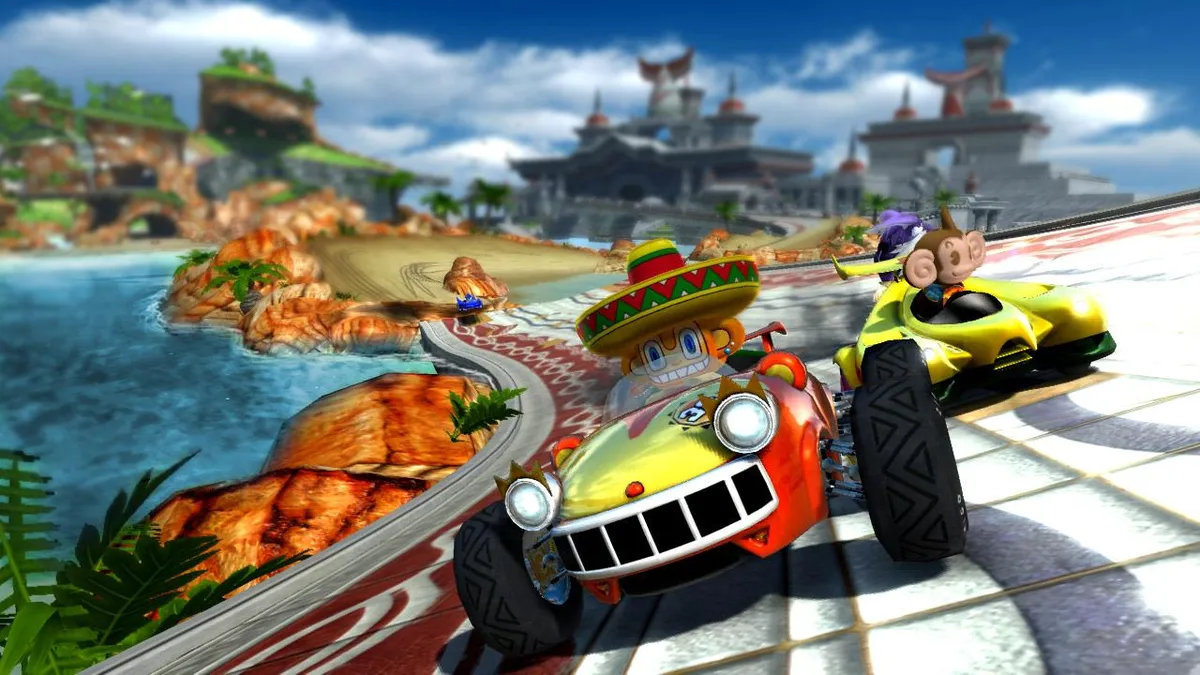
The roster runs to 20 different characters from the Sonic & SEGA universe, with Sonic, Tails, AiAi and Amigo named among the selectable racers. Against them you jostle a selection of 20 challengers including Super Monkey Ball's Ai Ai, Amigo from Samba and the evil Dr. Eggman. Because every character arrives in a unique vehicle rather than a shared chassis, a full field mixes sports cars, monster trucks, bikes, planes and a giant banana on one course, so the grid itself is part of the spectacle.
That spread shapes how you read a race. A rival ahead is a specific machine carrying bespoke special manoeuvres, and so is yours. The choice at selection is partly offensive, since it decides which character move you hold when the pack bunches, and partly a matter of how much you trust yourself to thread a plane, bike or giant banana through a crowded corner.
The Core Loop: Dodge, Launch, Recover, Spot the Line
Racing clean is only half the job. The documented loop has four moving parts. First, staying ahead of the pack means dodging traps, so a leader has to watch the track surface as carefully as the mirror. Second, when a competitor cannot be overtaken, the answer is to take them out with a pick-up weapon or with one of the 20 unique character moves. Third, if you have been battered, beaten and broken, power-ups super-charge your vehicle and get you back in the race. Fourth, secret short-cuts give the edge to victory for anyone alert enough to find them.
Put together, those rules produce a race with a rhythm rather than one sustained sprint. Leading is defensive work, because the instruction attached to the lead is dodging traps. Chasing is aggressive work, because the weapon and the character move exist to take out the racer you cannot pass. Getting hit flips you into recovery mode, where a power-up super-charges the vehicle and gets you back into the fight. Running alongside all of it is the quieter skill of noticing the course, because a secret short-cut offers the edge to victory.
One small design detail sharpens the weapon game: the 20 unique character moves allow the recipient to know who just hit them. Being knocked about is therefore not anonymous, and you can attribute the hit. That makes the character moves a social currency as much as a damage tool, which matters most when four players share a screen and everyone can see who fired what.
All-Star Moves: Super Sonic, Banana Blitz and the Tornado
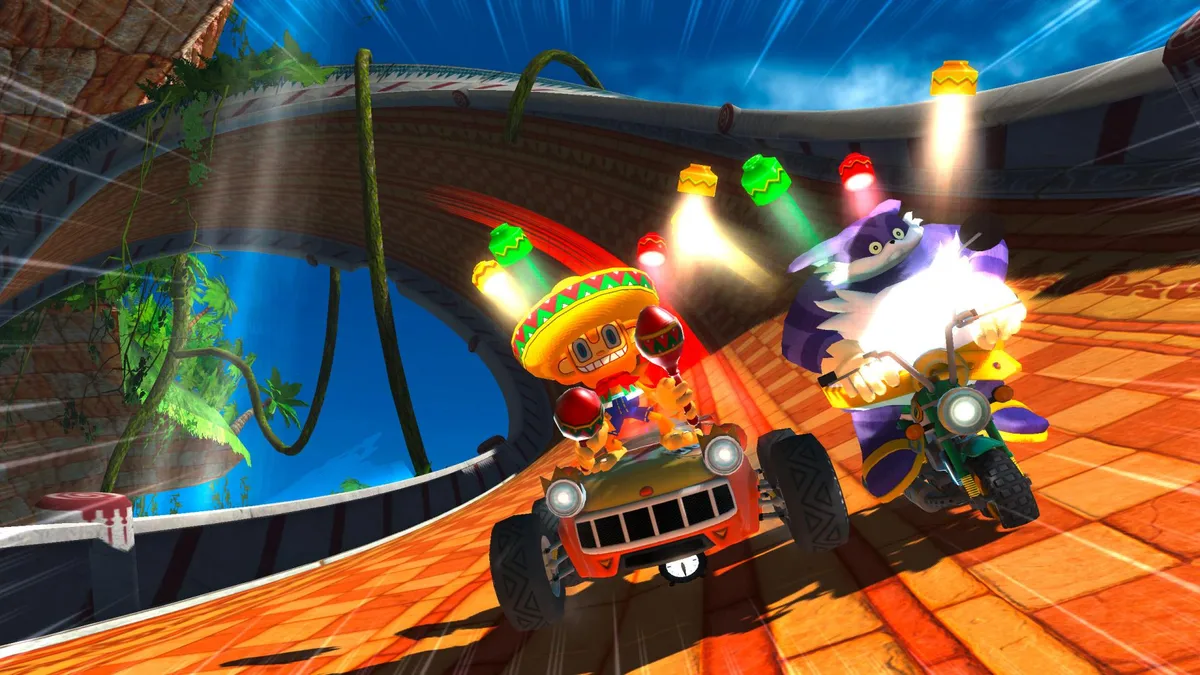
The named character moves are outrageous by design. Super Sonic is described as invincible. Banana Blitz is an assault of monkey balls. Tails' wild Tornado is set to throw any vehicle clean in the air, a disruption that lifts a rival off the track rather than merely nudging them aside. Each move is tied to a specific character and delivered through that character's unique vehicle, and the game counts 20 unique character moves in total.
Read as a set, the three documented moves do visibly different jobs. The Tornado is crowd control: it throws any vehicle it catches clean into the air, which makes it the documented answer when a rival is in your way. Banana Blitz attacks with a barrage of monkey balls. Super Sonic is the invincible option, a state you want when you are the one being hunted. Each is a different way of reshaping the race around you rather than simply out-driving the field.
The pick-up weapons sit beside these moves rather than replacing them. A player who needs to get by a competitor, or who cannot overtake a racer, takes them out with a pick-up weapon such as missiles, mines and other obstacles, or with one of the character moves. The choice between the two is a real decision: a weapon is a found resource, while a character move is the ability that came with your racer. Between them, the game supplies an active answer to a rival ahead.
27 Tracks From Seaside Hill to Blizzard Castle
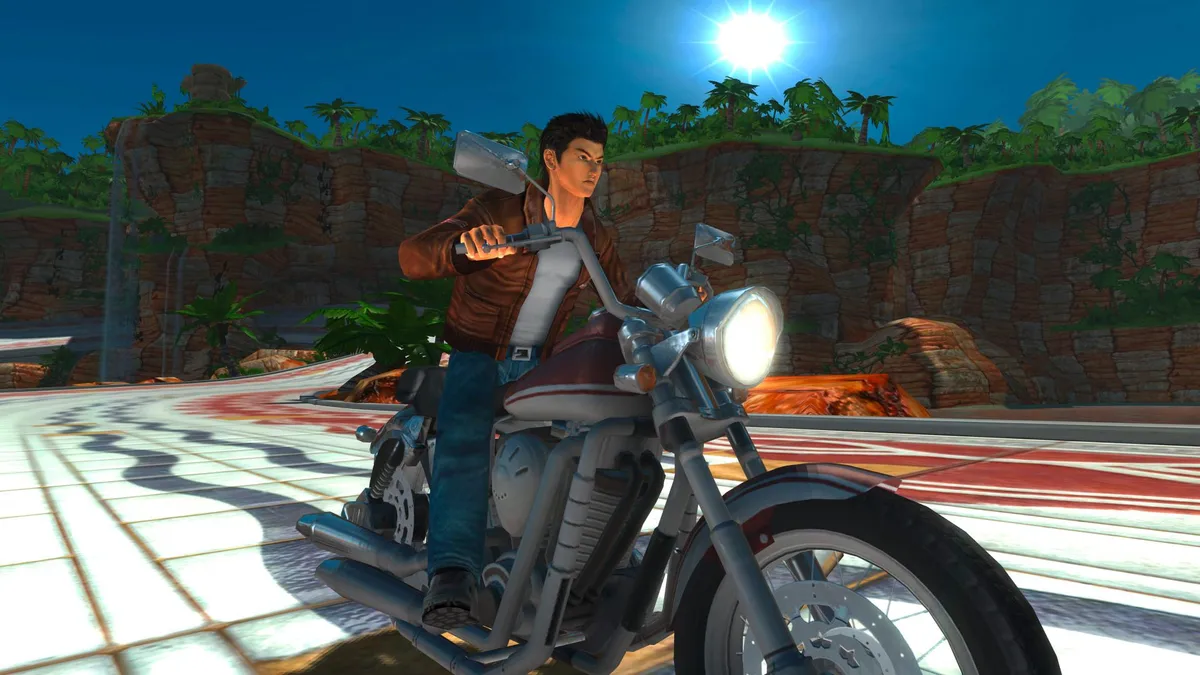
The course list runs to 27 challenging tracks from the Sonic and SEGA universe. Named circuits include Sonic Seaside Hill, Curien Mansion and Blizzard Castle. Each is staged in a distinct setting: racers zip around medieval castle ramparts, hurtle under lush rain forest canopies and tear through bustling cityscapes in a frantic race to the finish line. The environment therefore changes what you are racing past, from stone battlements to hanging vegetation to dense urban surroundings.
The track design feeds directly into the short-cut hunt, because the game's instruction is to stay alert for the secret short-cuts that give you the edge to victory. The visual variety of the 27 tracks, from castle ramparts to rain forest canopy to cityscape, is the scenery you are scanning while you race, so the courses are also the search space for the game's quietest advantage.
Hazards live on the same courses. Traps have to be dodged to stay ahead, and pick-up weapons may be fired at rivals, so a track is both a route to learn and a surface to read in real time. Because the racer spread includes planes and bikes alongside cars, monster trucks and a giant banana, each circuit also has to hold a field of visually mismatched machines without losing the thread of the race.
Solo Showdowns and Four-Player Split-Screen
Party racing is the framing the game uses for both halves of its mode structure. In single player you battle it out on the track; the other option is to challenge your friends in four-player split-screen for the ultimate track racing showdown. Both settings use the same track-racing showdown concept and the same 20-character roster, so the unique vehicles and their bespoke special manoeuvres remain available in either setting.
The distinction that matters is one of audience. Solo play is you against the field, applying the whole loop on your own: dodging traps, firing weapons when a rival will not be passed, and recovering with power-ups. Split-screen changes the social temperature. With up to four players sharing the view, the fact that a character move tells the recipient who hit them turns every Banana Blitz or Tornado into a direct message across the couch, and a rival's identity on the grid becomes a personal matter rather than a line in the results.
How the Documented Rules Suggest You Should Play
In front, prioritise survival. Dodging traps is how you stay ahead of the pack, so treat trap-dodging as the primary job while you hold a lead. Super Sonic's invincible state is the documented move for a racer who expects to be targeted, and its value is highest when a rival's Tornado or Banana Blitz is the thing you most want to shrug off.
In traffic, commit to removal. When a racer simply cannot be overtaken, spend what you have: a pick-up weapon such as missiles or mines, or your character move, whether that is Banana Blitz's monkey balls or the Tornado that throws any vehicle clean into the air. Do not hoard. The documented point of these tools is to take a blocking rival out rather than to keep chasing a gap that will not open.
When you are behind and hurting, look for the recovery. Power-ups super-charge your vehicle to get you back in the race, and being battered, beaten and broken is explicitly not the end of the story. Then, once you are back in touch, start looking past the racing line: secret short-cuts that give the edge to victory reward the player who treats the scenery of the 27 tracks as information rather than decoration.
For group play, factor in the announcement rule. Because a character move lets the recipient know who just hit them, split-screen rivals will remember the Tornado that lifted them off the track. Choosing a racer whose move you enjoy being on the giving end of is a sound selection principle, and spreading pain broadly rather than singling out one player is a reasonable way to keep a four-player session lively.
Why the System Holds Together
The pieces reinforce each other. Twenty characters in unique, bespoke machines give the grid variety; 20 unique character moves and a pick-up weapon pool give players offensive answers; traps make leading a skill rather than an inheritance; power-ups and a super-charge recovery prevent a bad start from ending the race; secret short-cuts reward alert course reading; and single-player and four-player split-screen both run on the same party racing rules. The result is a racer where the fundamental decision is not only how fast to go, but which tool to spend, on whom, and when to stop fighting and start looking for the shorter way through.
Scroll sideways to see the full table →
| Detail | Documented value |
|---|---|
| Release year | 2010 |
| Platform covered | Windows |
| Developer | Sumo Digital |
| Publisher | SEGA |
| Genre | Racing |
| Racers | 20 characters from the Sonic & SEGA universe |
| Vehicles | Unique per character: sports cars, monster trucks, bikes, planes, giant banana |
| Tracks | 27 challenging tracks |
| Named circuits | Sonic Seaside Hill, Curien Mansion, Blizzard Castle |
| Modes | Single player; 4-player split-screen |
| Offensive tools | Pick-up weapons (missiles, mines and other obstacles); 20 unique character moves |
| Recovery tool | Power-ups that super-charge the vehicle |
Sources & further reading.
- Sonic & SEGA All-Stars Racing — official game profile Retrieved Oct 17, 2026
First published .