 THE GAME ARCHIVE
Spiral Knights, released in 2011 by developer and publisher Grey Havens, drops players into a persistent multiplayer adventure with a premise that doubles as a floor plan: the Knights are stranded on an alien world, and the only way forward is down. Beneath the surface lies the Clockworks, a shifting labyrinth of levels, and somewhere below it all waits a mysterious Core. The store description frames the game around that descent and the players who make it together.
What players actually do
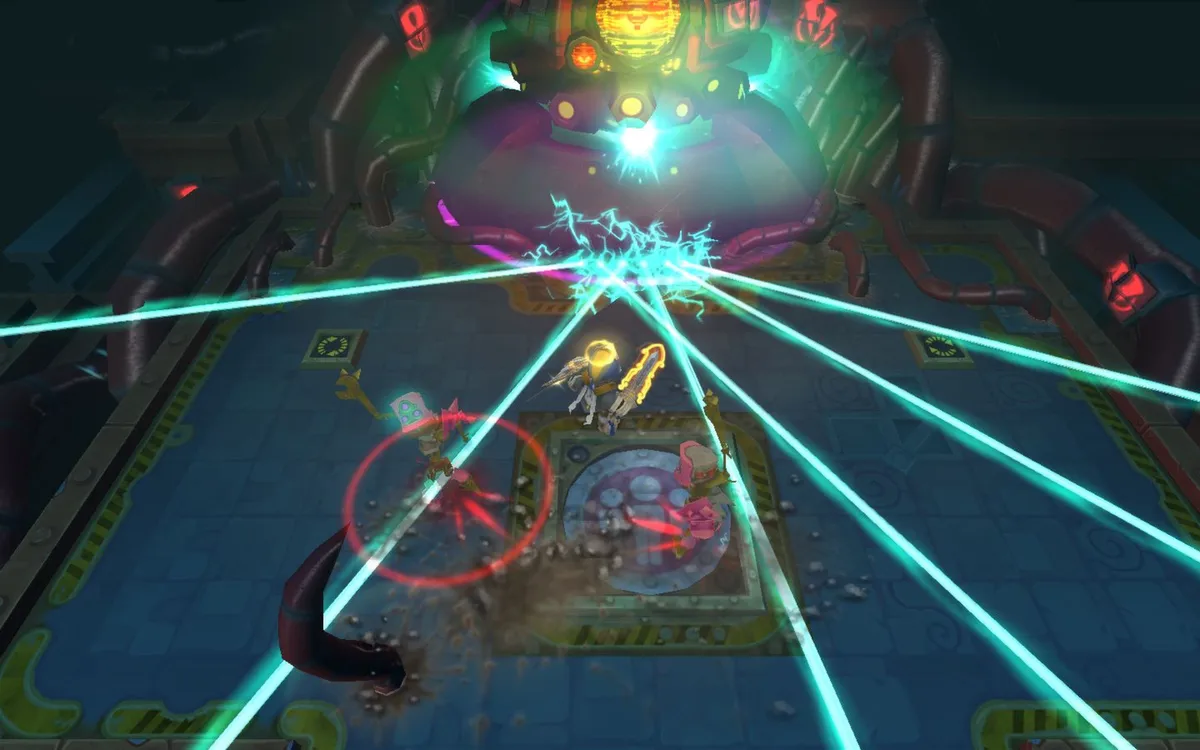
The core activity is cooperative exploration. Players band together to fight monsters, solve puzzles, and discover treasures inside the Clockworks, and the store description explicitly calls these challenges ones best tackled with friends. This is the game's central design statement: the dungeon-like run is built for a group, and the combat, puzzles, and treasure hunting are meant to be shared rather than soloed. The broader pitch is a cooperative adventure in a persistent world with a focus on instant, fast-paced action, so the game couples shared exploration with moment-to-moment fighting.
The overarching objective is to explore the ever-changing Clockworks beneath the alien world's surface in hopes of reaching its mysterious Core. That goal gives the cooperative runs a direction: the tunnels are not just a dungeon crawl but a descent with a destination, and each expedition is framed as progress toward it.
The store copy also advertises an instant-action hook: the pitch is going from login to a multiplayer adventure in less than a minute. Whether that promise held up in practice is not something this source can verify, but it tells you what the game wanted to be — a fast on-ramp rather than a long lobby wait — and it pairs naturally with the described focus on instant, fast-paced action.
 View full image ↗
Inside the Clockworks loop
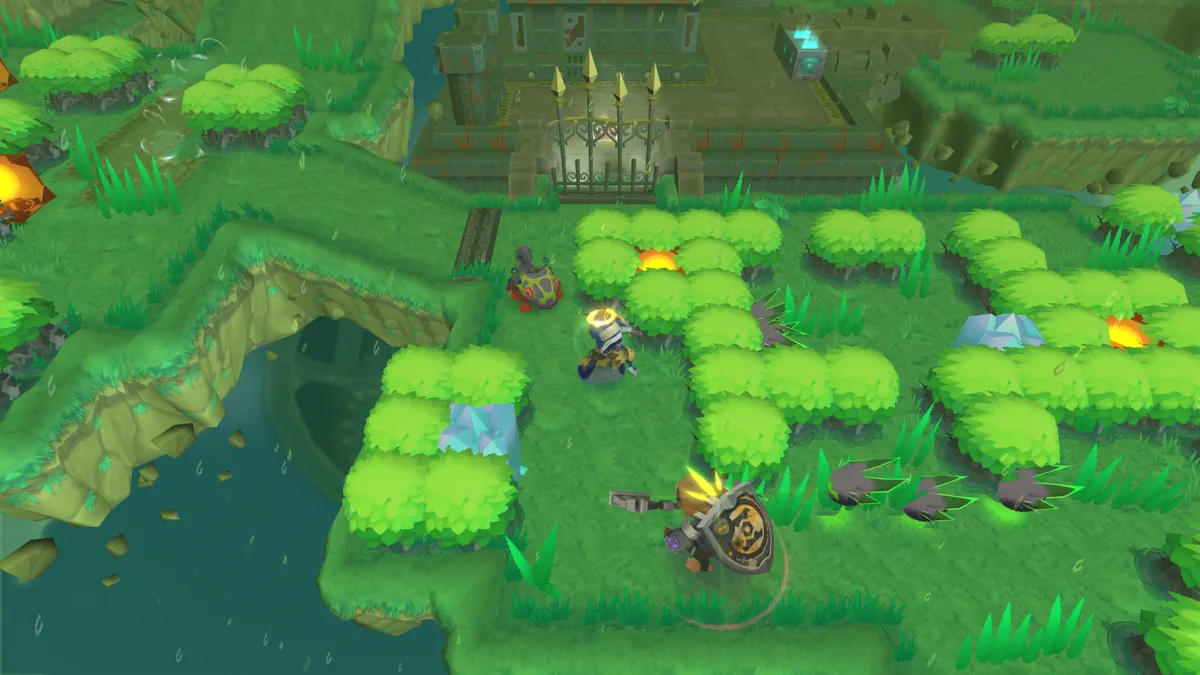
The Clockworks' defining characteristic is that it does not sit still. The game cycles levels to explore in real time, and the copy states that every moment of every day changes the world. This turns the dungeon into a moving target: parties return to a layout that has shifted, which keeps exploration from hardening into a memorized route and pushes the group to adapt to what the current cycle offers. The practical effect is that shared runs are shaped by when players play, not only by how they play.
Within a run, the described activities split into recognizable co-op roles. Fighting monsters is the pressure that keeps the party moving; solving puzzles interrupts it with something to figure out together; and discovering treasures is the payoff that rewards pushing deeper. Because the description consistently uses plural, group-facing language — "tackled with friends," "together" — the natural reading is that the loop is designed around a party rather than a lone delver, and that the challenge scales with the group's coordination.
 View full image ↗
Arsenal, guilds, and the mineral economy
Progression shows itself in two directions: what a player carries and who a player stands with. On the equipment side, the game advertises hundreds of unique weapons and gear to discover and alchemize. Alchemy is the transformation step — the copy presents creating an arsenal as a matter of finding gear and then working it through alchemy, which implies a system where discovery alone is not the end and materials feed an ongoing crafting loop rather than a single upgrade moment.
The social layer reaches further than the immediate party. Guilds are framed as powerful groups whose alliances grant greater influence over the world, and that influence is connected to minerals: players amass powerful minerals to transform the Clockworks. Together, these two statements suggest a loop in which guild activity and resource gathering have a visible effect on the shared world, tying personal progression to collective goals rather than treating them as separate tracks.
Access is part of the design as stated: the game is free to play, with no subscription required to enjoy everything it has to offer. How that free tier interacts with the arsenal and mineral systems in practice is not documented in this source, so the supported claim is simply the business model, not an assessment of how generous or grindy it felt.
 View full image ↗
Source-backed starting guidance
The one concrete starting path the store copy documents is tied to its Team Fortress 2 crossover. To receive the free Spiral Knights-themed TF2 hat, "The Spiral Sallet," players must reach the first Clockwork Terminal from any gate in the Haven Arcade and unlock the 'Mission Accomplished' achievement; the copy notes that players who already unlocked it will also receive the hat. That gives a new player a documented early objective and a named location — the Haven Arcade — to aim for, and it shows that reaching a Clockwork Terminal is an early milestone rather than a deep-run accomplishment.
What distinguishes the design
Spiral Knights' identity comes from stacking three supported ideas. First, it is cooperative by default: the Clockworks' challenges are explicitly best tackled with friends, so the game assumes a party rather than tolerating one. Second, the world moves: levels cycle in real time and change throughout the day, so exploration is a recurring question rather than a solved answer. Third, progression is layered, with a wide arsenal built through discovery and alchemy and guild alliances that convert gathered minerals into influence over the world. The result is a free-to-play, persistent-world action adventure whose dungeon is meant to be re-entered often, with friends, into a layout that keeps shifting.
Scroll sideways to see the full table →
| Field | Detail |
|---|---|
| Title | Spiral Knights |
| Release year (this Steam entry) | 2011 |
| Developer | Grey Havens |
| Publisher | Grey Havens |
| Platforms | Windows, macOS, Linux |
| Genres | Action, Adventure, Casual, Indie, Massively Multiplayer, RPG, Free To Play |
| Business model | Free to play, no subscription required |
| Central location | The Clockworks |
| Primary goal | Reach the mysterious Core |
Sources & further reading.
- Spiral Knights — official game profile Retrieved Oct 10, 2026
First published .