 THE GAME ARCHIVE
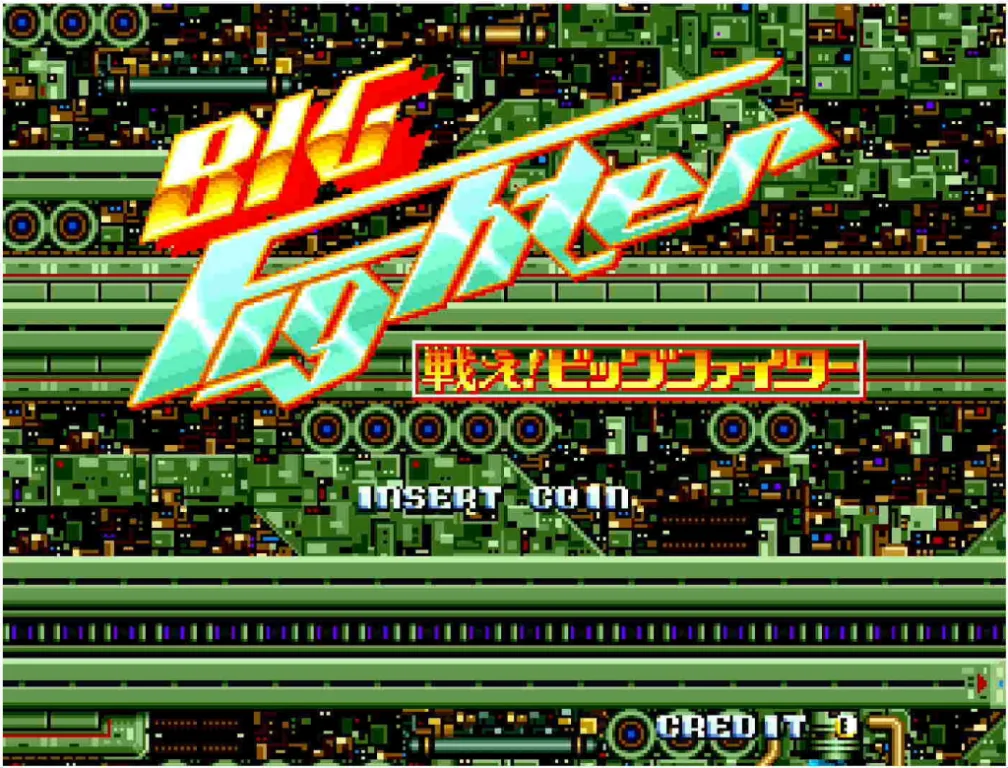
Tatakae! Big Fighter is an arcade shooting game that Nichibutsu released in 1989. Its defining idea is a craft that shifts between two shapes during battle: a fighter jet and a robot. Rather than locking the player into one configuration, the game lets the ship's silhouette change as the fight develops, and the publisher's description treats that transformation as something the player actively manages.
The documented loop joins two actions. Power-up items appear along the way as the player fights through a stage, and collecting them strengthens the ship. Alongside that enhancement, the player changes the craft's shape to suit the situation at hand. The publisher describes this combination of strengthening and reshaping as the key to clearing a stage, so form choice and power-up collection are presented as one combined discipline rather than separate chores.
What a player actually does, in the terms the documentation supports, is fight through stages in an arcade shooter, gather the power-up items that appear en route, and switch the ship between jet and robot form during battle. The evidence does not describe the control scheme, the weapons, the enemy roster, scoring, or the layout of individual stages, so this profile stays with the documented form-switching and power-up rules instead of guessing at inputs or level routes.
Two Shapes, One Ship: Jet and Robot Form Switching
The core mechanic is transformation during battle. The player controls a craft that can take a fighter jet form or a robot form, and the switch happens while fighting rather than being decided once before a stage begins. That means the same vessel presents two distinct visual identities over the course of a run, and the player's choice of shape is a live decision tied to what is happening on screen. The publisher frames this shifting silhouette as the game's signature, not as decoration layered over a single fixed ship.
The practical meaning of the mechanic is stated plainly: change the craft's shape to suit the situation. Because the switch is available mid-battle, the player is never permanently committed to the jet or the robot once a stage is underway. The strategic question the game poses is therefore situational rather than permanent: which of the two shapes fits the moment the player is in, and when is it worth reshaping. The documentation stops short of explaining what each form does differently, so the choice can be described as situational without inventing specific trade-offs.
Power-Up Items and Building Up the Ship
Power-up items are the documented way the player's craft gets stronger. They appear along the way as the ship travels through a stage, and collecting them strengthens the vessel. The publisher treats this enhancement as something gathered in the course of play rather than granted automatically: the ship improves as items are picked up. Because the items appear along the route, gathering them is part of fighting through a stage, and the strength built up feeds into the craft the player is using for the rest of that run.
The documented rule places strengthening and reshaping side by side. The player strengthens the ship with the power-up items that appear along the way and changes its shape to suit the situation. Both are named as the key to clearing a stage, which makes a strengthened ship and an appropriate jet or robot form complementary parts of one plan. In practice, the loop asks the player to gather items to build up the vessel and then select the shape that fits the current situation, with clearing a stage framed as the result of managing that pairing.
The Core Loop: Collect, Strengthen, Reshape, Clear
Read together, the documented mechanics describe a loop with two interlocking tracks. On one track the player gathers power-up items to strengthen the ship; on the other the player reshapes the craft between jet and robot to suit the situation. The stage-clearing rule names both, which suggests neither track is meant to carry the run alone. A player who strengthens the vessel but ignores its form, or reshapes without building up strength, is holding back part of what the publisher describes as the key to clearing.
Progress runs through stages in sequence, and the form decision carries across that ongoing run: a craft can be reshaped mid-battle, so the player is not locked into one shape once a stage starts. Accumulating power-ups builds the vessel, and selecting the appropriate shape applies that built-up craft to whatever the current stage presents. The documented rules do not specify how many stages there are, what changes between them, or how difficulty ramps, so the progression can be described only at this level: stage-by-stage play in which strengthening and reshaping are the named means of getting through.
Starting Advice Grounded in the Documented Rules
Any starting advice has to rest on the documented rules, which point toward two habits. First, treat power-up items as the route to a stronger ship and pick them up as they appear along the way. Second, treat the jet and robot forms as tools to be matched to the situation rather than a single preferred setting, since changing the craft's shape to suit the situation is named alongside strengthening as the key to clearing. Together these suggest a player who keeps the ship improving and keeps the form flexible is playing the way the publisher describes.
Beyond those two habits, the documentation does not support more specific advice. It says nothing about which form suits which enemy, how power-ups are triggered, whether items are dropped, placed, or otherwise awarded, or what a stage's success condition looks like beyond clearing it. A reader looking for detailed tactics will not find them in the publisher's description, and this profile does not fill those gaps with guesses.
Design Identity: A Transforming Arcade Craft
The most memorable characteristic the documentation records is the visual contrast between the fighter jet and the robot. These are described as distinct forms, and the game's identity rests on the ship moving between them during battle. That contrast gives the play a changing read on screen: the vessel the player is steering is not a fixed sprite but one that can present two different silhouettes within a single stage. For an arcade shooter of the period, that is the element the publisher chose to lead with, which tells a reader where the distinctive design emphasis sits.
The documentation does not describe the artwork, soundtrack, or presentation beyond the two forms, so the visual discussion stays with what is supported: a jet shape and a robot shape, both belonging to the same craft, with switching available mid-battle.
The 1989 Nichibutsu Original and Edition Scope
The catalog record places Tatakae! Big Fighter in 1989 on the arcade platform with Nichibutsu as publisher and Shooting as its genre. That fixes the format and the broad activity: a coin-operated shooter fought through stages. The cited publisher material presents the game as an original arcade release, and the description of jet-and-robot switching and power-up strengthening belongs to that original game.
The cited documentation does not cover modern reissues of the game, so no reissue features are described here. The catalog facts about title, year, platform, publisher, and genre are the reliable frame, and the gameplay discussion draws only on the publisher's description of form switching and power-up strengthening. Where the evidence is silent, from controls to scoring, this profile is silent too.
Scroll sideways to see the full table →
| Field | Value |
|---|---|
| Title | Tatakae! Big Fighter |
| Release year | 1989 |
| Publisher | Nichibutsu |
| Platform | Arcade |
| Genre | Shooting |
| Core mechanic | Switch between fighter jet and robot form during battle |
| Ship enhancement | Power-up items that appear along the way |
| Documented key to clearing | Strengthen the ship and change its shape to suit the situation |
Sources & further reading.
- Tatakae! Big Fighter — licensed publisher game documentation Retrieved Oct 19, 2026
First published .