 THE GAME ARCHIVE
One Button, One Orange Square
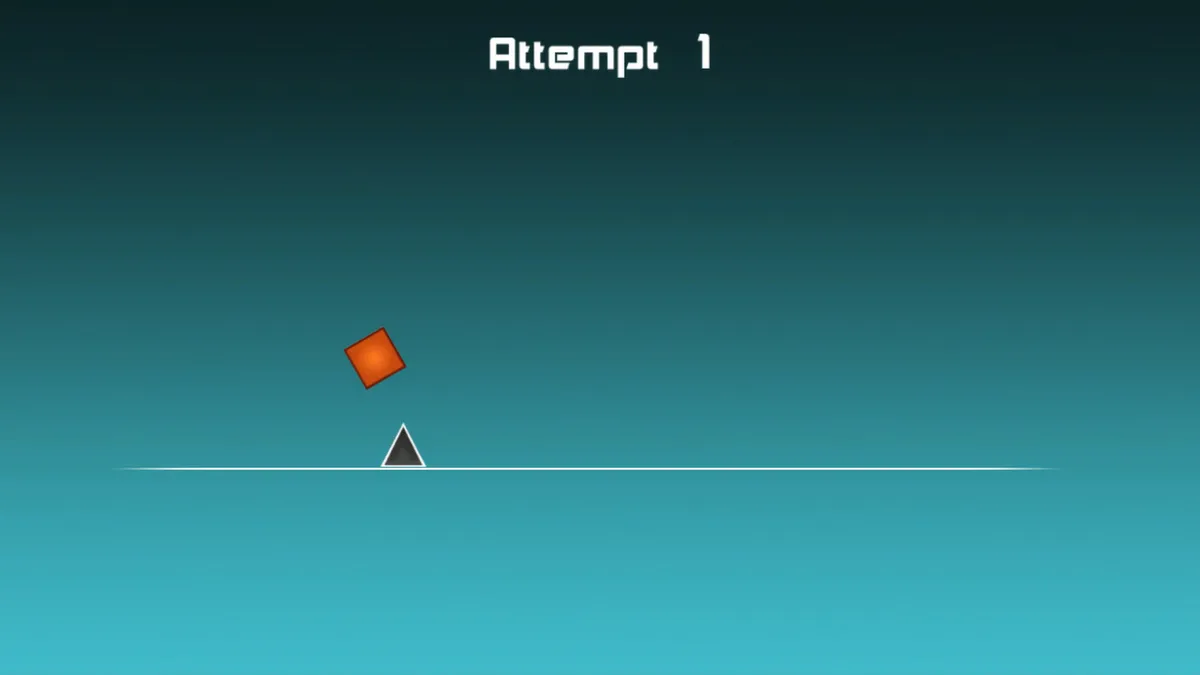
You control an orange square using a single button, and that one input handles the whole of your movement vocabulary. Pressing it launches the square into a jump, and the goal is to carry the shape over spikes and onto blocks until it reaches the end of the level. There is no second action to learn and nothing to aim, so each press is a timing decision: jump too early or too late and the square meets a spike instead of clearing it. The path alternates between hazards you leap across and blocks you land on.
The rules tie these elements together tightly. Any mistake causes instant death and returns you to the beginning of the level, so a run is a continuous chain of correctly timed jumps rather than a series of recoverable slips. Reaching the level's end is the objective, and progress depends on stringing spike clears and block landings together without a single error. Later practice tools let you learn those sequences, but in a normal attempt the whole route has to be performed correctly from the start to the finish.
Spikes, Blocks, and Instant Death
The level's obstacles are built from two recurring pieces: spikes you must clear and blocks you must land on. Spikes sit along the route as lethal hazards, while blocks serve as the platforms that keep the square moving forward toward the end of the stage. Because the square moves continuously, the terrain forces a steady rhythm of presses: clear a spike, settle onto a block, clear the next spike. Guidance over spikes and jumps onto blocks together form the route to the level's end.
The rule behind the hazards is absolute: any mistake results in instant death, and that death sends you back to the beginning of the level. There is no partial recovery after a mistimed press or a missed landing. The single objective, reaching the end of the level, must therefore be met by performing the entire spike-and-block sequence without one error. Practice Mode checkpoints exist as a separate tool for learning those sequences, but a normal attempt is judged from the level's start.
Practice Mode and Checkpoints
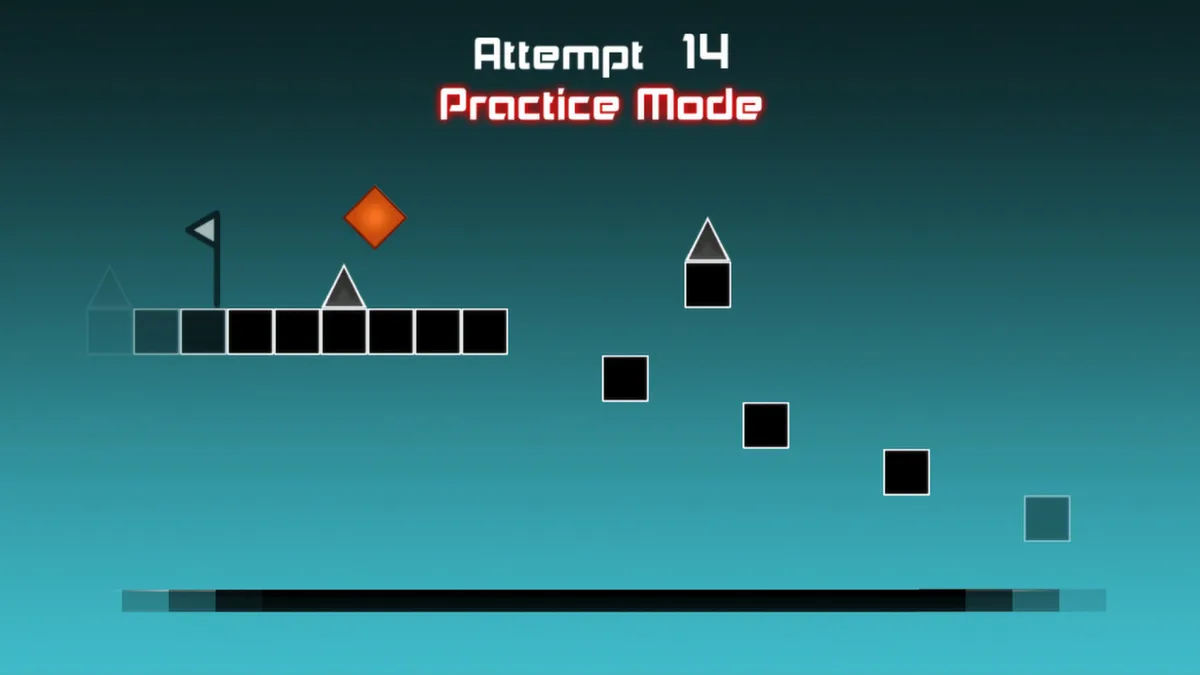
Practice Mode is the game's dedicated learning tool, and its defining feature is the use of checkpoints. In a normal attempt, any mistake produces instant death and sends the orange square back to the beginning of the level, so the entire spike-and-block sequence must be performed without error. Checkpoints give you a way to break that sequence into smaller pieces while practicing: you can work on a particular stretch of spikes and blocks rather than replaying the whole route from the start each time you miss a jump.
The two contexts interact clearly with the death rule. In regular play, death resets the square to the level's start, so progress is all-or-nothing and a single mistimed press undoes every jump already cleared. Practice Mode checkpoints, described as the way to learn the levels, sit outside that loop as a separate aid for rehearsal. When you return to a normal run, the corrected timing still has to carry through the whole spike-and-block sequence without one error.
Medals, Flagless Runs, and Steam Achievements
Beyond simply reaching the end of a level, the game tracks medals as optional goals you can work toward during play. One notable medal requires beating the game with no flags, which sets it apart from a standard completion because flags are absent for the entire run. These medal objectives are tied directly into Steam Achievements, so earning a medal also feeds into the platform's achievement system rather than living only inside the game's own progression.
The flagless medal plays against the same instant-death rule described elsewhere: any mistake returns the orange square to the start of the level, so a no-flag completion has to carry the exact jump timing across the full spike-and-block sequence in one continuous attempt. Practice Mode checkpoints remain a separate aid for rehearsal, but they do not substitute for that flagless run. Steam Achievements mirror the medal conditions, letting players pursue both the in-game medals and the matching platform unlocks.
The Desktop Level Editor
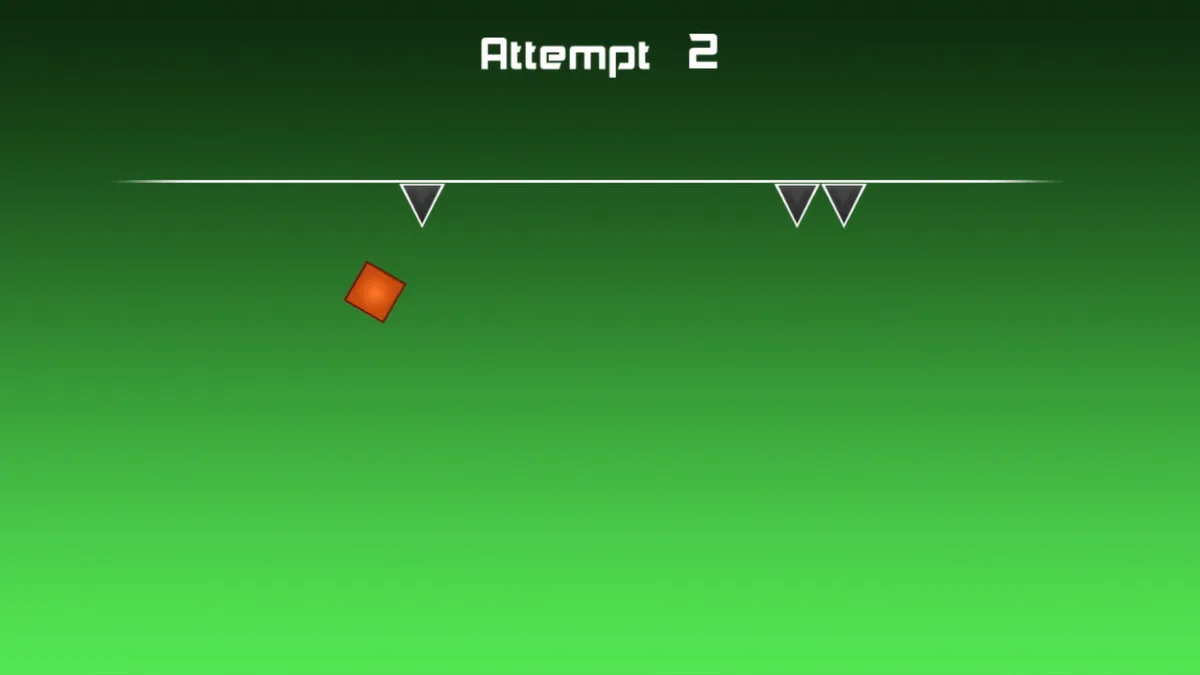
This desktop release of The Impossible Game adds a Level Editor that sits apart from the five classic levels, giving you a tool for designing your own near-impossible stages rather than only playing the ones included with the game. Because the stages you assemble use the same spike-and-block world, a created level is meant to be played under the same single-button jump, lethal spike, and landing-block rules as any other stage. The editor is presented as exclusive to this desktop version, so it is a feature of this release rather than of the classic set.
Once a level is built, the editor is paired with a sharing action: you can send your designs over the internet to challenge the world, turning a personal stage into one other players can attempt. Designing and distributing a level belong to the same feature rather than to separate tools. The editor is listed alongside the other desktop content, including five classic levels and Practice Mode checkpoints, and the game's supported systems are Windows, macOS, and Linux.
Sources & further reading.
- The Impossible Game — official game profileRetrieved Oct 28, 2026
First published .