 THE GAME ARCHIVE
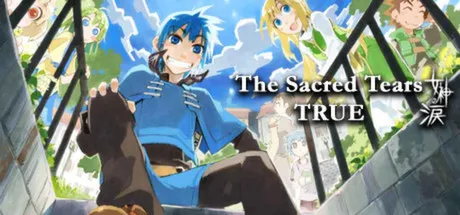
The Case-and-Mission Framework: 48 Chapters
The Sacred Tears TRUE is organized around 48 chapters, and each one is built as a single mission or case rather than an open stretch of exploration. That case-and-mission framework gives the game a clear unit of play: a chapter presents its own job or incident, and finishing that job or case moves the player onward. The structure is split into two matched halves, 24 main story chapters and 24 side chapters, so side content sits alongside the main line rather than interrupting it.
Because each chapter is a standalone episode, a mission or case can be taken as a self-contained segment while the larger narrative continues across the set. The lists describe chapters as short format entries of roughly 5 to 30 minutes, which makes the mission-and-case arrangement suit play in brief sittings. Progress through the 48 chapters is counted as completing the 24 main story chapters and the 24 side chapters, giving players two parallel tracks to work through within the same episodic framework.
Card Battles and Redistributable Skill Points
Combat in The Sacred Tears TRUE runs on a card battle system, and the game's own description frames it as deceptively simple yet deep. The pairing of those two words matters: the surface layer looks easy to pick up, while the underlying rules carry more weight than the first impression suggests. Because the description presents the card battles alongside traditional Japanese role-playing elements, the card layer sits within a role-playing framework rather than replacing it. The documented material does not specify the card types, hand size, turn order, or any particular rule for resolving a card play, so the depth is asserted rather than itemized.
Character growth uses redistributable skill points, the second named mechanic in the same feature list. The label means points already placed can be moved again rather than being locked to one assignment, so a build is not a permanent commitment. That property sits directly against the usual fixed allocation found in many role-playing games, where a spent point stays where it was spent. The card battle system and the skill-point system appear side by side in the description as fresh and unique features, but the documented material does not state how reallocated points feed into card performance or whether a change can be made freely at any moment.
Standalone Episodes in Short Sittings
Each of the 48 chapters is built as a single mission or case, and the game treats every one of them as a standalone episode. A chapter presents its own job or incident that can be opened, worked through, and closed out, while the main dramatic story arc continues to unfold across the set. The cast grows as the game progresses, so later chapters involve a larger group of characters than earlier ones, but the basic unit of play stays one mission or case at a time.
The chapter format runs roughly 5 to 30 minutes per episode, and the game presents that length as a way to make play easy to fit into short sittings. With 24 main story chapters and 24 side chapters, the short scope applies across both tracks, so a single sitting can cover one main chapter, one side chapter, or a small mix of the two. The standalone-episode design and the short length reinforce each other, since the mission or case is closed out within the episode and the next chapter begins as a fresh unit of play.
A Growing Cast and an Overarching Story Arc
The game follows Seil and his childhood friend Seana, two novice thieves in the Thieves Guild of Genoseed City. By day the pair runs a private investigation agency; by night they carry out Thieves Guild missions across the city. Their story is framed as a pursuit of dreams and adventure, and that personal goal sits at the center of the narrative rather than being a background detail. The game presents its narrative as a main dramatic arc that unfolds as the story advances, and the number of characters increases as the game progresses. Early on, then, players are working with a thinner cast tied to the two thieves and their city assignments, and later chapters bring in a wider group of people around them. The material does not describe individual characters beyond these two or how they join, so the growth of the cast is the documented trait of the arc.
The documentary material labels each of the 48 chapters a standalone episode, but the larger story arc plays out across the set as the cast grows. In play, that means a chapter still opens its own mission or case and closes it out, while the growing characters and the continuing dramatic story arc carry forward from one chapter to the next. The standalone form and the overarching arc are presented as coexisting rather than as alternatives. The storyline is supported by traditional Japanese role-playing elements and also by fresh features: a card battle system described as deceptively simple but deep, redistributable skill points, and a multiway system. The documented material does not explain how these systems connect to the story arc or affect a chapter's mission, and it does not itemize the rules of the card battles, the skill points, or the multiway system, so those mechanics are named but not detailed here.
Sources & further reading.
- The Sacred Tears TRUE — official game profileRetrieved Nov 1, 2026
First published .