 THE GAME ARCHIVE

A Kinetic Novel, Not a Game of Choices
Set against a ruined Earth and a broken planetarium, this title presents itself as a kinetic novel rather than a conventional game. The format is framed as a storytelling-focused form of entertainment, described as neither a novel, an anime, nor a game. The presenter aims to give the reader a strong sense of presence and closeness to the characters by leaning on a high-quality scenario along with graphics, music, and other production values. In practice, the story is told through prose, imagery, and sound rather than through play systems or player-run exploration of the setting.
The scenario drives the experience, built around the junker and the robot within the ruined planetarium. The title is an emotional visual novel from the studio Key, a sub-brand of VisualArts, and this English version localizes the Memorial Edition previously released for Windows on 30 April 2010. Rather than offering a game of branching decisions, the work frames storytelling itself as the sole purpose, delivering its narrative through a crafted script, illustration, and music so the reader follows the events as they are written.
Thirty Years of Rain: The Ruined Earth
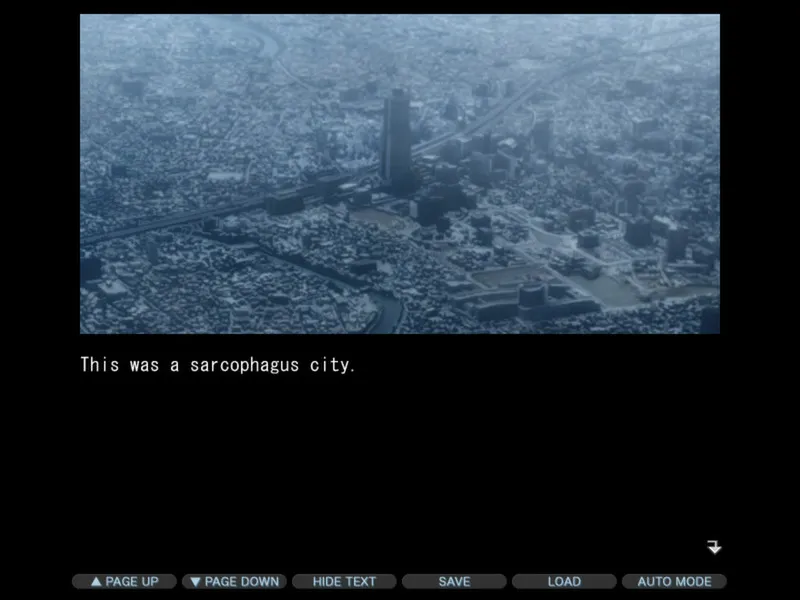
The story unfolds on a post-apocalyptic Earth roughly thirty years after the failure of the Space Colonization Program. Humanity is nearly extinct, and a perpetual, deadly Rain falls across the planet. Survivors known as Junkers plunder goods and artifacts from the ruins of civilization. One such Junker sneaks alone into the most dangerous ruin of all, a Sarcophagus City, and at its center discovers a pre-War planetarium. The setting centers on this planetarium inside a dead city, with the endless Rain framing the world outside its walls.
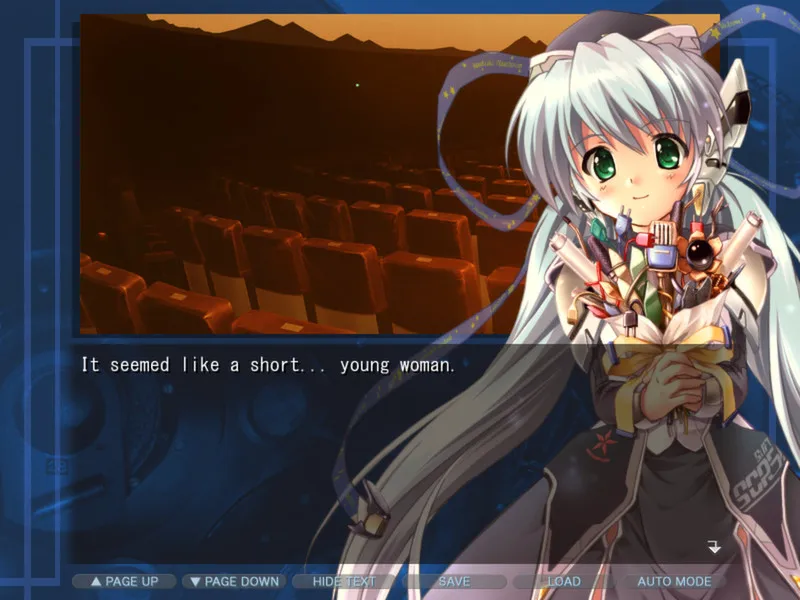
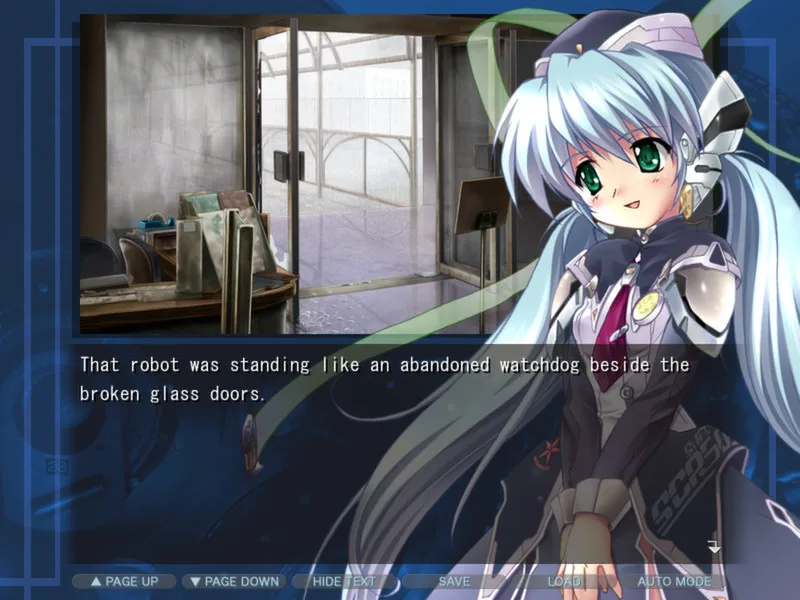
Inside that dead city, the Junker finds the planetarium and is greeted by Hoshino Yumemi, a companion robot. Without a shred of doubt, she assumes he is the first customer she has had in thirty years. She attempts to show him the stars at once, though the planetarium projector is broken. These details define the lived situation: a scavenger who enters ruins for goods and artifacts, a machine still operating on the assumption that visitors will come, and a city rendered dead by the perpetual Rain. The post-War planetarium itself stands as the artifact the Junker and the robot share.
The Sarcophagus City and the Broken Projector
The Junker moves through a post-apocalyptic Earth where humanity is nearly extinct and a perpetual, deadly Rain falls across the planet. Junkers plunder goods and artifacts from the ruins of civilization, and this one sneaks alone into the most dangerous ruin of all, a Sarcophagus City. At the center of that dead city he discovers a pre-War planetarium. Inside, Hoshino Yumemi, a companion robot, greets him without a single shred of doubt and assumes he is the first customer she has had in thirty years.
Yumemi immediately tries to show the Junker the stars, but the planetarium projector is broken. Unable to make heads or tails of her conversation, he ends up agreeing to try and repair the projector, which gives the section its concrete task: restoring the machine so the stars can be shown. The pre-War planetarium and its broken projector therefore sit at the middle of the scene, pairing a scavenger's ruin expedition with a machine's promise of a starry sky.
Voices, Music and the Push Toward Empathy
The presentation pushes toward empathy through sound as much as script. Hoshino Yumemi is voiced by Keiko Suzuki and the Junker by Daisuke Ono, with the title fully voiced in Japanese while the text itself can be read in either English or Japanese. The cast list pairs the robot and the scavenger as the two speaking presences carrying the story, so the player hears their exchange in the planetarium rather than reading it silently alone.
Music is credited to Magome Togoshi, and the scenario and design to Yuuichi Suzumoto, giving the story its authored score and written structure. The store describes the work as a heartwarming and memorable title centered on storytelling and emotional engagement, and as an emotional visual novel from Key, a VisualArts sub-brand. These named credits and the stated focus on storytelling and emotional engagement frame how the voices, music, and scenario combine: the reader follows written events, with the performances and score setting the tone of the ruin.
Sources & further reading.
- planetarian ~the reverie of a little planet~ — official game profileRetrieved Nov 1, 2026
First published .