 THE GAME ARCHIVE
Four Classes, Two Genders, Cosmetic Choices
Character creation in Torchlight II begins with a choice among four classes, and the official profile frames that choice as the main way play styles differ. Once a class is selected, the same class can be taken into the game as either a male or a female hero. The profile presents this as a per-class option rather than a single global toggle, so the gender decision sits alongside the class decision during setup. The four classes and the two-gender option together define the starting point before a hero enters the randomized levels and enemy encounters described elsewhere in the game.
Beyond class and gender, Torchlight II provides customized cosmetic features and looks, which the profile lists as a way to make a hero stand out. These cosmetic adjustments are documented as part of the character feature set, grouped with the four classes and the male-or-female option. The game is classified in the action, adventure, indie and role-playing genres, and its character options sit within that action RPG framework. The profile does not detail individual cosmetic categories or a menu flow, so the supported description stays at the level of adjustable appearance features tied to each hero.
Randomized Levels, Loot and Monsters in Vilderan
Torchlight II places its action role-playing adventure in a fully randomized world, so the journey is built around variation rather than fixed repetition. The game sets the campaign within the vast overworld and multiple hub towns of Vilderan, giving the randomized content a named region to unfold across. Each time a player plays, level randomization ensures new layouts and paths, while the loot and monsters encountered are also renewed. Weather and time of day shift between rain, snow, and both day and night as the hero travels through these levels and their connected towns.
The randomization is stated as a per-play rule: layouts, paths, loot, and monsters are all refreshed every time you play. That means the arrangement of a level and the treasure and creatures found within it are not fixed to a single configuration. The overworld and multiple hub towns provide the shared Vilderan setting, while level randomization governs the repeated content within it. Bountiful treasure is part of the game’s action RPG description, matching the loot that randomization renews alongside paths and monsters. Rain, snow, day, and night accompany exploration of this changing world.
Weather, Time of Day and Hub Towns
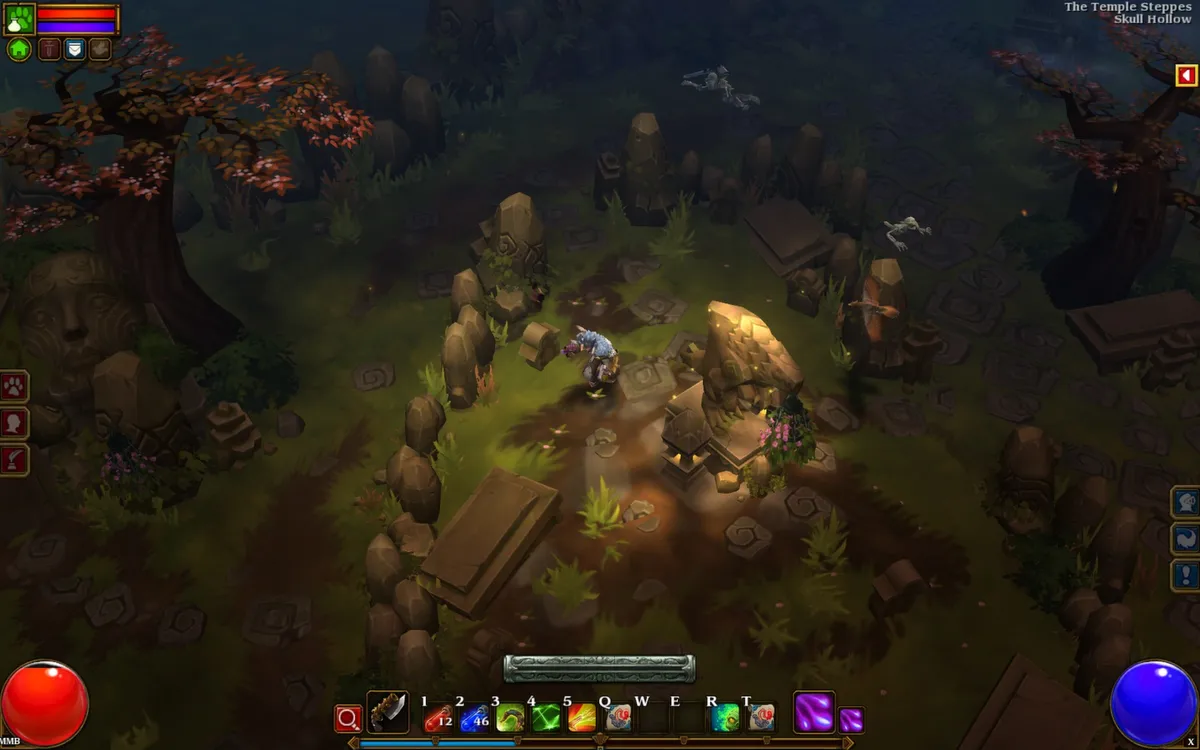
Torchlight II sets its action role-playing adventure in the vast overworld and multiple hub towns of Vilderan. Exploration is the framing activity described for this region: the hero fights through the rain and snow that fall there and moves between day and night. Those weather and lighting states are documented alongside the overworld and its towns, so the conditions shift as the hero travels through the levels rather than remaining fixed to a single setting.
The hub towns give Vilderan settled stops within the wider wilderness, and they occupy the same world where rain, snow, day and night occur. Level randomization operates on that world as a per-play rule: every time the player plays, the game ensures new layouts, paths, loot and monsters. The towns therefore sit inside a region whose traveled levels are remade each session, while the weather and time of day change during the fighting that fills those levels across the overworld.
Pets, Fishing and Running Loot to Town
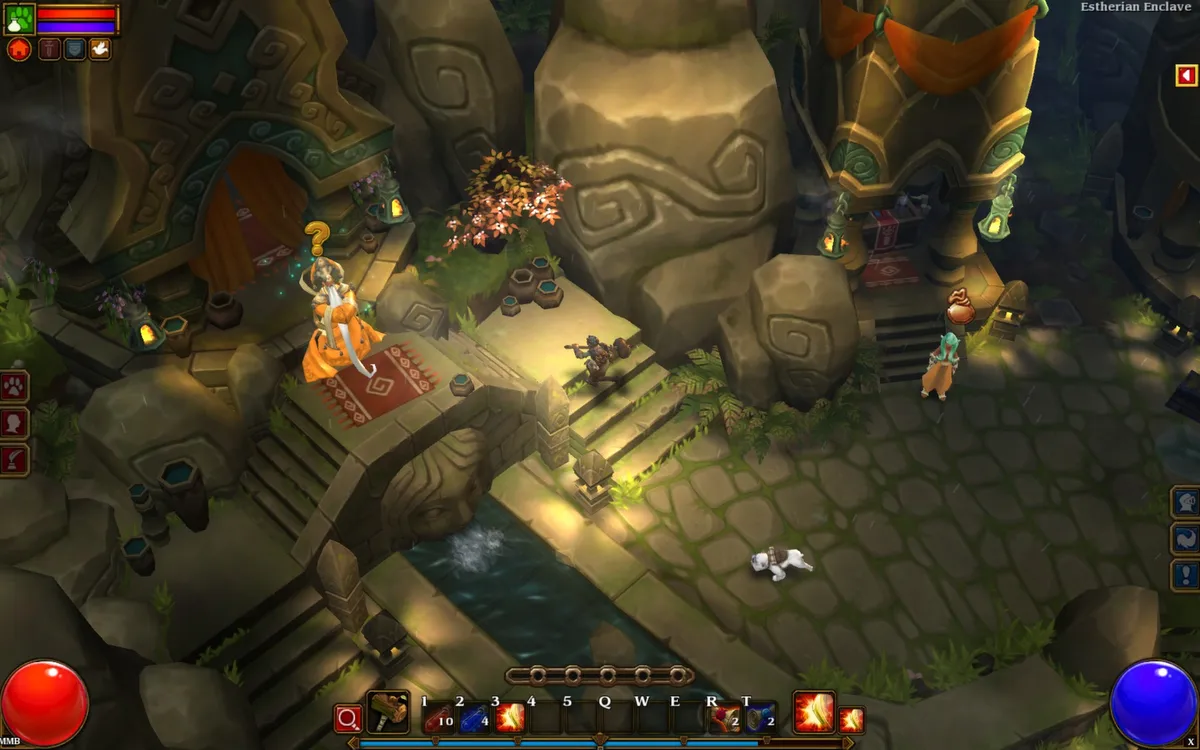
Pets return in Torchlight II, and the official profile groups them with fishing as a pair of improved features. Rather than forcing the hero to leave the action, the pet still makes the run to town to sell gathered loot, so selling happens away from the player's current location. The profile describes this as an improvement over earlier versions, pairing the delivery duty with the wider pet system. Loot collection is part of the action RPG framing, where bountiful treasure is listed among the game's features, giving the pet's town trip something concrete to carry.
Fishing is documented as returning in improved form, with more choices and better effects than before. The profile places fishing directly alongside the pet, so the two systems are presented together as a combined feature set in this sequel. In practice, the documented loop is that the pet handles the town run for selling loot while the player continues adventuring, and fishing expands what the pet feature offers through additional options and stronger effects. The action RPG's bountiful treasure supplies the loot that the pet carries to town to sell, tying the collection theme to the returning pet duty.
Online and LAN Co-op With Matchmaking
Torchlight II lets players bring friends along for the journey through online multiplayer and through LAN multiplayer, so co-op sessions can be arranged either over the internet or across a local network. Both options share the same purpose: joining other players in the game's action role-playing adventure rather than traveling Vilderan alone. The official profile presents these two connection types side by side as the multiplayer offering, without describing separate modes or differing content between them.
The multiplayer framing is tied to the game's broader adventure, which the profile describes as an action RPG filled with epic battles, bountiful treasure, and a fully randomized world. Bringing friends along therefore places co-op play within that same randomized world of battles and treasure, and the profile lists multiplayer objectives as a supported feature of the game. Online and LAN play are the two documented ways that shared journey can happen.
New Game Plus and Campaign Replay
Beating the primary campaign of Torchlight II unlocks New Game Plus, in which the player starts the campaign over with the same character. That restart is pitched as a significantly greater challenge, so the second run is harder while the hero stays the one already built. The profile puts no fixed end on the loop, describing the game as not over until the player says it is. The mode therefore follows completion of the primary campaign rather than replacing it, and it hinges on the same character being carried forward.
What carries over is the concrete tie between the two runs: skills, gold and gear earned during the first campaign are all kept when New Game Plus begins. Skill progression therefore stays attached to the character, gold retention keeps the funds intact, and equipment is not discarded at the switch. The primary campaign acts as the gate, since it must be finished before that same character can be taken into the tougher second pass. Together the completion requirement and the retained skills, gold and gear define how the documented progression links one campaign to the next.
Sources & further reading.
- Torchlight II — official game profile Retrieved Oct 17, 2026
First published .