 THE GAME ARCHIVE
Build and Upgrade Towers to Punish the Enemy
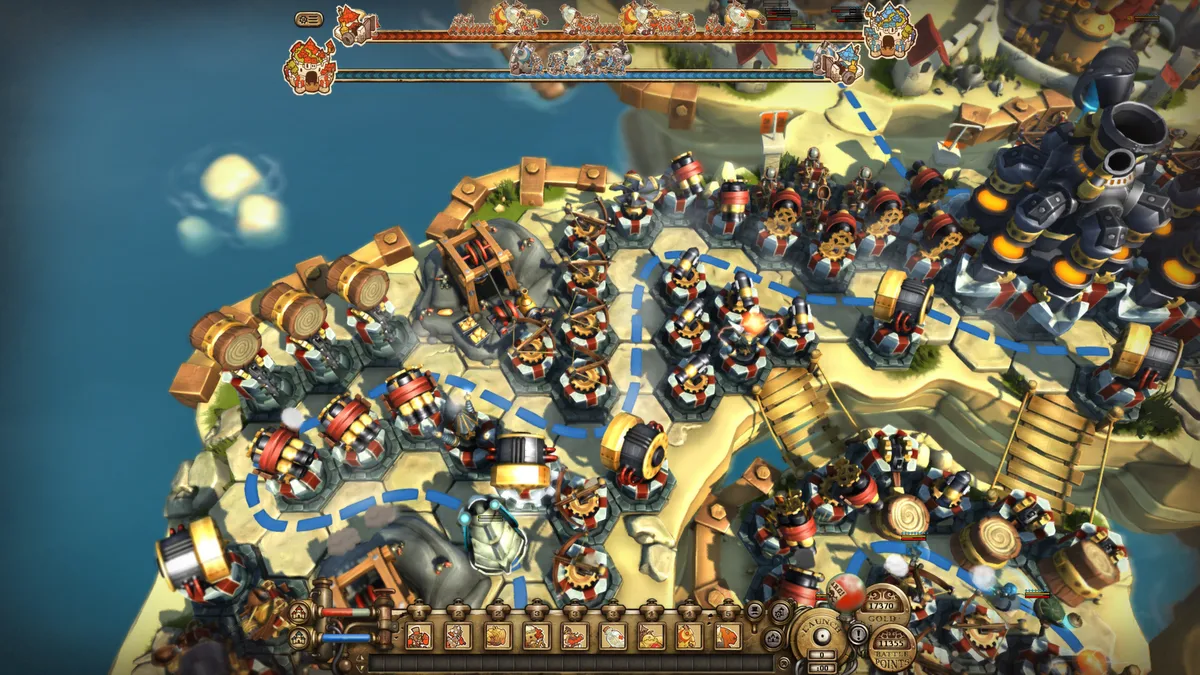
In Tower Wars, towers are the core of your defense, and the documented progression allows each one to be built and then upgraded. Rather than placing isolated defenses, you place towers to form lengthy mazes that channel incoming enemy units along a punishing path. The maze is the tool: the more winding the route, the longer enemy units stay within range of your towers. This is the concrete interaction between tower building and upgrading—placing structures establishes the maze, and upgrades strengthen the towers that line it, so your layout keeps exacting a toll on every unit that passes through.
Those towers exist to stop enemy units before they reach your side of the field, which makes the maze a defensive objective rather than decoration. The rules tie together in a clear loop: build towers, upgrade them, and shape the path so attacking units are slowed and exposed. Alongside this defensive work, the game presents offensive waves of specialized units that you upgrade, assemble, and unleash in multitudes. So the same match asks you to manage a maze of upgraded towers while also building your own attack waves, with each side of the conflict feeding the other.
Assemble Specialized Units for Massive Attack Waves
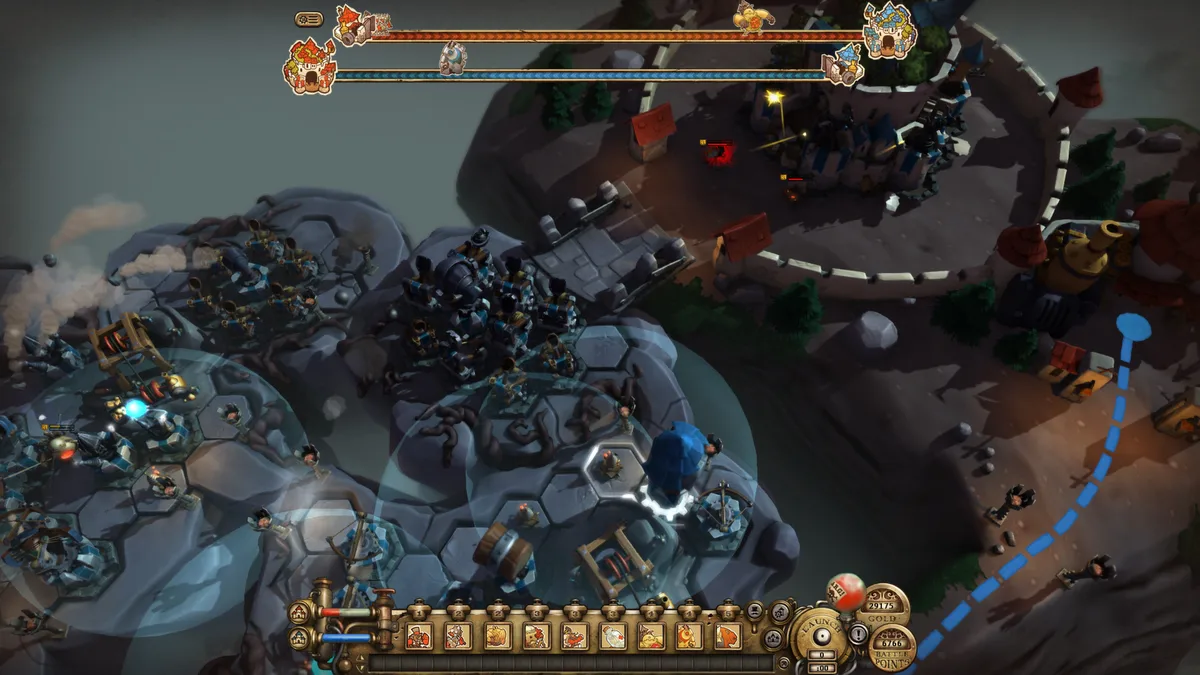
On the offensive side of a match, you upgrade, assemble, and then unleash multitudes of specialized units in massive attack waves. Each wave is something you construct from units you have improved beforehand, so the attack is not a fixed script but a group you put together and then send at the opponent. Sending a wave also ties back to the tower side of the match: while your specialized units march toward the enemy, that player's own maze of towers is what they must cross, and your own defenses remain in place to handle whatever comes back at you.
The technologies sit behind both halves of that two-sided fight. Unlocking and upgrading technologies bolsters the stats and functions of your units, which covers the specialized units you assemble into attack waves. Because the same technology system is described as strengthening unit stats and functions, the choices around research feed directly into the waves you send rather than existing as a separate track. In a match, the concrete sequence is to upgrade and assemble specialized units, add technologies that improve them, and then release those massed waves while the opponent's towers and mazes try to thin them out.
Unlock Technologies to Bolster Your Arsenal
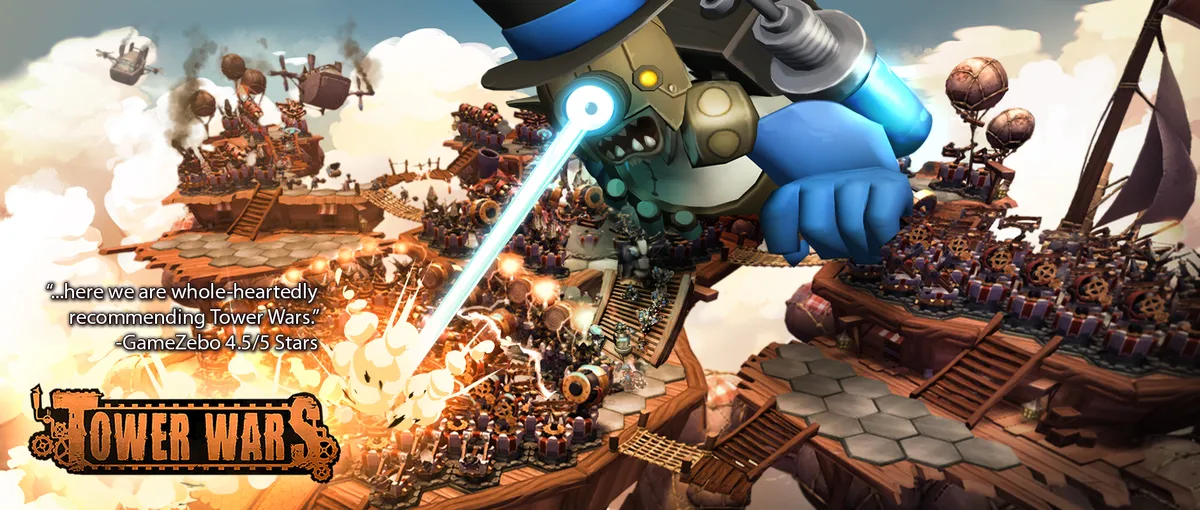
Technology research is the third track in a Tower Wars match, sitting alongside tower building and wave construction. The documented progression lets you unlock technologies and then upgrade them, and both actions bolster the stats and functions of your units. That phrasing matters because the research track is not restricted to one side of the fight: the units it strengthens are the same specialized units you upgrade, assemble, and send out in massive attack waves, and those units also appear on the defensive side as the game blends tower defense with real-time strategy.
The mechanics connect in one loop during online matches. You build and upgrade towers to make long mazes that punish incoming enemy units, while separately upgrading, assembling, and unleashing multitudes of specialized units in attack waves. Technology upgrades feed that offensive work by improving unit stats and functions before the wave is released. Because matches run as real-time strategy as well as tower defense, and are played in 1v1, 2v2, and 3v3 formats ranked or unranked, each player juggles maze placement, wave assembly, and research at once.
Online Modes: 1v1, 2v2, and 3v3 Ranked or Unranked
Tower Wars opens its online play across three team sizes: one-versus-one, two-versus-two, and three-versus-three. Each of those formats is offered in ranked or unranked matches, so the same core contest scales from a single opponent to a paired or three-player side. The game presents itself as a competitive multiplayer take on tower defense that also pulls in real-time strategy and chaotic multiplayer action, which means every online match asks each participant to handle the tower-and-wave systems at the same time rather than taking turns.
Around those online matches, the game lists online leaderboards alongside matchmaking and stat tracking as part of its multiplayer structure. The matchmaking feature is what places players into the ranked or unranked online contests at the available team sizes, while leaderboards and stat tracking record competitive performance. For a change of pace, the game also offers offline classic tower defense maps played as time trial diversions. That offline option sits apart from the online formats, giving a separate activity without the ranked or unranked match framing.
Leaderboards, Stats, and Offline Time Trials
Tower Wars ties its competitive play to online leaderboards and stat tracking, both listed among the multiplayer features that also include matchmaking and achievements. Matchmaking is what places players into the ranked or unranked contests at the one-versus-one, two-versus-two, and three-versus-three team sizes. The leaderboards and stat tracking then record competitive performance around those matches, giving the online formats a persistent record that sits alongside the tower, wave, and technology work done during a game.
Away from the ranked and unranked online contests, the game offers offline classic tower defense maps played as time trial diversions. That option is presented as a break from the online formats, and it is framed as a quick diversion rather than a full replacement for competitive play. The offline maps sit apart from the leaderboards, matchmaking, and stat tracking that structure multiplayer, so a player can work through classic tower defense maps on their own and measure the run by time.
Sources & further reading.
- Tower Wars — official game profileRetrieved Oct 27, 2026
First published .