 THE GAME ARCHIVE
Exploring the Castle: 200 Rooms and Hidden Treasures
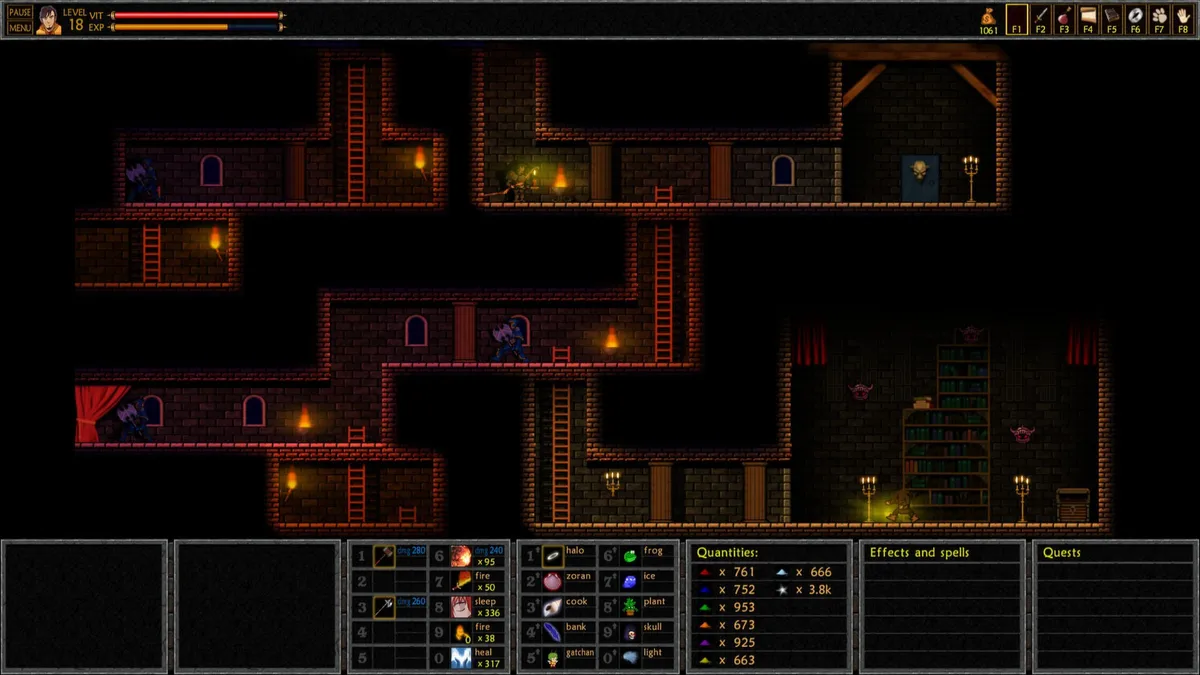
The castle in this 2014 action RPG platformer is built from 200 rooms, and the count is meant to be felt as you climb, drop and backtrack through its map. Running alongside that layout is the interactive castle map, which can be written on and altered. Rather than treating the map as a fixed reference screen, you can mark it yourself and change what it shows, so notes from one stretch of exploration stay available for later stretches. Rooms and map annotation work as one system: the map records the terrain, and the player decides what deserves a mark.
Spread across the castle are hidden treasures galore, placed as finds rather than as part of the standard room progression. They sit inside the same 200 rooms that make up the explorable map, so the two claims overlap: every treasure exists in a numbered room, and the writable map is the tool that helps you keep track of where you have looked. A player who annotates the map while hunting can fold treasure locations into the same notes used for routing. The collection is deliberately oversized, matching the room count's scale rather than reading as a short list of secrets.
Spells, Weapons, and the Tools of Battle
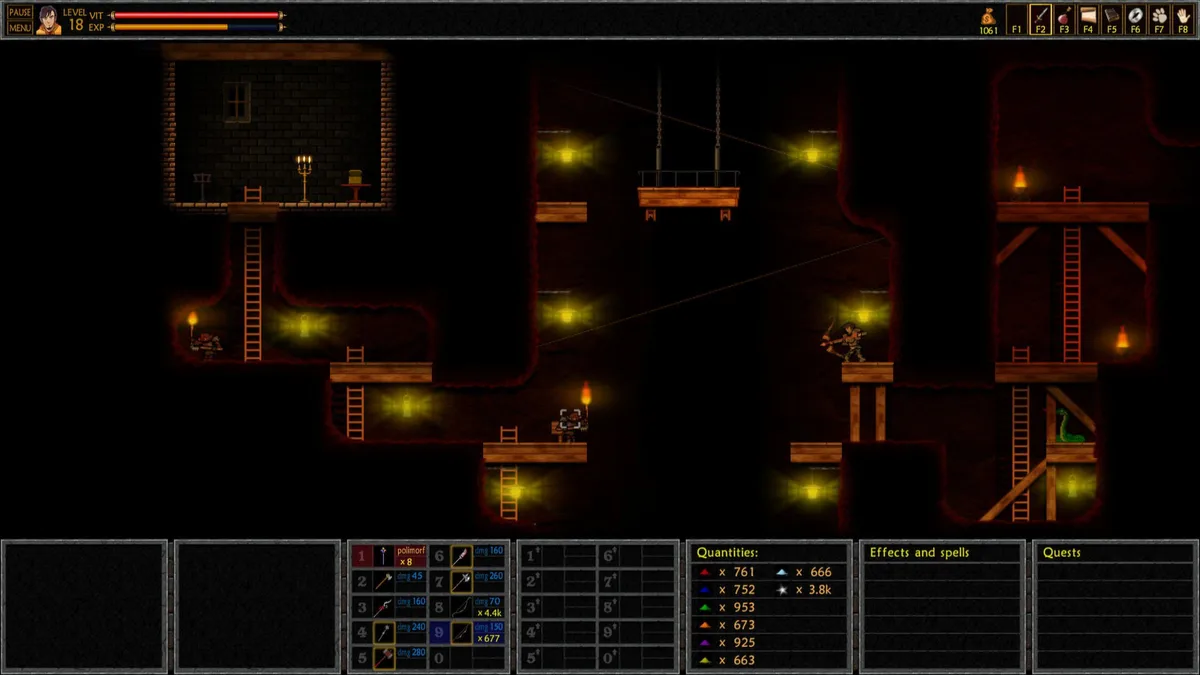
Across this action RPG platformer, the documented battle toolkit combines several distinct item types. The game lists 70 spells to learn, giving the character a broad school of magic to acquire over the course of the adventure. Alongside those spells sits a roster of 100 different weapons, so physical attacks are not limited to a single blade or club but spread across a large set of named equipment. Potions and scrolls appear as separate consumable categories, with potions serving as bottled items and scrolls as another carried resource, while rings form a further wearable category. Magical weapons and artifacts are listed as their own class of gear, distinct from the ordinary weapon count, so enchanted arms and relic-like objects sit apart from the baseline arsenal. Together these categories define what Daniel can gather and use during exploration and combat.
Scrolls, rings, potions, magical weapons and artifacts all belong to the same documented pool of obtainable things, and each has a clear place in how a run proceeds: spells are learned, weapons are collected, and consumables such as potions and scrolls are carried for use. Because the weapon count reaches 100 and the spell count reaches 70, the game presents variety as a core property of its item system rather than a small fixed loadout. Rings and artifacts add wearable and relic slots on top of the weapon and spell lists, while magical weapons bridge the two ideas by being both equipment and enchanted. The result is a layered set of tools where multiple item families coexist, each covering a different function during the castle crawl.
Boss Fights and Companion Pets
Seven bosses stand between Daniel and the end of the castle, each one a named kill target inside the 200-room map. The same profile that lists those seven encounters also lists pets in the collectible roster, alongside potions, scrolls, rings, magical weapons and artifacts. Bosses and pets therefore share a single documented feature set rather than living in separate modes: the castle crawl supplies the seven fights, and the companion animals belong to the same pool of obtainable things Daniel gathers. A player working through the boss count is also working through the item list that includes pets.
What connects the two halves is how the castle is played: you climb and backtrack through numbered rooms, annotate the writable castle map, and use the gathered toolkit against each boss. Spells are learned, weapons are collected up to the stated hundred, and consumables such as potions and scrolls are carried for use, while rings, artifacts and magical weapons fill wearable and enchanted slots. Pets sit in that same obtainable pool, so a companion animal is another entry in the roster Daniel assembles across the adventure rather than a separate system layered on top of the seven fights.
Character Development and Quests
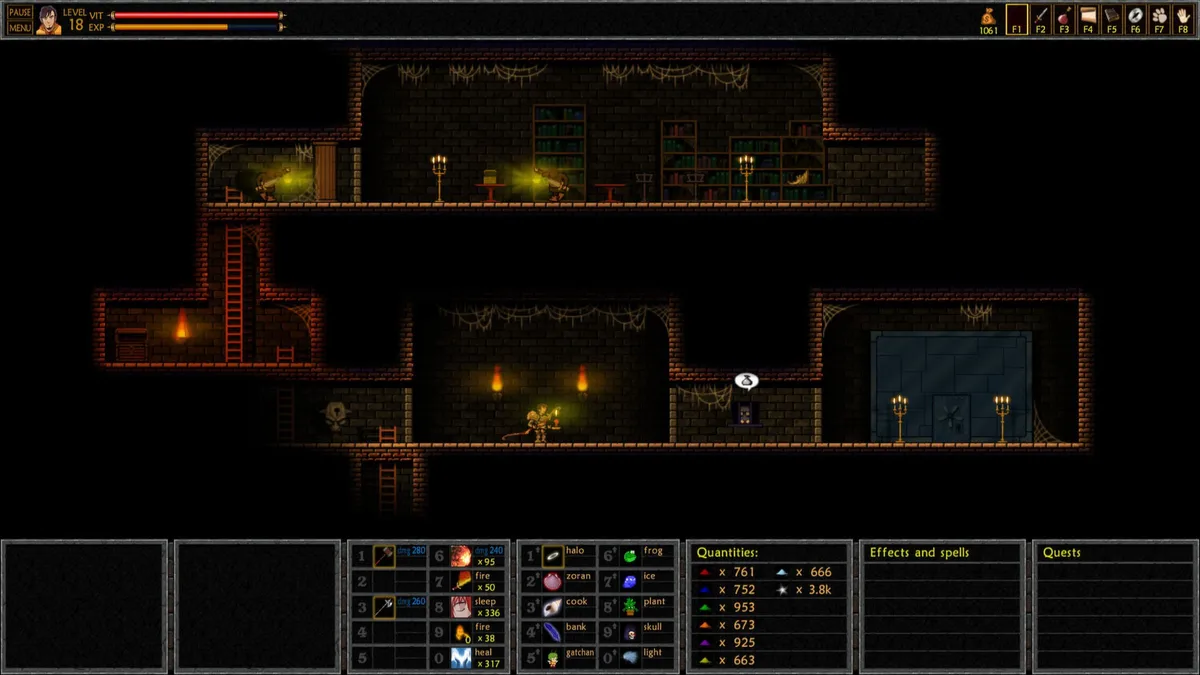
Character growth in this 2014 action RPG platformer runs through a full role-playing game character sheet that includes upgradeable skills. Daniel collects experience and develops his abilities as he navigates the castle, with the skill upgrades providing a structured path for improving his capabilities. Quests are the mechanism that drives this development: the game lists quests as a distinct feature, separate from the room exploration and combat encounters. By completing quests, the player advances the character sheet, allocating improvements across the upgradeable skill set. This system ensures that the 200-room castle crawl and its seven boss fights are supported by a progression framework where quests feed directly into the character sheet, letting Daniel grow stronger through deliberate advancement rather than incidental gains.
The full character sheet, with its upgradeable skills, works alongside the quest system to shape how Daniel develops over the course of the adventure. Quests give the player concrete objectives to pursue, and the skill upgrades tied to the character sheet let those efforts translate into measurable improvements. This progression does not stand alone: the same game profile that lists the character sheet, skills, and quests also confirms multiple endings. Development through quests and skill upgrades therefore feeds into an adventure that concludes in more than one way, with the player’s cumulative growth and quest completion forming the basis for which ending is reached. The character sheet, quests, and multiple endings are documented as connected parts of the same role-playing framework.
Setting Up Your Adventure: Difficulty and Endings
Before Daniel descends into the castle, the game asks the player to pick a difficulty setting. Difficulty is a selectable option presented alongside the adventure's other structural features, and it is documented in the same profile that lists the two hundred rooms, the seven bosses, the seventy spells and the hundred weapons. Choosing a difficulty therefore happens at the start, as part of setting up the run rather than as an adjustment made mid-crawl. The same profile also confirms multiple endings, so the configuration a player selects going in sits beside a conclusion that is not fixed to a single outcome.
Multiple endings are documented as a feature of the finished adventure. They are listed together with the difficulty settings, the role-playing character sheet and its upgradeable skills, the quests, the interactive castle map that can be written on and altered, the hidden treasures, and the battles against the seven bosses. The ending is therefore tied to the same framework that carries experience, skill advancement and quest completion: Daniel develops across the two hundred rooms, and the adventure resolves in more than one documented way. Difficulty and ending variety are both presented as options belonging to this single role-playing platformer structure.
Sources & further reading.
- UnEpic — official game profile Retrieved Oct 16, 2026
First published .