 THE GAME ARCHIVE
Drawing Becomes Matter: The Core Crayon Physics Mechanic
In Crayon Physics Deluxe, the central mechanic is the direct transformation of drawn shapes into solid objects. The game runs as a two-dimensional physics sandbox in which anything you sketch on the screen becomes a physical body subject to gravity, collision, and momentum. There is no separate inventory or placement tool: the crayon stroke itself is the only building block. A line drawn under a rolling ball becomes a ramp; a closed loop becomes a platform. The puzzle's solution emerges from how these newly materialized shapes interact under the engine's rules.
That transformation is grounded in a real-time physics simulation. Every shape you create immediately obeys the same forces as the pre-existing objects in the level, so a drawn lever can tip a crate and a drawn bridge can collapse under a weight. Because the simulation is continuous, the properties of your stroke—its length, thickness, and angle—determine how it behaves. The visual style reinforces this: everything looks like wax crayon on paper, so the physical world and your drawn additions share one coherent surface.
Puzzle Goals and Sandbox Freedom
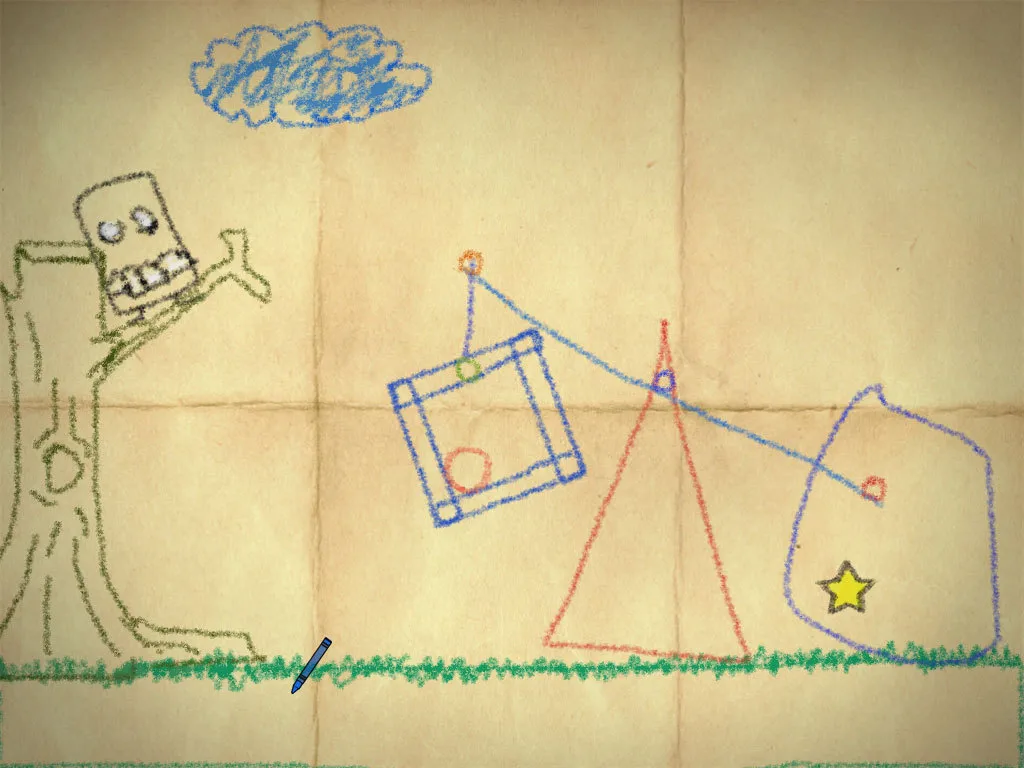
Crayon Physics Deluxe frames its play around two dimensions of activity that share one surface: a 2D physics puzzle game and a sandbox. In the puzzle mode, each stage asks you to reach a goal using the objects already present, then sketch additional shapes with the crayon. Those drawings are transformed into real physical objects, so a circle drawn near a ball can become a push, while a sketched line can redirect where the ball travels. Because every drawn body obeys the same simulation as the level's objects, the solution comes from how your strokes and the existing pieces move together rather than from any separate tool or menu. The game presents this as experiencing what it would be like if your drawings became real physical objects, which is the premise that connects the puzzle structure to the sandbox.
The puzzle half and the sandbox half are not separate modes with different rule sets. In both cases the game is a 2D physics puzzle and sandbox, and the operative rule is that drawings become real physical objects. In a puzzle, that rule is directed at a target: you solve with your artistic vision and creative use of physics, which means the shape you choose and where you place it matter to the outcome. In the sandbox, the same 2D physics system runs without a required target, letting you draw bodies and watch how they interact. The shared simulation is what makes the freedom meaningful, because every new stroke enters the same space and immediately participates in the same physical behavior as everything already on screen.
Across Over 70 Levels with Rockets, Ropes, and Hinges
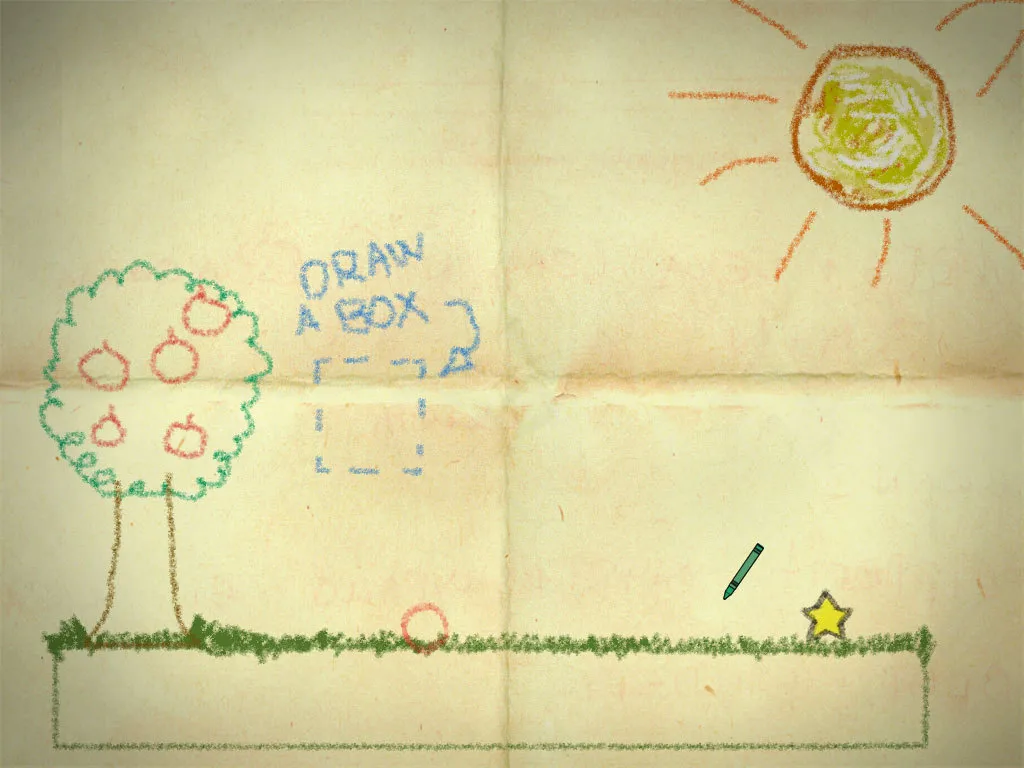
The full run of Crayon Physics Deluxe is built on a level-based structure that carries the drawing rule through more than seventy stages dated to the 2009 indie release. Each stage is a self-contained puzzle in the same two-dimensional physics sandbox, where the only verb is sketching: every line or closed loop you draw is converted into a solid physical body that falls, collides, and slides under the engine. Because the challenge is sequenced across stages, later puzzles can layer interactions between your drawn shapes and the level geometry rather than introducing new tools.
Beyond plain ramps and platforms, the level catalogue wires in three named devices: rockets, ropes, and hinges. A rocket is a drawn body that supplies thrust, so a sketched line can carry a ball upward against gravity; a rope links two anchor points and lets a drawn shape swing rather than merely fall; a hinge pins a drawn piece so it can rotate around a fixed point instead of staying rigid. Placed inside the same continuous simulation as ramps and closed loops, these three elements turn a stage into a small machine whose timing and pivots you set with your stroke.
An Easy-to-Use Level Editor Extends the Sandbox
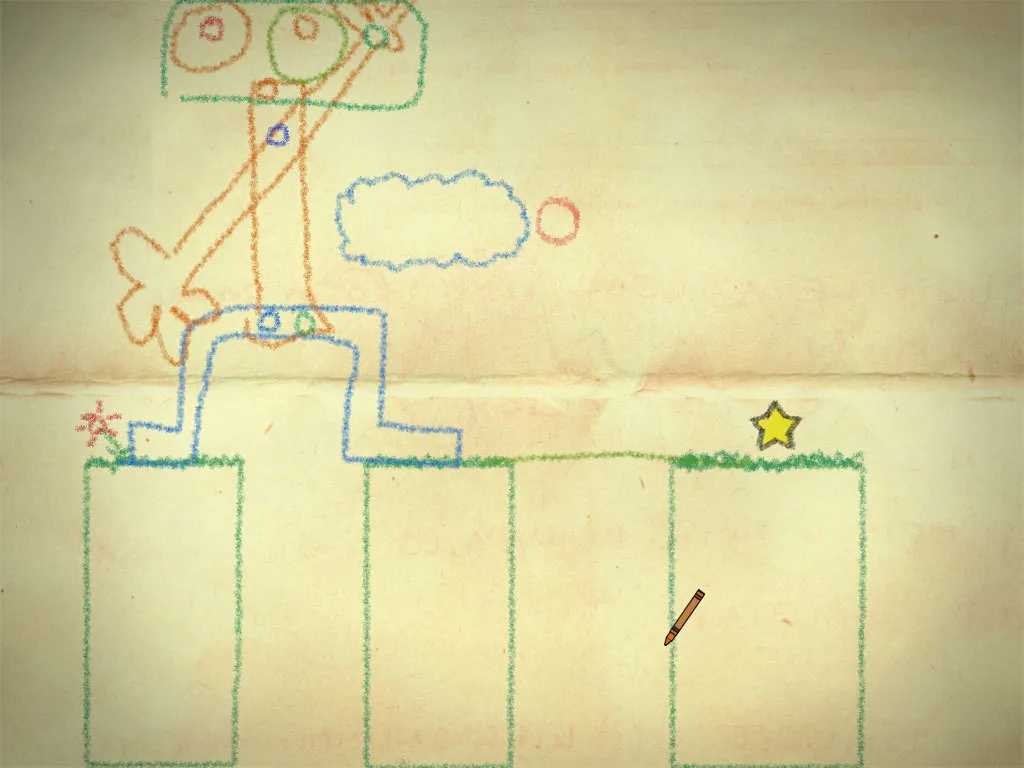
Crayon Physics Deluxe includes an easy-to-use level editor alongside its more than seventy stages and its two-dimensional physics sandbox. The editor sits within the same drawing-based rules as the shipped puzzles: you sketch lines and closed loops, and those strokes become physical bodies. Because the editor is documented only as a key feature rather than a detailed toolset, the concrete action it supports is authoring your own stages using the same conversion of crayon strokes into solid objects, without a separate placement tool or inventory.
The editor extends the sandbox because both rest on the same rule: drawings are transformed into real physical objects, and you solve puzzles with artistic vision and creative use of physics. Inside the editor, the named devices found across the levels—rockets, ropes and hinges—can be built into a stage, so a sketched rocket supplies thrust, a rope links two anchor points, and a hinge pins a piece to rotate around a fixed point. The editor therefore lets the sandbox practice of drawing bodies become a authored puzzle.
Sources & further reading.
- Crayon Physics Deluxe — official game profile Retrieved Oct 16, 2026
First published .